
Governor Yusuf reportedly sends Ganduje, others to Kwankwaso to mediate in marriage crisis
In a development that intertwines personal drama with the political tapestry of northern Nigeria, Governor Abba Kabir Yusuf of Kano State has reportedly mobilised a senior delegation to seek the mediation of Senator Rabiu Musa Kwankwaso in an ongoing marital dispute.
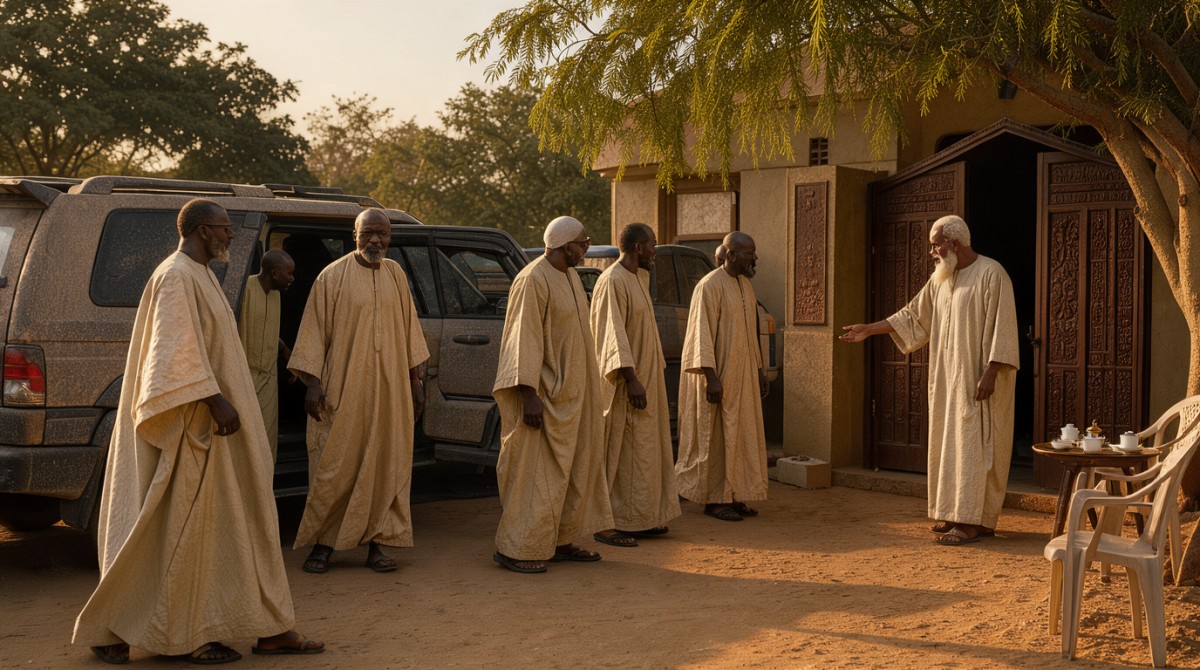
In a development that intertwines personal drama with the political tapestry of northern Nigeria, Governor Abba Kabir Yusuf of Kano State has reportedly mobilised a senior delegation to seek the mediation of Senator Rabiu Musa Kwankwaso in an ongoing marital dispute. The delegation, described as “high‑powered” and comprising political heavyweights, Islamic scholars and respected elders, is set to travel from Kano to Abuja with the aim of persuading the senator to allow his daughter, Hajiya Zainab Musa Kwankwaso, to return to the Governor’s residence. The move underscores how family matters can quickly become matters of public concern in a region where kinship, religion and politics are tightly interwoven.
Who is leading the peace mission?
The source close to the Kano Government House disclosed that former Governor and former National Chairman of the All Progressives Congress, Dr Abdullahi Umar Ganduje, will head the delegation. Ganduje’s involvement signals the seriousness with which the governor’s camp is treating the crisis, given his stature as a senior party elder and former state leader. By placing Ganduje at the forefront, the delegation hopes to leverage his political gravitas and longstanding relationships within the APC to smooth the path to reconciliation.
Alongside Ganduje, the delegation will feature Khalifa Sheikh Qaribullah Sheikh Muhammad Nasiru Kabara, the spiritual head of the Qadiriyya Islamic movement across Nigeria and West Africa. His presence adds a religious dimension to the mission, reflecting the deep-rooted role of Islamic scholarship in Kano’s sociopolitical landscape. The inclusion of Sheikh Abdulwahhab Abdallah, a prominent member of the Kano State Shura Council, further underscores the blend of political and religious authority that the governor is marshaling.
The composition of the delegation
Beyond the headline names, the delegation is expected to include Malam Tijjani Yammota and a cadre of other elders and political figures whose identities have not been disclosed. The source described these participants as “respected elders and political leaders,” suggesting a broad coalition that spans the traditional hierarchy of Kano’s emirate system and the modern party apparatus. Such a mix is typical of conflict‑resolution efforts in the north, where elders often serve as custodians of communal harmony.
The presence of both Islamic scholars and political veterans reflects a strategic attempt to address the dispute on multiple fronts. While the governor’s love for his wife and his commitment to their six children are personal motivations, the delegation’s composition signals a desire to frame the issue as one that could affect the stability of the state’s political alliances, especially given the Kwankwaso family’s historic influence in Kano politics.
Why Senator Kwankwaso’s intervention matters
Senator Rabiu Musa Kwankwaso, a former governor and a towering figure in Kano’s political arena, is also the father of Hajiya Zainab Musa Kwankwaso. The senator’s residence in Abuja has become the focal point of the mediation effort because he holds the key to granting his daughter permission to re‑enter the Government House. The source indicated that the delegation’s primary objective is to “appeal to Senator Kwankwaso to reconsider his position,” suggesting that the senator may be reluctant to intervene without a concerted appeal from respected peers.
Kwankwaso’s role is further complicated by his status as a senior statesman whose endorsement can lend legitimacy to any reconciliation. By involving Ganduje and other senior figures, the governor’s team hopes to create a pressure‑point that aligns with the cultural expectation that elders mediate family disputes. This approach mirrors traditional conflict‑resolution practices where the involvement of senior community members is seen as a pathway to restoring harmony.
The personal dimension: love, children and public perception
The source emphasized that Governor Yusuf “still loves his wife” and is “deeply committed to preserving their marriage,” especially for the sake of their six children. The couple has been married for over twenty years, having tied the knot on July 29 2006. This longevity adds a layer of gravitas to the dispute, as it is not a fleeting disagreement but a long‑standing partnership now under strain.
Public sentiment in Kano often intertwines personal morality with political credibility. By publicly affirming his affection for his wife and his respect for Senator Kwankwaso as a father‑figure, Governor Yusuf appears to be framing the issue as one of family values rather than political maneuvering. This narrative could resonate with constituents who value familial stability, especially in a region where the family unit is a cornerstone of social identity.
Political implications and the risk of politicisation
While the source stressed that the delegation aims to keep politics out of the marriage, the very act of mobilising senior politicians suggests that the dispute could have political reverberations. Kano’s political landscape is heavily influenced by patronage networks, and any perceived rift between the governor and the Kwankwaso family could ripple through the APC’s state machinery. The involvement of Ganduje, a former governor with his own political ambitions, hints at a possible alignment of interests that could strengthen the governor’s standing within the party.
Moreover, the source warned that “politics should not be allowed to come between a husband and wife,” indicating an awareness that partisan rivalries could exacerbate the personal conflict. By seeking a mediated solution, the governor may be attempting to pre‑empt any exploitation of the marital crisis by political opponents who could portray the dispute as a sign of personal weakness or instability.
Official response and the limits of public disclosure
When approached for comment, State Commissioner for Information Sunusi Bature Dawakin Tofa denied knowledge of any such delegation and described the matter as “purely personal” that “requires no public explanation.” He reiterated that personal issues of the governor can only be discussed with prior approval, urging restraint from officials. This official silence underscores the delicate balance between transparency and privacy in Nigerian politics, where personal matters of high‑ranking officials are often kept behind closed doors.
The commissioner’s refusal to confirm the delegation, coupled with the source’s anonymity, leaves the public with limited concrete details. Nonetheless, the very existence of a high‑profile peace mission, as reported by the Daily Post Nigeria, points to a concerted effort by the governor’s camp to resolve the crisis through traditional channels of elder mediation, rather than through the courts or public spectacle.
This article was produced with AI-assisted research and editorial support. Reporting is based on the source material cited below. Sources: Daily Post Nigeria; dailypost.ng; Global1.News (16 November 2026).
By Sarah Okafor, Staff Writer
What's Your Reaction?
 Like
0
 Dislike
0
 Love
0
 Funny
0
 Wow
0
 Sad
0
 Angry
0

Africa Correspondent at Global1.News. Based in Lagos, covering politics, business, technology, and culture across the continent. Focused on telling African stories beyond the headlines — the innovation, entrepreneurs, and communities shaping the region's future.















Comments (0)