
MHP leader says Türkiye must pursue balanced diplomacy
Turkey’s diplomatic posture in 2026 reflects a delicate balancing act between asserting regional leadership and navigating the turbulence of great‑power rivalry.
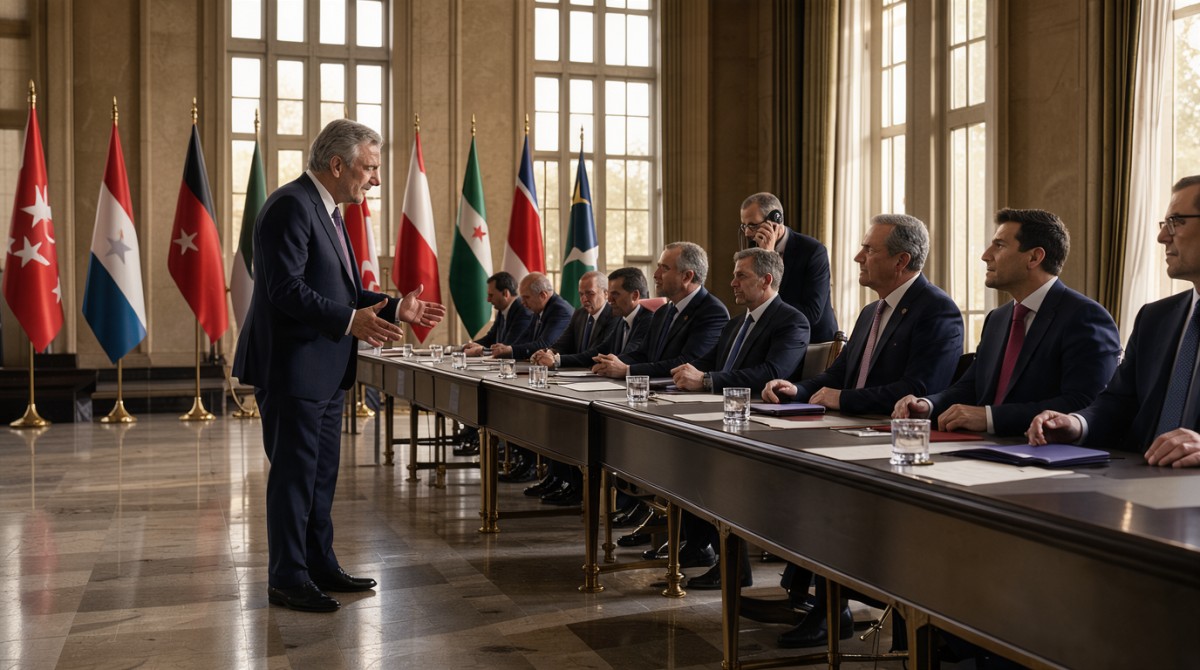
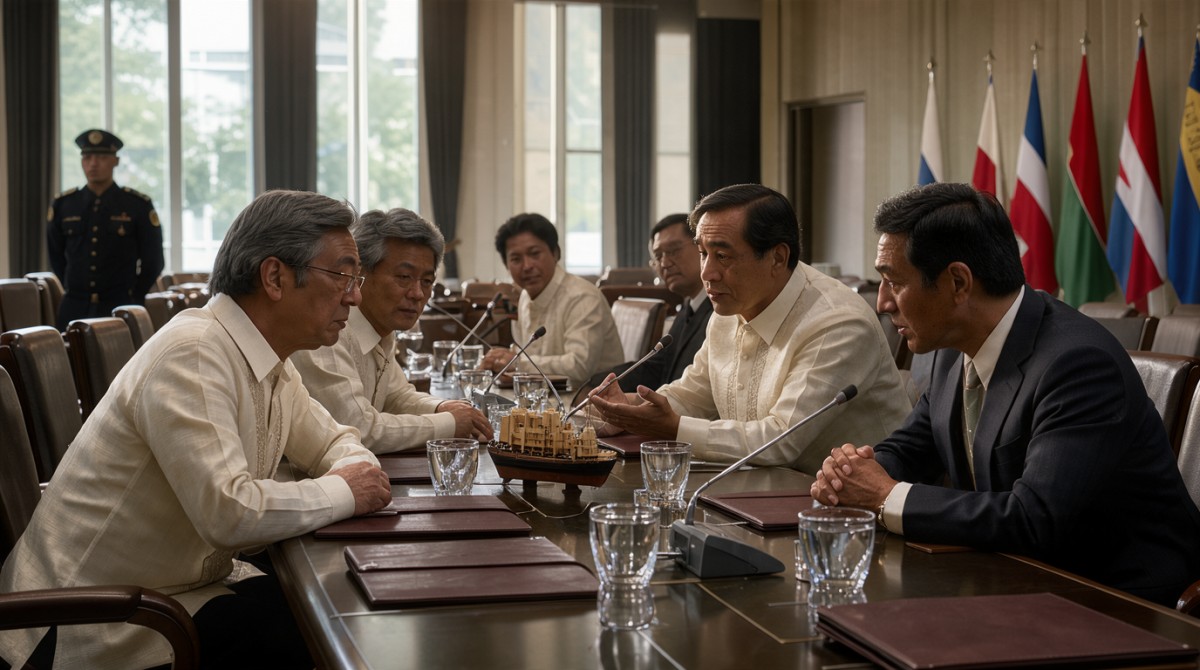
Turkey’s diplomatic posture in 2026 reflects a delicate balancing act between asserting regional leadership and navigating the turbulence of great‑power rivalry. As the Nationalist Movement Party (MHP) chair Devlet Bahçeli reminded parliamentarians on 17 November, Ankara has positioned itself as a “center of global diplomacy,” a claim that rests on its recent role at the COP31 climate summit and its broader engagement in a region scarred by protracted conflicts. This assessment offers a useful lens through which to examine Turkey’s strategic calculus amid the intersecting pressures of the Russia‑Ukraine war, the lingering Israeli‑Palestinian hostilities, and the shifting dynamics of energy security across the Middle East and the Caucasus.
Turkey’s Climate Diplomacy as a Platform for Soft Power
Bahçeli highlighted Turkey’s leadership at COP31, emphasizing the summit’s focus on electrification, clean‑energy transition, green industrialisation, circular economies, climate‑resilient cities and climate financing. By foregrounding these themes, Turkey seeks to portray itself as a forward‑looking actor capable of shaping global environmental agendas. The emphasis on “building a livable world” and the shared responsibility of individuals, institutions and states underscores a narrative that aligns Turkey’s domestic climate objectives with its international aspirations.
The MHP chair’s praise for President Recep Tayyip Erdoğan and Environment, Urbanisation and Climate Change Minister Murat Kurum further signals a coordinated domestic‑foreign policy message: Turkey’s climate commitments are not merely technical targets but instruments of diplomatic leverage. In a region where energy markets remain a central axis of power, showcasing competence in clean‑energy policy can translate into greater influence over neighbouring states grappling with the transition away from fossil fuels.
Balancing Act Amid the Russia‑Ukraine Conflict
Bahçeli warned that the Russia‑Ukraine war has “evolved into a prolonged conflict of attrition,” noting that diplomatic negotiations have yet to produce a settlement. He linked the continued fighting to negative repercussions for Turkey, implying that the war’s spill‑over effects—such as disrupted trade routes, energy price volatility and refugee flows—pose direct challenges to Ankara’s stability.
This assessment reflects a broader Turkish strategy of maintaining a degree of neutrality while safeguarding national interests. By acknowledging the war’s attritional nature, Turkish officials signal an awareness that the conflict will likely endure, necessitating a flexible foreign policy that can adapt to shifting supply‑chain realities and security calculations in Eastern Europe and the Black Sea region.
Condemnation of Israeli Operations in Gaza
In the same parliamentary session, Bahçeli condemned “continued Israeli attacks on the Gaza Strip despite a cease‑fire that took effect in 2025,” stressing that the violence continued to claim civilian lives. His remarks underscore Turkey’s longstanding rhetorical support for the Palestinian cause, a stance that resonates domestically and bolsters its image as a defender of Muslim interests.
By linking the Gaza situation to Turkey’s own security and stability, the MHP chair framed regional peace as a prerequisite for domestic tranquility. This narrative serves to justify Turkey’s diplomatic outreach to other Muslim‑majority states and to reinforce its role as a mediator in the broader Middle‑Eastern conflict matrix, even as the cease‑fire remains fragile.
The “Terror‑Free Türkiye” Initiative and Domestic Cohesion
Bahçeli described the “terror‑free Türkiye” initiative, launched in late 2024, as a strategic response to “changing global geopolitical realities.” He portrayed the programme as a long‑term vision aimed at strengthening national unity and ensuring stability amid an “increasingly uncertain international environment.” The initiative has, according to the MHP chair, garnered broad public acceptance and political support, while opponents are accused of offering “superficial assessments.”
This domestic security drive dovetails with Turkey’s external diplomatic posture. By projecting an image of internal cohesion, Ankara seeks to enhance its credibility on the international stage, arguing that a stable, terror‑free homeland is better positioned to contribute constructively to regional peace processes in the Middle East, the Caucasus and Eastern Europe.
Geopolitical Realities in the Middle East, Caucasus and Eastern Europe
Bahçeli’s remarks tied Turkey’s security to the broader stability of three volatile regions: the Middle East, the Caucasus and Eastern Europe. He argued that “as long as this region…does not attain peace, it is impossible for us to live in peace and happiness.” This statement reflects a strategic perception that Turkey’s security calculus extends beyond its immediate borders, encompassing the fate of Muslim communities, historic sites and cultural heritage scattered across these areas.
In practice, this outlook translates into a diplomatic agenda that seeks to mediate conflicts, maintain dialogue with rival powers, and leverage Turkey’s geographic position as a bridge between Europe and Asia. The emphasis on “lasting peace” suggests that Ankara will continue to engage in multilateral forums, such as the OSCE and the Organization of Islamic Cooperation, to shape outcomes that align with its security interests.
Energy Security and the Climate‑Energy Nexus
The COP31 focus on clean‑energy transition dovetails with Turkey’s broader energy security concerns. While the source material does not detail specific projects, the emphasis on electrification and green industrialisation signals an intent to diversify energy sources and reduce dependence on volatile fossil‑fuel markets—particularly relevant given the disruptions caused by the Russia‑Ukraine war.
By championing climate‑resilient cities and circular economies, Turkey positions itself to attract foreign investment in renewable technologies, potentially offsetting the economic shocks of regional instability. This approach also aligns with the “terror‑free” narrative: a modern, sustainable economy can undercut the appeal of extremist groups that exploit economic grievances.
Looking Ahead: The “Century of Türkiye” Vision
Bahçeli concluded by reaffirming the MHP’s commitment to a “Century of Türkiye,” framing the nation’s diplomatic and domestic policies as part of a long‑term project to leave “a stronger Türkiye for future generations.” This vision encapsulates the twin pillars of external engagement—through climate diplomacy, balanced foreign policy, and regional peace advocacy—and internal consolidation via security initiatives and economic modernization.
In the context of 2026, the articulation of this centennial ambition serves both as a rallying call for national unity and as a strategic blueprint for navigating an increasingly multipolar world. As Turkey continues to balance its role as a bridge between East and West, its ability to translate diplomatic rhetoric into tangible outcomes will determine whether the “Century of Türkiye” remains an aspirational slogan or becomes a measurable reality.
This article was produced with AI-assisted research and editorial support. Reporting is based on the source material cited below. Sources: Daily Sabah Middle East; dailysabah.com; Global1.News (17 November 2026).
By Malik Hassan, Staff Writer
What's Your Reaction?
 Like
0
 Dislike
0
 Love
0
 Funny
0
 Wow
0
 Sad
0
 Angry
0
Middle East Correspondent at Global1.News. Based in Beirut, covering politics, conflict, energy, and society across the Middle East. Brings context and depth to a region often reduced to headlines.











Comments (0)