
Limited access: Reducing mobility issues for people with physical challenges
When Juan Sánchez, 32, slipped on a stray piece of plastic while navigating the uneven sidewalks of his hometown of Tonalá, the incident was a reminder of a daily reality for millions of Mexicans living with mobility challenges.
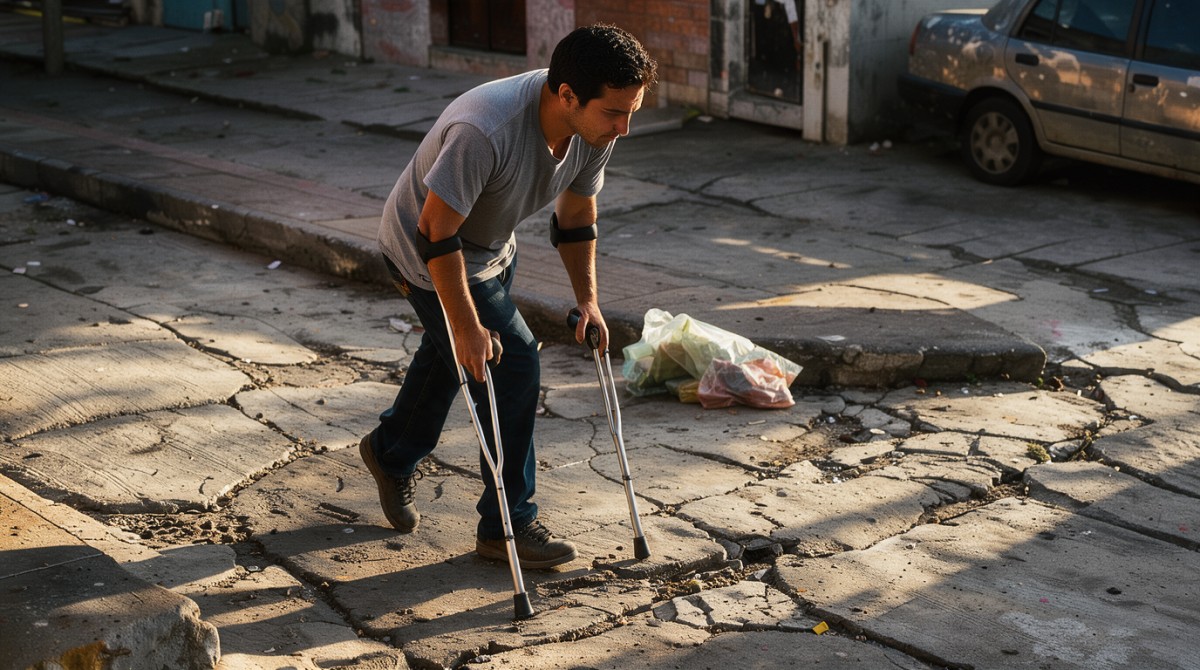
When Juan Sánchez, 32, slipped on a stray piece of plastic while navigating the uneven sidewalks of his hometown of Tonalá, the incident was a reminder of a daily reality for millions of Mexicans living with mobility challenges. Juan, who lost part of a leg in a teenage accident and now relies on crutches, says he has learned to move quickly, yet the city’s cracked tiles, narrow pathways and cobblestone streets still pose constant hazards. “I’m careful,” he tells me, “but I have slipped and fallen a few times.” His story is a window into a broader struggle: more than six million people across the nation live with some form of disability, according to the National Institute of Statistics, Geography and Informatics (INEGI), and for many, the simple act of walking from home to work remains a battle.
Constitutional Commitment to Mobility
In 2020, Mexico took a historic step by amending its constitution to recognize safe, accessible and efficient mobility as a fundamental human right. This amendment was intended to shift the nation’s perspective, treating mobility not as a charitable concession but as a precondition for exercising virtually every other right—healthcare, education, employment and community participation. The legal language echoed the equality and nondiscrimination principles later reinforced by the Supreme Court in 2026, signaling a clear policy direction: accessibility must be woven into the fabric of public life.
That same year, the Supreme Court (SCJN) issued a landmark ruling aimed at transforming public transit. The decision ordered the Mexico City Metro to double the number of seats reserved for people with disabilities, older adults and pregnant women, and to eliminate physical barriers inside stations. By mandating these changes, the Court set a precedent that other states and municipalities will be expected to follow, especially in a capital where roughly 71 % of residents rely on public transportation daily.
While the ruling represents a powerful legal tool, its impact is felt most keenly when it translates into tangible improvements on the ground. In the capital, the Metro’s commitment to “total accessibility” is a direct response to the Court’s mandate, but the broader picture includes ongoing upgrades to Metrobús, Guadalajara’s elevators and escalators, and training programs in Tlaquepaque’s hospitality sector—all aimed at creating a more inclusive urban environment.
Public Transit Gains and Gaps
Since the SCJN decision, public transit agencies have begun to incorporate universal design elements that benefit all riders, not just those with disabilities. Metrobús, for example, is adding ramps, tactile flooring and audible signals that allow users to navigate stations without assistance. Guadalajara’s focus on modernizing elevators and escalators reflects a citywide push to make its transit hubs more navigable for wheelchair users and those with crutches.
Yet the improvements within transit hubs only address part of the journey. For many, the “first mile” and “last mile”—the stretch from home to the nearest bus stop or Metro entrance—remain fraught with obstacles. Juan’s experience underscores this gap: uneven sidewalks, blocked ramps and narrow pathways can nullify the benefits of an accessible train car. The reality is that a person may board a fully accessible train only to face a treacherous walk across a cobblestone plaza to reach their final destination.
These challenges are not limited to Mexico City. Across the country, streets and sidewalks often lack the ramps, smooth surfaces and clear pathways required for independent mobility. The physical environment outside transit stations continues to be a barrier, limiting the very independence that the constitutional amendment promises.
Health and Social Services: Distance as a Barrier
The System for the Development of the Family (DIF) plays a crucial role in supporting people with disabilities, distributing free assistive devices such as wheelchairs, walkers and canes, and offering rehabilitation therapy. However, accessing DIF offices often entails long trips. Juan explains that the nearest center for disability paperwork is about an hour’s drive or roughly two hours by public transit. For someone who must rely on crutches or a wheelchair, such a journey can be exhausting, time‑consuming and sometimes impossible without a companion.
This distance creates a cascading effect: a family member may need to take time off work to accompany a loved one, or the individual may forgo essential services altogether. The result is a widening gap between policy intent and lived experience, where the promise of accessible services is undermined by geographic inaccessibility.
Dr. Rigoberto Antonio Cisneros García, co‑author of the “Proposal for Addressing Motor Disabilities in Mexico,” emphasizes that the problem cannot be solved from a desk alone. He calls for a collaborative network that complements public services, bringing assistance closer to communities and reducing the travel burden on people with mobility impairments.
Infrastructure Shortfalls: Sidewalks and Streets
Sidewalks across Mexican cities often suffer from neglect. Uneven paving, narrow widths, and frequent blockages by parked vehicles or street vendors create a hostile environment for anyone using crutches, a wheelchair or a cane. In many neighborhoods, ramps are absent, and when they exist, they are frequently obstructed by trash, market stalls or construction equipment.
These conditions are more than an inconvenience; they are a violation of the constitutional right to safe mobility. When a person cannot trust the ground beneath their feet, their ability to participate in daily life—going to work, visiting a doctor, attending school—diminishes sharply. The physical barriers thus translate into social and economic exclusion.
Experts argue that addressing sidewalk quality should be a priority for municipal governments. The “Proposal for Addressing Motor Disabilities” highlights the need for a national network of accessible pathways, suggesting that uniform standards for sidewalk width, surface smoothness and ramp placement could dramatically improve independence for millions.
Economic Implications of Inaccessibility
When mobility barriers prevent people from reaching workplaces or markets, the economic cost extends beyond the individual. Families may lose income if a caregiver must accompany a disabled relative, and employers miss out on a pool of capable workers who could contribute to productivity if given accessible workplaces and transportation. The ripple effect touches local economies, especially in smaller towns where informal labor markets dominate.
Moreover, the cost of accidents caused by unsafe sidewalks—medical expenses, lost work days and long‑term disability—places additional strain on public health systems. While the article does not provide specific figures, the qualitative impact is clear: improving sidewalk safety could reduce injury rates and associated economic burdens.
Investing in universal design, therefore, is not merely a moral imperative but an economic one. Upgrading public spaces to be barrier‑free can unlock the labor potential of millions, fostering a more inclusive and productive society.
Community Action and Cultural Shifts
Beyond legislation and infrastructure, cultural attitudes play a pivotal role. Juan notes that people often block ramps and sidewalks, either unintentionally or out of indifference. Changing these behaviors requires community education and a shift in social norms, encouraging citizens to view accessibility as a shared responsibility. In Mexican culture, concepts like “colonia” and “tianguis” illustrate how public spaces are central to daily life; making these spaces inclusive honors that communal spirit.
Local initiatives, such as the training of hospitality workers in Tlaquepaque for the World Cup, demonstrate how targeted programs can raise awareness and improve service standards. When businesses and public institutions prioritize inclusive design, they set examples that ripple through neighborhoods and markets.
Grassroots advocacy, supported by organizations like the Mexican Foundation for Health (Funsalud) and academic centers such as the Centro Universitario de Ciencias de la Salud (CUCS), can amplify the voices of people with disabilities, ensuring that policy decisions reflect lived realities.
Path Forward: From Rulings to Realities
The 2026 Supreme Court ruling and the 2020 constitutional amendment have laid a strong legal foundation for accessibility in Mexico. Yet the journey from courtrooms to cobblestone streets is far from complete. To honor the promise of safe, accessible mobility, the nation must adopt a holistic approach that addresses the entire travel chain—from the home front door to the final destination.
Key steps include: enforcing uniform sidewalk standards nationwide; expanding the geographic reach of DIF and other service centers; integrating universal design into new public works; and fostering community education campaigns that discourage obstruction of ramps and pathways. Coordination between federal, state and municipal authorities, alongside civil society, will be essential to translate legal mandates into everyday reality.
For Juan Sánchez and the millions who share his challenges, each improvement—whether a smoother sidewalk, a ramp free of trash, or a seat reserved on a crowded train—represents a step toward dignity and independence. As Mexico continues to build its inclusive future, the true measure of progress will be seen in the quiet confidence of a person on crutches who can walk his town without fear of a sudden slip.
This article was produced with AI-assisted research and editorial support. Reporting is based on the source material cited below. Sources: Mexico News Daily; mexiconewsdaily.com; Global1.News (16 November 2026).
By Rosa Martinez, Staff Writer
What's Your Reaction?
 Like
0
 Dislike
0
 Love
0
 Funny
0
 Wow
0
 Sad
0
 Angry
0
Latin America/Andes Correspondent at Global1.News. Based in Bogota, covering politics, environment, energy, and social movements across the Andean region. Passionate about environmental journalism and communities protecting their land.














Comments (0)