
Jojo the gorilla has spent his life alone. Can he finally find a companion?
Jojo, a male western lowland gorilla rescued from a private zoo in Gabon, has spent more than a decade living alone in a sanctuary. From infant capture to solitary captivity In 2015, when Jojo was less than a year old, poachers snatched him from the forest while he clung to his mother.
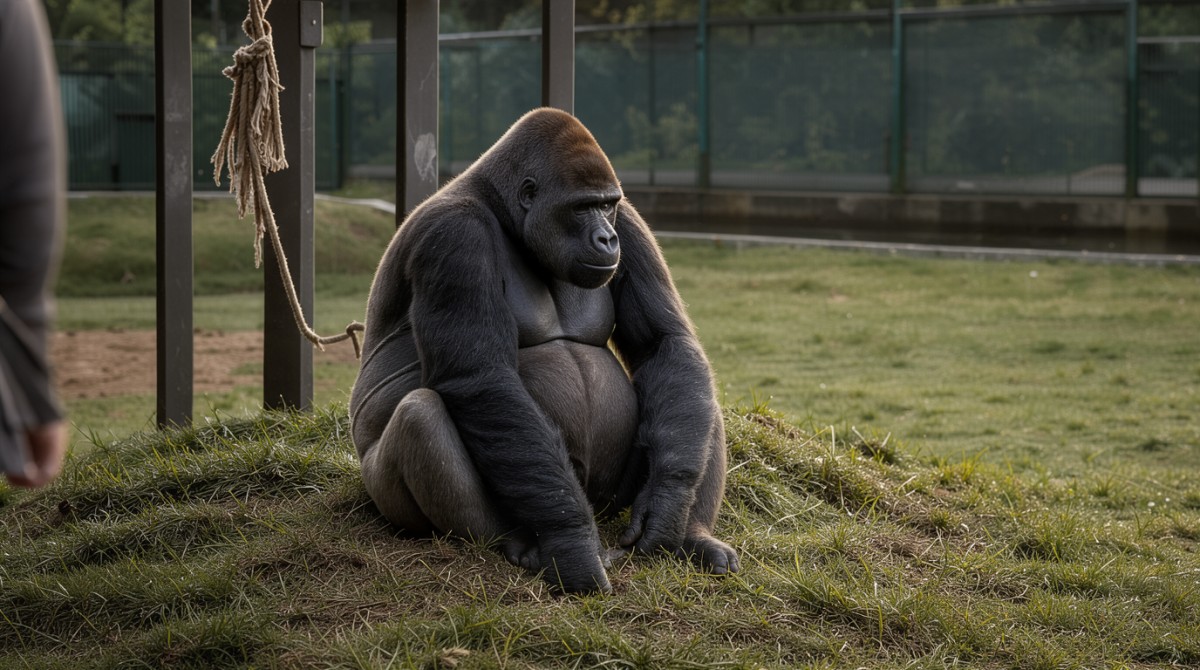
Jojo, a male western lowland gorilla rescued from a private zoo in Gabon, has spent more than a decade living alone in a sanctuary. His story, first reported in November 2026, highlights the deep psychological wounds inflicted by the illegal primate trade and raises difficult questions about how best to give a traumatized great ape a chance at companionship.
From infant capture to solitary captivity
In 2015, when Jojo was less than a year old, poachers snatched him from the forest while he clung to his mother. His family was killed, and the infant was sold to a private zoo in Gabon. There, he spent almost his entire childhood in a tiny cage on public display, isolated from any other gorilla. The BBC notes that most gorillas spend the first fourteen to nineteen years of their lives within an embedded family unit, learning social skills that are essential for survival. Jojo missed that critical period, growing up without the chance to sit quietly with a peer or learn the nuanced vocalisations that bind gorilla groups together.
By the time he was eleven, Jojo stepped onto grass for the first time, a tentative moment that marked the end of his early captivity. Yet the isolation persisted. Even after his transfer to the Lekedi Foundation sanctuary, he remains the only gorilla in his enclosure, a circumstance that has left a profound imprint on his behaviour and physiology.
Signs of trauma and chronic stress
Researchers studying Jojo have observed clear indicators of long‑term trauma. Professor Gillian Forrester of the University of Sussex, who monitors Jojo as part of a broader investigation into great‑ape psychology, reports that the gorilla exhibits a “chronically cold nose,” captured with a thermal camera. This “nasal dip” reflects a malfunctioning stress response, where blood flow to the nose fails to recover after the typical surge to the eyes and ears that accompanies heightened alertness.
Such physiological stress is mirrored in Jojo’s vocal behaviour. When women he knows visit his enclosure and then depart, he emits calls normally used by silverback males to summon females in the wild, according to sanctuary manager Éric Willaume. The keeper Maxe Anaclet Makaba notes that Jojo “craves human interaction,” even gathering leaves to trade for treats, a behaviour that underscores his yearning for social connection.
The broader context of primate trafficking
Jojo’s plight is part of a larger, distressing picture. The Pan African Sanctuary Alliance estimates that more than six thousand African primates were bought or sold in the global trade between 2000 and 2023. Thousands more are trafficked illegally for exotic pets, bushmeat, or traditional medicine. The loss of family bonds, as seen in Jojo’s case, is a common consequence of this illicit market, leaving many great apes with deep psychological scars.
Conservationist Tony King of the Aspinall Foundation explains that when infant great apes are taken from their groups, they often lose the “will to live.” He describes a look in their eyes where “the light goes out,” a sentiment echoed by many who have worked with rescued apes. The trauma can be so severe that even after rescue, the animals struggle to form new social bonds.
Why companionship matters for gorillas
Gorilla societies are built on close, long‑term relationships. Dr Robin Morrison of the University of Zurich points out that female mountain gorillas will actively seek out known companions even after years apart, underscoring the importance of social memory. Dr Katie Fawcett of the Grace Center adds that forming social relationships is essential for any gorilla to be considered for release into the wild, the ultimate goal for many sanctuaries.
For Jojo, who has never had the chance to sit quietly with another gorilla, the absence of companionship is more than a missing pastime; it is a barrier to psychological healing and future reintegration. Professor Forrester argues that “having another individual to share his life with would be so healing,” suggesting that a companion could help Jojo process grief and reduce chronic stress.
The challenges of finding a suitable partner
Introducing a new gorilla to Jojo is far from straightforward. The process of moving captive gorillas across borders is governed by international rules designed primarily for breeding programmes, not for therapeutic companionship or re‑introduction. Forrester notes that “there aren’t clear processes in place to do these kinds of trans‑locations,” and her outreach to accredited zoos has so far yielded no progress.
Even if a suitable gorilla were identified, the introduction would need to be gradual and highly controlled. Standard practice involves scent‑transfer—allowing each animal to become familiar with the other’s scent through objects—before any visual contact. Such cautious steps are necessary to avoid triggering further stress, especially in an animal like Jojo whose stress response is already compromised.
Is it too late for Jojo?
Jojo is probably in his twenties, an age at which many male western lowland gorillas become solitary by nature. Morrison explains that about a third of adult male gorillas live alone after dispersing from their natal groups. However, Jojo’s solitude is not a natural choice but a forced condition stemming from early trauma.
King cautions that introducing a new companion could paradoxically increase Jojo’s stress. He suggests that Jojo may be “best where he is,” given the risk that a forced social interaction could destabilise his already fragile emotional state. The debate reflects a broader tension in conservation: balancing the need for social rehabilitation against the potential for additional harm.
Looking ahead: what Jojo’s story tells us
Jojo’s case underscores the lasting impact of the illegal primate trade on individual animals and on the broader conservation agenda. It illustrates how early separation from family can produce lifelong psychological wounds that are not easily remedied, even with the best intentions of caretakers.
For the Lekedi Foundation and the scientists involved, the search for a companion remains a hopeful, if uncertain, endeavour. Their work highlights the need for clearer international protocols that address not only breeding but also the welfare of solitary rescued great apes. As Jojo continues to call out for connection, his story serves as a reminder that the fight against wildlife trafficking must include not just the rescue of bodies, but the healing of minds.
This article was produced with AI-assisted research and editorial support. Reporting is based on the source material cited below. Sources: BBC News Africa; bbc.co.uk; Global1.News (16 November 2026).
By Amara Diop, Staff Writer
What's Your Reaction?
 Like
0
 Dislike
0
 Love
0
 Funny
0
 Wow
0
 Sad
0
 Angry
0

West Africa/Sahel Correspondent at Global1.News. Dakar-based journalist covering politics, security, climate, and development across Francophone and Anglophone West Africa. Tells the stories of a region undergoing profound transformation.














Comments (0)