
Pope Leo speaks of community 'suffering' on visit to remote Andes town
When Pope Leo XIV touched down in the remote Andean village of Santa Cruz de Succhabamba, the scene was both intimate and astonishingly crowded. From bishop to pontiff: a personal pilgrimage Leo’s ties to Santa Cruz run deeper than a routine papal stop.
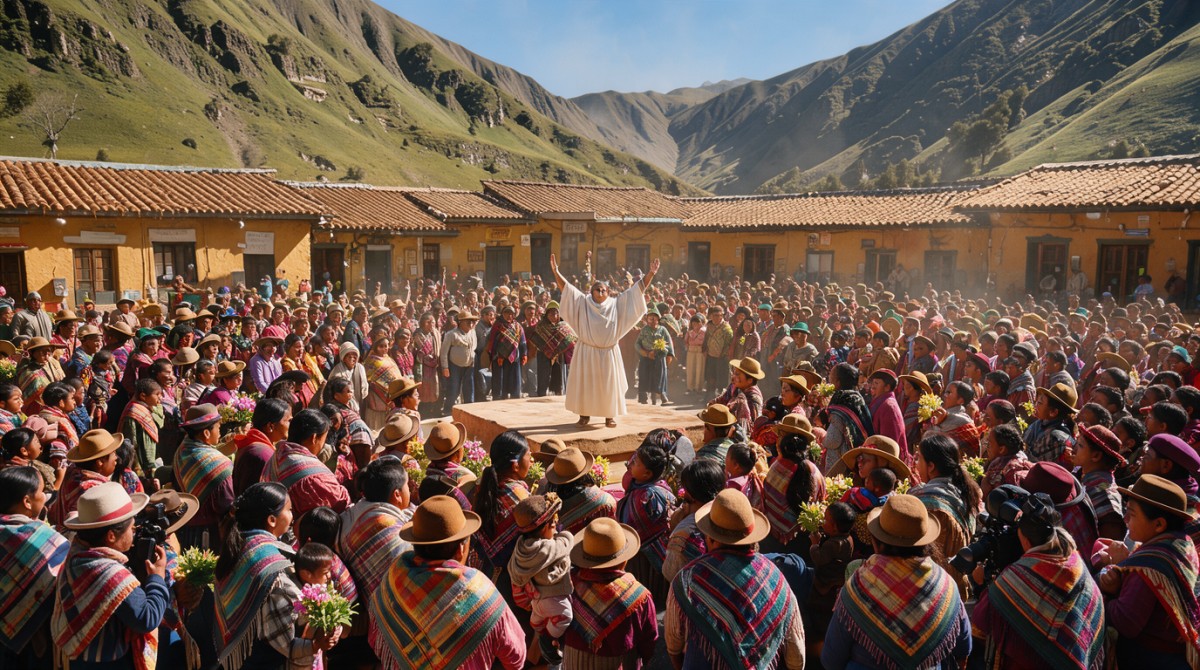
When Pope Leo XIV touched down in the remote Andean village of Santa Cruz de Succhabamba, the scene was both intimate and astonishingly crowded. A town of roughly six thousand residents swelled to a gathering of about twenty thousand, a figure the Vatican released after the pontiff’s arrival. The mass of faces—farmers, schoolchildren, elders, and migrants returning for a glimpse of their former bishop—underscored a profound paradox: a community grappling with depopulation and poverty yet eager to welcome a leader who once walked its dusty lanes as a local shepherd.
From bishop to pontiff: a personal pilgrimage
Leo’s ties to Santa Cruz run deeper than a routine papal stop. From 2015 to 2023 he served as bishop of the Diocese of Chiclayo, a role that placed him squarely in the lives of the town’s people. During those eight years he visited the village several times each year, preaching in the same parish that now welcomed him in a popemobile. The familiarity was evident when Rev. Kevin Noriega, ordained by the then‑bishop in 2018, described the visit as bringing “enormous hope and emotion.” For many, the Pope was no distant figurehead but a former “Father Robert,” a nickname that still resonates in the local memory.
Now, at seventy‑one, Leo reflected on that continuity. He told the crowd that the journey felt “like a very big dream that the Lord has allowed this servant to come here.” The sentiment was not merely ceremonial; it highlighted a rare continuity in a region where religious leaders often rotate without lasting connection. His return by helicopter, the cheering reception, and the subsequent ride in a popemobile were symbolic gestures that reinforced a bond forged over a decade of shared hardships.
The stark reality of migration and poverty
While the Pope’s presence sparked jubilation, the underlying statistics he cited painted a sobering picture. The Cajamarca region, home to Santa Cruz, bears the highest poverty rate in Peru—over forty percent of its population lives in poverty, according to official data. This figure eclipses national averages and signals a deep structural imbalance that has persisted despite decades of development programs.
Compounding the poverty crisis is a massive outflow of people. Cajamarca has lost the highest number of residents to internal migration in the country, with 729,000 individuals born there now living elsewhere in Peru. The Pope’s remarks on “the suffering of those who are forced to leave their homeland in search of a better future” directly referenced this demographic drain. The migration is not merely a statistic; it represents families torn apart, agricultural labor shortages, and the erosion of cultural continuity in remote highland communities.
Demographic decline and the future of Andean villages
Leo’s sermon also touched on a quieter, yet equally alarming trend: declining birth rates that are “emptying villages.” In a region where agriculture remains the mainstay, a shrinking population threatens the very viability of small towns like Santa Cruz. Fewer children mean fewer hands to tend terraces, less demand for local schools, and a gradual loss of communal rituals that have defined Andean life for centuries.
The Pope’s emphasis on “never losing heart” was a call to resilience, but it also hinted at the need for systemic change. Without interventions that address both the economic pull factors driving migration and the social incentives for families to stay, the demographic decline may become irreversible, leaving ghost towns in the highlands where vibrant cultures once thrived.
Health inequities highlighted by personal experience
Just weeks before his Latin American tour, Leo underwent surgery to remove part of his right lung after a cancerous lump was discovered during routine checks. The personal brush with illness sharpened his awareness of health disparities across the continent. He remarked that his own care made him think of those who “lack the means to obtain a timely diagnosis” or receive treatment for health conditions.
In remote Andean settings, medical infrastructure is sparse. Villagers often travel days to reach the nearest clinic, and diagnostic tools are limited. The Pope’s own health narrative, juxtaposed with the lived reality of his audience, underscored a broader critique: that access to basic health services remains a privilege rather than a right for many Peruvians, especially in mountainous provinces where geography compounds inequality.
The symbolism of the popemobile and helicopter arrival
The logistics of the Pope’s visit—arrival by helicopter and a subsequent tour in a popemobile—were more than mere transportation choices. In a region where modern connectivity is limited, the sight of a helicopter landing on a highland plateau signaled a bridge between remote life and global attention. The popemobile, a vehicle traditionally used to protect the pontiff while allowing public visibility, became a moving platform for collective hope.
For the locals, the spectacle reinforced a sense that their struggles were being witnessed on the world stage. The visual of the Pope waving from the vehicle, surrounded by cheering crowds, turned a simple pastoral visit into a potent political statement: that even the most isolated corners of Peru deserve recognition and solidarity.
Latin America tour: a broader narrative
Pope Leo’s twelve‑day journey across Latin America began in Peru, the longest stop on his inaugural tour after his election in May 2025. The itinerary included Argentina and Uruguay before returning to Peru for the Andean and Amazonian phases. The Peruvian leg carries particular weight because the pontiff was born in the United States but became a naturalized Peruvian citizen in 2015, after living in the country for extended periods between 1985 and 2023.
This personal history deepens the symbolic resonance of his visit. By choosing to start his Latin American outreach in a region marked by poverty, migration, and health challenges, Leo signals a priority on addressing the most pressing social inequities. His presence in Santa Cruz, a town he once shepherded as a bishop, frames the tour as a homecoming as much as a diplomatic pilgrimage.
What the visit means for Santa Cruz and beyond
The immediate impact of the Pope’s visit is palpable: a surge of “enormous hope and emotion” among residents, a renewed sense of visibility, and a brief reprieve from the daily grind of hardship. Yet the longer‑term implications hinge on whether the attention translates into concrete policy actions. The Vatican’s statements on poverty and migration may pressure Peruvian authorities to allocate more resources to Cajamarca, improve rural health services, and develop programs that encourage young people to stay in their hometowns.
For Global1.News readers, the scene in Santa Cruz offers a microcosm of the broader challenges facing the Andean highlands. It is a reminder that behind the headlines of papal tours and diplomatic gestures lie real communities wrestling with demographic decline, economic marginalization, and health inequities. As the Pope departs for Cusco and the Amazon, the echoes of his words—about suffering, hope, and the need to “never lose heart”—remain a call to action for both national leaders and international observers who claim to care about Latin America’s most vulnerable populations.
This article was produced with AI-assisted research and editorial support. Reporting is based on the source material cited below. Sources: BBC News Latin America; bbc.co.uk; Global1.News (16 November 2026).
By Elena Vasquez, Staff Writer
What's Your Reaction?
 Like
0
 Dislike
0
 Love
0
 Funny
0
 Wow
0
 Sad
0
 Angry
0

Latin America Correspondent at Global1.News. Based in Mexico City, covering politics, economics, energy, and culture across the region. Brings an on-the-ground perspective to stories spanning from the Rio Grande to Patagonia.












Comments (0)