
Labor Groups Challenge Court Bid to Block P85 NCR Wage Hike
Labor groups asked a Navotas court to dismiss a petition by fishing companies seeking to stop the P85 daily minimum wage hike in NCR. FFW and NAGKAISA filed an Urgent Motion to Intervene, arguing wage-setting belongs to wage boards, not courts.
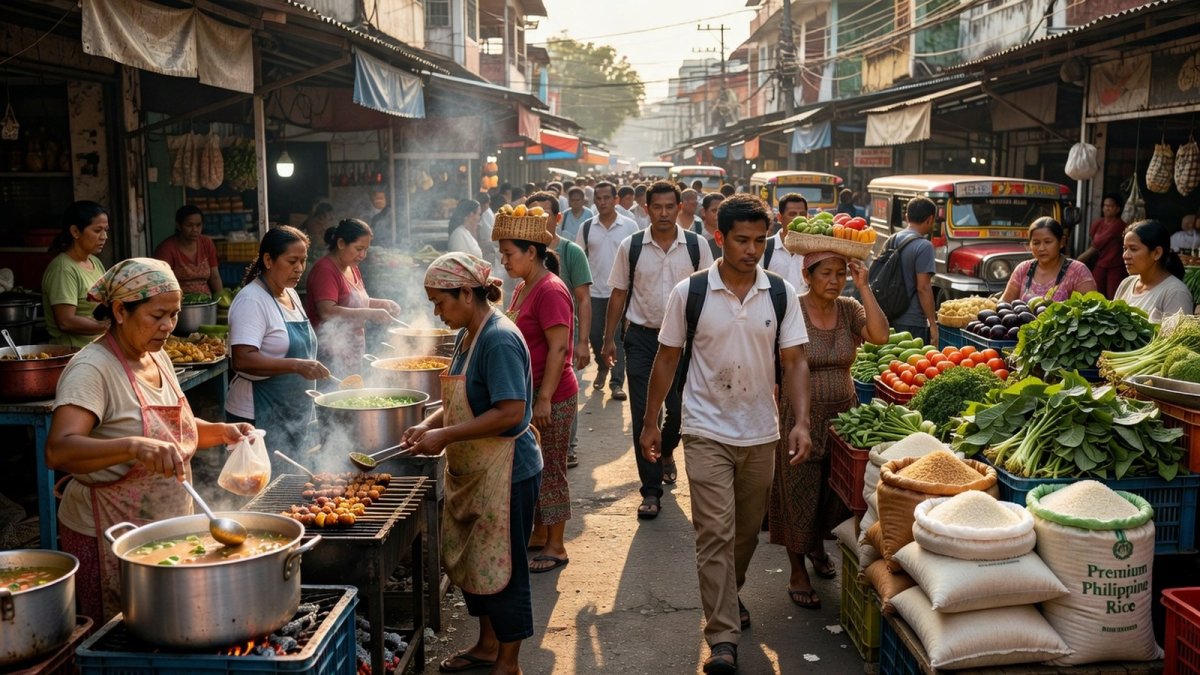
Labor organizations are taking their fight to the courts to defend the P85 daily minimum wage increase for workers in the National Capital Region, arguing that fishing companies cannot use judicial intervention to override a wage order issued through the proper tripartite process. The move comes after a temporary restraining order from one regional trial court halted the first tranche of the increase, leaving millions of minimum wage earners without the expected adjustment announced by the executive branch. For ordinary Filipino families already stretched by daily expenses, the outcome of this legal battle could determine whether the wage hike reaches their households or remains stalled in litigation.
The Court Battle Over the P85 Wage Hike
The Federation of Free Workers and leaders of the NAGKAISA Labor Coalition filed an Urgent Motion for Leave to Intervene with an attached Opposition-in-Intervention before the RTC Branch 287 in Navotas. The filing directly responds to a petition by fishing companies seeking to overturn NCR Wage Order No. 27. An earlier order from RTC Branch 152 in Pasig had already issued a temporary restraining order that stopped implementation of the initial P60 tranche of the wage increase.
FFW president Sonny Matula personally delivered printed copies of the electronically filed pleading to the Navotas Hall of Justice. Court personnel were unavailable because government work had been suspended due to Typhoon Maymay, yet the labor leaders completed the submission to ensure their position entered the record. The case now sits before RTC Branch 287 in Navotas for further proceedings.
Why Workers Are Intervening
Thirteen labor organizations joined the intervention, asserting they are real parties in interest because several participated in the proceedings before the Regional Tripartite Wages and Productivity Board-NCR that produced NCR Wage Order No. 27. The groups noted they were never named as parties in the fishing companies' petition despite their direct stake in the outcome. They emphasized that the decision could affect millions of workers expected to receive the wage adjustment.
Matula stated that the case concerns more than legal procedure. It involves protecting the wages and livelihood of millions of workers whose voices deserve to be heard before any court decides their fate. The intervention was prepared by Matula and other lawyers from NAGKAISA to challenge the petition seeking to overturn the wage order.
The intervention filed by the thirteen labor organizations brings the lived experiences of ordinary workers directly into the court record. By stepping forward as real parties in interest, groups that helped shape NCR Wage Order No. 27 ensure that the voices of factory hands, security guards, and market vendors are no longer sidelined while fishing companies seek to overturn the wage adjustment through judicial channels. This step transforms an otherwise distant legal proceeding into one that reflects the daily struggles of minimum wage families across the National Capital Region.
Wage Boards, Not Courts: The Legal Argument
The labor groups argued that alleged wage distortion issues must follow the mechanisms outlined in Article 124 of the Labor Code, which include grievance machinery, voluntary arbitration, negotiations, conciliation before the National Conciliation and Mediation Board, and compulsory arbitration before the National Labor Relations Commission when necessary. They maintained that a regional trial court lacks jurisdiction to resolve these matters in the first instance.
NAGKAISA further pointed to Article 126 of the Labor Code, which prohibits courts from issuing temporary restraining orders or injunctions against proceedings before the NWPC and regional wage boards. The coalition asserted that the petition attempts to bypass the wage-fixing system established by Congress. Matula noted that a court without jurisdiction has only one lawful authority-to dismiss the petition.
Articles 124 and 126 of the Labor Code lay out a clear path that keeps wage decisions in the hands of those closest to the workplace. Article 124 directs disputes over wage distortions through grievance machinery, voluntary arbitration, negotiations, and, when needed, the National Conciliation and Mediation Board or National Labor Relations Commission. This sequence lets workers, employers, and government representatives resolve issues together in a specialized setting rather than in a general courtroom unfamiliar with daily labor realities.
Article 126 reinforces this by barring courts from issuing temporary restraining orders against wage board proceedings. When RTC Branch 152 in Pasig issued its TRO, it stepped outside the system Congress designed, disrupting the tripartite balance that produced NCR Wage Order No. 27. Labor groups argue that such intervention undermines the very process meant to protect ordinary Filipinos from abrupt changes decided without their input.
By returning the matter to the proper channels, the courts would honor the constitutional emphasis on social justice and allow the wage order to move forward through established labor mechanisms that already include worker representation.
What the TRO Means for Workers
Workers had anticipated receiving the increase after it was announced by President Marcos and then labor secretary Bienvenido Laguesma. The TRO from RTC Branch 152 in Pasig prevented the initial P60 tranche from taking effect, leaving the adjustment unimplemented. Matula explained that the suspension affected not only workers' income but also the execution of the wage policy issued by the executive branch.
The labor coalition acknowledged the judiciary's role in upholding the rule of law while stressing that wage determination remains a specialized function assigned to tripartite wage boards, with review authority lodged with the NWPC. They urged courts to respect the jurisdiction set under the Labor Code and the constitutional protections for labor and social justice. A protest by Bukluran ng Manggagawang Pilipino, Oriang and Workers' Federation outside the labor department's main office in Intramuros on August 3 highlighted the frustration over the delay.
The temporary restraining order from RTC Branch 152 in Pasig has kept the first P60 tranche of the wage hike out of workers' hands even after President Marcos and then labor secretary Bienvenido Laguesma announced the adjustment. "When the President and the labor secretary announced the P85 wage hike, workers hoped that they would soon receive the increase. However, due to the TRO, the initial P60 tranche has remained unimplemented," Matula said. This pause leaves families waiting for relief that was meant to ease the daily squeeze of rising costs for food, transportation, and household needs.
For a minimum wage earner, that P60 represents more than a number on a pay slip. It can stretch a day's budget for pamasahe to and from the job site, a simple baon for lunch, or a few extra items at the neighborhood sari-sari store. When the increase stays frozen, these small margins disappear, forcing families to rely even more heavily on shared resources and the quiet solidarity of kapitbahay who help one another through tight weeks.
Human Impact: The Stakes for Filipino Families
Minimum wage earners in the NCR, including those in food service, security, factories, and market vending, stand to gain from the P60 to P85 daily adjustment that has been held up. For families relying on these wages to cover food, transportation, and household needs, the continued delay means postponed relief amid ongoing price pressures. Sari-sari store owners and jeepney drivers, who often depend on steady income from working-class customers, also feel the ripple effects when take-home pay stays flat.
Across the National Capital Region, the factory worker finishing a shift, the security guard standing watch through the night, the market vendor arranging goods before dawn, and the service crew member clearing tables all share the same hope that an extra P60 to P85 each day will reach their pockets. That modest lift can mean one more meal on the table, a bit more for the children's school needs, or simply fewer anxious calculations at the end of the week when bills arrive.
The delay touches the everyday rhythm of community life where sari-sari store owners notice slower sales from neighbors whose take-home pay has not moved, and jeepney drivers feel the difference when passengers count their coins more carefully. These ripple effects travel through kapitbahay networks that already practice bayanihan to stretch limited resources, yet the absence of the wage adjustment adds pressure that no amount of shared effort can fully replace.
The case before RTC Branch 287 in Navotas is therefore not an abstract contest over jurisdiction. It centers on whether the family budget of ordinary wage earners will finally receive the adjustment that emerged from tripartite talks or remain stalled while litigation continues. The labor groups' intervention keeps that human stake visible in every filing and hearing.
What Happens Next
The case remains pending before RTC Branch 287 in Navotas, where the labor groups' motion to intervene and their opposition will be considered. The organizations continue to call on the courts to respect the Labor Code's allocation of jurisdiction to wage boards and to uphold constitutional safeguards for labor and social justice. This dispute carries implications for the nationwide wage-fixing system, as similar challenges could test the boundaries between judicial review and the specialized role of tripartite bodies.
By Bella Reyes, Staff Writer Labor groups asked a Navotas court to dismiss a petition by fishing companies seeking to stop the P85 daily minimum wage hike in NCR. FFW and NAGKAISA filed an Urgent Motion to Intervene, arguing wage-setting belongs to wage boards, not courts.
This article was produced with AI-assisted research and editorial support. Reporting is based on sources cited in the article.
What's Your Reaction?
 Like
0
Like
0
 Dislike
0
Dislike
0
 Love
0
Love
0
 Funny
0
Funny
0
 Wow
0
Wow
0
 Sad
0
Sad
0
 Angry
0
Angry
0

Philippines/Southeast Asia Correspondent at Global1.News. Manila-based journalist covering Philippine politics, environment, maritime security, and social issues. Passionate about marine conservation and the communities protecting the Philippines' natural heritage.














Comments (0)