
Ukraine War Turns Black Sea Into World’s Deadliest Shipping Lane – WSJ
The Black Sea has become the world’s deadliest shipping lane this year, a stark illustration of how the Ukraine war has spilled into maritime commerce.
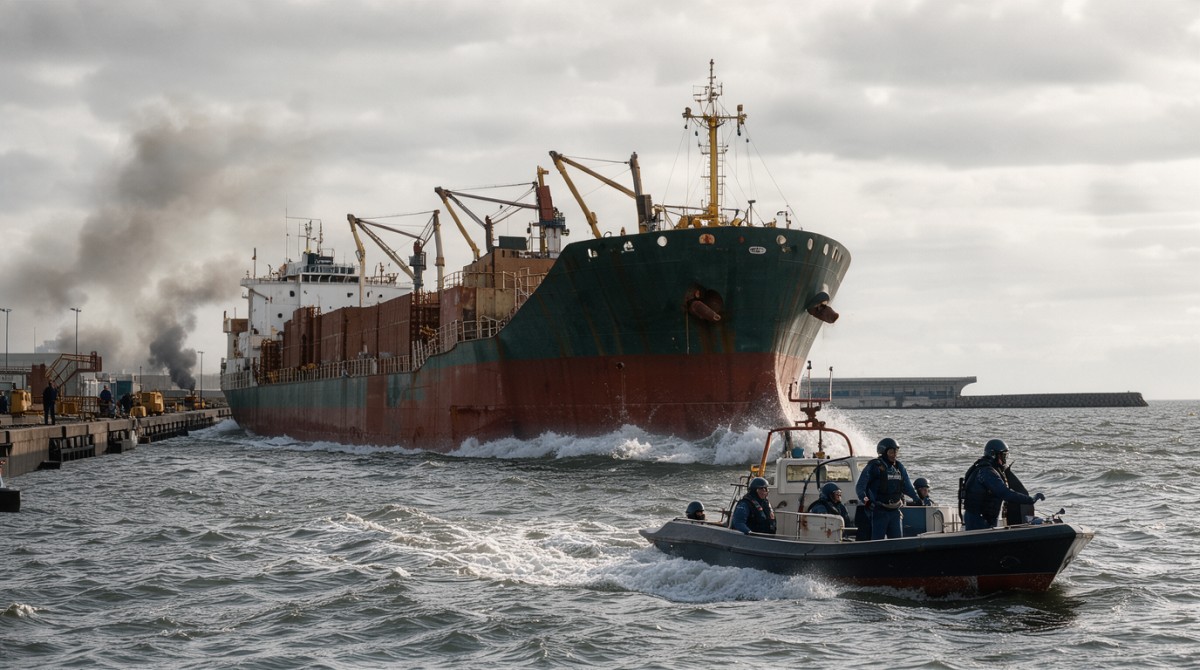
The Black Sea has become the world’s deadliest shipping lane this year, a stark illustration of how the Ukraine war has spilled into maritime commerce. According to the Wall Street Journal, more than 30 seafarers have been killed and over 20 remain missing as Russian and Ukrainian forces exchange strikes on vessels, ports and offshore facilities. The surge in attacks, recorded by maritime‑security firm Ambrey, underscores a widening conflict that now threatens the safety of commercial navigation across a region that was once a vital conduit for grain, energy and trade.
Scale of the threat: numbers that tell a grim story
Ambrey logged more than 300 attacks in the Black Sea during 2026, a figure that dwarfs the roughly 130 incidents reported by the International Maritime Organization in the Strait of Hormuz and other Middle‑East hotspots since the U.S.–Iran confrontation began in February. The disparity is stark: while the Hormuz corridor saw 25 seafarer deaths, the Black Sea has already claimed over 30 lives, with many more injuries and disappearances.
These statistics, drawn from the Turkish Shipowners’ Association, the ship‑tracking service MarineTraffic and local authorities, reveal a conflict that has rapidly escalated from land‑based combat to a full‑scale maritime campaign. The data also indicate that nearly half of the recorded attacks resulted in crew members being killed, injured or missing, highlighting the lethal intensity of the engagements.
Ukrainian drone activity: a new dimension of naval warfare
Ukrainian forces have increasingly turned to unmanned aerial systems to disrupt Russian shipping. Drones have struck vessels, ports and terminals, extending the battlefield to the open sea. In October alone, eight merchant ships were hit by drones while navigating Romanian or Bulgarian territorial waters, or in the adjacent maritime zones. Two additional vessels were damaged within Bulgaria’s exclusive economic zone, and a further ship was struck at the Ukrainian Danube port of Izmail after sailing along the coasts of Bulgaria and Romania.
The pattern of drone attacks suggests a deliberate strategy to pressure Russian logistics and to force merchant traffic away from contested ports such as Odesa. By targeting ships in the waters of NATO members, Ukraine also raises the specter of the conflict spilling beyond the immediate war zone, compelling the alliance to confront a new set of security challenges.
Russian retaliation and the impact on commercial routes
Russian strikes have compelled merchant vessels to avoid ports near Odesa, effectively creating a maritime exclusion zone around one of Ukraine’s key export hubs. The Kremlin’s response to Ukrainian drone activity has been to intensify attacks on shipping lanes, further constricting the flow of goods. Bulgarian Prime Minister Rumen Radev, after summoning Russian Ambassador Eleonora Mitrofanova, asserted that the circumstances of recent strikes point to Russian involvement and dismissed the notion that Ukraine would target its own crews.
These dynamics have forced commercial operators to reroute, often hugging coastlines for safety. Ship‑tracking data show a sharp thinning of merchant traffic across the northern and central Black Sea in October, with the majority of remaining vessels staying close to shore—a clear indication of heightened risk perception among shipping companies.
Decline in traffic through the Bosphorus: a measurable economic shock
Global Fishing Watch data, cited by the Wall Street Journal, reveal a 41 % drop in the number of ships entering the Black Sea via the Bosphorus in October compared with the same month in 2025. Total transits in both directions fell 38 % over the same period. This contraction reflects not only the immediate danger posed by attacks but also a broader reluctance among carriers to expose their crews and cargoes to a volatile environment.
The reduction in traffic carries significant economic implications. The Black Sea corridor is a critical artery for grain exports, energy shipments and regional trade. A sustained decline could exacerbate global food security concerns and disrupt supply chains that depend on the timely movement of commodities through the Turkish strait.
International ramifications: NATO’s exposure to spillover
Drone strikes near Romania and Bulgaria have heightened NATO’s exposure to the conflict. While the attacks have not yet resulted in direct casualties among NATO forces, the incidents underscore the potential for the war to breach the alliance’s maritime borders. The presence of hostile actions within the exclusive economic zones of member states raises questions about collective defence obligations under Article 5 and the readiness of NATO navies to respond to asymmetric threats.
Moreover, the incidents have prompted diplomatic protests, as illustrated by Bulgaria’s summons of the Russian ambassador. Such moves signal a growing willingness among NATO members to publicly attribute responsibility and to seek accountability, thereby increasing political pressure on Moscow.
Human cost: the plight of missing and injured seafarers
Beyond the strategic calculations, the human toll of the Black Sea’s transformation into a war zone is stark. More than 20 seafarers remain missing, their families left in limbo as search and rescue efforts contend with ongoing hostilities. The injuries sustained in attacks range from shrapnel wounds to severe trauma, reflecting the indiscriminate nature of the strikes.
The maritime community, traditionally bound by a code of safety and mutual assistance, now faces a crisis of confidence. Ship owners and crews must weigh the financial imperatives of delivering cargo against the existential risk of loss of life, a dilemma that threatens to erode the very fabric of global shipping.
Broader geopolitical context: the Black Sea as a pressure point
The intensification of maritime attacks fits within a broader Kremlin strategy to leverage the Black Sea as a lever of power. By threatening commercial navigation, Russia can exert economic pressure on Ukraine’s export capacity while signaling to the West the reach of its retaliatory capabilities. Simultaneously, Ukraine’s use of drones demonstrates an adaptive approach to asymmetric warfare, seeking to offset Russian naval superiority.
These developments also intersect with Russia’s internal narrative of external threat. The Kremlin has framed Western sanctions and NATO expansion as encroachments, using the maritime conflict to rally domestic support and justify heightened security measures. As the Black Sea becomes a flashpoint, the risk of escalation—whether through accidental encounters or deliberate escalation—remains high, making the region a critical barometer for the wider trajectory of the Ukraine war.
This article was produced with AI-assisted research and editorial support. Reporting is based on the source material cited below. Sources: The Moscow Times; themoscowtimes.com; Global1.News (16 November 2026).
By Irina Volkov, Staff Writer
What's Your Reaction?
 Like
0
 Dislike
0
 Love
0
 Funny
0
 Wow
0
 Sad
0
 Angry
0

Russia/Eastern Europe Correspondent at Global1.News. Covering Russian politics, energy, security, and the shifting dynamics of the post-Soviet space. Provides clear-eyed analysis on one of the world's most opaque regions.















Comments (0)