
IOM reports 1,515 newly displaced in Sudan’s north Darfur and Blue Nile states
In the past week, the International Organization for Migration (IOM) has documented a fresh wave of displacement that underscores the deepening humanitarian crisis in Sudan’s conflict‑torn north‑western and eastern regions.
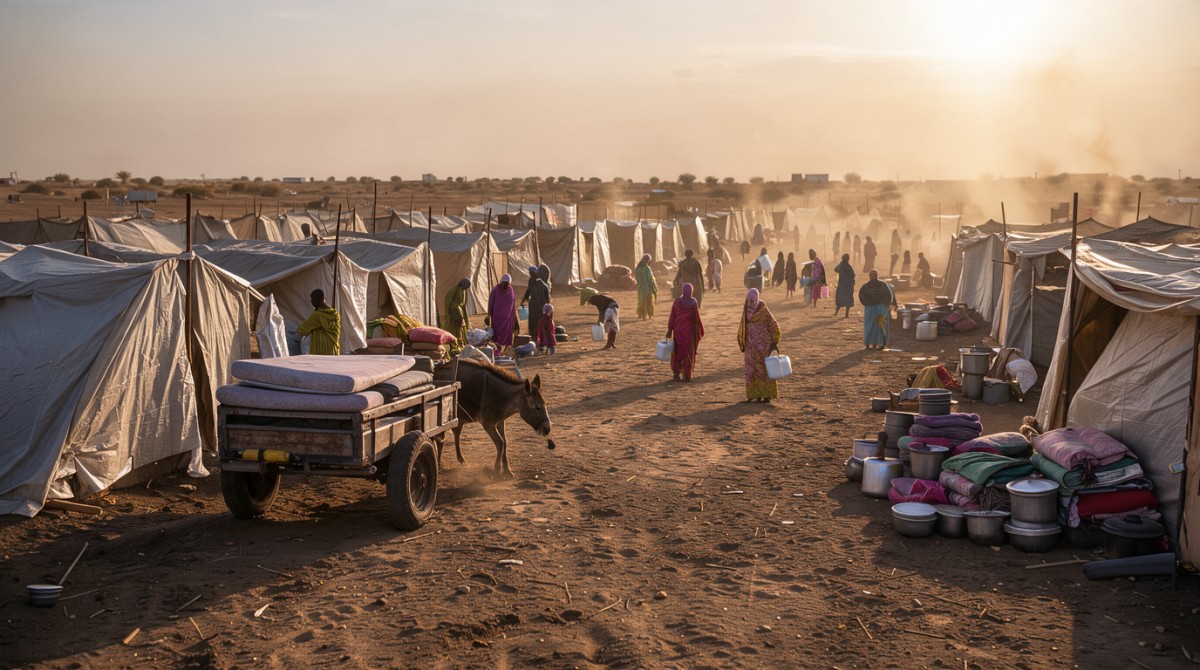
In the past week, the International Organization for Migration (IOM) has documented a fresh wave of displacement that underscores the deepening humanitarian crisis in Sudan’s conflict‑torn north‑western and eastern regions. Over just two days, at least 1,515 people were forced from their homes in North Darfur and Blue Nile states, a movement that reflects the volatile security environment created by the ongoing clash between the paramilitary Rapid Support Forces (RSF) and the Sudan People’s Liberation Movement‑North (SPLM‑N), as well as the broader fragmentation of state authority across the country.
New displacements in Blue Nile: Wad Abuk to Tadamon
According to the IOM’s displacement monitoring teams, an estimated 135 individuals fled the town of Wad Abuk in Bau locality on 14 November after security conditions sharply deteriorated. The families sought refuge in the nearby Tadamon locality, also within Blue Nile State. The IOM’s brief notes do not specify the exact triggers for the flight, but they place the movement within a pattern of intensified fighting in the state, where RSF forces and their SPLM‑N allies have recently launched attacks on several areas.
The displacement of these families, while numerically modest compared with earlier waves, carries a heavy human cost. Residents of Wad Abuk, a town already strained by limited services and disrupted livelihoods, now face the loss of shelter, access to water, and the safety of community networks. The IOM warns that security in the area remains “tense and volatile,” suggesting that the displaced may have limited options for safe return in the near term.
Cross‑border flight from North Darfur
On 13 November, the IOM recorded a larger movement of 1,380 people from three villages—Turba, Shiqiq Karo and Jankura—in Um Baru locality, North Darfur State. Most of those displaced crossed the international border into neighboring Chad, seeking safety beyond the reach of the fighting that has engulfed the region.
The exodus to Chad highlights the trans‑national dimension of Sudan’s crisis. For families arriving in Chad, the journey often involves perilous crossings through desert terrain, exposure to armed groups, and the uncertainty of reception conditions in refugee camps. While the IOM’s report does not detail the immediate conditions faced by these new arrivals, the broader context of displacement in the region suggests they are likely to encounter overcrowded camps, limited humanitarian assistance, and the psychological trauma of abrupt uprooting.
Earlier waves of displacement in North Darfur
The latest movements are part of a series of displacement incidents that have unfolded across North Darfur since the start of November. On 12 November, the IOM documented that roughly 5,035 people fled three villages in Um Baru locality after insecurity on 10 and 11 November forced them to abandon their homes. Earlier still, on 1 November, the organization recorded the displacement of another 1,150 individuals from four villages in the same locality, following security incidents that took place between 29 October and 31 October.
These successive waves illustrate a pattern of recurring insecurity that prevents displaced families from establishing any semblance of stability. Each episode adds to the cumulative number of people forced to seek shelter elsewhere, stretching the capacity of humanitarian actors and deepening the psychological toll on communities that have been repeatedly uprooted.
The human toll behind the numbers
Beyond the statistics, the human impact of these displacements is stark. Children, who have already endured years of conflict, now confront the loss of schooling, nutrition, and the safety of familiar surroundings. Women, often the primary caregivers, must navigate the challenges of securing food, water, and medical care in unfamiliar settings, while also coping with the trauma of having to protect their families amid ongoing violence.
Photographs from earlier in the year, such as those taken at the Al Afad Refugee Camp in January 2026, show thousands of Sudanese—many of them children—living in makeshift shelters after being forced from places like El Fasher, the capital of North Darfur, and other parts of Darfur and Kordofan. These images underscore the protracted nature of displacement in Sudan, where families who fled once often find themselves caught in a cycle of repeated moves as frontlines shift.
Security dynamics fueling displacement
The RSF, a powerful paramilitary group, controls most of the five states that comprise the western Darfur region, though pockets of North and West Darfur remain under the Sudanese Armed Forces’ (SAF) authority. In Blue Nile, the RSF and SPLM‑N alliance has intensified attacks, contributing directly to the insecurity that prompted the recent flight from Wad Abuk.
Meanwhile, the SAF retains control over most of the country’s other states, including the capital, Khartoum. This bifurcated control creates a patchwork of security environments, where civilians in RSF‑held areas face different threats than those under army control. The lack of a unified security apparatus hampers the delivery of humanitarian aid and complicates efforts to protect civilians, leaving many communities exposed to the whims of armed factions.
International‑law implications and the need for protection
Under international humanitarian law, parties to a conflict are obligated to distinguish between combatants and civilians, to take all feasible precautions to avoid civilian harm, and to ensure safe passage for humanitarian assistance. The repeated forced movements of civilians from villages and towns in North Darfur and Blue Nile raise serious concerns about compliance with these obligations.
When armed groups launch attacks that indiscriminately affect civilian populations, they risk violating the principle of distinction and the prohibition against forced displacement. The IOM’s warnings that security conditions remain “tense and volatile” signal that civilians are caught in the crossfire, a situation that calls for urgent monitoring by UN mechanisms and stronger advocacy for the protection of civilians.
Humanitarian response and funding gaps
The IOM’s reports highlight the organization’s role in monitoring displacement, yet the broader humanitarian response remains constrained by funding shortages. Earlier in 2026, UN agencies warned that 15.4 million people in Sudan urgently needed shelter, a figure that underscores the scale of need across the country. While the IOM continues to track movements and provide assistance where possible, the sheer volume of displaced persons—now numbering in the tens of thousands in North Darfur alone—exceeds the capacity of existing shelters and aid supplies.
Humanitarian actors must therefore prioritize the establishment of safe, dignified temporary shelters, the provision of essential services such as water, sanitation, and health care, and the reinforcement of protection mechanisms for vulnerable groups, especially women and children. International donors are urged to address the funding shortfall to prevent a further deterioration of living conditions for those already displaced.
This article was produced with AI-assisted research and editorial support. Reporting is based on the source material cited below. Sources: Middle East Monitor; middleeastmonitor.com; Global1.News (16 November 2026).
By Fatima Al-Rashid, Staff Writer
What's Your Reaction?
 Like
0
 Dislike
0
 Love
0
 Funny
0
 Wow
0
 Sad
0
 Angry
0

Gulf/MENA Correspondent at Global1.News. Based in Doha, covering Gulf politics, energy markets, diplomacy, and development across the Middle East and North Africa. Tracks the economic transformation of the Gulf states.











Comments (0)