
Army Tells Court It Will Detonate Iowa's Unstable Lead Azide Anyway
The U.S. Army told a federal appeals court it plans to detonate 68 drums of unstable lead azide at the Iowa Army Ammunition Plant on or by Tuesday, despite an Eighth Circuit order pausing the EPA's emergency permit. Two blasts are set for about noon Monday.
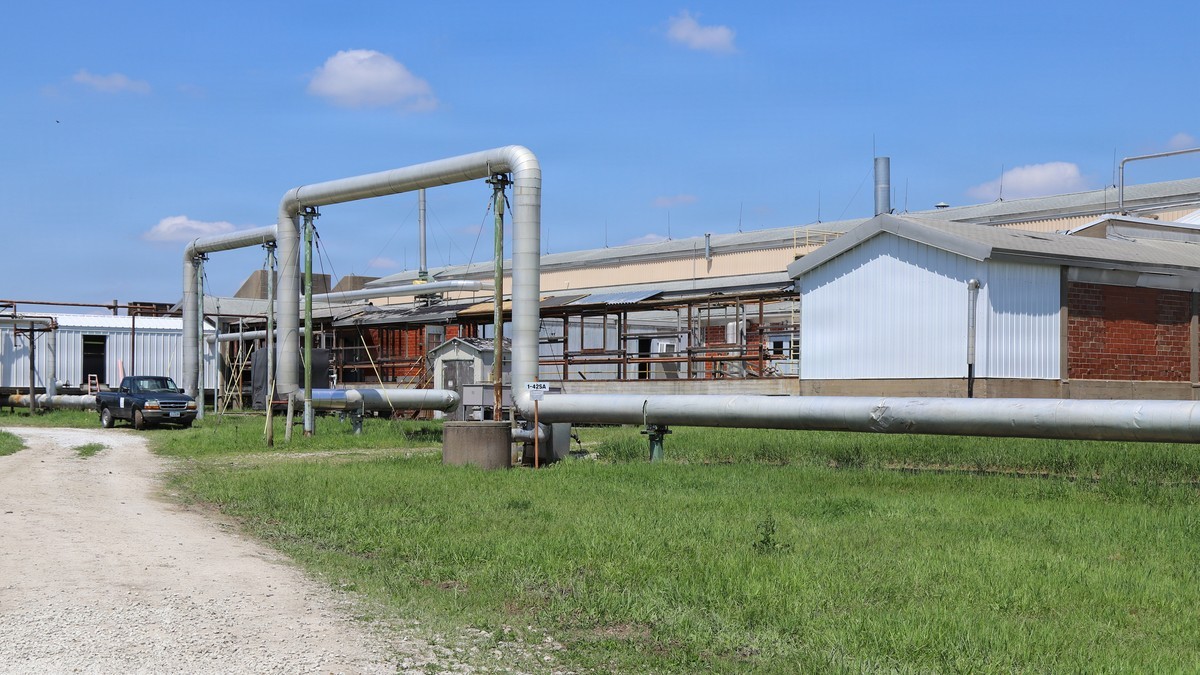
Folks, there are sixty-eight drums of a chemical so sensitive that a spark can set it off sitting in two bunkers in southeast Iowa, and the federal government has now told a federal appeals court it intends to blow them up anyway. The U.S. Army says the lead azide inside those drums has degraded past the point of safe handling, that moving it would be more dangerous than destroying it, and that cold weather in the forecast makes waiting a gamble it will not take. The Eighth U.S. Circuit Court of Appeals put the permit on hold late Thursday. On Saturday, the Army filed paperwork saying it will proceed without that permit anyway.
Army Tells Court It Will Detonate Iowa's Unstable Lead Azide Anyway
Middletown, Iowa — The Iowa Army Ammunition Plant has made medium- and large-caliber munitions since 1941, and for most of that history the material in its magazines was somebody else's problem in somebody else's decade. This year it became a public health argument with a court date, a governor's emergency operations center and a plume map that reaches a hundred miles.
Sixty-Eight Drums That Started to Crystallize
The trouble surfaced in March, during one of the twice-yearly inspections the plant runs on its barrels. Justine Barati, a public affairs specialist for Army Sustainment Command, described the mechanism to Our Quad Cities News: each drum has a port on top, and when inspectors looked through it they found that the water-and-ethanol bath protecting the lead azide had dropped low enough to expose the material. Exposed, it formed crystals. "When it forms crystals, then it's explosive," Barati said. The Army put the count at sixty-eight drums, holding roughly 9,700 pounds of the material — about five tons — and closed the installation for a period while it worked out what to do with them.
Lead azide is a primary initiating explosive — the compound that sets off the main charge in a munition. The Environmental Protection Agency says recrystallization has made the stock "more sensitive to friction and shock," and the Army's own assessment describes a stockpile that could detonate on its own.
What the Army Built Around Them
The drums sit inside two earth-covered magazines: concrete structures with soil mounded over the top. Barati's description is blunt. "It would be like if you were going in a cave." Since the instability was confirmed, crews have stacked sand around them — roughly 300 sand-filled barriers about two stories high.
The engineering is documented in the Army's mitigated finding of no significant impact, signed by the plant's commander, Lieutenant Colonel Daniel V. Nosse, on November 18. It lists 19,000 cubic yards of lime-fill foundation, 3,225 tons of washed sand in the barriers, and a 28-foot venting aperture angled south and southwest to throw blast pressure away from populated ground. Before and during the detonation the soil over the magazines will be saturated with water and misters will spray, measures the Army says keep heavy metals close to the earth.
A Warning That Reached People a Week Before the Blast
The advisory that reached the wider region went out on Sunday, November 15. For Middletown — a community of about 360 people, per CBS News, or nearly 400 by the Associated Press's count, sitting 160 miles southeast of Des Moines — the notice arrived with a week to spare. For towns much further out, it was the first they had heard of it at all. The Associated Press reported that some communities up to 100 miles away learned of the potential impact from that advisory.
Residents in the Middletown City Park neighborhood were asked to leave between 8 a.m. and 2 p.m. on the day of the blast, with the Armed Forces Reserve Center on DMC Highway 34 opened to them and their pets. Everyone in the region was told to stay inside, shut the windows, bring animals in, and clean cars and windowsills afterward. Schools across the region closed on Friday and had to decide what Monday would look like.

Then the Eighth Circuit Stepped In
The Iowa Environmental Council and the Iowa chapter of the Sierra Club sued on Thursday, arguing that the EPA had accepted the Army's rejection of safer options without requiring a full review, and that the public notice came far too late. That night, the Eighth U.S. Circuit Court of Appeals granted an emergency motion putting the EPA's emergency permit on hold while it considers whether to block the blasts outright.
Acting Army Secretary Adam Telle announced the same day that the detonations would move to Monday, calling it "the latest possible moment prior to a forecasted temperature drop, which would risk further destabilization of the material." Governor Kim Reynolds had spoken with Telle directly, and lawmakers in Iowa and Illinois had joined the calls for a delay. On Friday she activated the State Emergency Operations Center. The Sierra Club's legal chair, Wally Taylor, was not asking for a delay. "We don't want the explosion to take place at all," he said. "There are ways to do it without all the air quality problems and potential health problems."
The Army Says It Will Go Ahead Anyway
In federal court records filed late Saturday, the Department of the Army said it plans to move forward on or by Tuesday and will invoke an emergency munitions and explosives exclusion to the EPA permit. The government's argument is that a controlled blast is far safer than the alternative. "A controlled detonation allows the Army to implement measures to minimize the risk to the public, including the risk from the ejection of partial unexploded ordnances that can explode later from the Facility," the filing states. The Army adds that it intends to follow the permit's mitigation measures even if they are not in force.
The filing also supplies the clock: temperatures are forecast to drop below 30 degrees within days, and the Army says the crystals in the deteriorating waste could break as the mercury falls. In response, the two environmental groups filed a motion on Sunday seeking to supplement their emergency request, attaching three expert and local government declarations that challenge the Army's risk math and its public notice. The Justice Department said it planned to respond on or before Sunday. No ruling on the underlying complaint had been issued.
The Contractor Hired and Then Let Go
How the government arrived at detonation is now part of the record. The New York Times reported Saturday that the Army hired a Georgia company, MuniRem Environmental, in March to chemically neutralize nearly five tons of the material, then canceled the contract two months later. Chemical treatment carried a clear environmental advantage, one the Army acknowledged in its own assessment: no plume of lead dust.
MuniRem's chief executive, Valentine Nzengung, told the Times that then-Army Secretary Dan Driscoll made the final decision to order a controlled detonation. The Times also reviewed an email in which an Army contracting officer told the company the cancellation was unrelated to shortcomings in its technical proposal. The Army, the EPA and MuniRem did not respond to messages from Iowa Public Radio on Saturday. It remains unclear why the drums were not dealt with before they became this unstable.
What the EPA Told the Governor
EPA Region 7 Administrator Jim Macy sent Governor Reynolds a letter on Friday explaining the reasoning. The Army, the FBI and the Bureau of Alcohol, Tobacco, Firearms and Explosives concluded that disturbing the drums to treat their contents could endanger workers and the surrounding community. Building a structure over them, moving them to an existing disposal site on the plant, and leaving them where they sit were each ruled out.
Macy's timeline puts the EPA's first knowledge of the problem at March 12, with a team on site four days later and three emergency storage permits issued between April and September while the Army weighed its options. An EPA team has been in Middletown since November 16 taking its own samples. Current modeling, Macy wrote, predicts a low but elevated level of airborne lead for a few hours as the plume passes, and the agency is assessing drinking water sources.
What the Lead in That Plume Can Do
Iowa's Department of Health and Human Services is blunt in its fact sheet for the operation: there is no known safe level of lead exposure. Children younger than six and pregnant women warrant particular attention, because lead damages the developing brain and raises the risk of miscarriage and premature birth.
Patrick O'Shaughnessy, a professor in the University of Iowa's department of occupational and environmental health, told the Associated Press that how much contamination ends up in the air and on surfaces is still unknown, and that lead is a neurological toxicant. Andrew Whelton, an environmental engineering professor at Purdue, said high doses over a short period can bring on lead poisoning, while long-term exposure to low doses can produce developmental problems, especially in young children. Barati points out that residential soil standards for lead sit at 220 parts per million against 10 to 50 in natural soil.
A Town That Wants It Over
Middletown's mayor, Rodney Johnson, has backed the Army. In a video posted to Facebook he said the plant's commander briefed him on November 12 about how the material was being monitored, and warned that moving it could be catastrophic. "A prolonged delay is not acceptable for the citizens of Middletown," Johnson said. Residents had already taken time off work, arranged to leave town and moved animals ahead of the original Friday date.
Lucy Giehl, 64, lives about four miles north of the plant and first learned of the plan from that Sunday advisory. She wanted to know what happens after the dust settles — whether she needs gloves to wipe down surfaces, whether her dogs can drink from the pond. "There's just so many details that I feel like haven't been addressed with the public," she told the Associated Press. Morgan Hoenig, at Iowa State's Des Moines County Extension office, said callers were "deathly afraid" and that the office ran out of soil test kits.
What Happens at Noon on Monday
The plan on the table is two consecutive, rapid detonations at approximately noon Central time on Monday, November 23. The state health department advises residents in the path to stay indoors for 24 to 48 hours with windows and doors closed unless official guidance changes, to switch buildings with outside air intakes to recirculation, and to wet-clean surfaces afterward rather than dry sweep. The Army says its plume maps will be updated six hours before the blast and hourly until it happens.
What is not settled is the law. The Army's Saturday filing asserts authority to act under an emergency exclusion; Earthjustice attorney Thien Chau says that exception sets a high bar and has urged the Army not to use it to get around the court. The court has not ruled. The drums are still in the bunkers, the sand is still stacked around them, and the temperature is still dropping.
By Jessica Ali, Staff Writer
This article was produced with AI-assisted research and editorial support. Sources: the U.S. Army and Army Sustainment Command, including the Mitigated Finding of No Significant Impact for the Lead Azide Risk Mitigation at Iowa Army Ammunition Plant (IAAAP-EA-2026-01); the Office of the Governor of Iowa; Iowa Department of Health and Human Services; U.S. Environmental Protection Agency Region 7; CBS News; the Associated Press; Iowa Public Radio; ABC News; Fox News; Our Quad Cities News; and The New York Times, as reported by Iowa Public Radio. Photographs: Lori McFate/U.S. Army; U.S. Army via DVIDS; Shawn Eldridge/U.S. Army via the Associated Press. Any editorial cover card is produced in-house.
What's Your Reaction?
 Like
0
 Dislike
0
 Love
0
 Funny
0
 Wow
0
 Sad
0
 Angry
0

Editor-in-Chief at Global1.News. Atlanta-based journalist who cuts through the BS and tells it like it is. Lead anchor, host, and the voice you hear when the spin stops and the truth starts.















Comments (0)