
South Korea's Ruling Party Adopts a Push to Impeach the Chief Justice
The Democratic Party of South Korea adopted a formal party-line position to pursue the impeachment of Supreme Court Chief Justice Jo Hee-de, one day after the court partially overturned ex-Prime Minister Han Duck-soo's insurrection conviction and remanded it.
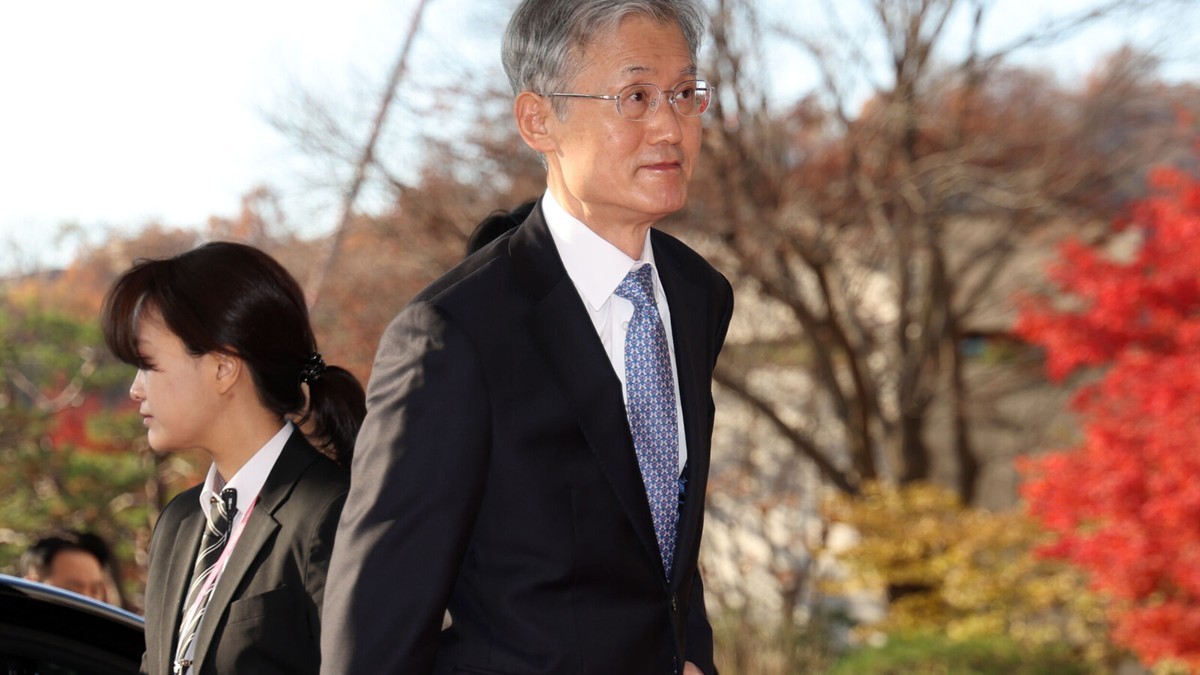
One day after South Korea's Supreme Court declared the December 2024 martial law an insurrection, the party that governs the country moved against the man who runs that court. The Democratic Party adopted a formal party-line position on Friday to pursue the impeachment of Chief Justice Jo Hee-de — taking an eighteen-month confrontation with the judiciary to a level Dong-A Ilbo calls unprecedented.
South Korea's Ruling Party Adopts a Push to Impeach the Chief Justice
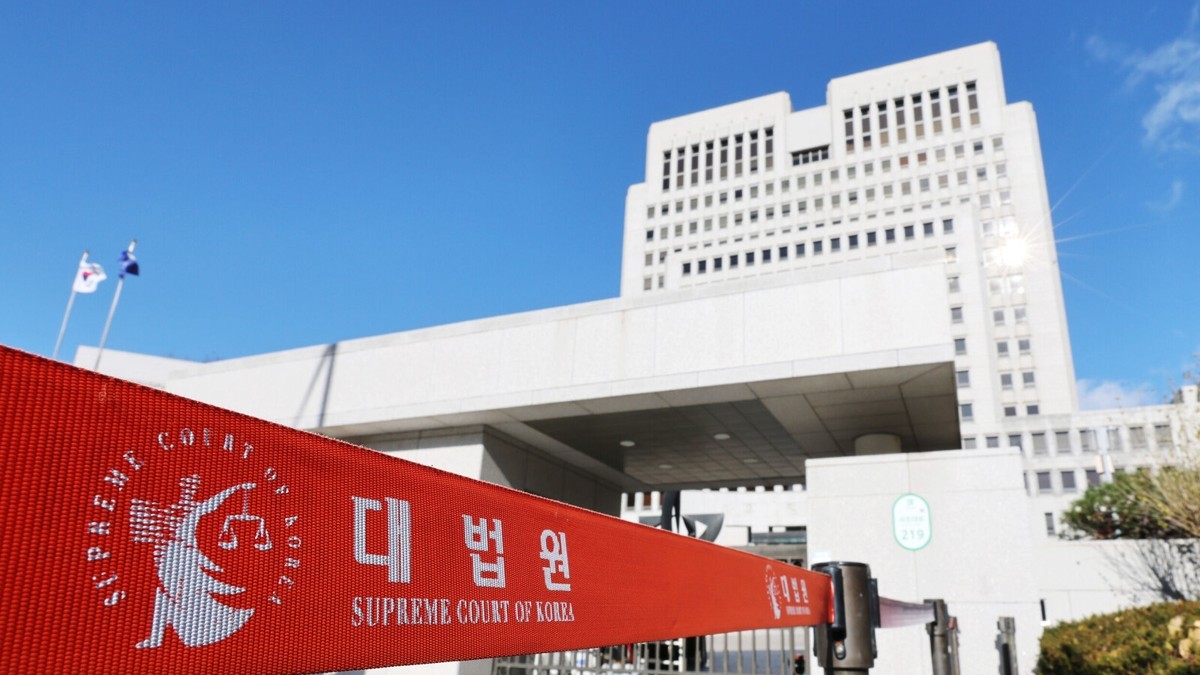
Seoul, South Korea — The decision came at a lawmakers' general meeting at the National Assembly in western Seoul, one day after the top court partially overturned former Prime Minister Han Duck-soo's insurrection conviction and sent the case back to the Seoul High Court. Within hours, the ruling was being invoked as grounds to move against the chief justice who presided over it.
A Party Turns on the Court
The mechanics moved fast. Party leader Kim Min-seok convened an emergency meeting of Democratic Party lawmakers on Thursday night, immediately after the ruling was read, and declared a decision had been made to impeach Jo. By Friday morning the party's Supreme Council had formed a task force to lead the effort, naming Rep. Yang Bu-nam, a former prosecutor, as its head. That afternoon the caucus made impeachment the party's official position.
Kim did not soften the language. He called the ruling "an antihistorical decision that presented Han Duck-soo's actions during the insurrection as an acceptable code of conduct", adding that it had "crossed the threshold of public and historical tolerance." Floor leader Han Byung-do said Jo bore "clear responsibility for allowing the Supreme Court's ruling to be tainted by blatant political interference."
The party plans to have its task force draft and introduce a motion, with a vote targeted for next month. Nothing has been filed.
What the Court Actually Ruled
The underlying ruling was the Supreme Court's first on Yoon Suk Yeol's martial law declaration, delivered 716 days after he imposed it on 3 December 2024. In an en banc decision presided over by Chief Justice Jo, the court held the declaration "diverging from the constitutional order and violating the basic rights of Koreans, making it unconstitutional and illegal."
It went further than procedure. "When the martial law declaration was made, Korea was not in a state of emergency, nor were the country's administrative or judicial functions severely impeded", the court found. Yoon had mobilized the military and police "in an attempt to seize control of the National Assembly and news outlets," it said, and declared martial law without the Cabinet meeting the Constitution requires. "In no instance can acts of insurrection be tolerated under Korea's constitutional order."
Then it carved out one charge. Han's conviction for joining the insurrection after the declaration stood. His conviction for trying to give the declaration procedural legitimacy by convening that Cabinet meeting did not.
Why the Cabinet Meeting Mattered
Insurrection in Korean law requires not just a riot but a purpose — gukheon-munran, the intent to subvert the constitutional order. The court has now made that element harder to prove.
Han's acquittal on the Cabinet-meeting charge turned on it. The court said it was difficult to establish that his act of requesting a Cabinet review carried the objective of subverting the Constitution. SBS reported the bench's language plainly: the request could not be shown to hold insurrectionary intent.
The bench was not unanimous, and the split ran through the justice assigned to the case. Justice Kwon Young-joon delivered the majority reasoning. Justices Oh Kyeong-mi, Shin Sook-hee and Kim Sung-soo dissented, with Oh reading the dissent: they accepted the new test but argued Han's conduct before the declaration, viewed whole, satisfied it.
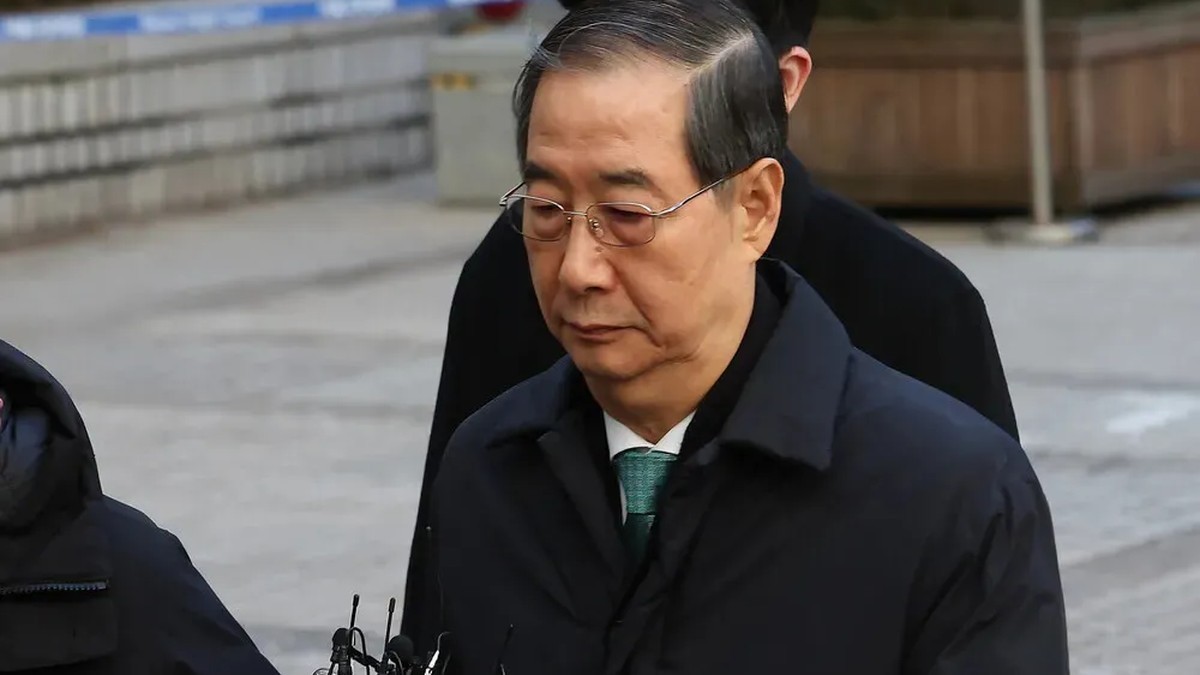
Han, 77, remains in custody. The court extended his detention by two months so the Seoul High Court can retry him.
The Arithmetic, and the Deadline
The numbers favor the governing party. The calendar does not. Under the Constitution an impeachment motion against the chief justice must be introduced by at least one-third of the National Assembly — 100 lawmakers — and needs a majority of the full membership, 150 votes, to pass.
The Democratic Party holds 161 seats. It can clear both thresholds without a single opposition vote.
What it cannot do is take its time. Jo's term ends on 5 June 2027, and Korea JoongAng Daily reports the party would have to submit its motion to the Constitutional Court by 7 December at the latest — a date that falls exactly 180 days before his term expires.
If the National Assembly passes a motion, Jo would be suspended from his duties, including authority over judicial appointments, while the Constitutional Court decides. That suspension is the point, and the reason the timeline is so tight.
Four Grounds, and the One Left Out
The party listed four. The Supreme Court's alleged attempts to comply and cooperate with the martial law declaration. Procedural violations in the trial of President Lee Jae-myung over alleged violations of the Public Official Election Act. Cash payments to judges described as encouragement, raising allegations of embezzlement. And Jo's refusal to take an oath at a National Assembly hearing.
The first is the weakest on the record. The allegation that the Supreme Court supported the martial law declaration has already been dismissed by a special counsel investigation. Yang said the party would "supplement the details and use them as grounds for impeachment."
Yang also reversed himself within hours. Immediately after the lawmakers' meeting he said the ruling in Han's case "does not constitute grounds for impeachment". After the task force's first meeting he said it was "under review as possible grounds". His explanation: "people can change their minds and positions during a debate." The party ultimately left the Han ruling off its formal grounds entirely.
The Sentence Nobody Is Marching About
The same bench that spared Han one charge upheld a sentence the day's outrage largely passed over. A full panel dismissed appeals from Kim Keon-hee and from the special counsel, confirming her four-year prison term and a 50 million won fine, the seizure of a Graff diamond necklace and an order to return 20.94 million won.
Kim, Yoon's wife, was convicted over her role in manipulating the stock price of Deutsch Motors, a BMW dealer, and over bribes that included two Chanel bags from the Unification Church. The alleged manipulation gain was 811.44 million won. She has been in prison since August 2025.
One strand narrowed the law rather than the defendant. The special counsel alleged Kim received polling worth more than 274 million won from Myung Tae-kyun 58 times between June 2021 and March 2022, in collusion with Yoon, and charged it as a political-funds violation. The court held that handing polling results to a politician does not by itself constitute receiving political funds.
A Stricter Insurrection Test
The ruling's reach is only now becoming clear. Yonhap reported on Sunday, citing legal circles, that the new standard narrows the insurrection concept for the first time in roughly 46 years — and that it will fall hardest on people who carried out orders rather than officials who gave them.
The previous test came from the Supreme Court's en banc decision of 20 May 1980 in the case of former KCIA director Kim Jae-kyu: awareness of the possibility of subverting the constitutional order, dolus eventualis, was enough. The Han ruling adds a step. The actor must also have aimed at realizing that outcome, with at least a willingness to tolerate it.
For officers who relayed and executed instructions, proving that second step is not simple. Yonhap pointed to Col. Cho Sung-hyun, former commander of the 1st Security Group of the Capital Defense Command, indicted for relaying orders for troops to move on the National Assembly. He was credited during the crisis with telling units not to cross Seogang Bridge, and received the Order of Military Merit. The first special counsel declined to indict him, judging he refused the order; the second indicted him, finding he had recognized what was coming and gone along until the repeal resolution passed.
Resistance From Inside the Party
The push is not unanimous inside the Democratic Party, and the doubts are on the record. At the caucus the day before, eight of the twenty lawmakers who spoke reportedly opposed it. Objections at Friday's meeting included a flat one: "A judge cannot be impeached on the basis of a court ruling."
One lawmaker asked for a vote to gauge members' opinions, saying a "silent majority" opposed the move. Some observers suggested party leaders, who had earlier put a parliamentary investigation into Jo on hold, changed course under pressure from hard-liners.
A first-term lawmaker laid out the risk: "If the National Conference of Judges pushes back on Nov. 30 and conservatives rally in response, and the impeachment battle drags on for six months, people's livelihoods and the economy will disappear from the political agenda." It would hurt the party in next year's by-elections and the general election after that, he said. A senior lawmaker called the decision "a little late, but the right move".
What the Opposition Calls It
The opposition did not treat it as a constitutional question. The People Power Party criticized the impeachment push as "madness and retaliation." Floor leader Jeong Jeom-sig, speaking at a party meeting in the Hongdae area of western Seoul, said: "Pursuing the impeachment of a single chief justice by invoking treason and insurrection simply because the court's ruling was not to their liking is nothing but madness."
Jeong also said: "It is ruthless political retaliation carried out for the sake of one man, President Lee Jae-myung." Dong-A Ilbo renders his name Chung Jeom-sik.
Independent Rep. Han Dong-hoon, who formerly led the People Power Party before leaving over internal strife, was harsher still: the move was "a self-coup that undermines democratic republicanism and an act of insurrection tantamount to a riot."
Progressive civil society split the other way. The People's Solidarity for Participatory Democracy put it this way: "Bogged down by jurisprudence, the Supreme Court has granted indulgence to high-ranking civil servants for betraying the Constitution and the Korean people when they had the power and responsibility to resist the insurrection."
The Older Case the Court Reopened
On Sunday the same court sent a quieter signal about how far it will let the state's past reach. SBS reported that the Supreme Court's Second Division, presided over by Justice Oh Kyeong-mi, reversed a lower court and sent a state compensation case back to the Gwangju District Court.
The plaintiff was a bereaved family suing over a man identified only as A, shot and killed by soldiers in October 1948 while working as a non-regular staff member at the Yeosu branch office during the Yeosu-Suncheon incident. The Truth and Reconciliation Commission found in September 2010 that A was a victim and notified the family that October. Believing the finding alone would bring compensation, the family did not sue, and filed only in July 2024.
Two lower courts acknowledged the state's liability but held the statute of limitations had expired. The Supreme Court disagreed: under the Truth and Reconciliation Act as amended in February, it held, victims who received truth-finding decisions before the law took effect and lost earlier suits on limitation grounds may file again within three years of the effective date.
What happens next is a matter of arithmetic and nerve. A motion has to be drafted, introduced and passed inside a window that closes on 7 December, if the party wants a suspension before Jo's term runs out. The governing party has the votes. It does not yet have the argument, the unity, or the public case — and the ruling it is protesting handed the opposition a phrase to use against it for as long as the fight lasts.
By Jessica Ali, Staff Writer
This article was produced with AI-assisted research and editorial support. Sources: Reuters, Yonhap News Agency, Korea JoongAng Daily, Dong-A Ilbo, Hankyoreh, SBS News, YTN, Seoul Shinmun, Aju Press, Korea Times and the Supreme Court of Korea press release in case 2026do6826. Photographs: News1 via Korea JoongAng Daily (lead image), Yonhap News and Choi Hyeon-su/Hankyoreh. Social card: Global 1 News editorial image.
What's Your Reaction?
 Like
0
 Dislike
0
 Love
0
 Funny
0
 Wow
0
 Sad
0
 Angry
0

Editor-in-Chief at Global1.News. Atlanta-based journalist who cuts through the BS and tells it like it is. Lead anchor, host, and the voice you hear when the spin stops and the truth starts.










Comments (0)