
Syrian Christian town demands security after resident kidnapped
When a 75‑year‑old resident of Suqaylabiyah saw her nephew’s motorbike lying on the ground and a car speeding away on the morning of 19 October, she assumed a traffic accident had occurred.
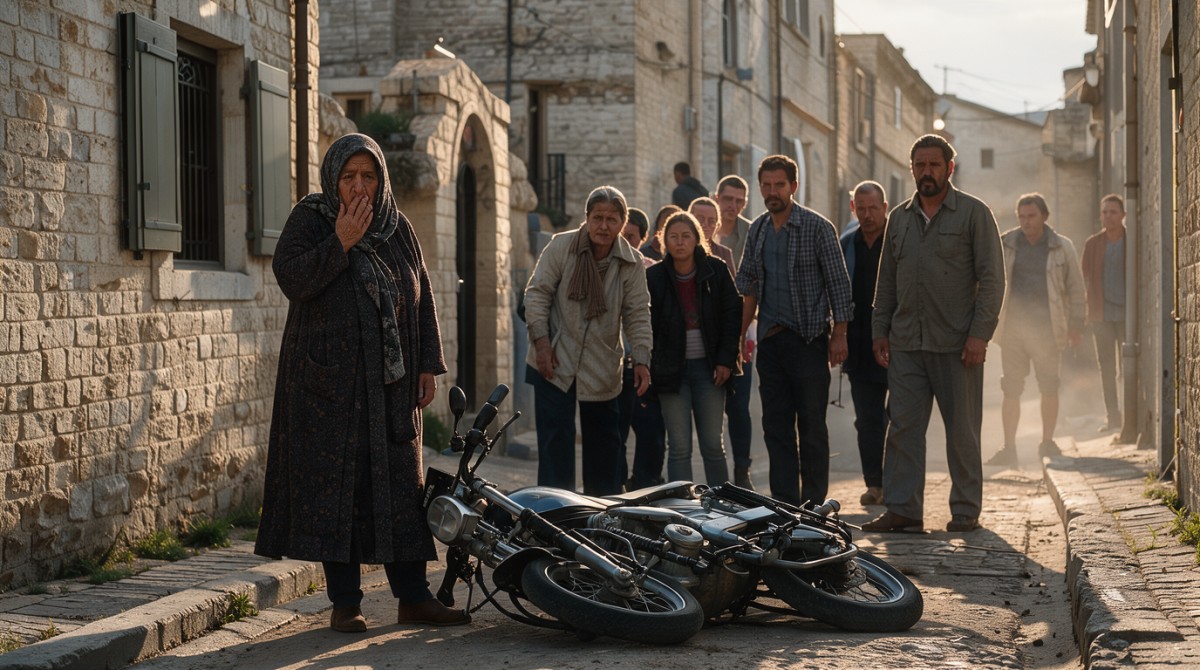
When a 75‑year‑old resident of Suqaylabiyah saw her nephew’s motorbike lying on the ground and a car speeding away on the morning of 19 October, she assumed a traffic accident had occurred. The reality was far more unsettling: Maher Sankari, a 38‑year‑old jeweller, had been abducted in front of his own home. The incident has sent shockwaves through the predominantly Christian town, prompting church leaders and local officials to demand a decisive response from the Syrian authorities.
Details of the kidnapping
According to surveillance footage obtained by AFP, a vehicle with tinted windows struck Sankari’s motorbike before two assailants dragged him away. The family was initially unaware that a kidnapping had taken place; they first thought Maher had been taken to a hospital. It was only after his wife returned empty‑handed that the grim reality set in.
Kidnapbers used the encrypted messaging app Telegram to contact the family, demanding a ransom of 120 kilograms (approximately 265 pounds) of gold. They also sent photographs showing Sankari gagged, shackled and bearing severe bruises. The family, terrified, has placed its hopes in President Ahmed al‑Sharaa, Interior Minister Anas Khattab and the security forces to secure his release.
Community reaction and solidarity
The abduction has ignited a candlelit march in Suqaylabiyah, with residents gathering in front of the town’s churches to call for Sankari’s safe return. Retired teacher Farida Esber, 62, voiced the community’s anguish, urging the state, patriarchs and churches to stand together “for the sake of his family and children.” She warned that the ransom demanded “even the central bank couldn’t pay,” underscoring the enormity of the demand.
Three Syrian church leaders have publicly condemned “a series of heinous and recurring attacks targeting the Syrian people, and Christians in particular.” They highlighted not only Sankari’s case but also a recent attack on an archbishop in Homs and the ransacking of his office, framing the kidnappings as part of a broader pattern of violence against Christians.
Escalating sectarian tensions
Suqaylabiyah’s plight cannot be viewed in isolation. The town’s recent history is marked by sectarian flare‑ups: a hooded group torched the town’s Christmas tree after the 2024 ouster of President Bashar al‑Assad, sparking protests in Damascus; in March, armed men from neighbouring Muslim villages vandalised shops and set cars ablaze. These incidents reflect a fragile security environment that has persisted for more than 13 years of civil war, during which weapons proliferated and armed factions vied for power.
Last year, sectarian bloodshed erupted in the Alawite‑majority coastal heartland and in the Druze‑majority province of Sweida. A deadly suicide attack on a Damascus church further illustrated the precarious position of religious minorities. The kidnapping of Sankari adds to a growing list of targeted attacks that have left the Christian community feeling increasingly vulnerable.
Impact on the dwindling Christian population
Experts estimate that the Christian population in Syria has fallen from roughly one million before the 2011 civil war to fewer than 300,000 today, a decline driven by displacement, emigration and ongoing violence. The Sankari case, along with a recent video of another kidnapped Christian in Hama province pleading for a $100,000 ransom, underscores the existential threat perceived by many Christians.
Local tailor Souheil al‑Farrouh, 63, captured the personal toll of the kidnapping on his phone, showing a picture of Sankari with his young children. “People are afraid,” he said, reflecting a sentiment that resonates across the town and the broader Christian diaspora in Syria.
Government promises versus on‑the‑ground reality
Islamist authorities, who seized power nearly two years ago after ousting President Assad, have pledged to protect minorities. Yet the continued frequency of kidnappings, attacks on clergy and the inability to secure the release of victims like Sankari reveal a gap between official rhetoric and operational capacity.
Residents of Suqaylabiyah are placing their trust in President al‑Sharaa and Interior Minister Khattab, hoping that the security forces will intervene. The demand for 120 kilograms of gold—a sum that far exceeds the resources of most families and even challenges the central bank—highlights the financial strain imposed on victims and the broader community.
Regional implications and the future of minority security
The kidnapping has drawn attention beyond Suqaylabiyah, prompting regional observers to question the stability of minority protections in a post‑Assad Syria. As armed groups continue to operate with relative impunity, the risk of further kidnappings and sectarian reprisals remains high. The incident also raises concerns for neighbouring countries hosting Syrian refugees, many of whom are Christian and now face heightened anxiety over their safety and the prospects of returning home.
International humanitarian organisations have long warned that the erosion of minority rights could destabilise any tentative reconciliation process. The lack of a swift, decisive response from Syrian authorities to cases like Sankari’s may embolden perpetrators and further erode confidence among the remaining Christian communities.
What lies ahead for Maher Sankari and his family
For Maher Sankari’s wife and their three‑ and four‑year‑old children, the immediate concern is his safe return. The family’s plea for “safe and sound” reunification reflects a broader yearning for normalcy amid a climate of fear. As the town continues its candlelit vigils and demands accountability, the outcome of this case could set a precedent for how future kidnappings are addressed.
While the ransom demand remains astronomical, the community’s resolve—embodied in the solidarity march and the vocal support of church leaders—signals that Suqaylabiyah will not remain silent. Whether the Syrian state can translate its promises into concrete action will be a litmus test for the protection of minorities in a war‑torn nation still searching for stability.
This article was produced with AI-assisted research and editorial support. Reporting is based on the source material cited below. Sources: Al-Monitor; al-monitor.com; Global1.News (23 November 2026).
By Hannah Berg, Staff Writer
What's Your Reaction?
 Like
0
 Dislike
0
 Love
0
 Funny
0
 Wow
0
 Sad
0
 Angry
0

Israel Correspondent at Global1.News. Based in Tel Aviv, covering Israeli politics, security, technology, and society. Provides balanced, deeply-sourced reporting on one of the most closely-watched regions in the world.












Comments (0)