
CrowdStrike Is in Talks to Buy Zscaler. The Market Already Picked a Winner, and It Was Not the Buyer
CrowdStrike is in talks to buy Zscaler in a combination worth roughly $265 billion, and the market split at once: Zscaler jumped as CrowdStrike fell, erasing more than half of Zscaler's value before anyone named a price.
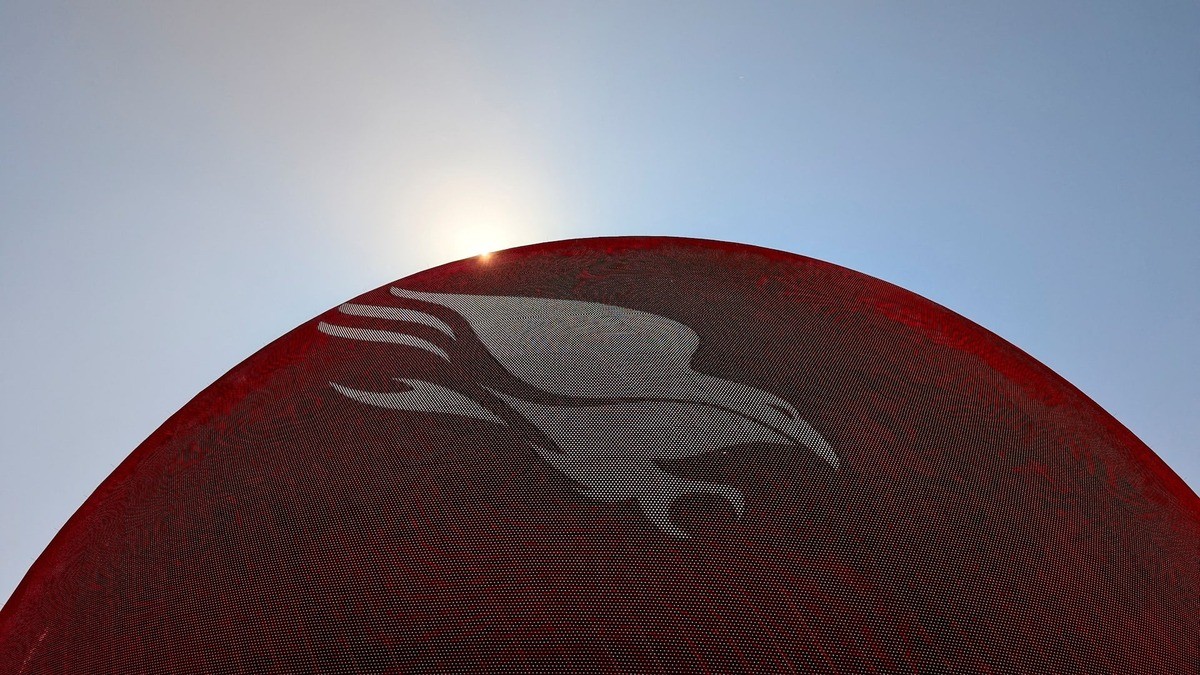
Two of the biggest names in cybersecurity are talking about becoming one. CrowdStrike, the Austin company whose Falcon software is widely used to secure laptops, servers and mobile devices, is in talks to buy Zscaler, the cloud-security firm that helped turn zero-trust networking into a boardroom phrase. Together they would be worth roughly $265 billion. Nothing is signed. But in the first minutes after the reports landed on Friday evening, the market had already voted on who pays and who gets paid.
CrowdStrike Is in Talks to Buy Zscaler. The Market Already Picked a Winner, and It Was Not the Buyer
New York - CrowdStrike shareholders opened the weekend roughly $18.6 billion poorer on paper, and no one had even named a price for Zscaler.
What Bloomberg and Reuters Actually Reported
The story arrived in two waves on Friday evening. Bloomberg moved first, citing people familiar with the matter, and said the two sides were discussing a transaction that could come together soon. Reuters then matched it independently, citing two of its own sources, and added the sentence that matters most: the talks are ongoing, no deal is guaranteed, and the discussions could still end without an agreement.
Neither outlet reported a price, a premium, a cash-or-stock mix or a timetable. CNBC reported that CrowdStrike declined to comment and that Zscaler did not immediately respond to a request for comment. Reuters said neither company immediately responded to its requests.
There is no agreement, no filing and no confirmed transaction. What exists is a reported negotiation between two companies that already sell to the same customers, plus a very large number attached to what would happen if it closed.
The Market Answered Before Either Board Did
Zscaler shares jumped in after-hours trading. Reuters put the gain at 17 percent, CNBC at 18 percent, Bloomberg at about 16 percent and Techzine at about 20 percent, a spread that reflects how thin after-hours trading is and one worth reporting as a range rather than a figure. CrowdStrike went the other way, down 8 percent according to Reuters and CNBC, with TradingView quoting 8 to 8.5 percent.
The split is the whole story in miniature. Zscaler holders are being offered a takeover premium. CrowdStrike holders are being asked to fund it in stock, absorb the integration risk and accept dilution. On Bloomberg's own figures, an 8 percent fall from a $233 billion valuation removes about $18.6 billion of value, more than half of Zscaler's entire market capitalization, before anyone named a price for Zscaler at all.
The read-through hit peers. Palo Alto Networks fell more than 3 percent after hours, while Okta rose nearly 3 percent and Fortinet almost 2 percent.
The Hole in CrowdStrike's Platform
The strategic logic is not complicated. CrowdStrike's Falcon protects endpoints: the laptops, servers and mobile devices people actually touch. Zscaler sells the other half of the problem, cloud-based network security that connects an employee to an application without routing them through a corporate network or a VPN, built on zero-trust principles that verify the user and the device every time instead of trusting them once.
Reuters was direct about why that gap matters. A deal would address one of CrowdStrike's biggest gaps in network security and help it compete more directly with platform providers such as Palo Alto Networks, which already sells across endpoint, network and cloud.
The demand side points the same way. Enterprise customers have been trying to cut the number of security vendors they deal with, rewarding suppliers who can put more products on a single contract. That logic is the engine behind the sector's three biggest recent deals.
A Consolidation Wave That Made This Logical
Those three deals set the template. Google paid $32 billion for Wiz, a transaction finalized in March 2026. Palo Alto Networks completed its roughly $25 billion purchase of CyberArk in February 2026. Cisco paid about $28 billion for Splunk in 2024. Techzine notes that both the Google-Wiz and Palo Alto-CyberArk processes took about a year to work through.
CrowdStrike and Zscaler are not strangers. The two have been integrated partners officially since 2019. On September 2, 2026, they expanded that partnership to automate security workflows and support real-time, adaptive zero-trust enforcement, connecting CrowdStrike's detection and response to Zscaler's access controls. The planned work included an integration using the OpenID Shared Signals Framework, so Falcon could continuously evaluate user risk and pass that context to Zscaler's Adaptive Access Engine, and a native Falcon Foundry application built on Zscaler OneAPI.
CrowdStrike has been buying elsewhere too. On November 3 it announced agreements for Fiddler AI, for agent observability, and for Dreadnode, for automated AI security testing. Both are expected to close in its fourth quarter of fiscal 2027.
Two Hundred Sixty-Five Billion Is Not a Price
Two hundred sixty-five billion dollars is the most repeated number in the coverage, and it is the most misleading. It is a combined market value, not an offer, not a premium and not a purchase price. Bloomberg put CrowdStrike at about $233 billion and Zscaler at about $32 billion at Friday's close. CNBC used about $235 billion for CrowdStrike and the same $32 billion for Zscaler. An earlier Reuters dispatch carried roughly $33.5 billion for Zscaler without saying when it was measured.
The two companies arrive from opposite directions. CrowdStrike's stock has roughly doubled during 2026. Zscaler's shares are down about 13 percent this year, after a software selloff in which investors reassessed what artificial intelligence does to established security vendors. Zscaler's price is what makes it reachable. CrowdStrike's currency is what makes the purchase payable.
Bloomberg reported that any transaction would likely be mostly stock, because CrowdStrike ended July with about $5 billion of cash. That is a fraction of what Zscaler costs, which is why dilution is not a theoretical concern.
Chaudhry Holds the Key
Any deal would likely need the backing of Jay Chaudhry, who founded Zscaler in 2007, serves as its chief executive and remains its largest shareholder. Reuters said so in plain terms. That gives one man an effective veto over a transaction that, by Bloomberg's account, would rank among the largest the cybersecurity industry has ever seen.
Reuters also credits Zscaler with pioneering zero-trust security, the model that continuously verifies users and devices before granting access to corporate applications and data.
Chaudhry has been here before. Techzine reports that a Broadcom offer for Zscaler last year was said to have been worth $38 billion, and that Chaudhry denied he and his board were considering a takeover bid. That figure is higher than Zscaler's entire market value on Friday, though the two numbers are a year apart and not directly comparable. Still, a $38 billion approach turned down is the closest thing in the public record to a floor on what he thinks the company is worth.
The Rout This Lands In
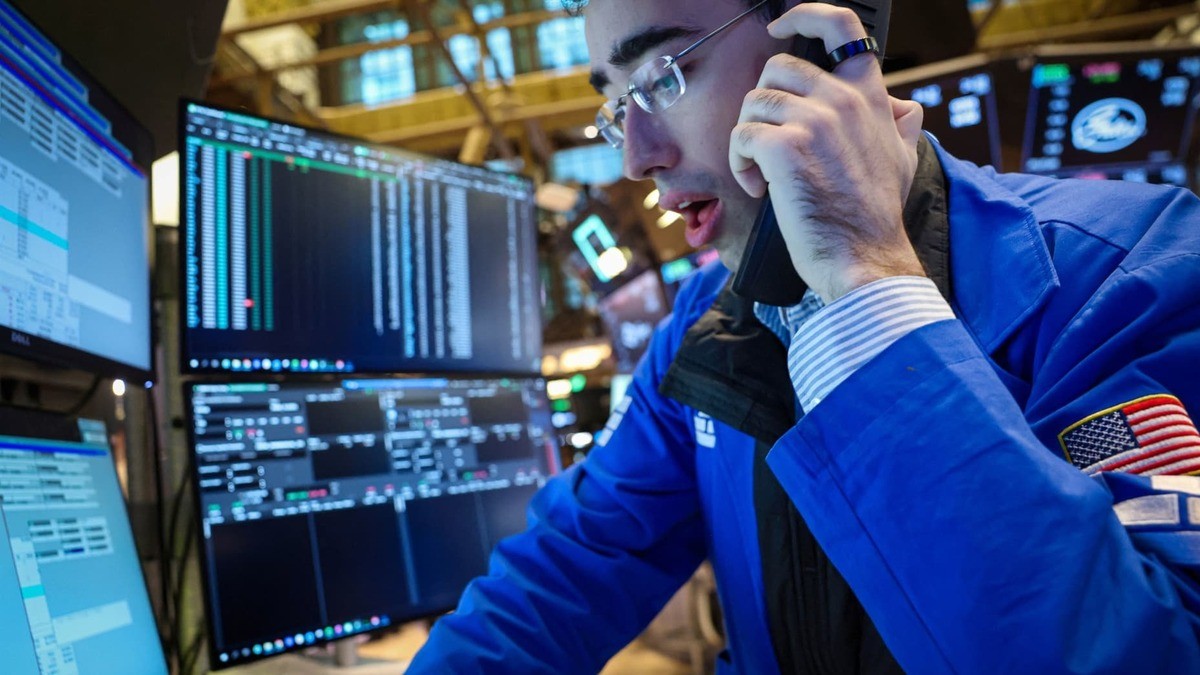
The timing is what makes this strange. Friday was one of the ugliest sessions of the year. The S&P 500 fell 265.44 points, or 3.7 percent, to 6,910.39, according to the Associated Press. The Dow Jones Industrial Average dropped 949.73 points, or 1.9 percent, to 48,147.33. The Nasdaq composite fell 1,261.47 points, or 5.3 percent, to 22,617.73, and into negative territory for the year.
The S&P 500 is now in a correction, more than 10 percent below its October 6 record. The last one was in March 2025, during the tariff war. Friday capped a seven-day losing streak, the longest since the pandemic hit in 2020, and a weekly loss of 8.6 percent for the S&P, 8 percent for the Dow and 10 percent for the Nasdaq, the worst week since April 2025.
Chip and AI-infrastructure stocks took the damage. AMD fell 13.3 percent, Micron 13.9 percent, Broadcom 12.2 percent, and the Philadelphia semiconductor index 10.7 percent. Japan's Nikkei and South Korea's Kospi each fell more than 5 percent overnight, and European indexes fell sharply as well.
Why the AI Trade Cracked
Charles Schwab's market commentary laid out the causes without much comfort. Its list runs through doubts about how the AI buildout gets financed, Anthropic's plunge of 8.5 percent the day after its record initial public offering, Democrats' midterm wins raising fears about growing opposition to AI data-center construction, Jensen Huang's departure from Nvidia, questions about AMD's ties to blacklisted Chinese firms, signs that AI spending is moderating, and increasingly hawkish Federal Reserve commentary.
Kevin Gordon of the Schwab Center for Financial Research said stocks "are increasingly pricing in both a Fed that has to battle sticky inflation and an economy that might see slower growth if AI spending declines." By late Friday, futures priced a 92 percent chance of a rate hike in December, according to the CME FedWatch tool cited by Schwab, and better than 80 percent odds of two or more hikes by June. Bitcoin fell 5.1 percent to $55,830 late Friday, its lowest since September 2024, having earlier dropped below $60,000 for the first time since July.
Michael Antonelli, a market strategist at Baird, put the moment plainly. "The whole notion that AI can continue to spend unlimited amounts of money and support the stock market, I think the notion of that is ending as we speak, that's what's being priced right now," he said. He added that he does not think the bull market that began in October 2022 is over.
What Would Have to Happen Next
If the talks produce a transaction, several things have to happen, and none of them has started. A price has to be agreed, which means a premium to a $32 billion base, and a structure, mostly stock given the cash position. Chaudhry has to sign off. Both boards have to approve. And a combination this size would draw antitrust attention in Washington at a moment when the last two mega-deals in the sector each took about a year to clear.
Bloomberg's reporting is that a deal could come together soon. Reuters' reporting is that it might not come together at all. Both can be true at once, and both outlets were careful to say so.
Then there is the awkward question of what a buyer does when its own stock is the currency and that currency is being repriced. CrowdStrike's shares have roughly doubled this year, which is what makes a stock-funded deal possible. A market that decides AI multiples ran too hot makes the same deal more expensive to the people paying for it.
What Nobody Has Said
Here is what has not been said by anyone. No price. No premium. No exchange ratio. No cash component. No timetable. No confirmation from either company. No statement from any regulator. No board approval. No definitive agreement.
What has been said is narrow and specific: two outlets with separate sources reported that two companies are talking about a combination, that the talks are live, and that they may produce nothing at all.
For the people who actually buy this software, that distinction is the practical one. A Falcon customer's laptops and a Zscaler customer's remote access work exactly as they did on Thursday. Large security mergers take months to close and longer to integrate, and nothing changes on a corporate laptop this quarter. What changes first is the renewal conversation, and the leverage on both sides of it.
The rest is a $265 billion question with no answer yet.
By Jessica Ali, Staff Writer
This article was produced with AI-assisted research and editorial support. Sources: Bloomberg, Reuters, CNBC, The Associated Press, Zscaler investor relations, Techzine and Charles Schwab market commentary. Photographs: the CrowdStrike logo on the Sphere in Las Vegas, September 1, 2026 (Raphael Satter/Reuters, file photo); a smartphone displaying the Zscaler logo, March 3, 2025 (Cheng Xin/Getty Images via CNBC); a trader on the New York Stock Exchange floor, November 18, 2026 (Reuters via CNBC). Social cover card: Global 1 News editorial image.
What's Your Reaction?
 Like
0
 Dislike
0
 Love
0
 Funny
0
 Wow
0
 Sad
0
 Angry
0

Editor-in-Chief at Global1.News. Atlanta-based journalist who cuts through the BS and tells it like it is. Lead anchor, host, and the voice you hear when the spin stops and the truth starts.














Comments (0)