
Bank Error, Bank Loss: Supreme Court Rules Banks Can't Reclaim Funds Due to Own Negligence
The Supreme Court ruled banks cannot force depositors to return money withdrawn in good faith when the bank's own negligence caused funds to become available. The Third Division denied BDO Unibank's petition against Cristina Barcellano, affirming her right to keep P76,000 after a teller error.
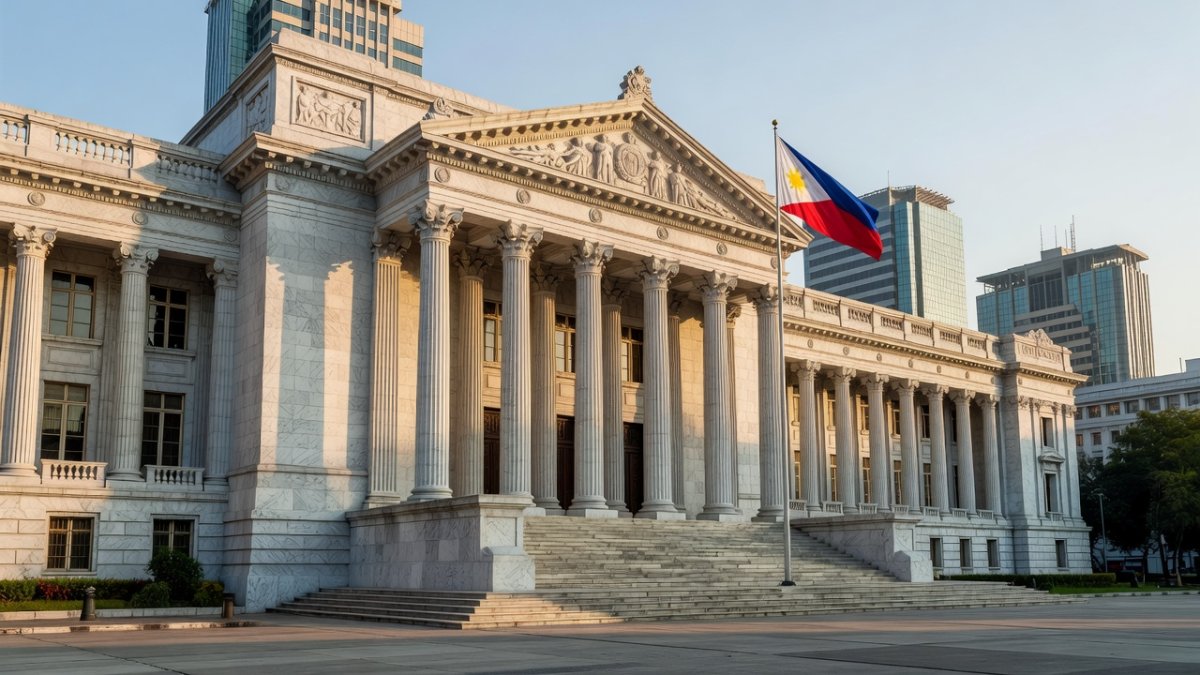
MANILA, Philippines — For decades, the unwritten rule in many Filipino households has been simple: when a bank makes a mistake, the customer pays for it. A check takes too long to clear, a teller misposts a deposit, or an ATM swallows a card on a Friday night—and the burden almost always falls on the account holder. But a landmark ruling from the Supreme Court this week flips that script, reminding banks that their duty to depositors goes far beyond mere competence. It demands extraordinary diligence, and when they fail, they—not the customer—must absorb the loss.
The high court’s Third Division denied a petition filed by BDO Unibank Inc. against depositor Cristina Barcellano, effectively ruling that a bank cannot force a client to return money they withdrew when the bank’s own gross negligence caused the funds to become available prematurely. The decision, penned by Associate Justice Japar Dimaampao, was promulgated on February 12, 2026, but only made public this week. For ordinary Filipinos—from the sari-sari store owner in Lucena to the OFW remitting money from Dubai—this ruling is a quiet but powerful affirmation that the banking system is supposed to work for them, not against them.
The Ruling: Extraordinary Diligence Is Not Optional
At the heart of the Supreme Court’s decision is a principle that should comfort every depositor in the country: banks are held to a standard of care that goes beyond the ordinary. The Court stressed that in handling transactions, banks are required to exercise "extraordinary diligence, which is more than that of a Roman pater familias, or a good father of the family."
This is not just legal jargon. In practical terms, it means that when a bank teller makes an error—like misclassifying a check—the consequences of that error cannot be shifted onto the customer. The Court explicitly rejected BDO’s argument that Barcellano should return the P76,000 she withdrew because it constituted unjust enrichment. Instead, the ruling places the burden squarely on the bank, which has the resources, the training, and the systems to prevent such mistakes in the first place.
The decision also clarifies the application of solutio indebiti, a legal principle that allows a person to recover money paid by mistake. BDO argued that Barcellano had no right to the funds and should therefore return them. But the Supreme Court disagreed, noting that the bank failed to demonstrate that Barcellano knowingly received a benefit to which she was not entitled. In other words, a customer who withdraws money that a bank has made available—through no fault of the customer—cannot be penalized for the bank’s own oversight.
The Story: A Check, A Teller’s Mistake, and P76,000
The case traces back to September 2003, a time when many Filipinos still relied heavily on physical checks and over-the-counter banking. Cristina Barcellano deposited a regional check worth P151,200 from an Albay branch of LandBank into her savings account at BDO in Lucena City. Regional checks, as many long-time bank customers know, take longer to clear because they originate from a different clearing area. In this case, the check should have taken seven banking days to clear.
But a BDO teller mistakenly validated the check as local instead of regional. That simple error meant the check cleared in just three banking days. Six days after the deposit, Barcellano withdrew P76,000 from her account. The following day, BDO received a stop payment order on the check and asked her to return the money. She initially agreed but never remitted the amount. Through legal counsel, she later demanded to withdraw the remaining balance of her BDO account. The bank countered by filing an estafa complaint against her.
For Barcellano, what should have been a routine banking transaction turned into a legal nightmare that spanned more than two decades. She was not a corporate executive or a wealthy investor. She was a regular depositor who trusted that the money appearing in her account was hers to use. The bank’s error—not any wrongdoing on her part—set off a chain of events that would eventually reach the highest court in the land.
The Legal Battle: From Estafa Charges to Acquittal
BDO’s decision to file an estafa complaint against Barcellano was a heavy-handed move for an ordinary depositor. Estafa, or swindling, is a criminal offense in the Philippines that carries serious penalties, including imprisonment. For an ordinary depositor, being accused of estafa by a major bank is not just a legal problem—it is a social and financial stigma that can affect one’s reputation in the barangay, one’s ability to secure credit, and one’s peace of mind.
The Regional Trial Court, however, saw through the bank’s argument. The court acquitted Barcellano of the estafa charge and held that the premature withdrawal happened due to the bank’s negligence. The Court of Appeals affirmed the RTC judgment, and BDO brought the case to the Supreme Court, where it argued that Barcellano should return the money under the principle of unjust enrichment.
The Supreme Court was not persuaded. In its decision, the Court noted that BDO did not even explain why the stop payment order was issued in the first place. The bank’s failure to provide this basic context undermined its entire case. As the Court put it: "Plain as day, BDO failed to demonstrate that Barcellano knowingly received a benefit to which she was not entitled when she withdrew the funds from her account."
This is a crucial point. The law does not punish people for benefiting from circumstances they did not create. Barcellano did not forge a check, did not collude with a bank employee, and did not engage in any fraudulent scheme. She simply withdrew money that her bank statement said was available. If the bank made a mistake, the bank must bear the cost.
What This Means for Ordinary Filipino Bank Customers
For the millions of Filipinos who entrust their savings to banks—whether it is the OFW in Riyadh sending money home to support their children’s education, the jeepney driver in Manila who keeps a small passbook account for emergencies, or the sari-sari store owner in the province who deposits daily earnings—this ruling is a significant victory. It affirms that the banking relationship is not a one-way street where the customer bears all the risk.
Consider the practical implications. If a bank erroneously credits a customer’s account and the customer withdraws the funds in good faith, the bank cannot simply demand repayment and threaten criminal charges. The bank must first prove that the customer acted with knowledge and intent to defraud. This is a high bar, and rightly so. The Supreme Court’s ruling reinforces the idea that banks, which hold the life savings of ordinary Filipinos, must be held to the highest standard of care.
This is especially important in a country where many families rely on a single bank account to manage their finances. A mistake by a bank can have cascading effects—a bounced check, a delayed remittance, an unexpected overdraft. When banks are allowed to shift the blame to customers, it erodes trust in the entire financial system. This ruling helps restore that trust by making it clear that banks cannot use their power to intimidate or penalize customers for errors that are not their fault.
A Reminder of the Bank’s Role in the Community
In the Philippines, banks are more than just financial institutions. They are woven into the fabric of daily life. The rural bank in a provincial town is where farmers deposit their harvest earnings. The commercial bank in the city is where overseas workers open dollar accounts for their families. The thrift bank on the corner is where tricycle drivers save for a rainy day. When a bank fails in its duty, it is not just a corporate problem—it is a community problem.
The Supreme Court’s ruling is a reminder that banks are expected to act with the care of a "good father of the family." In Filipino culture, a good father protects his family, provides for their needs, and takes responsibility for his mistakes. He does not blame his children for his own lapses. The Court’s language is deliberate: banks must embody this same spirit of responsibility and care in their dealings with depositors.
A Hard-Won Victory for the Ordinary Depositor
For Barcellano, the long legal battle is finally over. She was acquitted of the estafa charge, and the Supreme Court has now affirmed that she had no obligation to return the P76,000. But her case serves as a cautionary tale for banks across the country. The next time a teller makes a mistake, the bank should think twice before pointing fingers at the customer. The law, as the Supreme Court has made clear, is on the side of the depositor.
As the decision makes its way through public discourse this week, one thing is certain: the relationship between banks and their customers in the Philippines has just been rebalanced. And for the ordinary Filipino—the one who works hard, saves diligently, and trusts the system—that is a victory worth celebrating.
This article was produced with AI-assisted research and editorial support. Sources: Philstar.com, Philstar Life, Philippine News Agency, Supreme Court of the Philippines, BusinessMirror.
By Bella Reyes, Staff WriterWhat's Your Reaction?
 Like
0
Like
0
 Dislike
0
Dislike
0
 Love
0
Love
0
 Funny
0
Funny
0
 Wow
0
Wow
0
 Sad
0
Sad
0
 Angry
0
Angry
0

Philippines/Southeast Asia Correspondent at Global1.News. Manila-based journalist covering Philippine politics, environment, maritime security, and social issues. Passionate about marine conservation and the communities protecting the Philippines' natural heritage.













Comments (0)