
Haiti Gang Attack in Kenscoff Kills Dozens at Church Shelter
In a recent DW News report, the world saw the grim aftermath of a massacre in the hills above Port-au-Prince, where armed gangs turned a place of sanctuary into a killing field.
In a recent DW News report, the world saw the grim aftermath of a massacre in the hills above Port-au-Prince, where armed gangs turned a place of sanctuary into a killing field. Dozens of displaced Haitians, many of whom had already fled violence once this year, were executed inside a church in Kenscoff on the night of Sunday, Aug 23, 2026. The attack is a brutal reminder that for millions in Haiti, there is no safe place left to hide.
Kenscoff Massacre: Gang Attack on Church Shelter Leaves at Least 47 Dead in Haiti
Kenscoff, Haiti — The mountain air of Kenscoff, usually a cool retreat from the chaos of Port-au-Prince, carried the smell of gunpowder and grief this week. Armed gang members stormed a church serving as a displaced persons camp, executing men, women, and children who had sought refuge from the violence ravaging the capital below. The attack, which began around 10:30 pm on Sunday, has left the community in shock and the entire country bracing for what comes next.
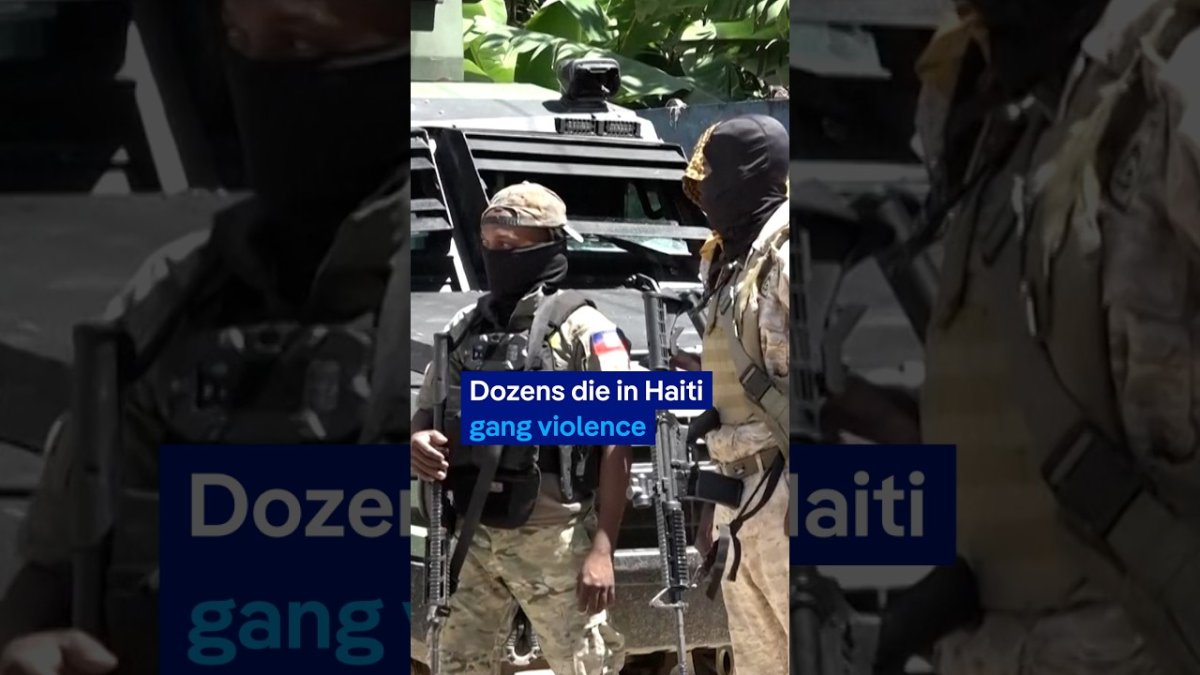
The Night of Terror in Kenscoff
Kenscoff Mayor Massillon Jean described the assault as "a night of terror" in an interview with AFP. "We have counted around 40 bodies. Searches are continuing. Some people are still missing," he said. The mayor detailed the horror: "The bandits raided a displaced persons camp located in a church. They executed several people. There are fatalities and dozens of wounded. Some people were abducted by the criminals."
The United Nations has since confirmed a higher toll, reporting at least 47 people dead and more than 22 injured, with casualty estimates expected to change as search teams comb through the rubble and surrounding homes. The Haitian human rights organization RNDDH offered a slightly different count, estimating between 30 and 40 killed and 15 to 20 wounded, but all accounts agree on the savagery of the assault. Several of those killed had already fled violence earlier this year, only to find death waiting for them in a house of worship.
The attackers did not stop at the church. They also targeted private homes, including the residence of Jean William Pape, a leading public health expert known for his work combating HIV and cholera in Haiti. The mayor blamed members of Viv Ansanm, a powerful gang coalition that the United States designated a "foreign terrorist organization" in 2025. The coalition, which controls much of the capital, has expanded its reach into the hills with impunity.
Why Kenscoff Matters
Kenscoff is not just another hillside town; it is a strategic prize. Sitting at roughly 1,500 meters above sea level, it overlooks the routes into Pétion-Ville, the upscale suburb where several embassies, luxury hotels, and the temporary seat of government are located. Whoever controls Kenscoff holds a commanding view of the capital's lifelines. For the gangs, taking Kenscoff means tightening a noose around the remaining symbols of Haitian state authority.
For the people sheltering there, it meant the collapse of their last refuge. Residents have called for the local police chief to resign amid allegations that officers failed to protect those inside the church, which sits just minutes away from the police station. The proximity of the station to the massacre has fueled anger and despair, as many believe the police either could not or would not intervene. This sense of abandonment echoes the experience of communities across Mexico that have faced cartel violence, where the same fear and the same resilience emerge when the state fails to protect its citizens.
A Region in Crisis: Gangs, Displacement, and Hunger
The Kenscoff massacre is the latest chapter in a long-running tragedy. Gangs now control an estimated 70 percent of Port-au-Prince, and their influence extends far beyond the capital. The UN reports that violence has displaced about 1.5 million people across Haiti, a staggering number for a nation of roughly 11 million. More than five million Haitians face severe food insecurity, a humanitarian catastrophe that shows no signs of abating.
The numbers are numbing, but they represent real lives. From January to June 2026 alone, more than 3,100 people were reported killed and 1,189 injured as gangs continued their attacks in Port-au-Prince. Early last year, gang attacks in Kenscoff killed more than 260 people and destroyed or set ablaze 200 homes, displacing 3,000 people. Since then, at least 10 more attacks have taken place in the area. The church shelter attacked on Sunday was supposed to be a safe haven; instead, it became a tomb.
Government Response and the International Mission
In a statement, the office of Prime Minister Alix Didier Fils-Aimé condemned the "heinous attack" and expressed "deep compassion" for the victims. The government said security forces were on the highest alert and that reinforcements were being deployed. "Kenscoff will not be abandoned. Haiti will not be handed over to bandits. The Republic will prevail," the statement read. But for a government that has struggled to exert control over even the capital, these words ring hollow to many Haitians who have heard similar promises before.
The international community has promised help, but it has been slow to deliver. A UN-backed multinational security support mission (MSS) is mandated to help Haiti's under-equipped police force, but it has not reached its full capacity of about 5,500 members. On Monday, Chad's president announced that the country will deploy 1,500 soldiers to the mission, a significant boost but still far short of what is needed. The mission, which includes personnel from several nations, has been hampered by funding shortfalls and logistical challenges, leaving Haitian police to face heavily armed gangs largely on their own.
Impact on Latin America and Migration
For readers in Mexico and across Latin America, the crisis in Haiti is not a distant tragedy. It is a direct driver of migration through the Caribbean toward Mexico and the US border. In recent years, Haitian migrants have transited Mexican cities such as Tapachula and Tijuana, often facing their own hardships along the way. The collapse of security in Haiti pushes more people to flee, and the region must prepare for another wave of arrivals.
Mexico's Foreign Ministry (SRE) has participated in regional efforts on Haiti through the Organization of American States (OAS), recognizing that the crisis requires a coordinated response. But diplomatic efforts have not translated into security on the ground. The gangs in Haiti operate with near-total impunity, and their violence has regional consequences. Every massacre in Kenscoff or Port-au-Prince sends another ripple through the Caribbean, and eventually, those ripples reach Mexican shores.
What to Watch For
Haiti has not held a general election since 2016. President Jovenel Moise was assassinated in July 2021 and never replaced, leaving a power vacuum that gangs have exploited. A general election is expected in December 2026, and voter registration is underway, but experts warn the country is currently too dangerous to hold a credible vote. The Kenscoff massacre underscores that warning, as gangs demonstrate their ability to strike anywhere, at any time.
The MSS mission's buildup will be critical. If Chad's 1,500 soldiers arrive as promised, it could shift the balance of power in some areas, but it will not be enough to secure the entire country. The Haitian people, like the communities in Kenscoff that have endured attack after attack, are running out of patience and out of options. The international community, including Mexico and the United States, must decide whether Haiti's collapse is acceptable or whether it warrants a more robust and urgent response.
For Latin America, the lesson is clear: Haiti's pain does not stay in Haiti. It travels with the displaced, crosses borders, and lands in the streets of Tapachula and Tijuana. The region cannot afford to look away. The people of Kenscoff, those who survived and those who did not, deserve more than condolences. They deserve a future where a church is a place of peace, not a site of execution. The Republic may prevail, as the prime minister promised, but only if the world acts with the urgency this moment demands.
By Rosa Martinez, Staff Writer
This article was produced with AI-assisted research and editorial support. Reporting is based on sources cited in the article.
What's Your Reaction?
 Like
0
Like
0
 Dislike
0
Dislike
0
 Love
0
Love
0
 Funny
0
Funny
0
 Wow
0
Wow
0
 Sad
0
Sad
0
 Angry
0
Angry
0
Latin America/Andes Correspondent at Global1.News. Based in Bogota, covering politics, environment, energy, and social movements across the Andean region. Passionate about environmental journalism and communities protecting their land.










Comments (0)