
Avocado Operations Resume in Michoacán After Export Pause
The wait is over for the families of Michoacán. After eight tense days of suspended inspections and halted shipments, the U.S. government has fully resumed all agricultural operations in the state, including the crucial certifications that allow Mexican avocados to cross the border into the United States.
Avocado Operations Fully Resume in Michoacán After Export Pause
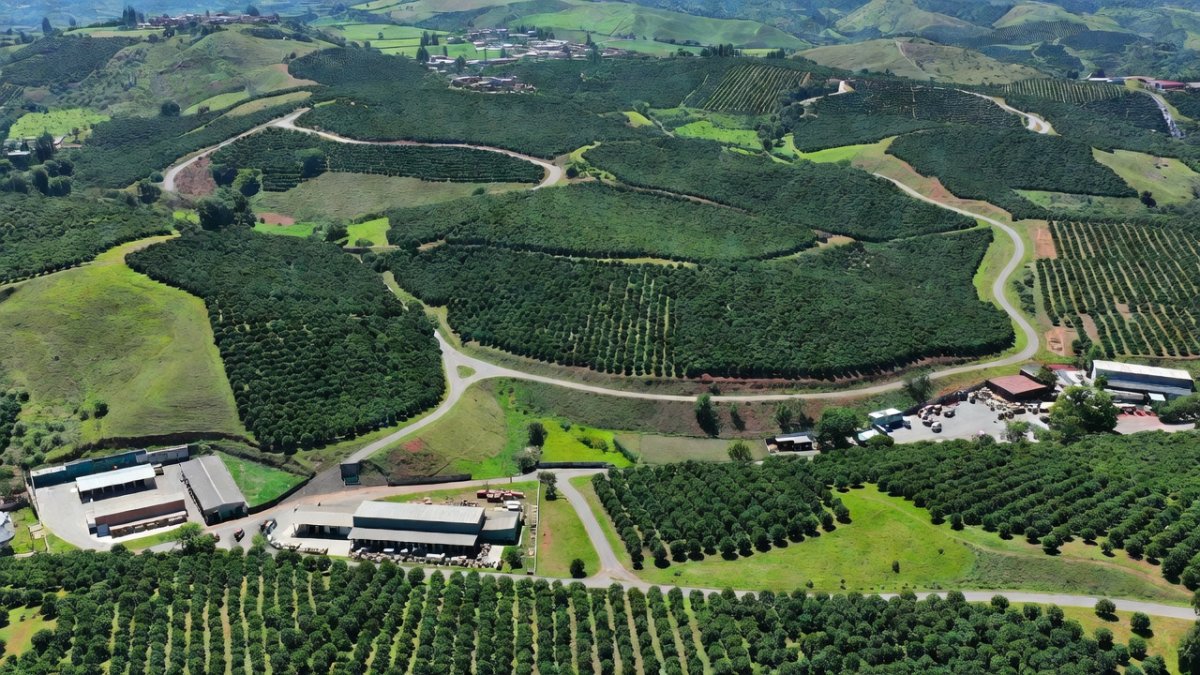
The wait is over for the families of Michoacán. After eight tense days of suspended inspections and halted shipments, the U.S. government has fully resumed all agricultural operations in the state, including the crucial certifications that allow Mexican avocados to cross the border into the United States. The announcement, made on Thursday, August 13, brings a collective sigh of relief to the roughly 200,000 people whose livelihoods depend on what many here call "green gold."
The pause began on August 5, when the U.S. Department of Agriculture (USDA) temporarily halted inspections and certification of new avocado shipments. This decision came just one day after the U.S. Embassy issued a security alert in Michoacán, a state that has long grappled with the presence of organized crime groups that extort producers and packers. For the campesinos, truck drivers, and packing plant workers in towns like Tancítaro and Uruapan, those eight days felt like an eternity, with millions of dollars in perishable product hanging in the balance.
Now, with the full resumption of activities, the rhythm of the harvest can return to normal. The U.S. buys approximately 80% of Mexico's avocado exports, and Michoacán alone produces roughly three-quarters of the nation's avocados. This is not just a trade statistic; it is the economic engine that powers entire communities, from the orchards on the hillsides to the bustling packing houses that prepare the fruit for international markets.
A Swift Response from the Sheinbaum Administration
The resolution of this crisis was not left to chance. When the U.S. Embassy issued its security alert on August 4, President Claudia Sheinbaum's administration moved quickly to address the concerns of their northern neighbors. By August 6, the federal government had deployed approximately 1,500 additional troops—reports cite 1,557 soldiers and National Guard personnel—to secure avocado production hubs and protect agricultural personnel across the state.
This deployment was a clear signal from the Palacio Nacional that the security of U.S. inspectors and the integrity of the avocado supply chain were top priorities. The presence of SEDENA and Guardia Nacional elements in the orchards and along transport routes was meant to reassure both Washington and the local communities that the government was taking the threat seriously. For many in Michoacán, seeing the green uniforms of the National Guard patrolling the roads was a welcome sight, a tangible sign that the state was not being abandoned to the whims of criminal groups.
The strategy worked. By Friday evening, August 7, U.S. Ambassador to Mexico Ronald Johnson announced on X that government activities in the state would partially resume starting August 8. Official operations were restored in key municipalities including Tancítaro, Tacámbaro, Uruapan, and the area between Morelia and Pátzcuaro. This partial resumption was a critical first step, allowing some product to begin moving again, but the full green light would take a few more days of careful evaluation.
Diplomatic Cooperation and the Path to Full Resumption
The full resumption on August 13 was framed by both governments as a triumph of bilateral cooperation. Ambassador Johnson took to social media to celebrate the news, writing, "U.S.-Mexico cooperation delivers results: Full resumption of U.S. government activities in Michoacán." His earlier statements had set a cooperative tone, acknowledging the efforts of the Mexican government to strengthen security for U.S. personnel and the people of Michoacán.
"We appreciate the cooperation of the Government of Mexico and the actions it has taken to help strengthen security for US personnel and the people of Michoacán," Johnson had written. "A secure agricultural sector benefits both of our nations by securing food production, strengthening supply chains, and supporting economic prosperity." This language of mutual benefit was echoed by Mexican officials, who emphasized that the security measures were not just for the Americans, but for the safety of all who live and work in the region.
The U.S. Embassy's announcement confirmed that all U.S. government activities in Michoacán had fully resumed, including the inspections needed for avocado exports. Ambassador Johnson noted that trade restarted after the Mexican government implemented additional security measures and U.S. authorities evaluated the situation to be secure. This careful, step-by-step approach—from alert to deployment to partial resumption to full operations—demonstrated a mature diplomatic channel between Mexico City and Washington.
The Human Cost of an Eight-Day Pause
While the crisis was resolved efficiently, the impact of those eight days was deeply felt across Michoacán. Local media reports indicate that the partial-resumption announcement on August 8 resulted in the release of 1,000 tons of avocados that had been waiting for export to the United States. For the families who depend on this trade, every day of delay means lost income, potential spoilage, and uncertainty about the future.
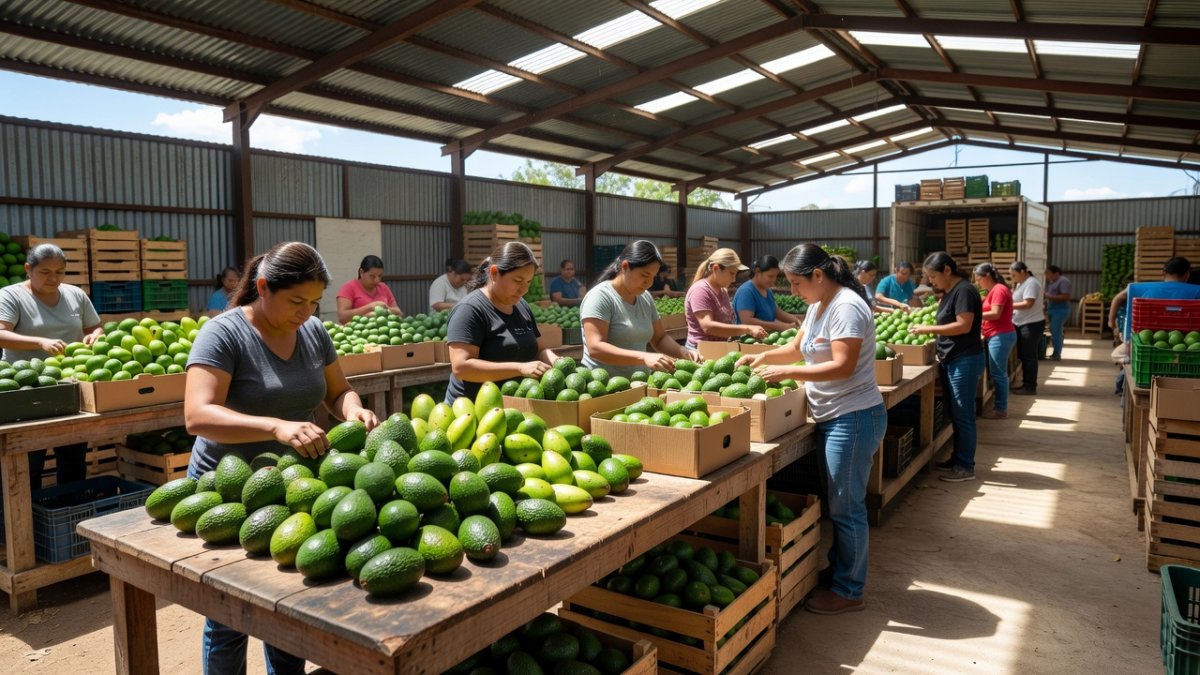
The avocado industry in Michoacán is not just about large corporations; it is a web of small-scale farmers, ejidos, and comunidades indígenas who have cultivated this fruit for generations. The truck drivers who navigate the winding mountain roads, the women who sort and pack the fruit in the plants, and the local shopkeepers who serve these workers all feel the ripple effects of any disruption. When the inspections stopped, so did the flow of money, and for many families, that is a direct threat to their ability to put food on the table.
The Association of Avocado Producers and Exporting Packers of Mexico (APEAM) celebrated the resumption, calling it a "significant step forward." In a letter signed by APEAM's General Director Luis Javier de la Rocha Zazueta and Board Chair Raúl Ernesto Martínez Pulido, the organization expressed its relief: "This is a big step for [the state] and brings greater certainty to the ag sector, which creates jobs, strengthens supply chains, and contributes to the well-being of communities in Mexico and the United States." These words reflect the deep interconnection between the orchards of Michoacán and the breakfast tables of American families.
Security Concerns and the Shadow of Extortion
The underlying issue that triggered this pause is a familiar one for Michoacán: organized crime. Michoacán state authorities described the U.S. operational pause as a "preventive" safety measure linked to recent law enforcement arrests targeting local criminal extortion rings. Organized crime groups routinely demand illegal payments—sometimes calculated at per-kilogram rates—to allow shipments to proceed. This is a tax that no farmer wants to pay, but one that has become a grim reality of doing business in the region.
The U.S. Embassy's warning that Michoacán remains under a Level 4 "Do Not Travel" advisory—the most restrictive designation in the State Department's travel advisory system—is a stark reminder that the security challenges are far from over. This is not a new problem; in early 2024, two USDA employees were assaulted and briefly detained by armed assailants in Michoacán, prompting a similar operational freeze. While no direct assault on U.S. personnel was reported in the latest alert, the memory of that incident looms large.
For the people of Michoacán, this is a daily reality. They live with the presence of criminal groups, the constant threat of violence, and the knowledge that their prosperity can be interrupted at any moment. The deployment of federal troops is a temporary measure, but the underlying issues of extortion and insecurity require long-term solutions that address the root causes of crime, including poverty, lack of opportunity, and weak local institutions.
Economic Stakes: Billions of Dollars and American Appetites
The economic stakes of this trade are immense. Mexico exported approximately $3.7 billion worth of avocados to the U.S. in 2025, a staggering figure that underscores the importance of this single commodity. The U.S. relies on Mexico for over 80% of its total avocado supply, and domestic producers in California simply cannot satisfy consumer demand. This means that any prolonged disruption in Michoacán has the potential to create supply shortages and drive up retail prices across American supermarkets and restaurants.
For the Mexican Hass Avocado Association, the pause was not expected to significantly hurt cross-border sales. Past security-driven export suspensions have typically been resolved within days once Mexican authorities guarantee fortified security escorts for federal agricultural personnel. This time was no different, with the entire episode lasting just over a week. However, the frequency of these disruptions is a cause for concern, as each one chips away at the confidence of buyers and investors.
The fact that only one other Mexican state, Jalisco, is authorized by the USDA to export avocados to the U.S. (since 2022) puts an enormous amount of pressure on Michoacán. Its volume is much smaller, meaning that Michoacán remains the undisputed heart of the avocado trade. Diversifying production to other states could help mitigate risks, but that is a long-term project that requires significant investment in new orchards, infrastructure, and certification processes.
Looking Forward: Certainty and Community Resilience
As the dust settles on this latest crisis, the focus now shifts to the future. The full resumption of U.S. government activities is a positive sign, but it is not a guarantee against future disruptions. The people of Michoacán know that the security situation can change quickly, and they have learned to be resilient in the face of uncertainty. The community's strength lies in its ability to adapt, to organize, and to keep working despite the challenges.
For the Sheinbaum administration, this episode is a test of its ability to manage both security and economic priorities. The deployment of troops was a decisive action, but the government must now work on longer-term strategies to pacify the region and provide lasting security for its citizens. This includes strengthening local police forces, investing in social programs, and tackling the corruption that allows criminal groups to thrive.
The avocado growers, packers, and truck drivers of Michoacán are not just workers; they are the backbone of a multi-billion-dollar industry that feeds millions of people. Their resilience is a testament to the spirit of Mexico, a country that has faced countless challenges and always found a way to move forward. As the trucks roll again and the inspections resume, there is a sense of cautious optimism in the air—a hope that this time, the peace will last a little longer.
Tags: avocado exports, Michoacán, USDA inspections, Claudia Sheinbaum, Ronald Johnson, APEAM, green gold, security alert, Tancítaro, Uruapan, avocado trade, Mexico economy, Guardia Nacional, SEDENA
This article was produced with AI-assisted research and editorial support. Sources: Mexico News Daily, UPI, Reuters, U.S. Embassy in Mexico, FreshFruitPortal.com.
By Rosa Martinez, Staff Writer
What's Your Reaction?
 Like
0
Like
0
 Dislike
0
Dislike
0
 Love
0
Love
0
 Funny
0
Funny
0
 Wow
0
Wow
0
 Sad
0
Sad
0
 Angry
0
Angry
0

Latin America/Andes Correspondent at Global1.News. Based in Bogota, covering politics, environment, energy, and social movements across the Andean region. Passionate about environmental journalism and communities protecting their land.














Comments (0)