
Mexican drug lord on FBI's 10 most wanted list arrested in shoot-out
In the early hours of Friday, a dramatic shoot‑out in Guasave, Sinaloa, ended with the capture of Fausto Isidro “Chapo Isidro” Meza Flores, a figure who has long lingered in the shadows of Mexico’s drug wars.
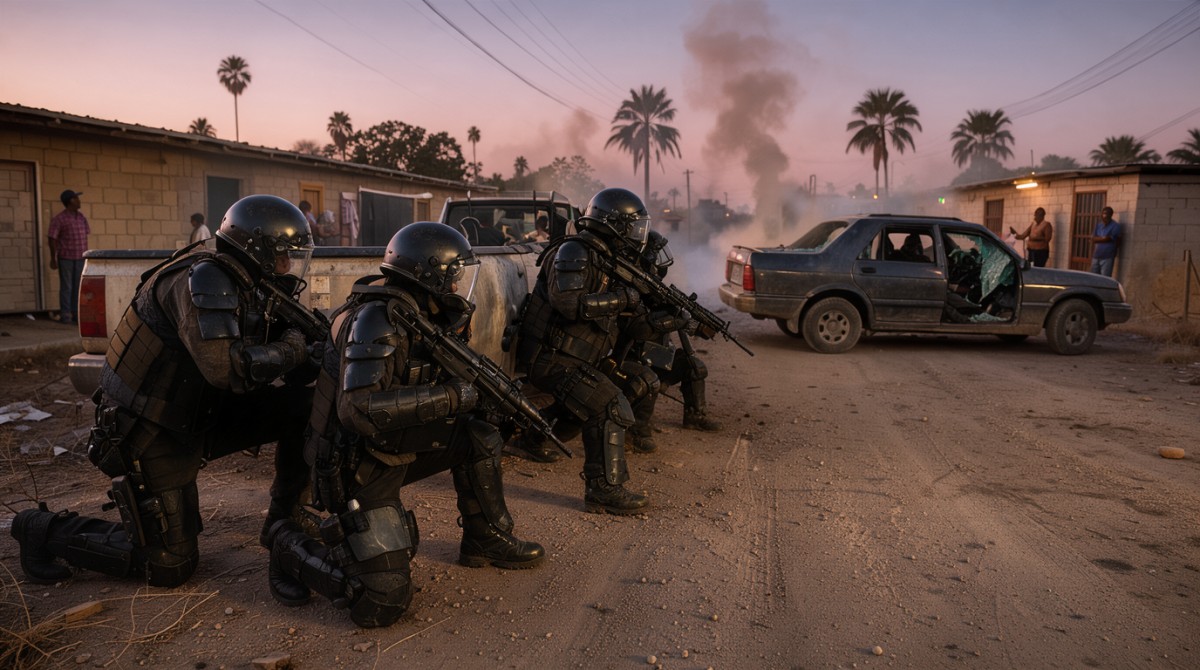
In the early hours of Friday, a dramatic shoot‑out in Guasave, Sinaloa, ended with the capture of Fausto Isidro “Chapo Isidro” Meza Flores, a figure who has long lingered in the shadows of Mexico’s drug wars. The operation, carried out by Mexican special forces, not only removed a man on the FBI’s ten‑most‑wanted list but also underscored the volatile interplay between local cartels, U.S. pressure, and Mexico’s own political calculus. As the dust settles, the ramifications echo far beyond the blood‑stained streets of Sinaloa, touching on the very nature of the region’s illicit economies and the state’s capacity to confront them.
From low‑profile kingpin to most‑wanted target
Fausto Isidro Meza Flores, known in the underworld as “Chapo Isidro,” has been the head of what officials call the Meza Flores Organisation, or the Guasave Cartel. While the cartel’s origins trace back to the 1990s, Meza Flores managed to avoid the spotlight by keeping a low profile, a strategy that allowed him to operate under the radar of both Mexican and American law‑enforcement agencies for decades.
His ascent to the FBI’s ten‑most‑wanted list in 2025 marked a turning point. The U.S. agency accused him of “flooding the United States with fentanyl, cocaine, heroin and other deadly drugs,” and linked him to a cache of 20 million fentanyl pills seized in 2024. The list also highlighted alleged “heinous crimes” such as kidnapping, extortion and torture, painting a portrait of a trafficker whose reach extended far beyond the borders of Sinaloa.
The Guasave operation: tactics and tragedy
According to Mexico’s defence secretariat, special forces arrived in Guasave employing “stealth and surprise,” establishing a perimeter to block escape routes and reinforcements. The operation quickly escalated when the cartel opened fire with gunfire and explosives, prompting a fierce exchange. Video footage circulating online shows helicopters unleashing streams of bullets, while other clips capture civilians fleeing a nearby baseball stadium as the sounds of gunfire echo.
The clash proved deadly on both sides. Seven suspects, including Meza Flores’s second‑in‑command—his cousin—were killed, as were four Mexican soldiers traveling to reinforce security in the town. In total, eight individuals were arrested: Meza Flores, his cousin, his brother‑in‑law who handled the cartel’s finances, and five other members who remain detained in Sinaloa. The secretariat also reported the seizure of multiple weapons, a grenade launcher, drugs and cash, though exact quantities were not disclosed.
U.S. involvement and the politics of extradition
The United States has been a persistent backdrop to the operation. The FBI’s most‑wanted designation and the charges dating back to 2012 and again in 2019 illustrate a long‑standing pursuit. While the U.S. Consulate General in Hermosillo warned its citizens to stay alert and remain sheltered in place, it stopped short of confirming any direct American participation in the raid.
Nevertheless, the arrest aligns with a broader U.S. demand for Meza Flores’s extradition. The FBI’s narrative frames him as a conduit for a “scourge of illicit drugs” crossing the southern border, a point repeatedly emphasized by then‑acting FBI director Brian Driscoll. The extradition request reflects a pattern of cross‑border cooperation that, while welcomed by Mexico in principle, remains fraught with sovereignty concerns.
Mexico’s shifting stance under President Sheinbaum
President Claudia Sheinbaum has taken a firmer line against cartels, positioning herself as a defender of Mexican sovereignty against perceived U.S. intervention. While her administration has welcomed closer collaboration with American agencies, it has consistently resisted any “boots on the ground” approach. The Guasave operation, conducted by Mexican forces using U.S. intelligence, exemplifies this delicate balance: leveraging foreign information while maintaining domestic command of the response.
Sheinbaum’s approach also reflects a broader political narrative. By showcasing decisive action against a high‑profile target, her government signals a commitment to curbing cartel power, a stance that resonates with a public weary of endemic violence. Yet the operation’s casualties—both cartel members and soldiers—highlight the human cost of such confrontations, a reality that will test the administration’s political capital.
The cartel’s broader conflict landscape
Meza Flores’s organization has long been locked in a brutal turf war with the Sinaloa Cartel, one of the nation’s most powerful drug trafficking groups. U.S. officials have described this clash as “extremely violent,” a characterization borne out by the heavy fire exchanged during the Guasave raid. The rivalry stems from competition over trafficking routes and market share, especially in the lucrative fentanyl and methamphetamine trades that have surged in recent years.
Historically, Meza Flores rose from the Beltrán Leyva Organization, a group that splintered in the early 2010s. A split between rival factions forced him to establish his own cartel by 2013, a move that intensified regional violence. The Guasave operation, therefore, is not an isolated incident but part of a larger, ongoing struggle for dominance among Mexico’s drug syndicates.
Human toll and community impact
The shoot‑out left the town of Guasave shaken. Residents reported hearing the thunder of gunfire and seeing helicopters hover over familiar streets. The secretariat’s advisory for U.S. citizens to remain sheltered reflects the broader climate of fear that grips communities caught in the crossfire of cartel battles and state interventions.
Beyond the immediate violence, the operation’s aftermath raises questions about the fate of those detained. While Meza Flores, his cousin and brother‑in‑law have been flown to Mexico City for prosecution, the five remaining suspects remain in Sinaloa, their legal status uncertain. The seizure of weapons and cash suggests a disruption of the cartel’s operational capacity, yet the deep‑rooted networks that sustain the drug trade mean that any vacuum may quickly be filled by rival groups.
Looking ahead: implications for the drug war
The capture of a figure on the FBI’s most‑wanted list is a symbolic victory for Mexican authorities and a morale boost for U.S. law‑enforcement agencies. However, the operation also underscores the entrenched nature of Mexico’s drug economy. While the removal of Meza Flores may temporarily hinder the flow of fentanyl, cocaine, heroin and other substances, the broader market dynamics—driven by demand in the United States and the profitability of synthetic drug production—remain unchanged.
For policymakers, the Guasave raid offers a case study in the limits of targeted strikes. The loss of life among soldiers and suspects alike illustrates the high stakes of confronting well‑armed cartels. As President Sheinbaum’s administration navigates the delicate balance between cooperation with the United States and protecting national sovereignty, future operations will likely continue to rely on shared intelligence while emphasizing Mexican command.
Ultimately, the story of “Chapo Isidro” Meza Flores is a reminder that the drug war is as much about power, territory and survival as it is about narcotics. The streets of Guasave may have quieted for a moment, but the underlying currents of violence and profit that have defined the region for decades persist, waiting for the next flashpoint to ignite.
This article was produced with AI-assisted research and editorial support. Reporting is based on the source material cited below. Sources: BBC News Latin America; bbc.co.uk; Global1.News (22 November 2026).
By Elena Vasquez, Staff Writer
What's Your Reaction?
 Like
0
 Dislike
0
 Love
0
 Funny
0
 Wow
0
 Sad
0
 Angry
0
Latin America Correspondent at Global1.News. Based in Mexico City, covering politics, economics, energy, and culture across the region. Brings an on-the-ground perspective to stories spanning from the Rio Grande to Patagonia.











Comments (0)