
469 Kilos of Haaland-Branded Cocaine Seized in Ecuador
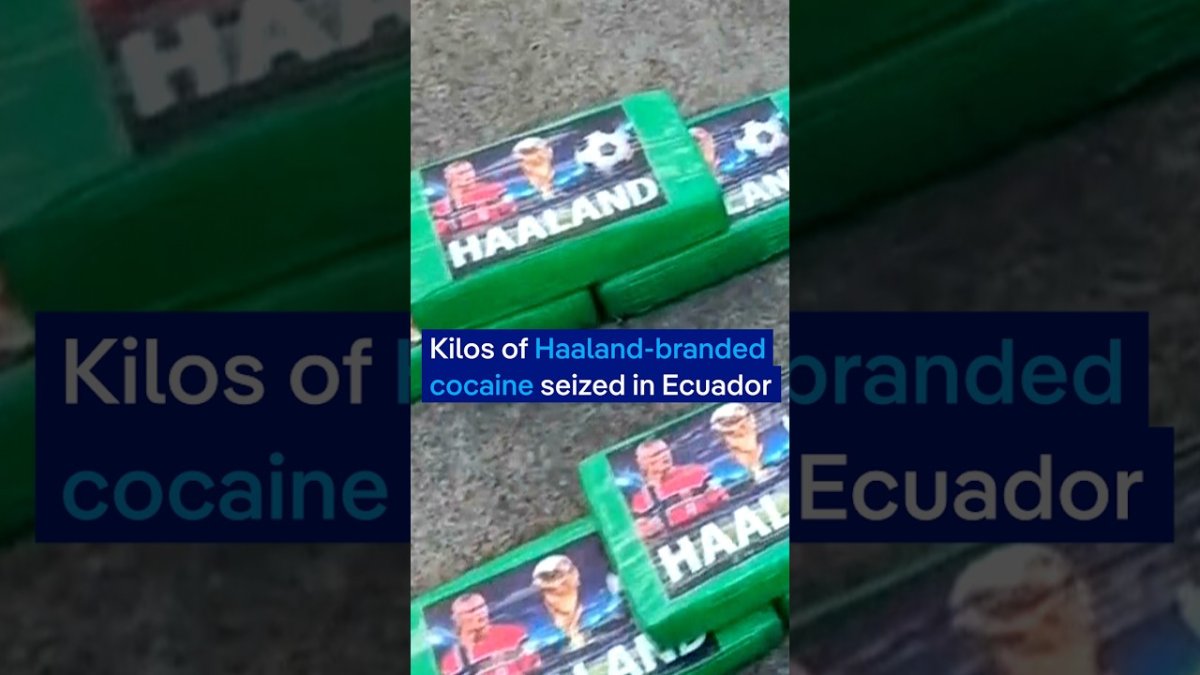
In a recent DW News report, Ecuadorian police unveiled a staggering find: 469 kilograms of cocaine — nearly half a ton — hidden in a truck's false bottom on the Pan-American Highway. The packages weren't anonymous bricks; they were stamped with the face and name of Norwegian soccer star Erling Haaland, and some carried the name of Lionel Messi.
In a recent DW News report, Ecuadorian police unveiled a staggering find: 469 kilograms of cocaine — nearly half a ton — hidden in a truck's false bottom on the Pan-American Highway. The packages weren't anonymous bricks; they were stamped with the face and name of Norwegian soccer star Erling Haaland, and some carried the name of Lionel Messi. For families in Mexico's colonias and rural pueblos, this isn't just a bizarre headline — it's a window into the transnational drug networks that touch every corner of our continent, from the Andes to the taquerías of Tijuana.
The seizure, announced by the Policía Nacional del Ecuador's anti-narcotics unit on Wednesday, took place in Tulcán, in the northern province of Carchi, just kilometers from the Colombian border. A Colombian woman driving the truck was arrested after police acted on an anonymous tip. The video released by authorities shows dozens of green rectangular packages spilling out of the vehicle's hidden compartment — each one a grim souvenir of a global trade that connects soccer superstars, cartel branding wars, and the daily struggles of ordinary people.
Kilos of Haaland-Branded Cocaine Seized in Ecuador: A Half-Ton Haul on the Colombia Border
Tulcán, Ecuador – Mexico City — The Pan-American Highway, a ribbon of asphalt that runs from Alaska to Patagonia, passes through Tulcán like a lifeline. On Wednesday, that lifeline became a trap. Ecuadorian anti-narcotics police stopped a truck on the highway and discovered 370 packages of cocaine — 469.6 kilograms in total — hidden in a false bottom designed to evade inspection. Many of the packages were wrapped in green rectangular packaging emblazoned with Haaland's face and name; others bore the name of Lionel Messi. The driver, a Colombian woman, was arrested on the spot.
Police did not publicly explain the Haaland stickers, but experts say celebrity branding on cocaine shipments is not unusual in the region. The haul, nearly half a ton, represents a significant blow to trafficking networks that use Ecuador's northern border as a staging ground. The province of Carchi, where Tulcán sits, is a key corridor for cocaine moving from Colombia — one of the world's largest producers — toward Pacific ports like Guayaquil, where the drugs are shipped to consumers in the United States, Europe, and yes, Mexico.
The Story Unfolds: A Tip, a Truck, and a False Bottom
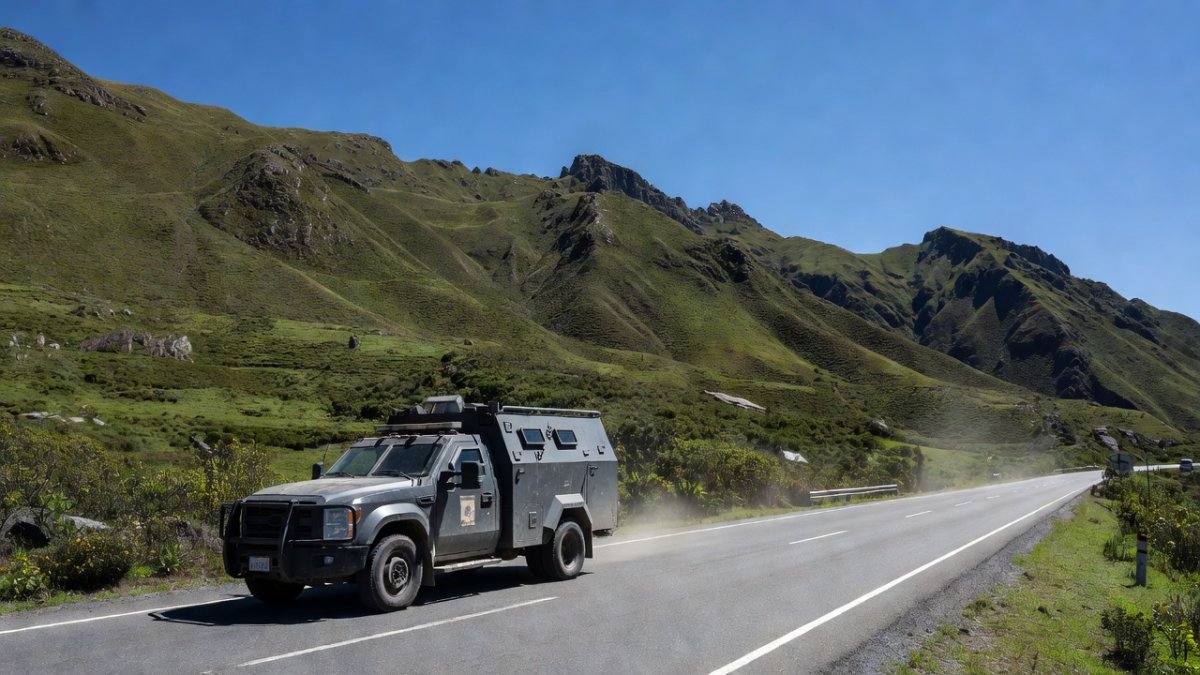
The operation began with an anonymous tip, a common thread in Ecuador's ongoing drug war. Police from the Policía Nacional del Ecuador's anti-narcotics unit set up a checkpoint on the Pan-American Highway in Tulcán, the capital of Carchi province and a flashpoint in the country's battle against organized crime. When the truck approached, officers noticed irregularities in its structure. A search revealed the false bottom — a compartment so well-constructed that it required tools to access. Inside, they found the 370 packages, each weighing roughly 1.27 kilograms, a standard unit in the cocaine trade.
The arrested driver, a Colombian woman whose name has not been released, now faces charges under Ecuador's comprehensive drug trafficking laws. Police released video of the seizure, showing officers pulling package after package from the hidden compartment, their green wrappers bearing Haaland's stoic face. The visual was striking: a soccer superstar's image, usually associated with goals and glory, now stamped on a product that destroys lives. For the people of Tulcán, this is not abstract. The city has seen its share of violence as cartels fight for control of the border corridor, and residents live with the daily reality of a drug war that President Daniel Noboa declared an "internal armed conflict" in January 2024.
The seizure is part of a broader pattern. Ecuadorian authorities have reported record cocaine confiscations in recent years, with the country seizing over 200 tons of drugs in 2024 alone. But this haul stands out not just for its size, but for its branding — a reminder that the drug trade is as much about marketing as it is about logistics.
Why Haaland? Celebrity Branding on the Cocaine Trail
Why would traffickers stamp Haaland's face on their product? The answer lies in the strange world of cartel branding, where pop culture meets the black market. Celebrity names and images on cocaine packages are not new. In recent years, authorities have seized shipments bearing the names of Messi, Neymar, and even fictional characters like the Joker. The branding serves multiple purposes: it distinguishes one cartel's product from another, signals quality to buyers, and sometimes mocks authorities or rivals.
Haaland's image, in particular, may be a nod to his explosive performance at the 2026 World Cup, where he scored seven goals across four matches in July, becoming a global social media phenomenon. His face, already ubiquitous in sports media, now adorns cocaine bricks in Ecuador. Police did not speculate on the meaning, but observers note that the branding could be a way for a specific trafficking group to mark its territory — a "brand war" that mirrors the turf battles playing out in Ecuador's streets.
For Mexican readers, this is familiar territory. In Mexico, cartels have long used branding to assert dominance. The Cartel Jalisco Nueva Generación (CJNG) and the Sinaloa Cartel have been known to mark their shipments with logos, names, or symbols. The practice is so common that Mexican authorities have seized cocaine packages stamped with everything from religious icons to cartoon characters. The Haaland branding is a reminder that the drug trade is not just a criminal enterprise — it's a cultural phenomenon that co-opts the symbols we love.
Ecuador's Drug War Intensifies: Noboa's Internal Armed Conflict
This seizure comes at a critical moment for Ecuador. President Daniel Noboa, who took office in November 2023, has made the fight against drug gangs a centerpiece of his administration. In January 2024, he declared an "internal armed conflict" against organized crime, designating groups like Los Lobos and Los Choneros as terrorist organizations. The move gave the military sweeping powers to conduct operations, and the results have been mixed. While seizures have increased, violence has also spiked, with gang-related murders and prison riots making headlines worldwide.
The Carchi province, where Tulcán is located, is a strategic prize. It borders Colombia's Nariño department, a region controlled by the FARC dissidents and other armed groups that produce and transport cocaine. The Pan-American Highway through Tulcán is a direct route to Ecuador's Pacific coast, where ports like Guayaquil serve as major export hubs. According to the United Nations Office on Drugs and Crime, Ecuador sits between the world's largest cocaine producers — Colombia and Peru — and the world's largest consumers, making it a transit country of immense importance.
The "internal armed conflict" has had profound effects on Ecuadorian society. The military now patrols streets in Quito and Guayaquil, and checkpoints like the one in Tulcán have become routine. But the drug trade adapts. Traffickers use false bottoms, submarines, and even drones to move product. Wednesday's seizure is a victory, but it's one battle in a war that shows no signs of ending. For the people of Carchi, the conflict is not abstract — it's the sound of helicopters overhead, the sight of armed soldiers at roadblocks, and the fear that their children might be recruited by gangs offering quick money.
What This Means for Mexican Communities: The Same Networks, The Same Pain
For Mexicans, the Haaland cocaine seizure in Ecuador is more than a curiosity — it's a reminder that the same transnational networks operate across our region. The CJNG and Sinaloa Cartel have established relationships with Ecuadorian and Colombian groups, using the Pacific coast to move cocaine northward. Mexican ports like Manzanillo and Lázaro Cárdenas have become key entry points for South American cocaine, and Mexican cartels control much of the distribution network in the United States.
The impact on Mexican communities is direct. In cities like Tijuana, Ciudad Juárez, and Monterrey, cocaine addiction has devastated families, while the violence associated with drug trafficking has turned colonias into battlegrounds. The fentanyl crisis, which has killed tens of thousands of Americans, has also affected Mexico, where synthetic opioids are now produced and consumed. But cocaine remains a staple of the trade, and the profits from shipments like the one seized in Tulcán fund the weapons, corruption, and violence that plague our communities.
There is also a human cost that statistics don't capture. In Guadalajara, a mother waits for news of her son who disappeared after being recruited by a cartel. In Oaxaca, a campesino watches his village's youth leave for the north, lured by the promise of money from the drug trade. In Mexico City, a family in the colonia Doctores mourns a father killed in a turf war. The cocaine seized in Ecuador is not just a product — it's a chain that links the Andes to our streets, and every seizure is a small victory against a system that profits from suffering.
Mexican authorities have taken note. In recent years, Mexico has increased cooperation with Ecuador and Colombia on security matters, sharing intelligence and coordinating operations. The Secretaría de Marina (SEMAR) and the Secretaría de la Defensa Nacional (SEDENA) have conducted joint patrols in the Pacific, and the Fiscalía General de la República (FGR) has worked with its Ecuadorian counterparts to dismantle trafficking networks. But the challenge is immense, and the drug trade's adaptability means that every victory is temporary.
Reactions and Responses: From Quito to Manchester
The reaction to the seizure has been swift. Ecuadorian police officials hailed the operation as a success, emphasizing in their statement that the arrest followed a community tip — part of a broader push to encourage citizens to report suspicious activity. President Noboa, who has made security his top priority, has not yet commented publicly on the Haaland branding, but his administration has stressed that no seizure is too small — or too strange — to ignore. Police released video of the bust, and the images of green packages stamped with a soccer star's face spread quickly across international media.
In Norway, Haaland's home country, the news has generated a mix of amusement and concern. Fans took to social media to joke about the striker's unlikely cameo in the drug trade, with memes comparing his goal-scoring prowess to the cartel's packaging efficiency. Haaland's camp has not issued a statement, and it's unlikely the footballer will address the matter directly. For Messi, whose name also appeared on some packages, the association is similarly unwelcome. Neither player has any connection to the drug trade, and the branding is purely a marketing gimmick by traffickers.
International drug policy observers have noted the seizure as an example of the evolving tactics used by criminal groups. Security analysts who follow Latin American trafficking point out that celebrity branding is a way for traffickers to differentiate their product in a crowded market — and a way to generate publicity that, ironically, helps them recruit and intimidate. The seizure also highlights the importance of international cooperation, as the drugs were likely destined for markets far beyond Ecuador's borders.
What to Watch For: Route Shifts, Binational Cooperation, and the World Cup Legacy
As the investigation into the Tulcán seizure continues, several developments are worth watching. First, trafficking routes may shift. If Ecuadorian authorities tighten controls on the Pan-American Highway, traffickers could move to alternative corridors, including maritime routes or the porous border with Peru. Second, binational cooperation between Colombia and Ecuador is likely to intensify. The two countries have a history of tension over border security, but the shared threat of drug trafficking has pushed them toward collaboration. In recent months, joint operations have increased, and Wednesday's seizure could serve as a catalyst for further cooperation.
Third, the legacy of the 2026 World Cup, which was co-hosted by Mexico, the United States, and Canada, may influence security policies. The tournament brought unprecedented attention to the region, and authorities have used the momentum to strengthen border controls and intelligence sharing. The Haaland branding, tied to his World Cup performance, is a reminder that the event's impact extends beyond sports. Finally, the role of social media in the drug trade is likely to grow. Traffickers use platforms like TikTok and Instagram to glamorize their lifestyle, and the Haaland packaging is a prime example of how pop culture is co-opted for criminal purposes.
For the people of Tulcán, the seizure is a small victory in a long war. The city, once a quiet border town, has become a symbol of Ecuador's struggle against organized crime. The truck driver, a Colombian woman, now faces years in prison, but her arrest is unlikely to deter the networks that sent her. The cocaine will be destroyed, but more will take its place. The Haaland packages will become a footnote in the annals of drug seizures, but the trade will continue.
As we reflect on this story, let us remember the human cost behind the headlines. Every kilo of cocaine seized represents a family spared from addiction, a community protected from violence, a life saved. But it also represents the immense challenge we face as a region. From the Andes to the Sierra Madre, from Tulcán to Tijuana, the drug trade is a hydra that grows new heads as fast as we cut them off. The seizure of 469 kilograms of Haaland-branded cocaine is a reminder that the fight is far from over — but it's also a testament to the courage of the police officers, prosecutors, and ordinary citizens who refuse to give up.
In the taquerías of Mexico City and the tianguis of Oaxaca, people will talk about the strange story of the soccer star's face on a cocaine brick. They will laugh at the absurdity, shake their heads at the audacity, and perhaps feel a flicker of hope that the authorities are winning. But they will also know, deep down, that the real battle is not against packages or brands — it's against the poverty, inequality, and lack of opportunity that drive people into the arms of the cartels. Until we address those root causes, the Haalands of the drug trade will keep finding new faces to stamp on their product.
By Rosa Martinez, Staff Writer
This article was produced with AI-assisted research and editorial support. Reporting is based on sources cited in the article.
What's Your Reaction?
 Like
0
Like
0
 Dislike
0
Dislike
0
 Love
0
Love
0
 Funny
0
Funny
0
 Wow
0
Wow
0
 Sad
0
Sad
0
 Angry
0
Angry
0
Latin America/Andes Correspondent at Global1.News. Based in Bogota, covering politics, environment, energy, and social movements across the Andean region. Passionate about environmental journalism and communities protecting their land.









Comments (0)