
Putin's Kuril Islands Visit Sparks Japanese Protests
President Vladimir Putin made his first visit to the disputed Kuril Islands this week, drawing sharp protests from Japan, which claims the territory. Tokyo summoned Russia's ambassador as the decades-old territorial dispute deepens amid the Ukraine war and rising Pacific tensions.
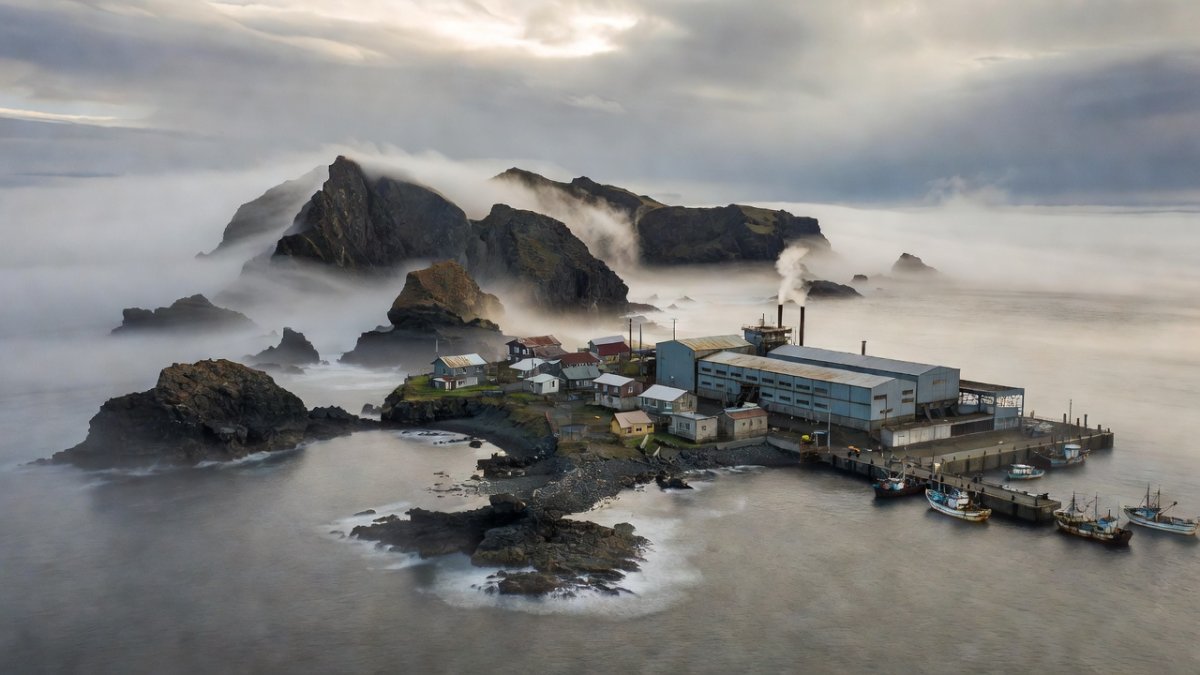
President Vladimir Putin made his first-ever visit to the disputed Kuril Islands on Thursday, a symbolic move that drew immediate and sharp protests from Japan, which claims the four-island chain as its own territory. The Kremlin released video footage of Putin on one of the main islands, with Russian media reporting he toured a fish-processing plant and was presented with caviar. The visit, which follows a Wednesday stop on the nearby island of Sakhalin, marks a significant escalation in the long-simmering territorial dispute that has defined Russian-Japanese relations for decades.
Putin's First Visit to Disputed Kuril Islands Draws Japanese Protests, Deepens Regional Rift
Moscow, Russia – this week — The visit, confirmed by the Kremlin and reported by Russian state media, is the first by Putin to the contested territory since he assumed the presidency. The islands, known as the Northern Territories in Japan, were seized by the Soviet Union in the final days of World War II and have remained a point of friction ever since. Japanese Prime Minister Sanae Takaichi responded with unusual force, telling reporters that the Northern Territories are "an inherent part of Japan's territory, both historically and under international law." She added that Putin's visit "offends the sentiments of the Japanese people and is absolutely unacceptable," and warned that it "made it more difficult to restore relations in the medium to long term."
Japan's Official Protest and Diplomatic Fallout
The diplomatic response from Tokyo was swift and formal. On Thursday, Japan's Foreign Minister Toshimitsu Motegi summoned Russian Ambassador to Japan Nikolai Nozdrev to lodge a "strong protest" against what the ministry described as Putin's surprise move. According to a statement from the Japanese Foreign Ministry, Motegi told the ambassador that the visit would "have an extremely negative impact on Japan-Russia relations." The protest underscores the depth of the rift between the two nations, which has widened considerably since Moscow's full-scale invasion of Ukraine began in 2022. Japan has joined other G7 countries in imposing sanctions on Russia and has provided financial and non-lethal aid to Kyiv, positioning itself firmly within the Western camp.
Putin's Sakhalin Stop and Security Posture
Putin's itinerary this week included a stop on Sakhalin Island on Wednesday, where he held a meeting "on ensuring the security of Russia's eastern borders," according to the state news agency RIA Novosti. The meeting took place while Russia's navy was conducting drills in the area, a clear signal of Moscow's military focus on its Pacific flank. During his remarks in Sakhalin, Putin addressed Japan's sanctions directly, calling them "unprovoked." He pushed back against Tokyo's characterization of Russia as a threat, stating, "Japan has identified Russia as a main source of threats. I would like to point out that we are not threatening Japan... On the contrary, it has territorial claims against our country." This framing positions Russia as the aggrieved party, a narrative Moscow has consistently advanced in its disputes with Japan.
Historical Context: The 1945 Seizure and Its Legacy
The four contested isles — Kunashir, Habomai, Shikotan, and Iturup in Russian; Kunashiri, Habomai, Shikotan, and Etorofu in Japanese — are part of the volcanic Kuril archipelago, which runs in a broad arc from Russia's Kamchatka Peninsula down to Japan's main northern island of Hokkaido. The Soviet Union declared war on Japan on August 8, 1945, after the atomic bomb was dropped on Hiroshima and six days before the end of the conflict. Following the occupation, Moscow deported the islands' Japanese population of approximately 17,000 people. The islands then acquired strategic importance, providing air and sea bases during the Cold War as the Soviet Union confronted the United States and Japan, its closest ally in the Pacific. Today, the islands are home to a population of about 20,000 Russian citizens who live in a harsh climate, though the territory holds significant mineral deposits including gold and silver, as well as rich fishing grounds.
Precedent: Medvedev's 2010 Visit
Putin's visit follows a precedent set by his predecessor and current deputy on the Security Council. In 2010, then-president Dmitry Medvedev became the first Russian leader to visit the disputed territory. Medvedev also went there several times subsequently as prime minister, each visit drawing protests from Tokyo. Putin's decision to make his own first visit now, however, carries additional weight given the current geopolitical climate. The timing suggests a deliberate message to Japan and its allies, reinforcing Russia's claim to the islands while the broader regional security environment grows increasingly tense.
Worsening Ties Since the Ukraine Invasion
Relations between Japan and Russia — which fought a war in 1904-5 — have deteriorated markedly since the full-scale invasion of Ukraine began in 2022. Japan's alignment with G7 sanctions and its material support for Kyiv have placed it firmly on the opposite side of Moscow's geopolitical divide. The territorial dispute, which had seen occasional diplomatic overtures in past decades, has now become a hardened front in a broader confrontation. Putin's visit effectively closes the door on any near-term diplomatic resolution, as Takaichi's comments suggest. The Japanese prime minister's statement that the visit "made it more difficult to restore relations in the medium to long term" reflects a realistic assessment of the current impasse.
Regional Dynamics: Russia-China Alignment and North Korea
The Kuril Islands visit must be viewed within the context of a rapidly shifting Pacific security landscape. Russia and China have moved closer in recent years, with their navies and air forces conducting joint exercises in areas around Japan, prompting frequent scramblings of Japanese jets. North Korea, which this month termed Japan's military build-up a "transformation into a war state," has also sent troops and artillery shells to help Russia's war against Ukraine. Japan's latest defense white paper, issued this month, again highlighted growing risks from all three countries. This convergence of threats has pushed Japan to bolster its own defense posture, creating a cycle of escalation that shows no signs of abating.
Espionage Concerns and Dual-Use Technology
Beyond the military and territorial dimensions, there is a growing concern about intelligence and technology flows. The New York Times reported in July that Russia had turned Japan into a "den of spies" and a key source of dual-use technology needed for its war in Ukraine. This report, while not officially confirmed, points to a shadow war of espionage and sanctions evasion that complicates the official diplomatic narrative. The combination of territorial disputes, military posturing, and covert operations paints a picture of two nations locked in a multifaceted rivalry with no clear off-ramp.
Analysis and Implications
Putin's visit to the Kuril Islands is a calculated provocation that serves multiple purposes for the Kremlin. Domestically, it reinforces a narrative of Russian strength and territorial integrity, appealing to nationalist sentiment. Internationally, it sends a clear message to Japan and its G7 allies that Moscow will not yield on territorial claims, regardless of sanctions or diplomatic pressure. The visit also strengthens Russia's strategic position in the Pacific, where it seeks to counterbalance U.S. influence alongside China. For Japan, the visit represents a diplomatic setback that hardens the position of those who argue for a more assertive stance toward Moscow. The medium-term outlook for Russian-Japanese relations appears bleak, with the territorial dispute now firmly entrenched as a symbol of the broader geopolitical divide. As both nations continue to fortify their positions, the Kuril Islands remain a flashpoint in a region already bristling with tension.
By Irina Volkov, Staff Writer
This article was produced with AI-assisted research and editorial support. Sources: The Moscow Times.
What's Your Reaction?
 Like
0
Like
0
 Dislike
0
Dislike
0
 Love
0
Love
0
 Funny
0
Funny
0
 Wow
0
Wow
0
 Sad
0
Sad
0
 Angry
0
Angry
0

Russia/Eastern Europe Correspondent at Global1.News. Covering Russian politics, energy, security, and the shifting dynamics of the post-Soviet space. Provides clear-eyed analysis on one of the world's most opaque regions.














Comments (0)