
Army Secretary Dan Driscoll Resigns After Months of Friction With Pete Hegseth
Army Secretary Driscoll Resigns Amid Hegseth Clashes This is a news analysis article examining the resignation of Army Secretary Daniel P. Driscoll and the circumstances surrounding his departure. The following report separates verified facts from analysis, with opinions clearly attributed to critics and observers. Washington, D.C. — Army Secretary Daniel P.
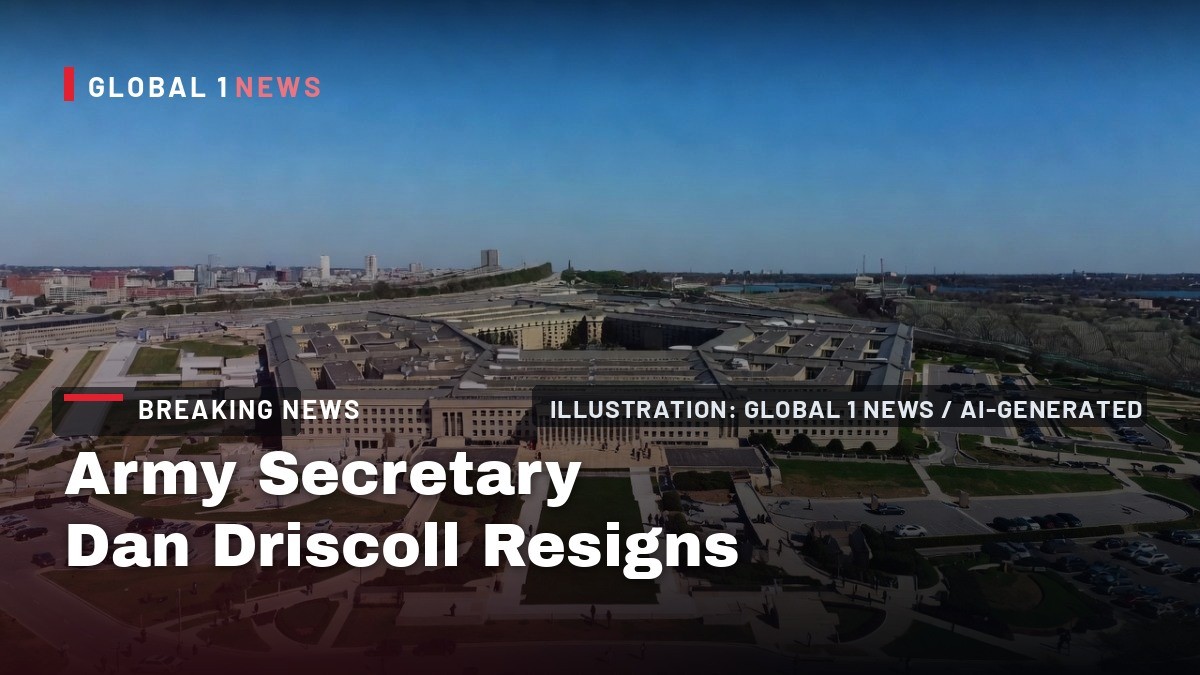
Army Secretary Driscoll Resigns Amid Hegseth Clashes
This is a news analysis article examining the resignation of Army Secretary Daniel P. Driscoll and the circumstances surrounding his departure. The following report separates verified facts from analysis, with opinions clearly attributed to critics and observers.
Washington, D.C. — Army Secretary Daniel P. Driscoll submitted his resignation to President Donald Trump on Monday, August 31, 2026, according to the White House, which confirmed the departure. The resignation was first reported by The Wall Street Journal. No official reason was given for the departure, according to Stars and Stripes and CBC News.
Driscoll, a friend of Vice President JD Vance and a former Republican congressman from North Carolina, served approximately 18 months in the role, according to CBC News. His tenure was marked by repeated clashes with Defense Secretary Pete Hegseth over the ouster of combat-tested Army leaders and the fundamental priorities of the service, according to The New York Times, POLITICO, and CBS News.
The Resignation: What Is Known
The White House confirmed that Driscoll's resignation letter was delivered directly to President Trump on Monday. In a statement to The Guardian, the White House said, "The United States Army is more powerful than ever thanks to his work alongside the Commander-in-Chief and Secretary of War."
The White House's use of the phrase "Secretary of War" is notable, as it reflects Hegseth's preferred historical nomenclature for the position of Secretary of Defense. The statement did not address the circumstances of Driscoll's departure or acknowledge any friction between the two officials.
Driscoll's resignation comes after months of reported tension with Hegseth. According to The New York Times, POLITICO, and CBS News, the two men clashed repeatedly over the removal of senior Army officers and the direction of the service. The timing of the resignation, coming just days after Hegseth forced out the Army Chief of Staff, suggests that the rupture between the two men had reached a breaking point. Defense observers note that a Secretary of the Army who cannot work with the Secretary of Defense on personnel decisions faces an impossible situation, as the service secretary's authority is ultimately subordinate to the civilian leadership above him.
Historical Context: The Army Secretary Role
The position of Secretary of the Army has deep historical roots, tracing its lineage to the Secretary of War established under President George Washington in 1789. The role was reorganized in 1947 under the National Security Act, which created the Department of Defense and established the separate service departments as subordinate components. The Secretary of the Army, as the civilian head of the Department of the Army, has traditionally served as the principal advocate for the service within the broader defense establishment.
The statutory line of succession places the Army Secretary second in line to the Secretary of Defense, according to The Guardian. That Driscoll held this position of statutory importance while engaged in sustained conflict with the Secretary of Defense highlights the unusual nature of his tenure.
Past Army Secretaries have occasionally found themselves at odds with their superiors, but the current situation is distinguished by the scale and pace of personnel changes being implemented by Hegseth. Driscoll's background as an Iraq War veteran and former congressman fit the traditional mold. His departure raises questions about what profile of candidate would be willing to accept the position under the current circumstances.
Statutory Succession and Reporting Structure
Driscoll served as Secretary of the Army, a position that places him second in the statutory line of succession to the Secretary of Defense, according to The Guardian. The Secretary of the Army oversees the Department of the Army, reporting through the Secretary of Defense to the President.
In this role, Driscoll was responsible for the administration of Army affairs, including manpower, equipment, training, and installation management. The position carries significant authority over the service's budget and policy direction, though operational command of military forces flows through the chain of command from the President to the Secretary of Defense to combatant commanders.
However, the formal reporting structure does not capture the full complexity of the relationship between the Army Secretary and the Secretary of Defense. In practice, the Army Secretary must navigate a political landscape that includes Congress, the White House, the Joint Chiefs of Staff, and the broader defense community. When the Secretary of Defense pursues an aggressive agenda of personnel changes and institutional reform, the Army Secretary's ability to serve as an independent voice for the service becomes constrained.
Leadership Changes and Dismissals
Hegseth has fired or forced out at least a half-dozen senior Army officers during his tenure as Defense Secretary, according to dnyuz reporting. The Army's four-star general ranks have shrunk from ten to five, a level not seen in decades, according to the same source.
The most recent dismissal came this week when Hegseth forced out Army Chief of Staff Gen. Randy A. George. "General Randy A. George will be retiring from his position as the 41st Chief of Staff of the Army effective immediately," Hegseth wrote on Thursday, according to The Independent. Gen. David Hodne and other senior officers were also removed from their posts in the same period.
According to Responsible Statecraft, Driscoll and George had publicly opposed Hegseth's decision to block several Army officers from becoming one-star generals. The officers in question had been recommended for promotion based on their combat experience and leadership records, but Hegseth reportedly intervened to prevent their advancement.
The reduction in four-star generals from ten to five represents a dramatic restructuring of the Army's senior leadership. Four-star generals typically command major combatant commands, serve as service chiefs, or hold key joint staff positions. The halving of this rank structure means that the Army has fewer senior officers available to fill critical leadership billets, and those who remain carry significantly expanded portfolios.
Defense analysts have noted that the pattern of dismissals appears to target officers who have demonstrated independence or who have pushed back against Hegseth's policy direction. The removal of Gen. George, who had publicly opposed the promotion blocks, is seen by critics as a clear signal that dissent will not be tolerated at the highest levels of military leadership.
The cumulative effect of these personnel changes extends beyond the individuals directly affected. Junior officers and mid-level commanders observe the fate of their superiors and adjust their behavior accordingly, a dynamic that military sociologists have long documented. When senior officers are removed for disagreeing with civilian leadership, the institutional incentive structure shifts toward conformity and away from candid professional advice.
Driscoll's Background and Public Statements
Driscoll is a former Army officer and Iraq War veteran who received the Bronze Star for his service in combat. He is a graduate of Yale Law School and served as a Republican congressman representing North Carolina's 11th district, a seat he resigned to take the Army Secretary position.
His friendship with Vice President JD Vance reportedly helped him secure the appointment, according to Stars and Stripes. Driscoll's military background and Ivy League education positioned him as a figure who could bridge the gap between the uniformed military and civilian leadership.
In April 2026, amid swirling rumors of discord between Driscoll and Hegseth, Driscoll said he was not going anywhere, according to dnyuz. The statement was made publicly and was interpreted at the time as an attempt to quell speculation about his potential departure. The accuracy of that statement, given Monday's resignation, has become a subject of discussion among defense observers. Defense observers who track these dynamics note that public denials of departure rumors are often a last resort for officials trying to maintain authority in the face of persistent speculation, and that such denials frequently precede the very departure they seek to prevent.
Potential Successor and Interim Leadership
According to the Military Times, Hegseth is considering Sean Parnell as a potential replacement for Driscoll. Parnell currently serves as the Assistant Secretary of Defense for Public Affairs and is an Army veteran. He has been a vocal supporter of Hegseth's agenda and has worked in political communications roles.
If Parnell is nominated and confirmed, he would bring a different profile to the position than Driscoll. Parnell's background is more heavily weighted toward political and communications work rather than the policy and management experience typically associated with the Army Secretary role.
In the interim, the Army will operate with acting leadership. The service is currently grappling with two wars, according to a New York Times headline, though the specific conflicts were not named in the source material. The timing of the leadership vacuum comes at a period of significant operational demands on the force.
The consideration of Parnell for the position raises questions about the administration's priorities for the Army Secretary role. If the primary qualification for the position is loyalty to the Secretary of Defense's agenda rather than independent expertise or institutional knowledge, the role may be transformed from an independent advocate for the Army into an extension of the Defense Secretary's office. Critics of this approach argue that it undermines the statutory design of the position, which was intended to provide a civilian check on military leadership while also representing the Army's interests within the broader defense establishment. Senators on the Armed Services Committee would have the opportunity to question any nominee about their views on Army priorities, personnel decisions, and the appropriate relationship between the service secretary and the Secretary of Defense.
Analysis: Implications for the Army and the Administration
Critics of the recent leadership changes argue that the dismissals and forced retirements represent a consolidation of power by Hegseth. They point to the reduction in four-star generals from ten to five as evidence that the Defense Secretary is seeking to limit the number of independent voices in military leadership.
Some defense observers have expressed concern that the pattern of removals targets officers and civilian leaders who have demonstrated independent judgment or who have disagreed with Hegseth's priorities. The removal of Gen. George, who had publicly opposed Hegseth's decision to block officer promotions, is cited by these critics as an example of this pattern.
Supporters of the administration's approach argue that the changes are necessary to reform a military establishment that has become resistant to civilian control and slow to adapt to new strategic realities. They point to the White House statement praising Driscoll's work as evidence that the administration views the transition as a positive development.
The resignation of Driscoll, who was a Republican, a veteran, and a friend of the Vice President, raises questions about the administration's tolerance for dissent within the defense establishment. If a figure with Driscoll's credentials and connections could not maintain his position while disagreeing with Hegseth, observers question whether any senior official with independent views can survive in the current environment.
The impact of this leadership turbulence on force readiness is a central concern for defense analysts. Military effectiveness depends not only on equipment and training but also on stable, experienced leadership at the top. When senior officers are removed or forced into retirement, institutional knowledge is lost, and the remaining leadership must devote time and attention to managing transitions rather than focusing on operational priorities.
The Army's ongoing involvement in two wars compounds these challenges. Operational commanders require clear guidance and consistent support from civilian leadership to execute their missions effectively. A leadership vacuum at the Department of the Army, combined with the recent removal of the Army Chief of Staff, creates uncertainty about the service's strategic direction at a time when clarity is essential.
The pattern of Pentagon departures under this administration extends beyond the Army. The frequency and pace of leadership changes across the defense establishment have created an environment of instability that affects morale, planning, and execution. Career officials who might otherwise seek senior leadership positions may be deterred by the prospect of serving in an environment where tenure is uncertain and disagreement carries professional risk.
The coming weeks will determine whether Parnell is nominated and confirmed, how the Army functions with acting leadership, and whether the reduction in four-star generals has operational consequences. The Army's ability to manage its current commitments while undergoing significant leadership changes will be closely watched by defense analysts and members of Congress.
By Jessica Ali, Lead Anchor and Reporter, Global1.News
This article was produced with AI-assisted research and editorial support. Sources: The New York Times, The Wall Street Journal, POLITICO, CBS News, The Guardian, Stars and Stripes, Military Times, Axios, CBC News, dnyuz, Responsible Statecraft, The Independent.
What's Your Reaction?
 Like
0
Like
0
 Dislike
0
Dislike
0
 Love
0
Love
0
 Funny
0
Funny
0
 Wow
0
Wow
0
 Sad
0
Sad
0
 Angry
0
Angry
0

Editor-in-Chief at Global1.News. Atlanta-based journalist who cuts through the BS and tells it like it is. Lead anchor, host, and the voice you hear when the spin stops and the truth starts.













Comments (0)