
Himalayan Flood Exposes Climate Debt Paradox for Nepal
An August 26 glacial collapse near the Nepal-China border sent a deadly flood down the Trishuli River, killing at least 788 people in Nepal and leaving 2,502 missing. As Kathmandu seeks $5 billion to rebuild, the disaster exposes a stark climate paradox: near-zero emissions, front-line losses.
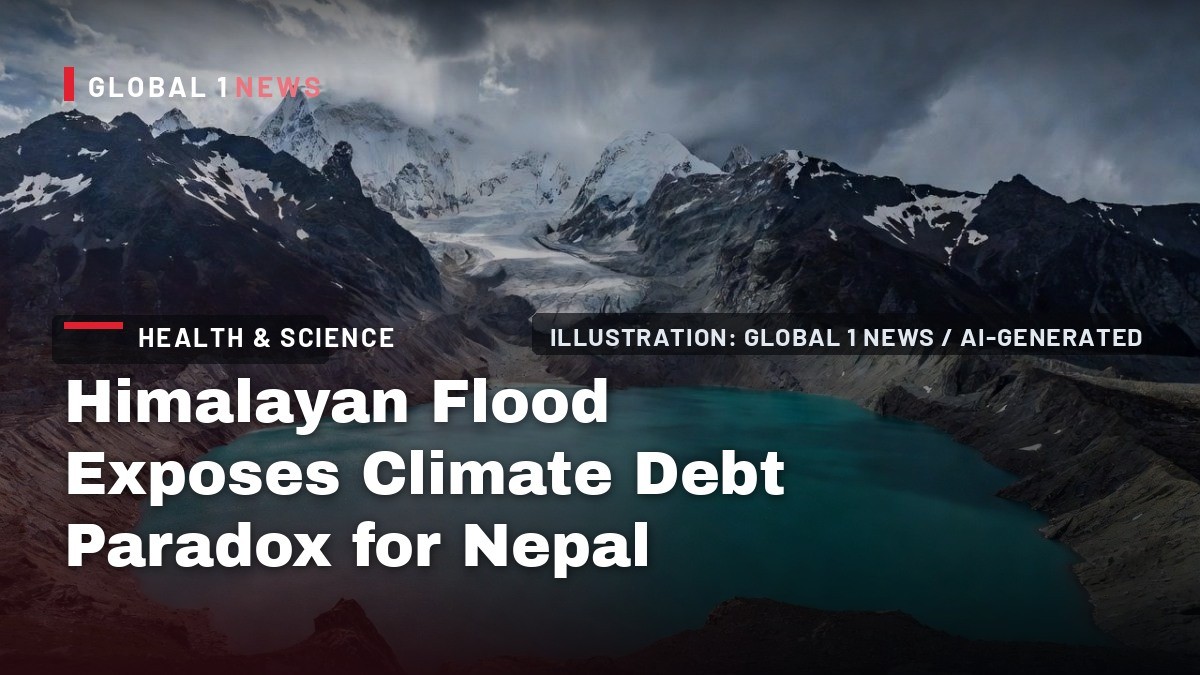
Himalayan Flood Exposes Climate Debt Paradox for Nepal
Kathmandu, Nepal – September 1, 2026 — The disaster that struck central Nepal last week was not an earthquake or a monsoon surge; it was a glacial lake outburst flood (GLOF), a phenomenon scientists have warned about for decades. The event has now forced Kathmandu to seek $5 billion in reconstruction aid, a sum equal to a tenth of its GDP, while the country's total annual fossil fuel emissions account for just 0.04 percent of the global total.
Anatomy of a Sudden Collapse
Satellite imagery confirmed the flood originated from a glacial lake north of the Langtang Himal range that drained suddenly on the morning of August 26. The collapse sent a violent surge of water, mud, and debris through the Lhende Khola into the Bhote Koshi and Trishuli river systems. The initial trigger, according to Nepal's National Disaster Risk Reduction and Management Authority (NDRRMA) spokesperson Shanti Mahat, was a river blockage in Tibet. "The river was blocked by an avalanche and the flood came suddenly after the river opened in Tibet," Mahat said, describing a scenario where an ice or debris dam failed catastrophically.
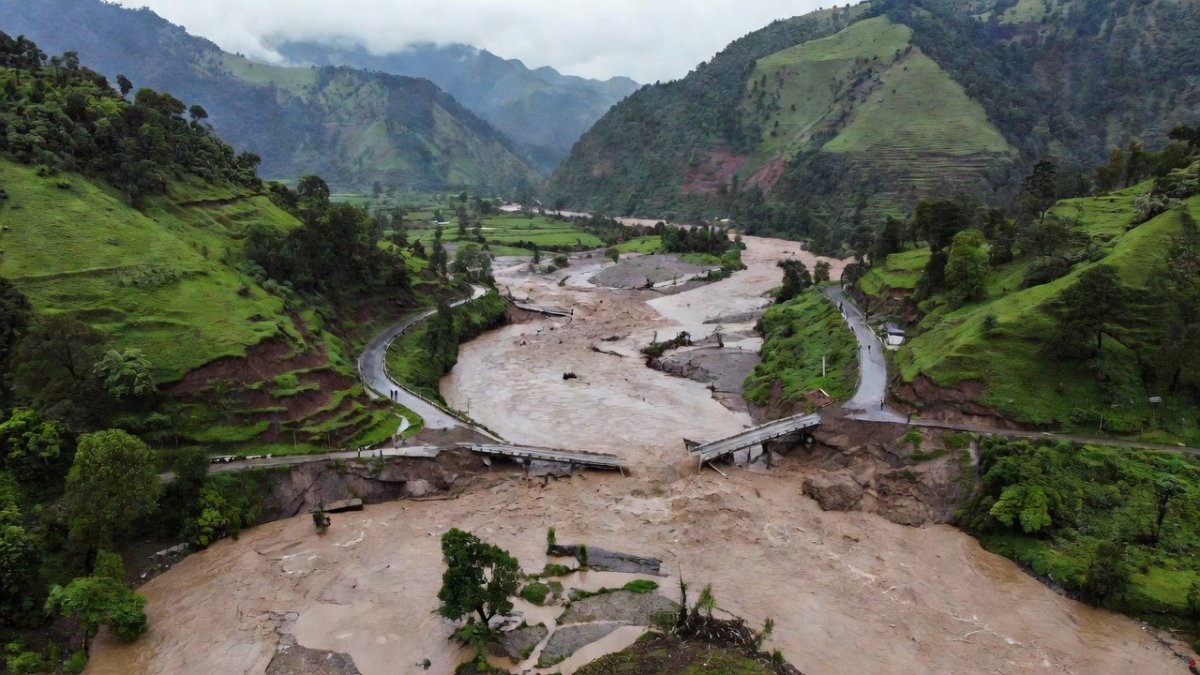
The flood destroyed the Gyirong checkpoint on the China-Nepal border, a critical trade and transit point, before slamming into dozens of settlements across the Rasuwa, Nuwakot, and Dhading districts. The confirmed death toll in Nepal stands at 788, with 2,502 people still missing. In the Tibet Autonomous Region of China, an additional 16 deaths and 546 missing persons have been reported. The 72-kilometer stretch of the Trishuli River that bore the brunt of the flood is now a scar of boulders, uprooted trees, and collapsed bridges, cutting off communities and severing the primary road link to the border.
Near-Zero Emissions, Front-Line Losses
The numbers that define Nepal's contribution to the climate crisis are starkly minimal. In 2021, Nepal emitted roughly 47.5 million metric tonnes of CO2-equivalent, or about 1.6 tonnes per capita, ranking approximately 81st among global emitters. More recent data for 2024 shows fossil CO2 emissions of about 15.9 million tonnes, a figure that represents roughly 0.04 percent of the world's total. While Nepal's emissions have risen about 1.7 percent per year in absolute terms over the decade to 2024, this small absolute increase stands against a global scientific consensus demanding steep and immediate cuts from major polluters.
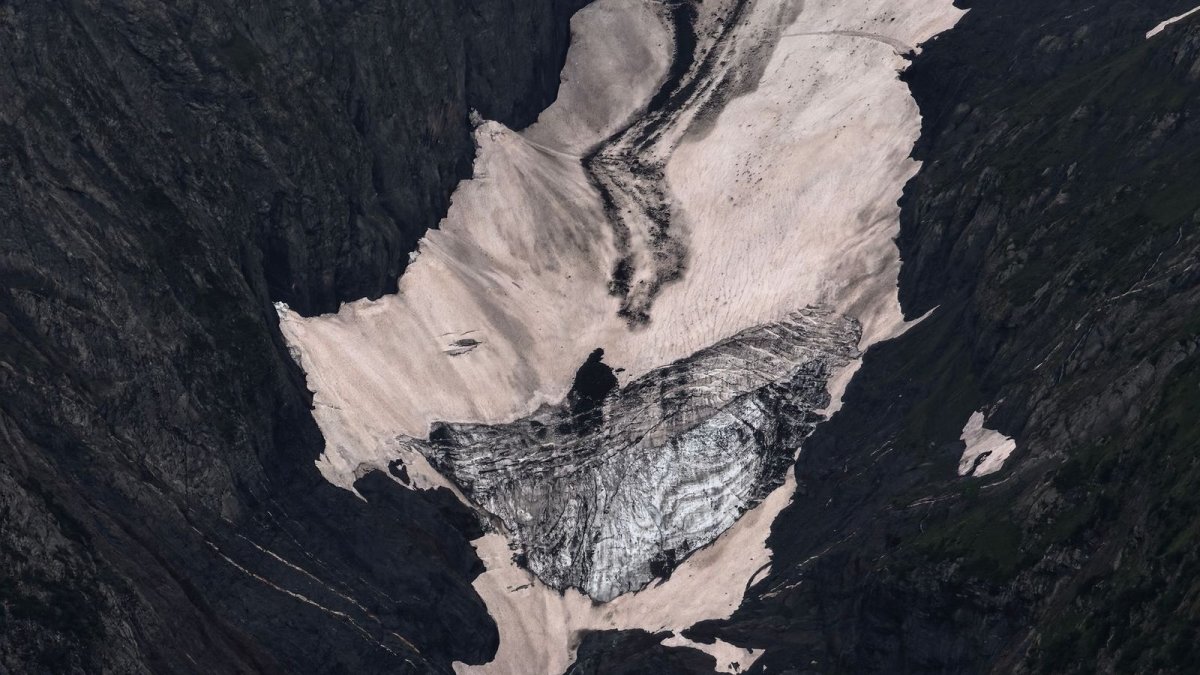
This is the core of the climate paradox. The glaciers that feed the Trishuli, and the lakes they form, are melting and destabilizing because of a warming atmosphere driven by emissions from industrialized economies. Nepal, with its negligible carbon footprint, is experiencing the consequences first-hand. The Hindu Kush Himalaya region, according to the International Centre for Integrated Mountain Development (ICIMOD), is warming faster than the global average. ICIMOD has warned that up to two-thirds of Himalayan glaciers could disappear by 2100 under current emissions trajectories, a scenario that would render events like the August 26 flood not anomalies, but recurring seasonal threats.
A $5 Billion Bill on a Tenth of GDP
The economic cost of the disaster is staggering for a nation of Nepal's size. Finance Minister Swarnim Wagle told Reuters on August 29 that Nepal needs $4 billion to $5 billion to rebuild, a bill equal to up to a tenth of the country's GDP. This figure covers not just immediate relief but the reconstruction of roads, bridges, hydropower plants, and entire settlements along the Trishuli corridor. A senior Nepali official confirmed that the government has requested urgent financial help from the United Nations' special fund for climate-disaster recovery, commonly known as the loss and damage fund. Nepal has also called for specialist foreign assistance for flood recovery, recognizing that the technical expertise required for safe glacial lake drainage and early warning systems is not fully available domestically.
The request to the loss and damage fund is a test case for international climate justice. The fund was established to help vulnerable nations cope with the irreversible impacts of climate change, but its operational framework remains contentious. Nepal's application, backed by a death toll nearing 800 and a reconstruction bill that could cripple its economy, presents a moral imperative that is difficult to ignore. Yet the gap between pledged support and disbursed funds has historically been wide, and Kathmandu's ability to rebuild will depend on the speed and generosity of international donors.
The GLOF Threat Across the Himalaya
The August 26 event is not an isolated tragedy but a systemic risk across the entire Himalayan arc. A glacial lake outburst flood occurs when a moraine dam holding back a glacial lake fails, releasing millions of cubic meters of water in hours. The 2013 Kedarnath disaster in Uttarakhand, which killed thousands, was triggered by a cloudburst that breached a glacial lake. In February 2021, the Chamoli district in Uttarakhand saw a massive rock and ice avalanche that devastated the Rishi Ganga valley and destroyed two hydropower projects. More recently, in October 2023, the South Lhonak Lake GLOF in North Sikkim hit hydropower infrastructure along the Teesta River, demonstrating how vulnerability has been hard-wired into the Himalayan landscape through poorly sited development.
In Nepal, Thulagi Lake is listed among the most severe potential GLOF threats to buildings, roads, and hydropower. The lake, located in the Annapurna region, sits above the Marsyangdi River valley and poses a direct risk to downstream infrastructure. The pattern is consistent: as glaciers retreat, they leave behind unstable moraine dams that hold increasingly large volumes of water. ICIMOD's projections of glacier loss are not abstract; they translate directly into a growing inventory of dangerous lakes across Nepal, Bhutan, India, and Pakistan. The science is clear, and the August 26 flood is the latest data point confirming that the region's infrastructure is not built for the climate that is coming.
What This Means for India: Shared Rivers, Shared Risks
The Trishuli River flows south through Nepal and meets the Kali Gandaki at Devghat, forming the Narayani-Gandak river system that flows into India, connecting Rasuwa district directly to Bihar. The August 26 flood triggered a Gandak alert in Bihar, with several districts at risk. India Today reported that Bihar and Uttar Pradesh issued alerts the same day as the flood. Discharge at the Valmikinagar Gandak Barrage peaked around 81,000 cusecs before easing as the flood pulse travelled south through the Narayani system. The barrage, which regulates water for irrigation in Bihar, was tested by the sudden influx, and the event served as a reminder that Himalayan disasters do not respect international borders.
India's own Himalayan states face the same GLOF threat, as evidenced by Kedarnath, Chamoli, and South Lhonak. The vulnerability is compounded by aggressive hydropower development. India and Nepal have set ambitious cross-border power trade goals, with Nepal aiming to export 10,000 MW of hydropower to India in the coming decade. This makes Himalayan hydropower assets a shared strategic interest. A GLOF that damages a dam or a transmission corridor in Nepal directly impacts India's energy security. The August 26 flood destroyed infrastructure along the Trishuli, which hosts several cascade hydropower projects, and the reconstruction will need to factor in not just rebuilding but hardening these assets against future glacial events. The economic integration of the two countries' power grids means that the risk of glacial lake outburst floods is now a bilateral security issue, not just an environmental one.
The Bottom Line
The August 26 disaster is a defining moment for climate policy in South Asia. Nepal's request for $5 billion from the loss and damage fund is a direct test of whether the international community can translate rhetoric into resources. For India, the event underscores the need for a comprehensive GLOF early warning system that covers the entire Himalayan arc, from the Indus to the Brahmaputra. The current approach of reactive relief is no longer tenable; proactive risk assessment, glacial lake monitoring, and infrastructure siting standards are essential.
The paradox of Nepal's position — near-zero emissions, front-line losses — is the central injustice of the climate crisis. The country's 1.6 tonnes per capita emissions are a fraction of the global average, yet its citizens are dying in floods caused by a warming atmosphere they did not create. The international community's response to Nepal's request will be a measure of its commitment to climate justice. For South Asia, the lesson is simpler: the glaciers are melting, the lakes are filling, and the next flood is already forming. The only question is whether the region will be prepared.
— By Dr. Raj Patel, Staff Writer
This article was produced with AI-assisted research and editorial support. Sources: Reuters, The New York Times, CNBC, NDTV, Business Standard, News18, Wikipedia, ICIMOD.
What's Your Reaction?
 Like
0
Like
0
 Dislike
0
Dislike
0
 Love
0
Love
0
 Funny
0
Funny
0
 Wow
0
Wow
0
 Sad
0
Sad
0
 Angry
0
Angry
0

India/South Asia Correspondent at Global1.News. Analytical voice with a background in science and health journalism. Based in New Delhi, covering Indian politics, education, healthcare, technology, and policy. Breaks down complex data into clear, actionable reporting.














Comments (0)