
Russia Declares Missile Danger Across the Volga as Drones Hit an Oil Hub 1,300 Kilometers Deep
Russia declared missile danger across nine Volga regions and shut airports from Kazan to Ufa on Nov. 19, hours after drones struck oil storage tanks near Almetyevsk in Tatarstan, 1,300 kilometers from Ukraine.
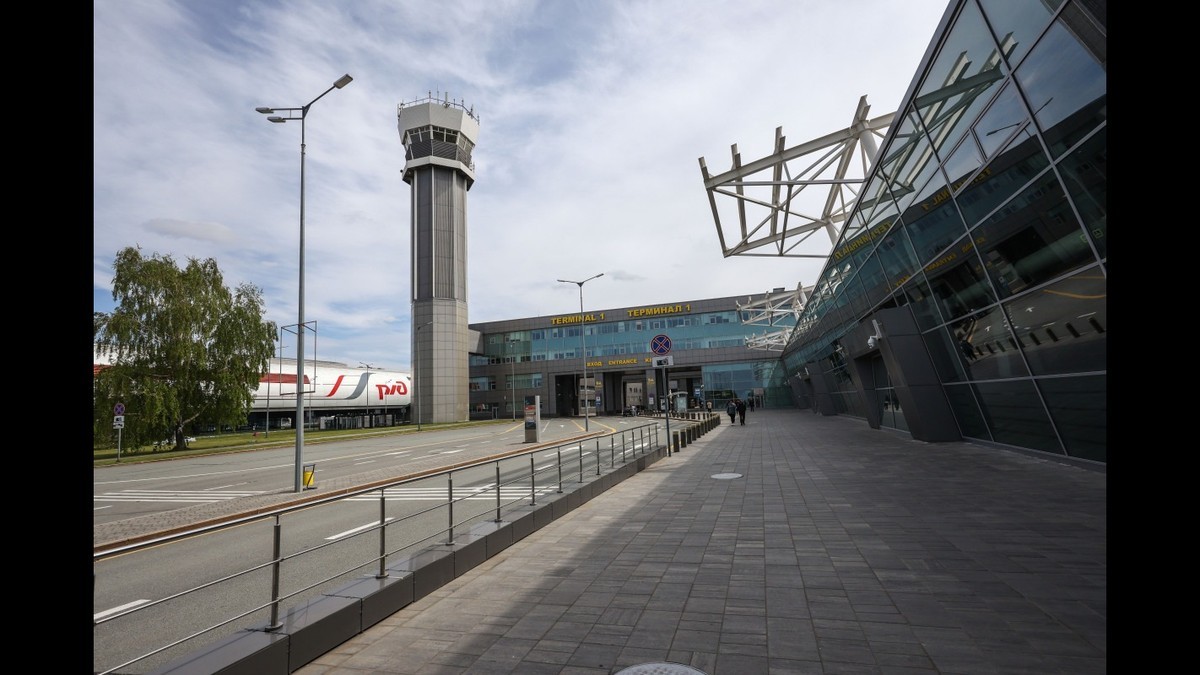
Folks, the war reached the Volga on Thursday, and it got there twice before dinner. Overnight, Ukrainian drones hit an oil pumping station in Tatarstan, roughly 1,300 kilometers from Ukraine's border. By early afternoon, sirens were sounding across Kazan, schoolchildren were filing into basements, flights were frozen from the Volga to the Urals, and at least nine Russian regions were under the loudest alert their civil-defense system issues: missile danger.
Russia Declares Missile Danger Across the Volga as Drones Hit an Oil Hub 1,300 Kilometers Deep
KAZAN, Russia — The alerts came in a cascade across the Volga Federal District, one regional emergency ministry after another, most of them inside a single hour on Thursday afternoon. Tatarstan's came at 2:21 p.m. local time. Samara's at 2:14. Ulyanovsk, Penza, Saratov, Chuvashia, Udmurtia and Kirov followed, with Orenburg joining later.
The Volga Went Quiet
Russia's civil-defense system runs three tiers, and they are not interchangeable. Drone danger means unmanned aircraft have been detected heading toward a region. Threat of drone attack means they are over it. Missile danger is the top rung, the one that empties streets and sends whole school buildings underground.
Thursday's wave used the top rung across an industrial belt that runs from the Volga's west bank to the southern Urals. Tatarstan's emergency ministry declared it at 2:21 p.m. Moscow time and lifted it around 4 p.m., roughly 100 minutes later. Samara's governor, Vyacheslav Fedorishchev, declared his at 2:14 p.m. Moscow time and lifted it at 3:43 p.m. Moscow time, about ninety minutes later.
No regional government named a target, a weapon or a launch point. No city in the district reported an impact. What the record shows is a warning system going off across a territory larger than most countries, then standing down without an explanation.
What Broke at Kaleykino
The overnight attack is the part Russia has confirmed. The Defense Ministry said air defenses destroyed 53 Ukrainian fixed-wing drones between 8 p.m. Moscow time on Nov. 18 and 8 a.m. on Nov. 19, over the Belgorod, Voronezh, Kursk, Lipetsk, Oryol, Rostov, Ryazan, Smolensk and Tula regions and the Republic of Tatarstan.
In Tatarstan, the press service of the republic's head said drones struck oil storage tanks near Almetyevsk in the early morning. "An automatic fire-extinguishing system and the well-coordinated efforts of the facility's security services helped to quickly contain the blaze, preventing a major fire," the statement said. Falling debris damaged several civilian facilities. Nobody was killed or hurt.
The independent Russian outlet Astra, analyzing eyewitness footage, identified the site as the Kaleykino oil pumping station, five to eight kilometers from Almetyevsk. Residents told monitoring channels they counted at least 16 explosions and watched ambulances and fire trucks head for the station. Neither Transneft-Prikamye, which operates it, nor the Almetyevsk district administration has published an account of the damage.
A Hub That Feeds Druzhba
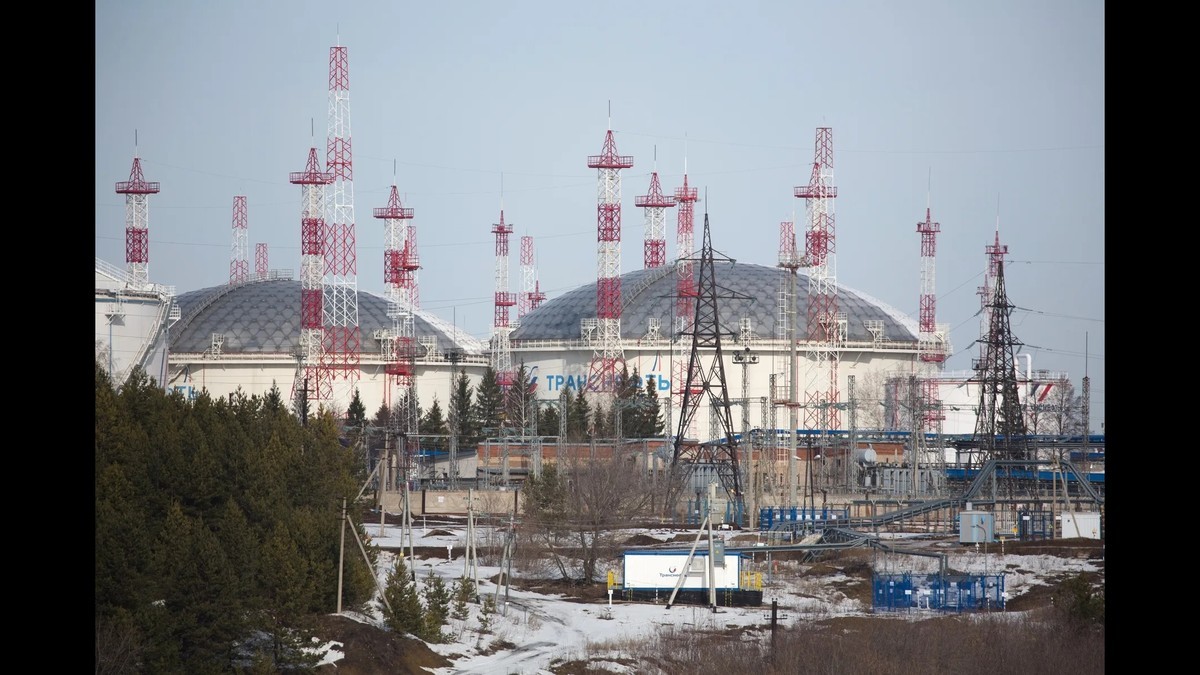
Kaleykino is not a refinery. It is a junction, and in a pipeline network the junctions matter more than any single plant.
The station belongs to Transneft-Prikamye, a subsidiary of the state-controlled pipeline monopoly, and it is one of the main blending and pressure hubs in the Russian system. Crude arrives from Western Siberia, Tatarstan, Udmurtia and Bashkortostan, gets mixed to specification and pushed onward — toward Samara, toward Nizhny Novgorod, toward the TANECO refinery at Nizhnekamsk, and into the Druzhba pipeline, the main artery carrying Russian crude west.
Ukraine hit the same station on the night of Feb. 23. Two storage tanks of 50,000 cubic meters each caught fire, according to a Russian emergency ministry source cited by Astra. Reuters reported afterward that Transneft had to cut the volume of oil it accepted into its pipeline system by roughly a quarter.
Four Waves of Sirens in Kazan
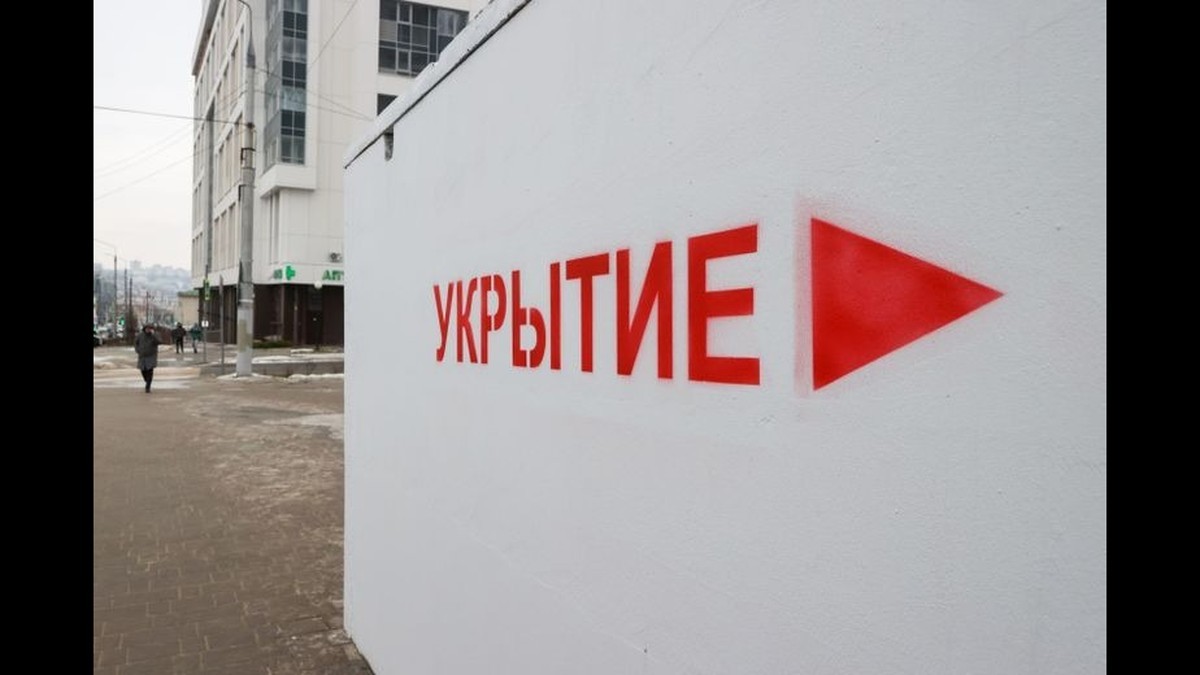
In Kazan, the sirens started minutes after the airport shut. Warning systems activated at 2:21 p.m., and by three o'clock residents downtown had heard a fourth wave of them, the local outlet 116.ru reported. In some districts the siren sounded once or twice; in others it kept going.
Children were moved out of schools and kindergartens into designated shelters. Kazan Federal University evacuated its buildings. The emergency ministry told residents to shut off gas, water and electricity, take documents and get to a basement, an underpass, a parking garage or a purpose-built shelter.
Kazan's airport had already closed at 2:22 p.m. — the second time in a single day. The first closure came at 4:10 a.m. under drone danger and held until 8:40 a.m., four and a half hours. Five aircraft bound for Kazan from Moscow, Dushanbe, Khujand and Antalya were diverted to Samara, and by mid-morning the board showed more than 29 delayed arrivals and departures, the longest by over six hours.
Samara Stopped Moving, and the District Followed
Samara stopped. Buses, trolleybuses and trams were halted on the order of mayor Ivan Noskov, who said the metro would keep running and admission would be free for anyone sheltering in it. Kurumoch airport evacuated passengers and staff in what its own channel called an organized evacuation, and a court hearing in the murder case of a former Samara mayor had to be interrupted mid-session.
Rosaviatsia, the federal air transport agency, suspended arrivals and departures at airports in Penza, Saratov, Samara, Bugulma, Nizhnekamsk, Kazan, Cheboksary, Ulyanovsk, Izhevsk, Kirov and Ufa, each time citing only the need to ensure flight safety.
The pattern repeated down the district. Penza's governor, Oleg Melnichenko, declared missile danger and activated the "Kover" plan, an aviation shutdown protocol. Ulyanovsk's governor, Alexei Russkikh, told residents not to stay outdoors and to shelter in rooms with solid walls and no windows. Cheboksary's mayor canceled classes at every school in the city, and Chuvashia's education minister said children across the republic were being moved into shelters.
What Russia Will Not Say
Here is what is established: the drones, the tanks, the fire-suppression save, the debris damage, the 53 intercepts, the sirens, the shutdown airports, the emptied schools.
Here is what is not. No Russian official has said what triggered the afternoon missile-danger tier across the Volga. No regional government has reported a missile, a strike, a casualty or a single damaged roof from that wave. Rosaviatsia has not explained its closures beyond "flight safety." Transneft-Prikamye has said nothing about Kaleykino's condition, and Rustam Minnikhanov, the head of Tatarstan, has not addressed the strike publicly.
Ukraine has not claimed the Almetyevsk operation or commented on it, and no Ukrainian official has described a missile launch toward the Volga on Thursday afternoon. That silence matters. In this war both governments withhold operational detail, and a civil-defense alert is a warning, not proof of what is inbound.
The Numbers Behind the Campaign
The strike fits a campaign that has been escalating for three weeks. Reuters reported on Nov. 18, citing two industry sources, that Ukrainian attacks had cut Russia's crude refining by roughly 45 percent since late October — from more than 700,000 metric tons a day at the end of October to around 400,000 tons a day, about 3 million barrels a day.
Attacks over 20 days had disrupted or halted operations at 15 of Russia's 35 major refineries, up from nine in the middle of the previous week, with Ryazan, Yaroslavl, Kirishi and plants in the Volga region among them. Russia's energy ministry did not respond to Reuters.
The trajectory is steep. On Nov. 10, Reuters put the outage at about 30 percent. On Nov. 15, President Volodymyr Zelensky said Ukrainian forces had taken 55 percent of Russia's refining capacity offline. On the night of Nov. 18, drones hit the Ilsky and Afipsky refineries in Krasnodar Krai for the second time this month.
The squeeze shows at the pump. Gasoline shortages and sales restrictions have been reported in at least eight Russian regions, and Rosneft stations in Moscow have reinstated limits of 50 liters per vehicle and 20 liters per canister.
A Declaration About Refined Fuel
All of this landed on the day Washington, Moscow and Beijing sat down together. President Donald Trump, Vladimir Putin and Xi Jinping met for about 90 minutes at the Kylin Villa in Shenzhen, on the sidelines of the APEC summit, in the first trilateral meeting of the three leaders.
They emerged with a short "peace declaration." It commits them to United Nations reform, to respecting the immunity of state officials, to opposing what it calls abuse of jurisdiction by the International Criminal Court and similar bodies, and to dialogue on reducing nuclear risk. It also pledges them to increase the production and supply of refined petroleum products, with no targets and no timelines.
It does not mention Ukraine. It does not mention Iran, Taiwan or North Korea. Putin said afterward that Kyiv and Europe are not ready to make compromises, and Kremlin spokesman Dmitry Peskov told Russian media that Ukraine was not "the central topic."
So the three largest nuclear powers signed a document promising more refined fuel, hours after drones took another bite out of the refineries that produce it.
The Same Day in Kyiv and Kursk
Moscow spent Thursday doing to Ukraine what Ukraine did to Russia. Ukraine's Air Force said Russian forces launched Onyx anti-ship missiles and 98 drones overnight — Shahed attack drones, Gerbera and Parodiya decoys among them. Ukrainian authorities reported four killed and 36 injured across the country over the past day, including an 11-year-old boy and a 12-year-old girl.
By mid-afternoon in Kyiv, a Russian drone had damaged the Dutch embassy. It is not clear whether the embassy was the target or whether the drone was shot down near it.
In Kursk, on Russia's side of the border, Governor Alexander Khinshtein said a daytime Ukrainian attack injured at least 11 people. Falling debris and blast waves, from weapons he did not identify, damaged an apartment building, private homes, a regional court, a central library, a medical college and the facade of a trauma center.
On the Crimean Bridge, rail and road traffic was suspended again — the third consecutive day of strikes on the crossing. Ukraine's forces confirmed a Neptune missile strike on the span. Tuesday's attack destroyed a 227-meter section of roadway and damaged the railway; Zelensky described it as a seven-phase operation prepared over several weeks. He spent Thursday in Berlin, pressing European officials and Trump's envoys for air defense, energy support and money.
What Comes Next
Watch Kaleykino's throughput. A pumping station is not a refinery, and a fire suppressed in minutes may leave the pipes intact. But it is a pressure and blending node, and February showed that even a survived hit can force Transneft to throttle what it accepts into the system. If intake drops again, the effect runs down the line to Samara and Nizhnekamsk.
Watch whether the Volga alerts keep coming, because they are no longer rare. On Nov. 15, drones hit a residential building and industrial sites in Nizhnekamsk and injured seven people.
The story is not that a fire was put out. It is that a country that began this war with the deepest rear in Europe now has to empty its schools and shut its airports when its own air-defense screens light up — 1,300 kilometers from the front.
By Jessica Ali, Staff Writer
This article was produced with AI-assisted research and editorial support. Sources: Interfax, TASS, Reuters, The Moscow Times, Kyiv Independent, Kyiv Post, Meduza, Kommersant, Business Online, NEWS.ru, Astra, Censor.NET, and the regional emergency ministries of Tatarstan, Samara, Ulyanovsk, Penza, Saratov, Chuvashia, Udmurtia, Kirov and Orenburg. Photographs: Business Online (Tatarstan airport); Sergei Petrov / NEWS.ru (shelter sign); Militarnyi (Transneft facility).
What's Your Reaction?
 Like
0
 Dislike
0
 Love
0
 Funny
0
 Wow
0
 Sad
0
 Angry
0

Editor-in-Chief at Global1.News. Atlanta-based journalist who cuts through the BS and tells it like it is. Lead anchor, host, and the voice you hear when the spin stops and the truth starts.











Comments (0)