
Bukele Registers for a Third Term Under the Constitution His Party Rewrote
President Nayib Bukele registered to run for a third consecutive term in El Salvador's February 2027 election, under a 2025 constitutional reform his party passed that abolished term limits and extended presidential terms from five years to six.
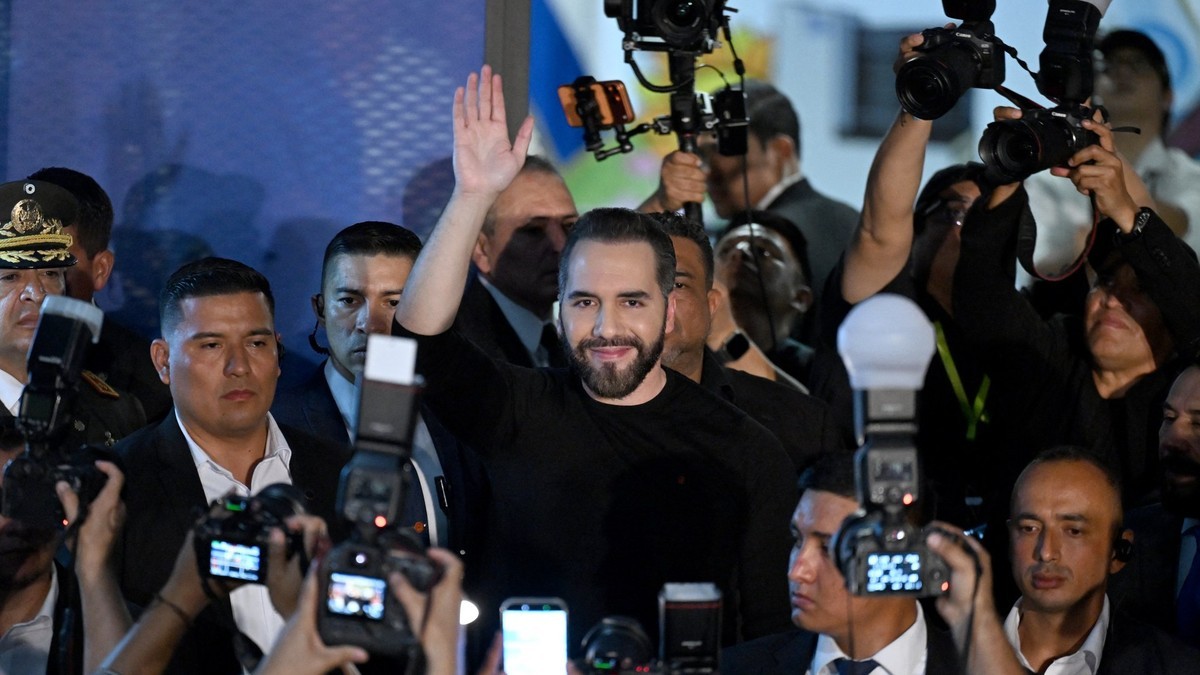
Folks, watch the paperwork, because the paperwork is the story. On Thursday night, minutes before the deadline, Nayib Bukele walked into El Salvador's Supreme Electoral Tribunal and registered to run for a third consecutive term as president — under a constitution his own party rewrote sixteen months ago to make that possible.
Bukele Registers for a Third Term Under the Constitution His Party Rewrote
San Salvador, El Salvador — The filing itself took a signature. The ground beneath it took five years to clear.
The Filing at the Electoral Tribunal
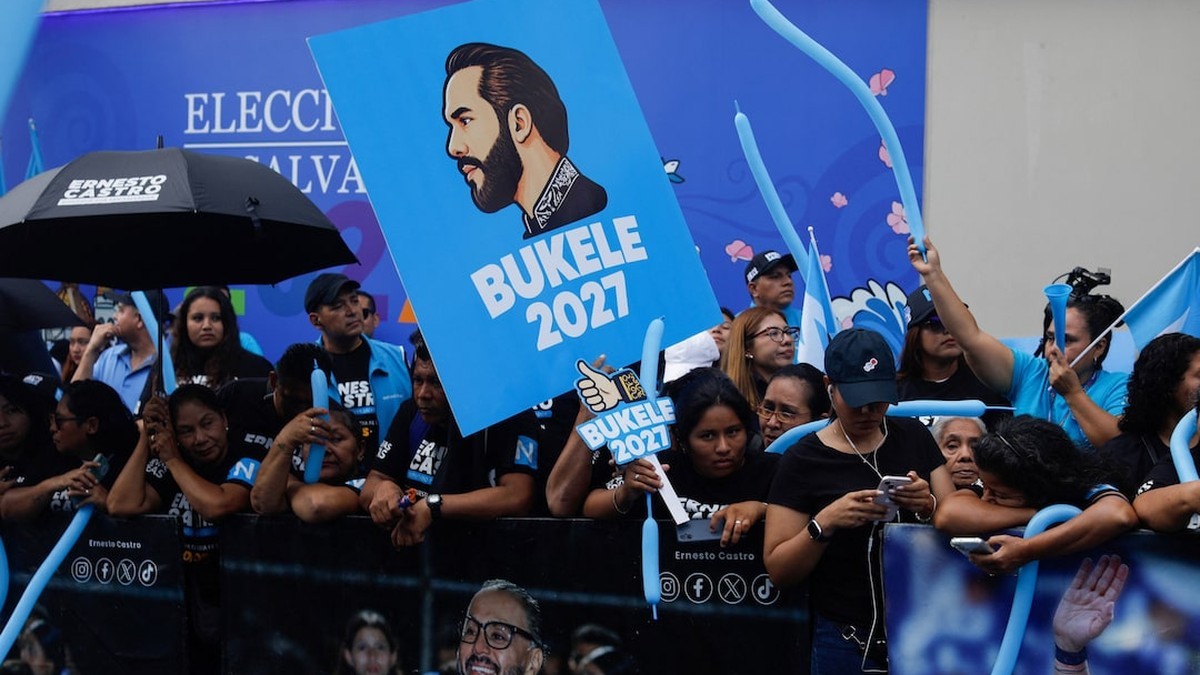
Bukele submitted his candidacy to the Supreme Electoral Tribunal in San Salvador on Thursday 19 November, at the close of a deadline that expired at midnight, with Vice President Felix Ulloa registered alongside him as his running mate, according to Reuters and the Associated Press. He arrived in a fleet of police cars. Supporters carrying "Bukele 2027" signs crowded the pavement outside, and the tribunal building was packed with local and foreign press waiting for him.
The same ballot will fill 60 seats in the Legislative Assembly and 44 municipal councils. Roxana Soriano, who chairs the tribunal, put the total number of elected posts being decided at 582. The presidential campaign period opened on 27 October, almost a month before the candidates formally filed. The vote falls on 28 February 2027 — 101 days after Bukele signed.
Six More Years
The crowd outside chanted it in the street: "six more years," the phrase AFP's reporters heard from thousands of supporters as Bukele went in to file. Under the amended rules, six years is what a presidential term now lasts, up from five.
Addressing the crowd afterwards, Bukele framed the vote as a national test of nerve. "We need to go out and vote, to tell families and friends that on 28 February we all go out and vote en masse, and that we send a message to the whole world that El Salvador is not going back to the past," he said, in a translation of remarks carried by El Salvador's own press. In remarks carried by Al Jazeera, he put it more bluntly: "In El Salvador there is total, complete open democracy."
Reuters reported that after signing his registration he thanked the crowd and said the country was heading toward a democratic election that would feature "freedom of expression."
The Constitution His Party Rewrote
None of this was supposed to be possible. El Salvador's constitution long barred consecutive re-election. In 2021, the Supreme Court ruled that sitting presidents could seek another term. He won a second term in 2024 with roughly 85 percent of the vote.
Then came the change that matters most. On 31 July 2025, the Legislative Assembly approved a constitutional reform by 57 votes to three, according to AFP, DW and Le Monde. It removed presidential term limits, permitted re-election "without reservation," extended the presidential term from five years to six, abolished the second-round run-off, synchronized presidential, legislative and municipal elections, and brought the end of the current term forward to 1 June 2027.
The Inter-American Commission on Human Rights warned that month that the reform could affect the rule of law.
The Four Candidates Standing in His Shadow
Bukele will not be alone on the ballot. Reuters reports four opposition candidates, among them Maytee Iraheta of the right-wing Nationalist Republican Alliance, known as ARENA, and Rafael Aguirre of the left-wing Farabundo Marti National Liberation Front, the FMLN. The smaller National Conciliation Party registered its own ticket, Alirio Garcia Flamenco with Mauricio Vilanova, and the Salvadoran Patriotic Fraternity also filed.
The arithmetic is brutal for all of them. Nuevas Ideas holds 54 of the 60 seats in the Legislative Assembly. Reuters reports polling that puts the party well ahead of opposition groups sitting in single digits. Both main opposition parties have questioned the mass arrests of the security crackdown, promised to repeal the state of emergency, and denounced what they call arbitrary detentions — claims the government rejects outright.
What the Polls Actually Show
Three numbers have been circulating, and they are not measuring the same thing. Reuters reports polls giving Bukele support of 55 to 70 percent. The Associated Press says recent polls put his approval rating around 90 percent. AFP reports that around 80 percent of Salvadorans approve of his security crackdown specifically.
Those are three different questions: vote intention, overall approval, and approval of one policy. The thread running through all of them is the same. His war on the gangs is popular, and it is popular in a region that has been looking for a model.
That popularity is not a small thing to explain away. El Salvador was, for years, among the most violent countries in the hemisphere. The government says homicides have fallen roughly 97 percent compared with 2019 levels, citing national police figures. Whatever else is contested here, that number is the reason the crowd showed up.
The Emergency That Never Ended
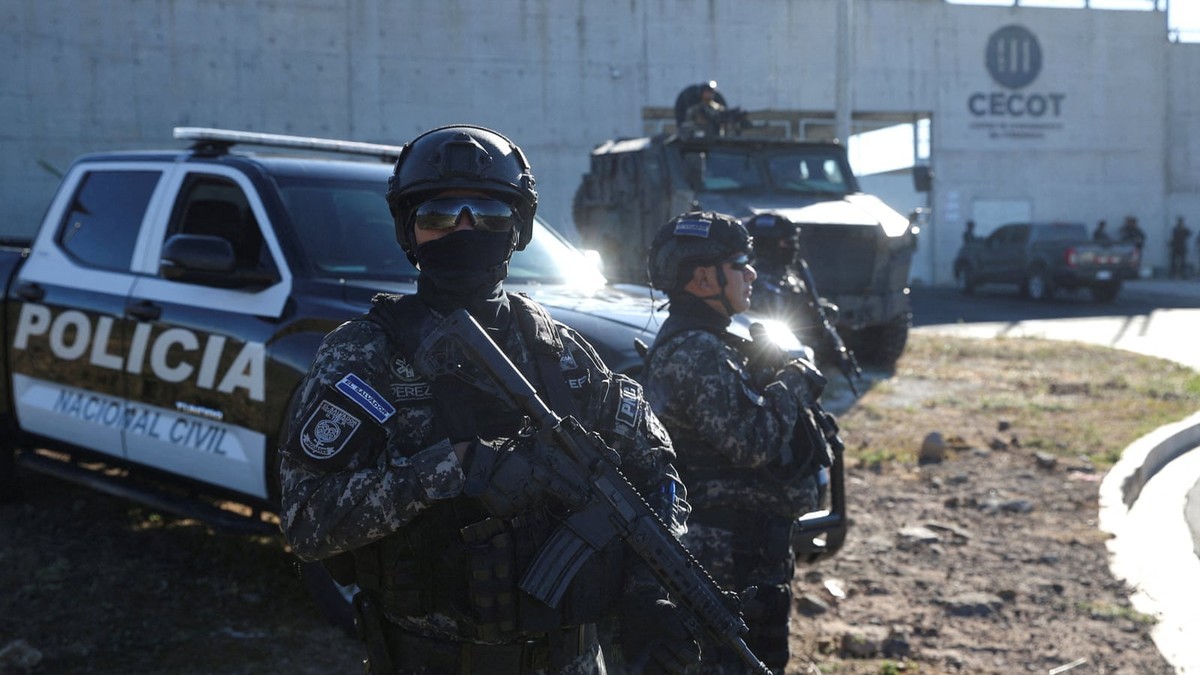
The crackdown rests on a state of exception declared on 27 March 2022, after a burst of violence attributed to MS-13 and Barrio 18 killed 87 people in 72 hours. It has never been lifted. Human Rights Watch counted 45 extensions at the time of its most recent world report; the Congressional Research Service records lawmakers approving the 54th consecutive 30-day extension in August 2026. The two counts differ, and the emergency has outlasted both.
The detention figures are large and they keep moving. The National Civil Police put the total above 92,000 as of June 2026. By October, AFP was reporting more than 93,000 arrests. El Salvador's own prosecutors have acknowledged that nearly 90 percent of those held have not been tried.
Human Rights Watch estimates the prison population at around 118,000, more than double the system's capacity. The Guardian puts it near 120,000 — roughly 2 percent of the entire population. Human Rights Watch notes that is among the highest incarceration rates in the world.
The Deaths Inside
People have died in that system, and the counts do not agree. Amnesty International said in July 2026 that at least 470 people had died in state custody since the emergency began. The human rights group Cristosal told the Inter-American Commission on Human Rights in October that it had documented 454 deaths, 78 percent of them among people with no established gang ties. Socorro Juridico Humanitario, which keeps its own tally, counts 582.
Amnesty's report concluded that what began as a temporary measure had become a permanent system of mass arbitrary detention. "Security cannot be built on arbitrariness, torture, enforced disappearances and the annulment of due process," said Ana Piquer, the organization's Americas director.
In March 2026, a panel of international jurists went further, concluding there were reasonable grounds to believe crimes against humanity were being committed under the emergency. The government rejects the characterization and says it is protecting the victims of violence, not the gang members.
The most consequential external verdict has come from Washington. The US State Department's 2024 country report, released in August 2025, asserted there were "no credible reports of significant human rights abuses" in El Salvador — a break from earlier editions that observers questioned as relations warmed under the second Trump administration.
The October Review
Then, in October, Bukele opened a door he had spent four years welding shut. He announced a review of detentions that could release a large share of those held, and the numbers attached to it have been all over the map ever since. The Armed Conflict Location and Event Data project says he later clarified it could free about 10,000 of the more than 93,000. Other reports put the figure as high as 46,000, roughly half. Spanish-language coverage described a plan benefiting around 5,000.
The commission doing the reviewing is unofficial and unusually constituted: according to Ibrahim Bukele, the president's brother, it includes judges, prosecutors, executive staff and the first lady, Gabriela de Bukele.
ACLED's Latin America analyst Tiziano Breda called the announcement "less a humanitarian gesture than a political calculation," pointing to an election calendar, a prison system under strain and international scrutiny that was threatening to intensify.
The Haiti Detour
Bukele has also taken the model abroad. In October, El Salvador sent troops to Haiti after four Salvadoran aviation technicians serving with a UN-backed force went missing in a gang attack. The Associated Press and Al Jazeera put the deployment at about 2,500; Reuters says more than 2,000. Haiti's government welcomed it.
On Wednesday, the day before he filed, Bukele posted footage on X of Salvadoran helicopters striking the home of a man Haitian media identified as a powerful gang leader. Nearly a month on, the mission's objectives remain unclear.
Diego Da Rin, a Haiti specialist at the International Crisis Group, told AFP that Bukele wants "to cement his image as a hero against organized crime, saying that he not only defeated Salvadoran gangs, but is also helping another country facing a security crisis that seems unsolvable." Al Jazeera reports that analysts accuse Bukele of exploiting the Haiti crisis to bolster his reputation ahead of the elections.
What February Will Not Settle
Juan Pappier of Human Rights Watch did not mince it. "Bukele is running for a third consecutive term after packing the court, rewriting the constitution to his liking and jailing or forcing into exile those who dare criticise him," he said, according to the Associated Press. "The absolute concentration of power in his hands has been the defining feature of his administration."
Here is what 28 February can actually decide: 582 posts, a president, 60 deputies, 44 councils. Here is what it cannot. It cannot unrewrite a constitution, or restore a term limit, or answer the deaths in custody, or resolve the cases of the thousands still waiting for a hearing.
And it will not settle the argument Washington has mostly declined to have. El Salvador has taken deportees from the United States, including Venezuelans sent to CECOT, and that arrangement has survived court challenges and reporting on wrongful removals. A government facing serious allegations at home is not facing equivalent pressure from its most important partner abroad.
Bukele says El Salvador will never go back to the past. The harder question is what the present has already made permanent.
By Jessica Ali, Staff Writer
This article was produced with AI-assisted research and editorial support. Sources: Reuters, Associated Press, Agence France-Presse, Al Jazeera, El Diario de Hoy (elsalvador.com), La Prensa (EFE), La Pagina, Le Monde, DW, Human Rights Watch, Amnesty International, the Inter-American Commission on Human Rights, the Congressional Research Service, ACLED, Cristosal, Socorro Juridico Humanitario and the Supreme Electoral Tribunal of El Salvador. Lead image: President Nayib Bukele waves to supporters at the Electoral Tribunal after filing his candidacy, 19 November 2026. Photo: AFP via Al Jazeera. Photographs: Nuevas Ideas supporters at a campaign rally in San Salvador, 6 November 2026, Jose Cabezas/Reuters; National Civil Police officers outside the CECOT facility in Tecoluca, Jose Cabezas/Reuters via The Guardian. Social cover card: Global 1 News editorial image.
What's Your Reaction?
 Like
0
 Dislike
0
 Love
0
 Funny
0
 Wow
0
 Sad
0
 Angry
0

Editor-in-Chief at Global1.News. Atlanta-based journalist who cuts through the BS and tells it like it is. Lead anchor, host, and the voice you hear when the spin stops and the truth starts.












Comments (0)