
US Revokes Brazil Ambassador Visa Amid Election Tensions
The United States has revoked the visa of Brazil's ambassador to Washington, Maria Luiza Ribeiro Viotti, in a move that sharpens an already tense standoff between Brasília and Washington just months before Brazil's elections.
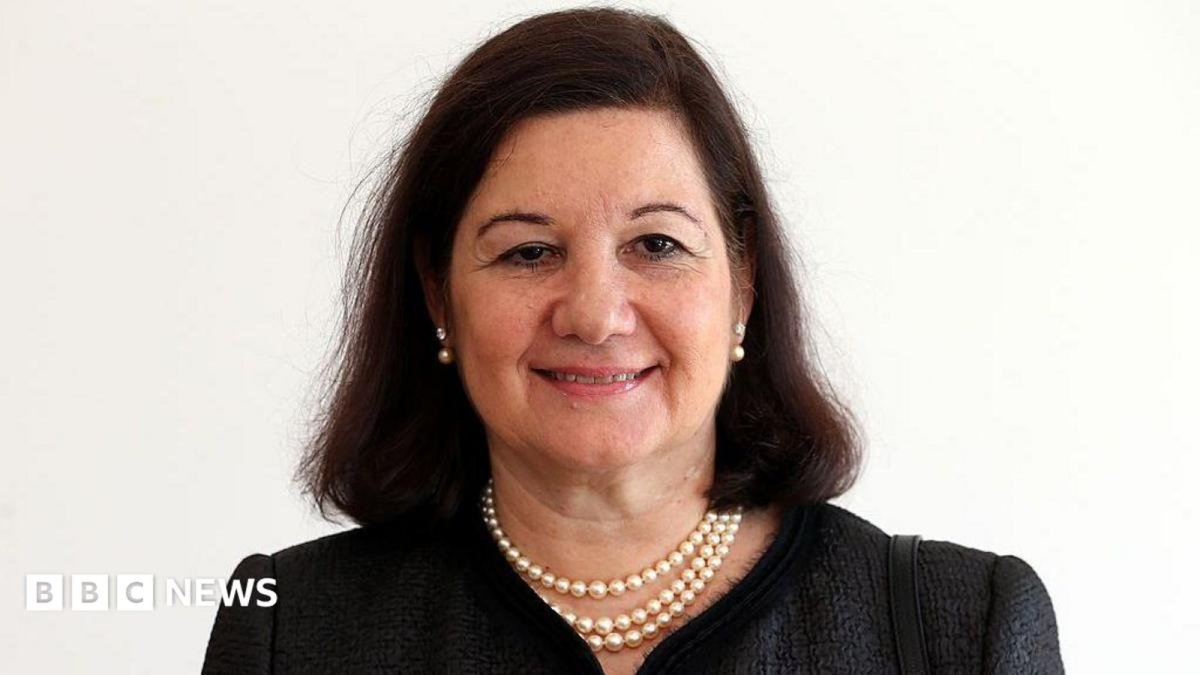
The United States has revoked the visa of Brazil's ambassador to Washington, Maria Luiza Ribeiro Viotti, in a move that sharpens an already tense standoff between Brasília and Washington just months before Brazil's elections. This action follows Brazil's refusal last month to grant entry to two State Department officials, prompting accusations of foreign meddling from President Luiz Inácio Lula da Silva. The Brazilian government dismissed the US explanation as unfounded, telling the BBC the move violated established diplomatic norms. For Latin America, such steps revive memories of external pressures on sovereign processes that have long shaped regional politics.
US Revokes Brazil Ambassador Visa Amid Election Tensions
Brasília, Brazil — The revocation of Ambassador Maria Luiza Ribeiro Viotti's visa marks a direct response to Brazil's earlier denial of entry to American officials, according to a State Department spokesperson. Officials framed the step as reciprocal rather than punitive, noting that Viotti faces no expulsion from the United States and that further options remain available. The Brazilian presidency told the BBC that the justifications offered by Washington lack foundation and ignore established diplomatic protocols. This exchange arrives amid a series of frictions that include tariff reimposition and security designations affecting Brazilian interests, as reported by the BBC this week.
Reciprocal Visa Action and State Department Framing
The State Department described the cancellation of Viotti's visa as a measured reply after weeks of communication with Brazilian counterparts. A State Department spokesperson said Brazil had received multiple opportunities to reverse course on the denied entries yet continued to delay. They stressed the action does not equate to a ban, leaving room for continued dialogue while signaling that additional measures could follow. In Brasília, the Presidency of the Republic countered that Washington's stated reasons were unfounded and ignored established diplomatic protocols. Diplomatic reciprocity — matching one nation's restrictive measure with an equivalent response — is a long-established practice used to maintain balance in bilateral relations without immediate rupture. The repeated emphasis on additional options remaining on the table allowed Washington to project flexibility while sustaining pressure. Such framing rarely conceals underlying disagreements, particularly when the dispute centers on access to Brazil's electoral preparations.
Such reciprocal steps rarely occur in isolation and often reflect deeper disagreements over access and influence. The State Department highlighted ongoing engagement, yet the public announcement this week escalates visibility of the rift. Brazilian officials maintain that their decisions rest on protecting national processes from external scrutiny that lacks invitation. The move underscores how both sides present competing interpretations of the same events, with Washington emphasizing reciprocity and Brasília rejecting the stated reasons as false.
Denied US Delegation and Lula's Meddling Accusation
Last month, Brazil blocked visas for two State Department officials scheduled to arrive in late July for discussions on freedom of expression, religion, and election integrity, according to the BBC. The visitors planned meetings that included right-wing candidate Flávio Bolsonaro. President Lula da Silva publicly labeled the intended visit an attempt to meddle in domestic affairs, a charge the United States dismissed as baseless. The Brazilian government viewed the itinerary as an unacceptable interference in its political process. The officials identified in reports include Riley M Barnes, assistant secretary for democracy, human rights, and labor, and Samuel Samson, deputy assistant secretary in the same bureau.
Their proposed presence raised concerns that external voices would cast doubt on Brazil's electoral mechanisms without evidence. Lula's administration has repeatedly warned against such engagements, citing the country's established legal framework for international observation. The episode echoes Brazil's deep historical sensitivity to foreign interference, a wariness rooted in decades of external actors seeking to shape domestic political outcomes under the guise of promoting democratic values. When foreign officials arrive with agendas that align closely with domestic opposition figures, the line between dialogue and meddling becomes a point of contention, prompting Brasília to assert control over who enters its territory. Lula's accusation therefore reflects a consistent defense of sovereignty against external involvement.
Flávio Bolsonaro Claims and Electoral Court Rejection
Flávio Bolsonaro, son of former president Jair Bolsonaro — who is serving a 27-year prison sentence for plotting a coup after losing the last election — recently told diplomats that Brazil's voting machines share origins with Venezuela's and referenced a CIA report on fraud in that country. He later clarified that his remarks sought greater international observation rather than direct challenges to system integrity. Brazil's Superior Electoral Court rejected these assertions outright, affirming the electronic voting process as among the world's most secure according to expert assessments. Endorsements for Flávio Bolsonaro from Argentina's President Javier Milei and Israeli Prime Minister Benjamin Netanyahu added international dimensions to the domestic debate.
The Superior Electoral Court's stance reinforces Brazil's position that its institutions require no external validation on core functions. This episode illustrates how individual political statements can trigger broader governmental responses on visa policy. Brazil's electronic voting system has earned its reputation for security through rigorous, transparent audits conducted by independent experts and the absence of any proven instance of large-scale manipulation since its nationwide adoption. The Superior Electoral Court's swift rejection of claims linking Brazilian machines to foreign vulnerabilities underscores that these assertions lack technical grounding and serve more as political statements than substantive critique.
Tariffs, Gang Designations, and Stalled Perez Nomination
Recent months have seen the United States reimpose tariffs on Brazilian goods and designate certain Brazilian gangs as terrorist organizations, according to the BBC. At the same time, Brazil has withheld approval for Donald Trump's nominee Daniel Perez, a Florida state representative and ally of Secretary of State Marco Rubio, to serve as the next US ambassador. The nomination, advanced on 1 June without prior consultation, remains under review in line with international diplomatic practice. Lula has voiced public criticism of the State Department under Rubio for patterns of intervention across Latin America, including support for conservative candidates in regional elections. These accumulated disputes create a backdrop where visa decisions carry amplified weight. Brazilian officials continue to cite adherence to legal standards in handling the Perez request.
The convergence of reimposed tariffs, terrorist designations for Brazilian gangs, and the stalled Daniel Perez ambassadorship adds layers to the existing tensions. Each measure compounds the sense that Washington seeks to extract concessions on sovereignty-related issues, from trade access to security cooperation. For Latin America, this standoff signals an ongoing need to reaffirm principles of non-interference, encouraging South American nations to coordinate more closely on shared diplomatic norms.
Implications for Bilateral Ties and Regional Sovereignty
This visa revocation signals a narrowing space for routine diplomatic engagement between Brazil and the United States at a sensitive electoral moment. For Brazil, the episode reinforces the need to safeguard institutions against perceived external influence, echoing long-standing regional concerns over sovereignty in the face of powerful northern neighbors. Other Latin American nations watch closely, recognizing parallels in how election-related visits and ambassadorial approvals can become leverage points. The standoff highlights tensions between stated US goals of promoting democratic norms and Brazilian insistence on controlling access to its political processes. Such friction may encourage greater coordination among South American states on shared principles of non-interference. As both capitals weigh next steps, the episode tests whether established channels can contain disputes before they affect trade, security cooperation, and broader hemispheric stability.
By Elena Vasquez, Staff WriterThis article was produced with AI-assisted research and editorial support. Reporting is based on sources cited in the article.
What's Your Reaction?
 Like
0
Like
0
 Dislike
0
Dislike
0
 Love
0
Love
0
 Funny
0
Funny
0
 Wow
0
Wow
0
 Sad
0
Sad
0
 Angry
0
Angry
0

Latin America Correspondent at Global1.News. Based in Mexico City, covering politics, economics, energy, and culture across the region. Brings an on-the-ground perspective to stories spanning from the Rio Grande to Patagonia.












Comments (0)