
Brazil Passes 1,000 Mpox Cases as a New Clade Drives the Curve
Brazil passed 1,000 confirmed mpox cases in 2026, with the newer clade Ib now dominant in Rio de Janeiro and São Paulo, one death recorded and 25,000 vaccine doses due within three weeks.
Brazil crossed a threshold this week. The country's mpox count passed one thousand confirmed cases for the year, 191 of them added in six days. That is the headline. The part that matters more is what is driving the curve: a viral lineage that was not the one behind the 2022 outbreak, and which is now the dominant strain in the two states where most of the cases sit.
Brazil Passes 1,000 Mpox Cases as a New Clade Drives the Curve
Rio de Janeiro, Brazil — The Ministry of Health's epidemiological panel counted 1,023 confirmed cases as of Thursday, 12 November, alongside 46 probable cases still being classified and 581 under investigation. One death has been recorded for the year. Six days earlier the same panel stood at 832.
What the Number Actually Measures
The six-day jump was 191 confirmations, a rise of roughly 23 per cent, and G1 reported the crossing on Thursday afternoon. By Friday the panel had moved again, to 1,055, according to Folha de S.Paulo. The shape of the year is what makes those figures worth reading twice. Agência Brasil, working from the same panel, put 293 confirmations in October and 227 already in November — 520 cases across two months, more than half of everything Brazil has recorded in 2026. Six states hold nearly all of it: Rio de Janeiro with 390, São Paulo with 388, then Ceará at 61, Minas Gerais at 45, the Federal District at 41 and Santa Catarina at 24. Two states account for 76 per cent of the country's infections, per Agência Aids. Since mpox was first notified in Brazil, the country has logged 15,455 cases and 19 deaths.
The Clade That Changed
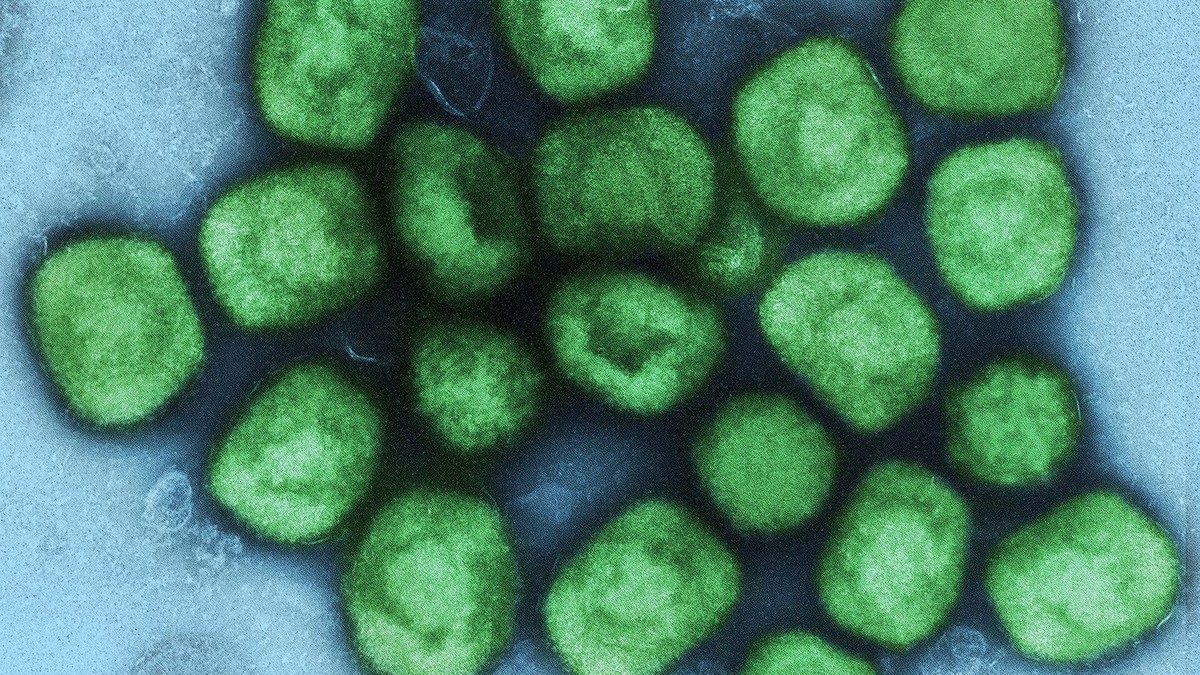
Mpox is caused by the monkeypox virus, an Orthopoxvirus, and it has lineages. The 2022 global outbreak, which reached Brazil and produced about 10,500 cases and 14 deaths that year, was driven by clade IIb. The lineage gaining ground now is clade Ib, identified in eastern Democratic Republic of Congo in 2023 and the reason the World Health Organization declared a public health emergency of international concern in August 2024 — a declaration it later ended as cases fell in central and eastern Africa. In Rio de Janeiro, the first clade Ib infection was detected in March 2026, in a patient seen at the Fiocruz national institute of infectology. For months, nothing followed. Then September arrived. Since then, among Rio cases with a clade result available, 73 per cent have been clade Ib, according to the state health secretariat. The other 27 per cent were clade IIb — the lineage that was standard in Brazil until this year.
Rio de Janeiro, Where the Curve Bent
Rio's state total, 390 confirmed cases, is more than triple the 123 it recorded in all of 2025. In the city of Rio alone, 74 cases were logged over the past two months, seven times the same period last year. The clearest measure is not the count but the positivity rate. A technical note from researchers at the Federal University of Rio de Janeiro found that of 596 tests run in the state in 2026 to early November, 181 came back positive — 30.4 per cent, against 10.9 per cent in 2025. In October the rate was 76.4 per cent: 68 positives from 89 tests. Of those 181 positive results, 169, or 93.4 per cent, were in men, concentrated in the 20-to-39 age band, and 119 of them, 65.7 per cent, were in the city of Rio. At the Fiocruz institute, 113 people have been confirmed with mpox since September. In October it assessed 130 suspected cases and confirmed 89.
São Paulo, Where a Third of the Cases Are Clade Ib
São Paulo's 388 cases put it a hair behind Rio, and its genomic picture differs in a way that says something about surveillance. The state's Adolfo Lutz Institute has identified clade Ib in 103 of this year's cases, concentrated in the São Paulo metropolitan region. In 2025 the state recorded 423 cases, and exactly one of them was clade Ib; the rest were clade IIb. Clade Ib appeared sporadically in São Paulo from early in the year, but since September it has outrun clade IIb, and across all of 2026 roughly a third of the state's cases carry the newer lineage. That is a sharp change from 2024, when a single clade Ib case was identified all year. The state has confirmed 67 cases since 4 October — which tells you the acceleration is not confined to Rio.
The One Death, and What Rio Said About It
Brazil has recorded one mpox death in 2026. It was in Rio de Janeiro. The city government said the patient's case was aggravated by an underlying illness, which it did not name. That is the whole of the official account, and the restraint is worth noting: the ministry's own comparison shows 54 hospitalisations for mpox this year against 254 in 2022, a fall of 78.7 per cent, while 2025 closed with about a thousand cases, two deaths and 58 admissions. What the numbers do not capture is the illness. Vitor Fernandes, a 31-year-old DJ in Rio, noticed what looked like a spot on his finger in March 2025. Days later came fever, body aches and more lesions, and a diagnosis. He was sent to Fiocruz. "They counted 39 lesions," he told Folha de S.Paulo, in remarks translated from Portuguese. "It was torturous pain. Pain like death." He was discharged a month later, by which point he was no longer transmitting.
The Antiviral That Failed Its Tests
The vaccine carries so much weight because the drug did not deliver. Tecovirimat was handed out during the 2022 outbreak. It had been approved in the United States for smallpox on the strength of animal studies, because smallpox was eradicated in 1980 and could not be tested in people. Mpox offered the chance to find out. The PALM007 trial, published in the New England Journal of Medicine, compared tecovirimat with placebo in 597 patients with clade I infection in the Democratic Republic of Congo. Lesions resolved in seven days on the drug and eight on placebo, a difference researchers did not treat as meaningful. Then in February this year the STOMP trial closed the question for clade II: more than 400 adults, and by day 29 the estimated proportion with resolved lesions was 83 per cent on tecovirimat and 84 per cent on placebo. Mpox still has no proven specific treatment. The drug remains reserved for severe cases and immunosuppressed patients, with no evidence it alters their course.
Twenty-Five Thousand Doses, Three Weeks Out
On 8 November the Ministry of Health announced it had secured 25,000 doses of mpox vaccine after negotiating with the Danish manufacturer. The purchase runs through the Pan American Health Organization's revolving fund, and the ministry says it lifted an initial offer of 20,000 by another 5,000. Delivery is expected within three weeks. Before that announcement, 3,650 doses from the national stock had gone to nine states, among them Rio de Janeiro, Ceará and the Federal District. The negotiation was hard for a structural reason: there is one manufacturer, in Denmark, pre-qualified by the World Health Organization, and its production capacity is limited. The ministry describes a global shortage. It is also a cold-chain problem. The vaccine must be held at minus 20 degrees Celsius, and once thawed the doses must be used within four weeks, which is why states request resupply as their stocks fall.
The Fivefold Trick and What It Costs
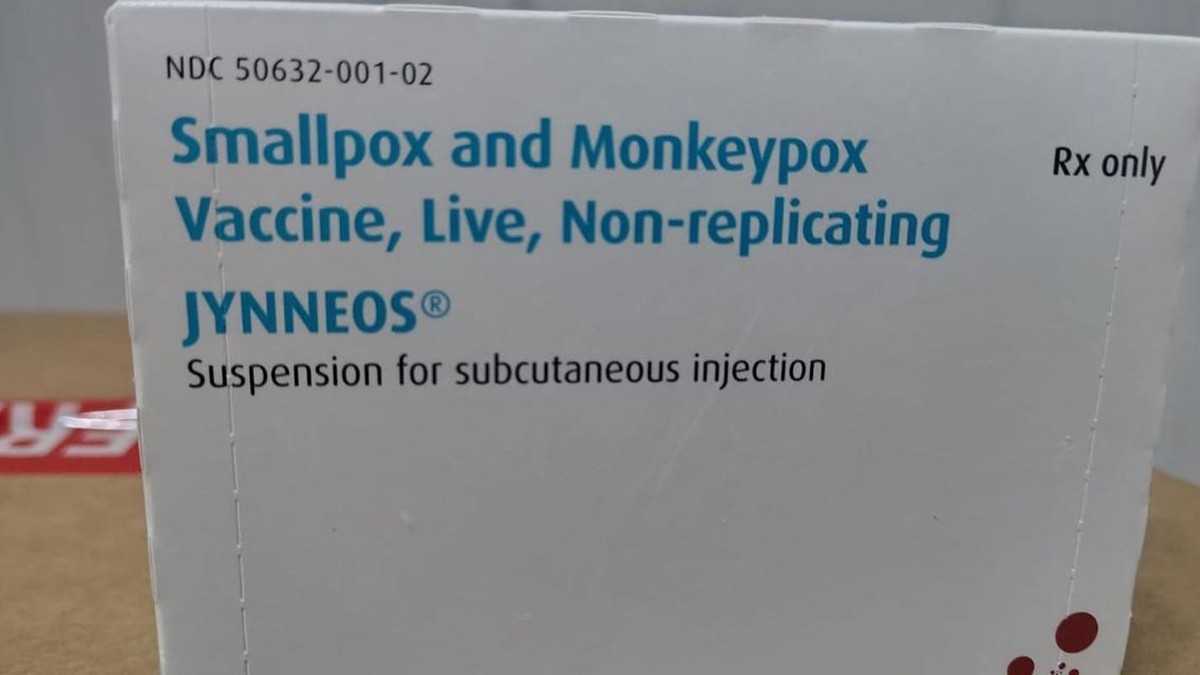
Faced with a scarce vial, the ministry issued a technical note alongside the purchase directing states and municipalities to switch to intradermal application. The technique, already used in Europe, delivers a fifth of the dose into the skin rather than beneath it and can stretch to cover up to five times as many people in specified groups. It is a real gain with a real cost: it needs trained staff, and it tightens the four-week rule on thawed vials because more arms must be found before the clock runs out. What nobody should expect from this campaign is certainty about how well the vaccine works against this lineage. MVA-BN, sold as Jynneos and made by Bavarian Nordic, is a third-generation non-replicating smallpox vaccine never tested in a randomised trial for mpox efficacy. The observational data come from 2022 and are entirely clade IIb. The WHO estimates 76 per cent risk reduction after one dose and 82 per cent after two, from study ranges of 35 to 86 and 66 to 90.
The Bottleneck Was Never Only Supply
Part of this story has nothing to do with Denmark. Between 2022 and 2023, Brazil distributed 49,000 mpox vaccine doses and administered 14,395 — less than a third of what it had. A survey of more than 9,500 people across sexual orientations and gender identities found just 4.9 per cent reported receiving at least one dose; the researchers pointed to limited supply and access barriers. The doses arriving in three weeks will meet the same wall unless they are placed differently. Mpox vaccination in Brazil is not done at ordinary health posts. It happens at Reference Immunisation Centres, which means registration and travel for people who may have neither. To protect someone before exposure, two doses 28 days apart must be finished before the risk arrives. That argues for putting vials where the people already are: HIV pre-exposure prophylaxis clinics and sexual health services. There is a further complication. Antibody levels fall sharply between six and twelve months after the second dose.
What to Watch and What to Do
Watch three things: whether the curve keeps climbing through the rest of November, whether clade Ib's share keeps rising outside Rio and São Paulo, and whether the 25,000 doses land inside the three weeks promised. Against clade Ib there is no clinical effectiveness data at all, only laboratory work — including an April study in which sera from 25 vaccinated health workers neutralised the new lineage, but at consistently lower levels than against clade IIb. The practical guidance has not changed. There is no mass vaccination, in line with WHO advice. The vaccine is offered to people living with HIV within specified CD4 thresholds, to PrEP users, to laboratory staff who handle mpox samples and to people with medium- or high-risk contact, in two doses 28 days apart. The symptoms to know are skin lesions, which can also appear in the mouth, on the genitals or around the anus, together with fever, swollen lymph nodes or rectal pain. Anyone with new lesions should seek assessment and avoid close contact until seen. And people living with HIV should stay current on antiretroviral treatment, because immunosuppression, more than lineage, decides who gets severely ill.
By Jessica Ali, Staff Writer
This article was produced with AI-assisted research and editorial support. Cover: Global 1 News editorial image. Photographs: Jefferson Rudy/Agencia Senado (Ministry of Health building); NIAID (electron micrograph of monkeypox virus particles); Agencia Brasil (JYNNEOS vaccine carton). Sources: Ministério da Saúde (Brazilian Ministry of Health), Agência Brasil, G1/Globo, Folha de S.Paulo, O Globo, Agência Aids, Fiocruz, Universidade Federal do Rio de Janeiro, The Conversation Brasil, World Health Organization, New England Journal of Medicine (PALM007 and STOMP trials).
What's Your Reaction?
 Like
0
 Dislike
0
 Love
0
 Funny
0
 Wow
0
 Sad
0
 Angry
0

Editor-in-Chief at Global1.News. Atlanta-based journalist who cuts through the BS and tells it like it is. Lead anchor, host, and the voice you hear when the spin stops and the truth starts.














Comments (0)