
Five EU Leaders Tie Britain's Return to the Power Market to a Cohesion Bill
Five EU heads of government have asked Brussels to make Britain's return to the internal electricity market conditional on a financial contribution to the bloc's regional funds, ten days before the 20 November summit. Britain says no amount has been agreed.
Folks, here is the trade put plainly: Britain wants back inside Europe's electricity market, and five EU leaders have just told Brussels to make it pay for the privilege — ten days before Andy Burnham sits down with them at a summit in Brussels.
Five EU Leaders Tie Britain's Return to the Power Market to a Cohesion Bill
London, United Kingdom — A letter from the leaders of Belgium, Germany, Denmark, Luxembourg and the Netherlands asks the European Commission and the European Council to link British participation in the bloc's internal electricity market to a financial contribution aimed at reducing "economic, social and territorial disparities between the regions of the Union." The letter was seen by Euronews, POLITICO and The Telegraph.
The Ask, in One Sentence
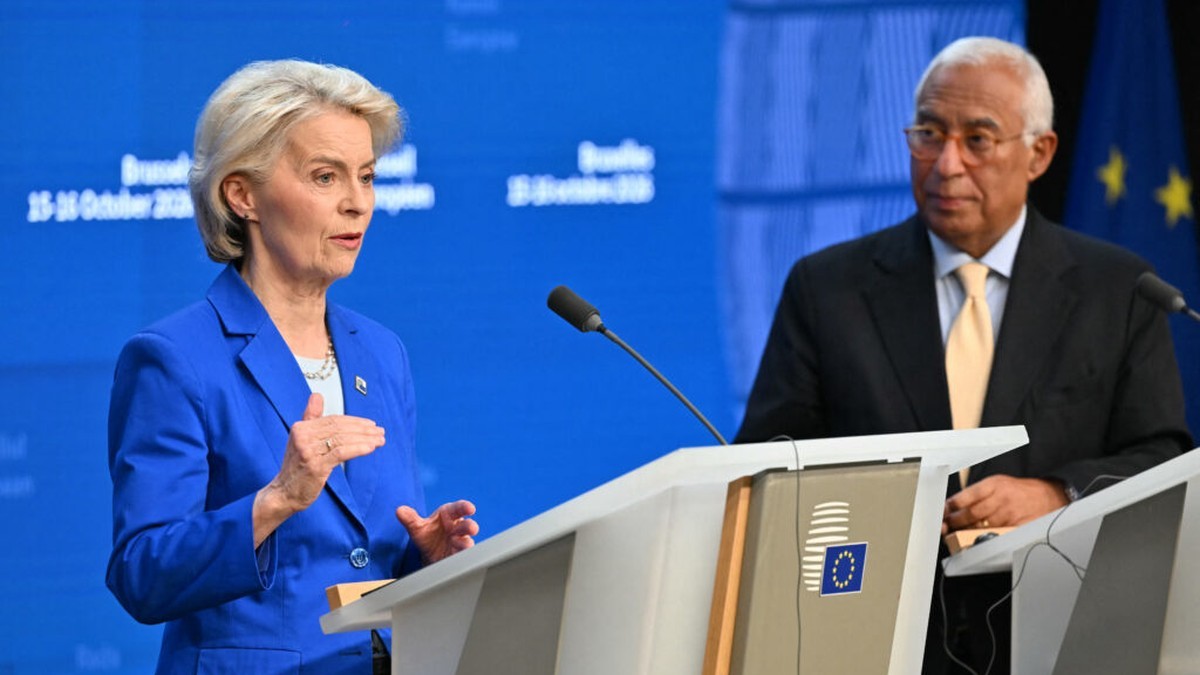
The demand is blunt and it is written into a single clause of the letter. "An agreement on an appropriate financial contribution by the UK towards reducing economic, social and territorial disparities between the regions of the Union should be linked with the integration of the UK into the EU electricity market," the five leaders wrote to Commission President Ursula von der Leyen and European Council President António Costa. Every other argument in the document is scaffolding around that one condition. It converts what was originally a technical question about cables, trading platforms and grid codes into a question about money, and about what Britain's wider post-Brexit relationship with the bloc is worth. POLITICO reported that the letter was sent earlier this week. Euronews published its account on 10 November.
Who Signed It, and Why These Five
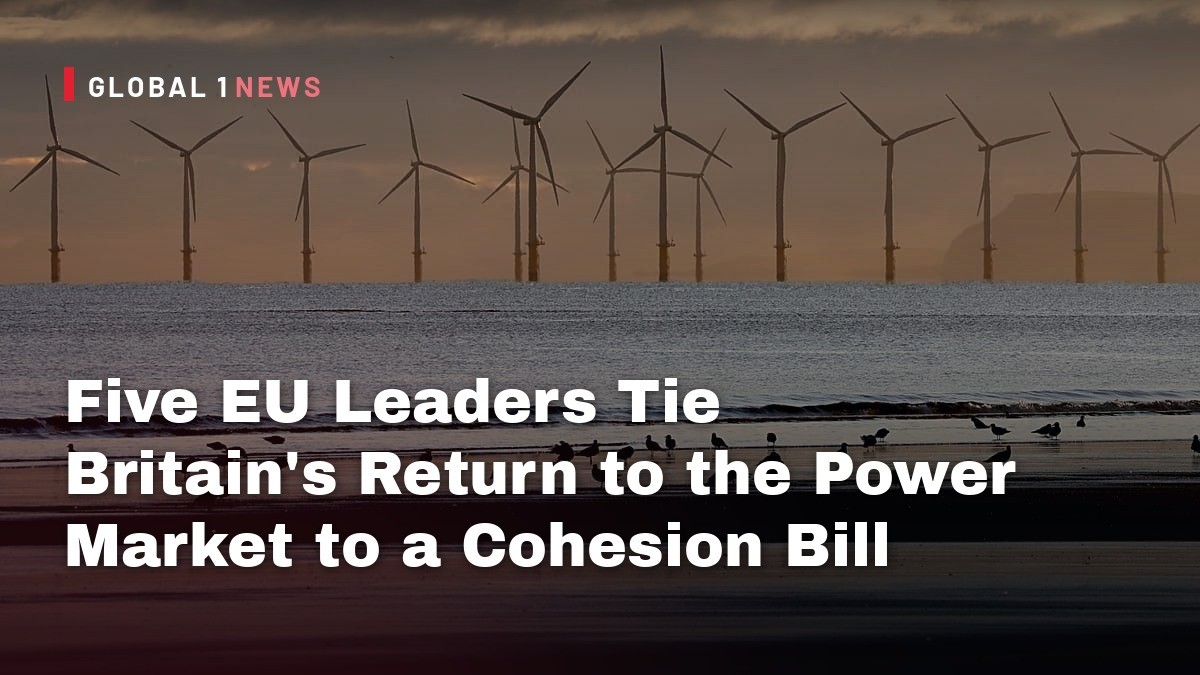
The signatories are Bart De Wever of Belgium, German Chancellor Friedrich Merz, Denmark's Mette Frederiksen, Luxembourg's Luc Frieden and Dutch Prime Minister Rob Jetten. Euronews notes that all five are "closely connected to the North Sea energy system", which is the reason the letter carries commercial weight rather than diplomatic courtesy. Their argument is that a deal gives predictability to investors and lets the bloc develop the North Sea's offshore wind at scale. The letter points to ambitions for up to 100 GW of joint projects and 300 GW of offshore wind. "An agreement on electricity market integration is crucial, in order to provide clarity and predictability for stakeholders from both the UK and the EU," it states, adding that this is "necessary to unlock the full potential of the North Sea area and transform it into the largest clean energy hub in the world."
Two Descriptions of the Same Money
This is where the negotiation gets slippery, and both descriptions are on the record. Euronews reports the five want Britain to contribute to the bloc's regional development funds in return for closer energy ties. POLITICO reports the EU position as: the UK "would have to make a contribution to EU cohesion funds as the price of participating in the market — a politically difficult ask for London." But an EU diplomat from a country supporting a swift deal told POLITICO the contribution would amount to "investing" in market access. "The UK would be investing in access to a more integrated, secure and competitive European energy market — bringing lower energy costs, greater investment certainty and huge opportunities for British businesses and consumers," the diplomat said. Same money, two entirely different political products, aimed at two different audiences.
The Link Britain Says Was Never in the Deal
The British government's own paperwork records how new this condition is. A Cabinet Office explanatory memorandum submitted on 4 February 2026 states that "neither the May 2025 Common Understanding nor the December 2025 outcome of exploratory talks make reference to a financial contribution from the United Kingdom" for the EU's work in this policy area. The memorandum traces the change to 13 November 2025, when the Council and Commission adopted a statement saying any agreement giving Britain access to parts of the internal market "should reflect an appropriate financial contribution" to the Union's economic and social cohesion. The Commission then built it into its recommendation, COM(2025)804, published on 22 December 2025, and the Council authorised negotiations on two parallel agreements on 30 March 2026. Britain signed up to explore electricity participation in May 2025. It did not sign up to this.
What Joining Actually Requires
Strip out the politics and the technical price of entry is substantial. The draft EU mandate, as summarised in that same British memorandum, covers both wholesale and retail markets, participation in EU trading platforms "in all timeframes", involvement in ENTSO-E, the EU DSO Entity and the EU agency ACER, and "timely dynamic alignment" of UK electricity rules with EU rules. It would require the UK to apply EU rules on wholesale energy market integrity and transparency, known as REMIT, to financial instruments qualifying as wholesale energy products. It explicitly would not give Britain access to the EU financial services market. The Council says the arrangement "envisages dynamic alignment of UK laws to EU rules." In practice that means rules Britain does not vote on, applied in Britain, with the Court of Justice of the European Union as the ultimate authority on questions of EU law under the proposed arbitration mechanism.
The Norway Yardstick
There is a working model, and it comes with a number attached. Euronews reports that Norway, which sits in the EU internal market through the European Economic Area, contributes roughly €391 million a year through cohesion grants supporting economic and social development in less prosperous European regions, according to the Norwegian Mission to the EU. That figure is a reference point, not a forecast. The Commission's recommendation says any British contribution should be "calculated based on the Union financial contribution towards reducing the disparities between the regions of the Union, adjusted to reflect the relative size of the UK economy and the proportion of the internal market to which the United Kingdom participates." That formula, not the Norwegian number, is why no figure in London has been treated as final.
The Bill Britain Is Already Paying
The counter-argument from British industry is that staying out already costs money. POLITICO reports that Energy UK, the sector's representative body, says being outside the electricity market will create "additional costs of up to £10bn this Parliament through higher energy bills and lower Treasury revenues." In written evidence to a parliamentary committee, Energy UK put it another way: by linking the UK and EU emissions trading schemes and improving electricity trading arrangements alone, the UK "would avoid missing out on up to £10bn over the current Parliament." The same submission, citing NESO's 2024 review, notes Britain is connected to the EU internal energy market by more than 10 GW of interconnectors, with imports providing around 14 per cent of UK electricity consumption in 2024. The Telegraph, by contrast, reports the EU supplies 5-10 per cent of UK electricity. Different measures, both published, and the gap matters when someone is pricing a membership fee.
What 20 November Will and Will Not Deliver
The summit will produce deals, just not this one. POLITICO reports that talks on the internal electricity market are not expected to conclude in time for the 20 November meeting, and that the summit is expected to see both sides sign off three further agreements on youth mobility, emissions trading and alignment on agri-food rules. A joint statement will address the future of the electricity talks. The Guardian reported that a draft of that statement, discussed by EU ambassadors on 4 November, commits both sides to the principle that UK participation in parts of the internal market "requires an appropriate level of financial contribution" reflecting the degree of that participation. Borderlex reported the food and carbon agreements may not be signed until 2027 at all, because the two sides still disagree on youth mobility and tuition fees for students.
The Question the Minister Did Not Answer
On 16 October, the Conservative MP Mike Wood tabled a written question to the energy department. It was answered on 26 October, and the question was precise: "whether the payments to the EU Cohesion Fund will be in addition to payments to be a member of the EU Single Electricity Market." Martin McCluskey, the under secretary answering, did not say. He said the government will negotiate an electricity agreement aimed at cutting trading costs, strengthening energy security, driving North Sea investment and helping achieve the Clean Power 2030 Mission. He said the Commission "has a mandate to seek a UK financial contribution as part of any additional Internal Market access", that the government is engaging to understand the EU's proposal, that "no contribution has been agreed", and that any payment "must be in the UK's interest and deliver value for money." Whether Britain would pay twice — once for the wires, once for cohesion — remains unanswered on the record.
The Three Things That Decide It
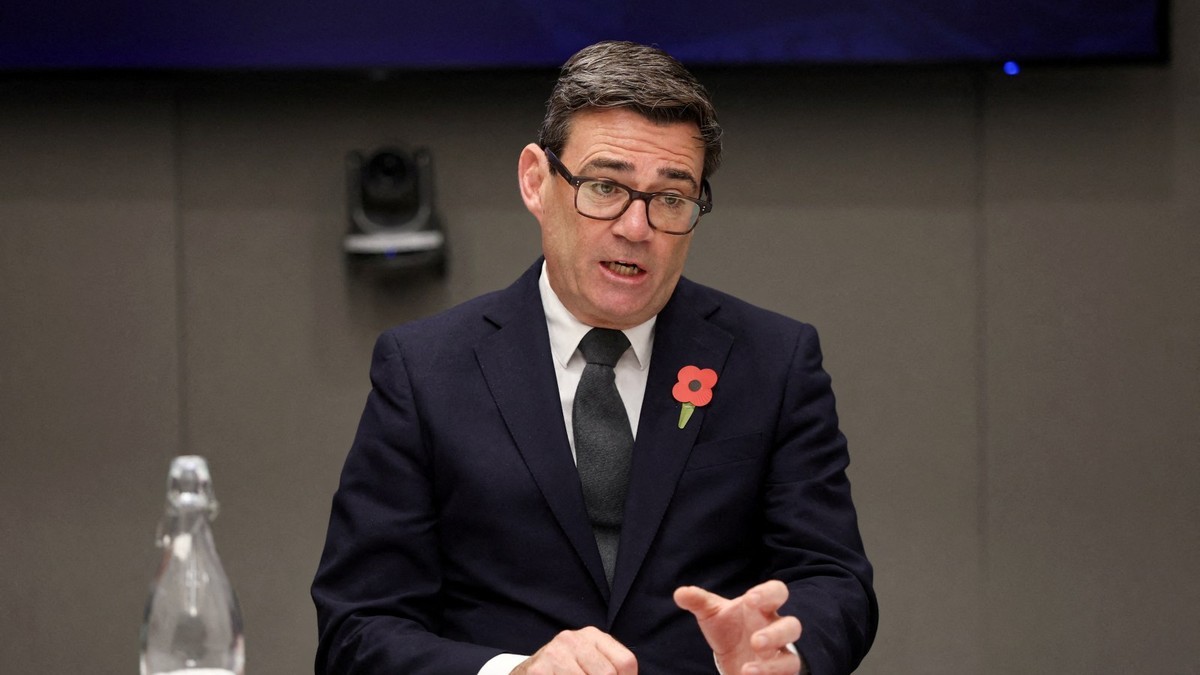
Three things decide how this lands. First, whether the 20 November statement commits to a date. The five leaders want "a path towards the conclusion of these negotiations" agreed at the summit, and an EU diplomat told POLITICO that a group of countries is pushing the Commission to wrap up by the end of 2027. Second, whether the parallel-entry clause holds. The Council is explicit that both agreements "should follow parallel paths and enter into force and apply simultaneously", which hands cohesion payments a veto over the electricity deal rather than leaving them as a bargaining chip. Third, whether Downing Street can sell it. The Telegraph reports that an EU diplomat believes the bloc should make the case to the British public directly, on lower prices, North Sea investment and energy security, because Burnham's run of Brexit deals has generated mixed views.
The Choice in Front of Britain
Folks, this is not a story about cables. It is a story about whether access to the European market is a right, a purchase, or a favour, and Europe has now answered: it is a purchase, priced against the size of your economy and the share of the market you want to use. Britain can pay and get cheaper power, more North Sea investment and a seat in the room where the rules are written. Or it can stay outside, keep its rulebook, and keep absorbing the cost gap its own industry puts at up to £10bn. What it cannot do is get the access without the bill. Watch the 20 November statement for a date, watch whether the cohesion link survives contact with the text, and watch whether the government ever answers Mike Wood's question. If it will not say whether Britain pays twice, assume the answer is the expensive one.
By Jessica Ali, Staff Writer
This article was produced with AI-assisted research and editorial support. Sources: Euronews, POLITICO, The Telegraph, The Guardian, Borderlex, the Council of the European Union, the European Commission (COM(2025)804), EUR-Lex, GOV.UK, the UK Parliament and Energy UK. Photographs: Euronews (North Sea offshore wind, cover); Nicolas Tucat/AFP via Getty Images via POLITICO; Reuters via The Sun.
What's Your Reaction?
 Like
0
 Dislike
0
 Love
0
 Funny
0
 Wow
0
 Sad
0
 Angry
0

Editor-in-Chief at Global1.News. Atlanta-based journalist who cuts through the BS and tells it like it is. Lead anchor, host, and the voice you hear when the spin stops and the truth starts.












Comments (0)