
BRICS at 20: Expanded Bloc Tests Consensus as Xi and Putin Expected in New Delhi
The 18th BRICS Summit meets in New Delhi on September 12-13, 2026, as India chairs an expanded bloc of 11 members. Xi Jinping and Vladimir Putin are expected, with consensus tested by West Asia divisions and de-dollarisation debates.
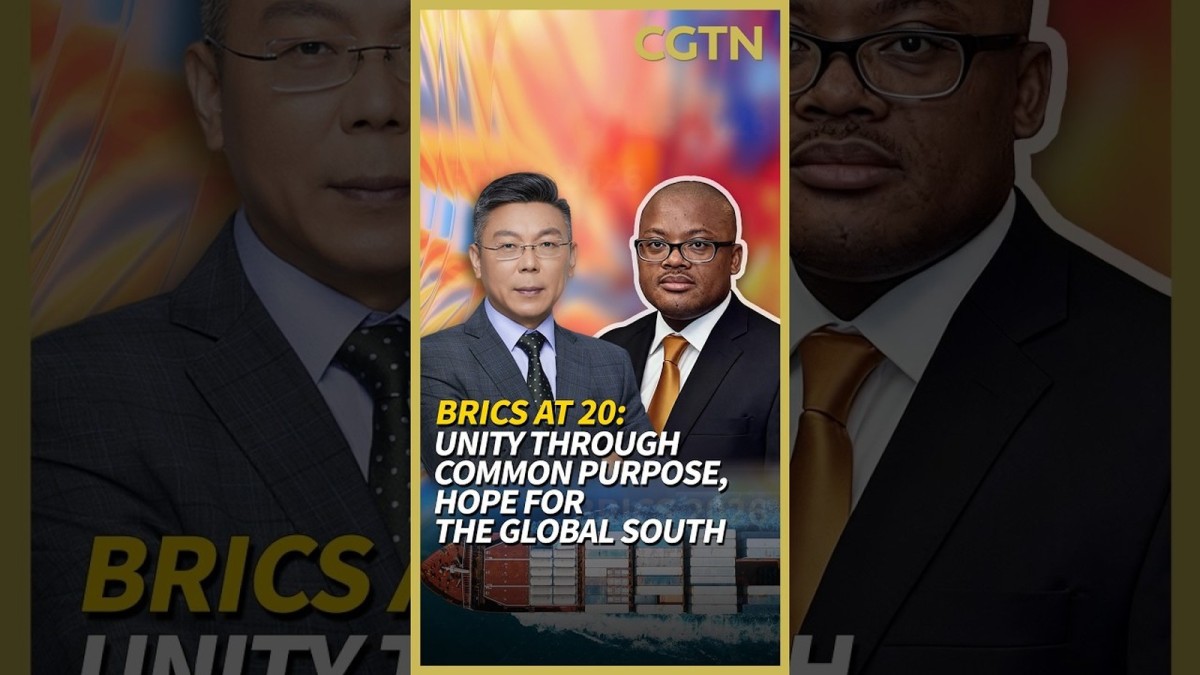
In a CGTN interview, Professor Busani Ngcaweni, director of the Centre for Public Policy and African Studies at the University of Johannesburg, argued that BRICS has held together for two decades precisely because it manages differences rather than suppressing them, and that the grouping's expansion is opening new financing and development pathways for the Global South. That judgement is about to be stress-tested. The 18th BRICS Summit is scheduled for September 12-13, 2026 at Bharat Mandapam in New Delhi. India assumed the chairship on 1 January 2026, succeeding Brazil, which hosted the 17th summit in 2025. It is India's fourth chairship, and the first held under the expanded membership. Prime Minister Narendra Modi chairs, under the theme "Building for Resilience, Innovation, Cooperation and Sustainability", which India's Ministry of External Affairs frames around Modi's "Humanity First" approach.
From Four to Eleven: The Arithmetic of an Expanded Bloc
BRIC began in 2006, when Brazil, Russia, India and China formalised coordination at the UN General Assembly at foreign-minister level. Leaders' summits have been held annually on a rotating basis since 2009, with South Africa completing the original five. Twenty years on, the grouping has 11 full members: Brazil, Russia, India, China and South Africa, plus Egypt, Ethiopia, Iran, Saudi Arabia and the United Arab Emirates, who joined from January 2024, and Indonesia, which joined in January 2025. A partner-country category created at the 2024 Kazan summit now has 10 participants, including Nigeria, Malaysia, Thailand and Vietnam. More than 30 other countries have expressed interest in joining as members or partners. Officially cited figures put the grouping at approximately 49.5% of the world's population, nearly 40% of global GDP and about 26% of global trade, with China and India alone accounting for more than 2.8 billion people.
Yet enlargement is also divergence: each new member brings its own security alignments, and the May foreign ministers' meeting exposed how much those constrain the collective voice.
The May Warning: A Chair's Statement Instead of a Communique
BRICS foreign ministers met at Bharat Mandapam on May 14-15, 2026, across three sessions: global and regional matters; reform of global governance; and "BRICS at 20". The meeting ended without a fully negotiated joint communique for the first time in an Indian chairship year, leaving India to issue a Chair's Statement and Outcome Document covering 63 thematic points and explicitly recording differing views.
The divergence centred on West Asia: Iran sought language condemning US-Israeli operations, while Saudi Arabia and the United Arab Emirates, both with close security ties to Washington, resisted framing BRICS as anti-Western. Negotiators fell back on language from the 2025 Rio summit, reaffirming a two-state solution and a Gaza ceasefire while dropping sharper condemnations of settlement expansion. Counter-terrorism was the area of unanimous agreement, with the statement condemning the Pahalgam attack "in the strongest terms".
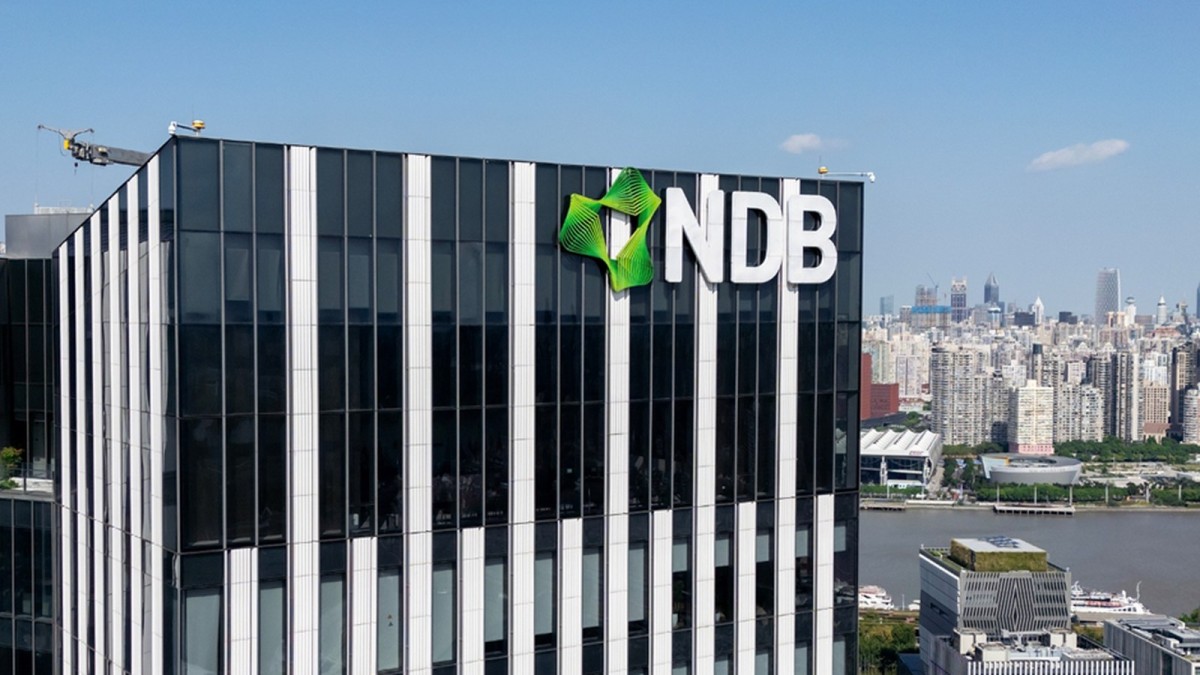
Sudhakar Dalela, Secretary (Economic Relations) at India's MEA, said the sessions allowed members to exchange views across the three pillars of the strategic partnership, and that ministers underscored the need for reformed multilateralism. The outcome document covers UN Security Council and international financial institution reform, trade, artificial intelligence, energy security and food security. The New Development Bank's 11th annual Board of Governors meeting convened simultaneously in Moscow, endorsing the bank's continued expansion.
Payments, Currencies and the Limits of De-Dollarisation
The New Delhi agenda is expected to cover resilient supply chains, cross-border payments, greater use of national currencies, digital trade, artificial intelligence and food security. India's MEA says economic and financial cooperation is one of the three main pillars and that trade discussions focus on making intra-BRICS trade more balanced.
Officials say the focus is practical steps to make cross-border payments faster and cheaper, and that "these discussions are not aimed at any third country or grouping" - a deliberate distinction from talk of a single BRICS currency. Reserve Bank of India Governor Sanjay Malhotra has said cross-border payments are an area of interest because there is a lot of scope for reducing cost, and Reuters has reported that the RBI suggested placing a proposal linking the digital currencies of BRICS members on the 2026 agenda. Russia operates SPFS, China CIPS, India UPI and Brazil Pix; India has already connected UPI with the United Arab Emirates. Analysts at India's MP-IDSA note that ideas such as de-dollarisation lack consensus and have not gained traction within BRICS, and characterise the grouping as an anchor of stability rather than an anti-Western bloc.
India's Chairmanship: Consensus Management Under Pressure
India says it has carried out more than 350 BRICS engagements this year and is working through the Sherpa channel on landing zones for the final joint statement. A joint Leaders' Declaration is expected, subject to consensus. Officials describe BRICS as a consensus-based framework, saying that where consensus cannot be reached, dialogue continues.
That formulation is both a diplomatic formula and an admission. India has resisted attempts by Russia and Iran to turn BRICS into an explicit counterweight to Washington, in order to protect its partnerships with the United States, Europe and the Quad. The sceptical reading, common among Western analysts, is that the May Chair's Statement was evidence of institutional strain. The official reading is that the value of BRICS lies in its machinery - the New Development Bank, the finance track, the sherpa process - rather than in declaratory language. Analysts are watching for one of three outcomes in New Delhi: a full consensus joint declaration; a declaration strong on economic deliverables but general on politically sensitive questions such as West Asia; or a further failure to reach consensus that leaves India relying on a Chair's Statement alone.
Who Is Coming, and What They Bring
Chinese President Xi Jinping, Russian President Vladimir Putin and Iranian President Masoud Pezeshkian are among the leaders expected to attend, according to sources. Indian media reports suggest Xi may bring a delegation of around 400 officials, but Beijing has not formally confirmed the trip.
China is the largest economy within BRICS and the world's largest trading nation, and a major source of infrastructure financing and an increasingly important provider of technology and industrial capacity to developing economies. The New Development Bank, established by the original five and headquartered in Shanghai, has increasingly promoted local-currency lending. Chinese analysts at the Chinese Academy of Social Sciences note that more than 100 countries and international organisations have taken part in dialogue and cooperation under the BRICS framework.
Russia's position with India shows how far practical integration has gone. Published analysis by Dr Victoria Panova records bilateral trade reaching $60 billion by the 2025/26 fiscal year, making Russia India's fourth-largest trading partner, with Russia's share of Indian oil imports reaching 50% in July 2026 against an annual average of 35-45%. In December 2025, Putin and Modi agreed a Cooperation Development Programme through 2030 aimed at raising trade turnover to $100 billion, and the share of bilateral payments settled in national currencies has reached 96%. The same analysis argues that the grouping's purpose in 2026 is to build alternative infrastructure that reduces the risks of unilateral dependence, and that the New Development Bank and national-currency settlements are instruments of hedging rather than confrontation.
A Summit Set Against War, Sanctions and Shipping Disruption
The summit convenes against the war in West Asia, disruption to international shipping and the increasing use of sanctions by the United States. Washington has framed a campaign of "economic asphyxiation" against Iran, a BRICS member, under the label "Operation Economic Outcast", and is pursuing quiet diplomacy with countries doing business with Iran before imposing secondary sanctions. The UAE, also a BRICS member, has suspended trade and financial transactions with Iran "until further notice". In 2025, President Donald Trump imposed tariffs of up to 50% on Indian goods, half as a penalty over India's purchases of Russian oil. Disruption around the Strait of Hormuz has interrupted energy flows plus fertilisers, petrochemicals and goods critical to food security.
For China, the strategic logic is familiar: technological self-sufficiency, South-South cooperation and multilateral institution-building aimed at a more representative international order. For India, the calculation is narrower - to extract economic deliverables without being conscripted into an anti-Western bloc. For the Gulf members, the priority is to keep both doors open. For ASEAN partners such as Malaysia, Thailand and Vietnam, BRICS is a hedging instrument, not an allegiance.
Professor Ngcaweni's point about shared goals sustaining cooperation over 20 years may prove the most durable insight of all: the grouping's cohesion has never depended on agreement about the West, only on the shared conviction that the existing order under-serves them. Whether that is enough to produce a joint declaration in New Delhi is the question the coming days will answer.
By Prof. Marcus Chen, Staff Writer
This article was produced with AI-assisted research and editorial support. Sources: CGTN video interview (10 September 2026); CGTN News; Ministry of External Affairs, India; Reuters; CNBC-TV18; Times Now; MP-IDSA.
What's Your Reaction?
 Like
0
Like
0
 Dislike
0
Dislike
0
 Love
0
Love
0
 Funny
0
Funny
0
 Wow
0
Wow
0
 Sad
0
Sad
0
 Angry
0
Angry
0

World Politics Analyst at Global1.News. Based in Beijing, covering US-China relations, global trade, and geopolitical strategy. Brings deep analytical perspective to the power dynamics shaping international affairs.











Comments (0)