
West Bank approaching 'point of no return', Russia warns UN Security Council
The United Nations Security Council heard a stark warning on Wednesday from Russia's ambassador, Vassily Nebenzya, that the occupied West Bank is "approaching a point of no return," with the risk of "deep destabilization of the military and political situation throughout the region." The statement, delivered during a session on the Middle East and the Palestinian question, comes as Israeli military operations, settlement expansion, and settler violence continue to reshape the
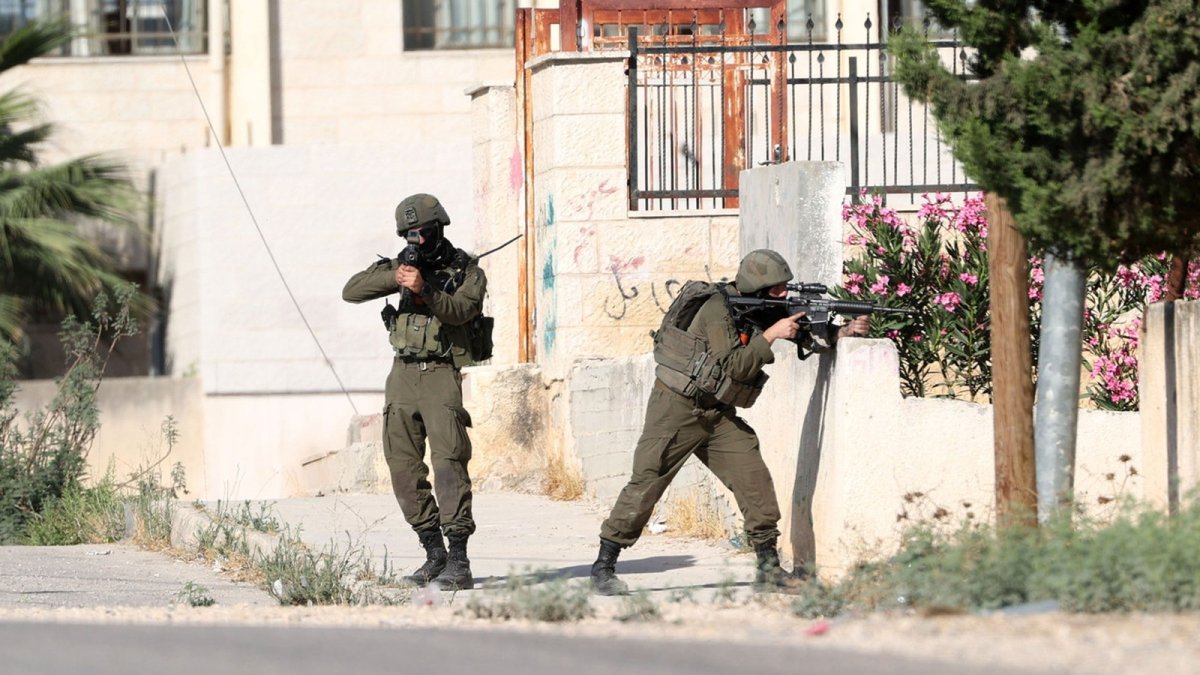
The United Nations Security Council heard a stark warning on Wednesday from Russia's ambassador, Vassily Nebenzya, that the occupied West Bank is "approaching a point of no return," with the risk of "deep destabilization of the military and political situation throughout the region." The statement, delivered during a session on the Middle East and the Palestinian question, comes as Israeli military operations, settlement expansion, and settler violence continue to reshape the territory at an alarming pace. For Palestinians living in villages like Tell, near Nablus, the diplomatic language of "points of no return" is not abstract — it is the sound of explosives demolishing a neighbor's home, the sight of olive groves burned, and the daily reality of living as trespassers in their own land.
A Warning from the Security Council Floor
Ambassador Nebenzya attributed the deteriorating situation to what he called Israel's "creeping expansion" in the occupied Palestinian territories. He urged Israel to refrain from unilateral steps, including settlement activity, that could undermine the prospects for a two-state solution. The Russian envoy also called on Israel to take effective measures to curb settler violence and to return to implementing relevant UN Security Council and General Assembly resolutions. His remarks reflect a growing international alarm that the situation on the ground is moving beyond the capacity of diplomatic frameworks to contain.
The warning is not isolated. UN data cited in related reporting indicates that some 119 Palestinian communities in the occupied West Bank have been uprooted in the past three years. Palestinians are increasingly treated as trespassers in their own land, while Israeli settlers operate with what residents describe as impunity — slashing, burning, and seizing land without consequence. The cumulative effect, diplomats and human rights observers argue, is the systematic erosion of any viable Palestinian statehood project.
The Human Cost in the West Bank
The numbers are stark. UN officials reported that 76 Palestinians, including 18 children, had been killed in the West Bank in 2026 as of August 10. Each figure represents a family shattered, a community in mourning, and a cycle of violence that shows no sign of abating. In the village of Tell, in the Nablus governorate, Israeli forces evacuated nearby homes before demolishing the home of Palestinian Farouk Ramadan using explosives on August 11. The demolition, captured in photographs by Anadolu Agency, is part of a broader pattern of punitive and administrative demolitions that have become a near-daily occurrence across the territory.
For residents of Tell, Jenin, and other villages across the northern West Bank, the threat is constant. Children grow up accustomed to the sound of military raids at dawn, the sight of bulldozers, and the fear of losing their homes without warning. The psychological toll is immeasurable, but the physical evidence is clear: entire communities are being systematically dismantled, their residents displaced, and their livelihoods destroyed. The international community's warnings, however urgent, have done little to alter the trajectory on the ground.
Gaza's Broken Ceasefire
Ambassador Nebenzya also voiced deep concern about the situation in the Gaza Strip, saying that implementation of the US peace plan for the enclave had effectively stalled. While he welcomed the role of mediators in helping halt large-scale fighting, he noted that the ceasefire continued to be violated, primarily by Israel. Citing casualty figures, Nebenzya said nearly 1,300 Palestinians had been killed in less than a year since the ceasefire formally took effect, including almost 300 children, according to UNICEF reports.
UNICEF has reported that at least 300 children in Gaza have been killed since the ceasefire took effect in October 2025 — roughly one child killed every day during the ceasefire period. The figure is a damning indictment of the fragility of the truce and the failure of the international community to protect civilian life. For families in Gaza, the ceasefire has not brought the peace they were promised; it has merely changed the nature of the violence they endure. The stalled US peace plan, which was meant to chart a path toward reconstruction and political resolution, remains mired in political maneuvering and mutual recrimination.
The Diplomacy Debate: Who Mediates?
Nebenzya's remarks also took aim at attempts by "individual countries" to assume the role of sole mediator in the conflict, particularly when the mediator "openly favors one side." While he did not name the United States directly, the implication was clear. The Russian envoy argued that sustainable stability required coordinated international and regional efforts, not situational, closed-door schemes. "The Palestinian question, as well as the entire complex of Middle Eastern issues, cannot be resolved in one stroke or through situational, closed-door schemes," he said.
This critique reflects a broader frustration among many UN member states with the exclusivity of the current diplomatic process. The United States has historically positioned itself as the primary broker in Israeli-Palestinian negotiations, but its perceived bias toward Israel has undermined its credibility in the eyes of many Palestinians and international observers. The result, critics argue, is a peace process that has become a mechanism for managing the conflict rather than resolving it, while the realities on the ground continue to deteriorate.
What "Point of No Return" Means
The phrase "point of no return" carries a specific weight in diplomatic discourse. It suggests a threshold beyond which the situation cannot be reversed through conventional means — a moment when the two-state solution becomes geographically and politically impossible. In the West Bank, that threshold is being approached through the steady expansion of settlements, the construction of bypass roads, and the fragmentation of Palestinian territory into isolated enclaves. The international legal framework, which has long been the basis for peace efforts, is being systematically undermined by facts on the ground.
For Palestinians, the point of no return is not a hypothetical scenario; it is the lived experience of watching their land shrink, their communities fracture, and their political aspirations fade. The two-state solution, once the cornerstone of international consensus, is becoming increasingly difficult to envision as settlements expand and the Palestinian population is confined to ever-smaller areas. The warning from the Security Council is not just about the risk of regional destabilization; it is about the erasure of a people's right to self-determination.
The Path Forward: A Return to International Law
Nebenzya argued that a lasting settlement should be based on the existing international legal framework and the principle of "two states for two peoples." He said the success of any peace initiative in the Middle East should ultimately be measured by whether it leads to the establishment of an independent and contiguous Palestinian state comprising the West Bank and Gaza, with East Jerusalem as its capital. This vision, however, requires a level of political will and international coordination that has been conspicuously absent.
The path forward, as outlined by the Russian envoy and echoed by many international legal experts, involves a return to the fundamentals: an end to settlement expansion, a halt to settler violence, and a commitment to implementing existing UN resolutions. It also requires a more inclusive diplomatic process that does not privilege the interests of one party over another. For Palestinians, the path forward is not about new initiatives or grand plans; it is about the enforcement of existing international law and the recognition of their basic human rights.
As the Security Council debates and diplomats issue warnings, the people of Tell, Nablus, Jenin, and Gaza continue to live under the shadow of violence and displacement. The international community's words, however well-intentioned, have yet to translate into meaningful action. The question remains whether the world will heed the warning before it is too late — or whether the point of no return will be crossed, not as a diplomatic metaphor, but as a lived reality for millions of Palestinians.
This article was produced with AI-assisted research and editorial support. Sources: Middle East Monitor, Anadolu Agency, UN Security Council, UNICEF.
By Fatima Al-Rashid, Staff Writer
What's Your Reaction?
 Like
0
Like
0
 Dislike
0
Dislike
0
 Love
0
Love
0
 Funny
0
Funny
0
 Wow
0
Wow
0
 Sad
0
Sad
0
 Angry
0
Angry
0

Gulf/MENA Correspondent at Global1.News. Based in Doha, covering Gulf politics, energy markets, diplomacy, and development across the Middle East and North Africa. Tracks the economic transformation of the Gulf states.











Comments (0)