
Won’t allow Gau Mata to be slaughtered in West Bengal, says CM Suvendu Adhikari
West Bengal’s new chief minister, Suvendu Adhikari, used a press briefing on 23 November 2026 to reaffirm the state’s resolve against indiscriminate cow slaughter, while also signalling a nuanced approach to regulated meat processing.
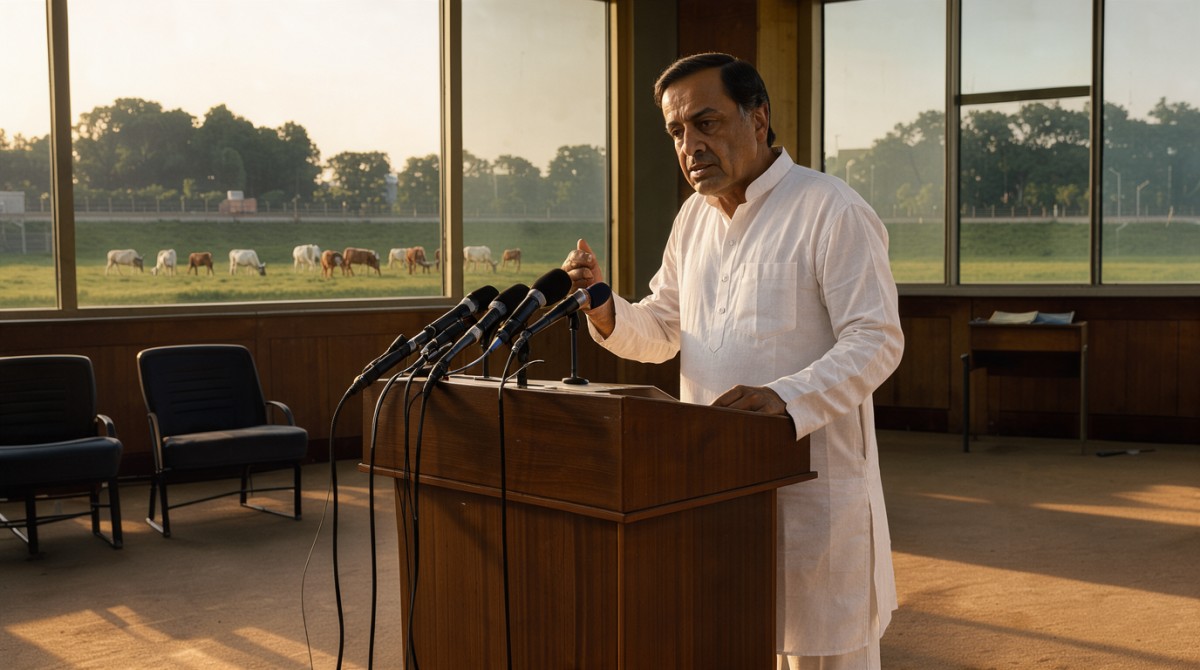
West Bengal’s new chief minister, Suvendu Adhikari, used a press briefing on 23 November 2026 to reaffirm the state’s resolve against indiscriminate cow slaughter, while also signalling a nuanced approach to regulated meat processing. The announcement, made after a cabinet meeting at Nabanna, carries political, legal and economic implications that intersect with the state’s animal‑welfare infrastructure, the broader national debate on cattle protection, and the fiscal priorities of a BJP‑led administration that came to power earlier this year.
Political framing of the anti‑slaughter stance
Adhikari’s declaration, “I will not allow Gau Mata to be slaughtered in the State,” was positioned as a direct response to public concerns and a reaffirmation of the BJP’s cultural agenda. By framing the issue as a matter of state policy rather than mere enforcement, the chief minister sought to pre‑empt criticism from opposition parties that have traditionally leveraged cattle‑related sentiment for electoral gain. The statement also hinted at a broader political calculus: the BJP, having recently assumed power, is keen to demonstrate decisive action on a symbolically charged issue that resonates across rural and urban constituencies.
Opposition reactions were swift. A senior CPI(M) advocate warned that the chief minister’s rhetoric could “divide the people,” while a leader from the Democratic Trinamool Congress urged Adhikari to ensure that no BJP figure was implicated in cattle‑meat exports. These comments underscore the politicisation of cattle welfare, where parties use the issue to both rally support and attack rivals, making any policy shift a contested terrain.
Legal backdrop: the 1950 Act and recent guidelines
The chief minister referenced the West Bengal Animal Slaughter Control Act of 1950, a colonial‑era statute that already restricts cattle slaughter. He also invoked a 2018 Calcutta High Court observation, indicating that the judiciary has been actively monitoring compliance. However, the most recent legal development came in May 2026, when the state government issued a fresh set of guidelines mandating fitness certificates for all cattle, including cows, bulls, buffaloes and calves, before they could be slaughtered.
These guidelines require certification by authorised local officials and a government veterinary surgeon, and restrict slaughter to designated facilities. Violations attract up to six months’ imprisonment, a fine of up to ₹1,000, or both. The High Court’s refusal to stay the May notification reinforced the legal weight of the new rules, suggesting that the judiciary is prepared to uphold stricter controls despite the practical challenges of enforcement.
Enforcement realities: illegal slaughter persists
Adhikari candidly acknowledged that illegal cattle slaughter continues in certain parts of West Bengal, despite the existing legal framework. This admission points to a gap between statutory provisions and on‑the‑ground enforcement. The chief minister cited “certain examples” without detailing locations, but the statement implies that clandestine operations remain active, likely in peripheral districts where monitoring capacity is limited.
The persistence of illegal slaughter raises questions about the adequacy of current enforcement mechanisms. While the May 2026 guidelines impose penalties, the modest fine of ₹1,000 may not deter organised networks. Moreover, the requirement for fitness certificates places additional administrative burdens on rural farmers, who may lack easy access to authorised officials or veterinary surgeons, potentially driving them toward informal channels.
Fiscal commitment: annual grant to gaushalas
In a move that blends policy with welfare, Adhikari announced an annual grant of ₹1 lakh per gaushala for the upkeep and treatment of aged cattle. This allocation signals a targeted investment in the state’s cattle‑shelter infrastructure, which has expanded in recent years as more farmers retire unproductive bovines. By earmarking funds specifically for aged cattle, the government aims to reduce the economic incentive for illegal slaughter, offering a financial safety net for owners.
The grant, while modest in absolute terms, could have a multiplier effect if gaushalas use the funds to improve veterinary care, feed quality, and shelter conditions. Better‑maintained gaushalas may also serve as community hubs for animal‑welfare education, reinforcing the state’s broader narrative of protecting “Gau Mata.” However, the effectiveness of the grant will depend on transparent disbursement mechanisms and robust monitoring to ensure that funds reach intended beneficiaries.
Distinguishing slaughterhouses from cow slaughter
When pressed about the impact of the new policy on existing slaughterhouses, Adhikari drew a clear line: “Slaughterhouses and touching Gomata are not the same. If there is permission, slaughter can take place in slaughterhouses.” This distinction underscores the government’s intent to preserve the meat‑processing sector while tightening controls on cow slaughter. Designated slaughterhouses, already subject to certification and veterinary oversight, can continue operations for permissible species, thereby maintaining supply chains for beef, buffalo meat and other livestock products.
By allowing regulated slaughter in authorised facilities, the state seeks to balance economic interests—particularly for meat‑processing firms and workers in the sector—with cultural sensitivities surrounding cow protection. This calibrated approach may also mitigate the risk of illicit slaughter moving underground, as it offers a legal avenue for meat producers while keeping the core objective of protecting cows intact.
Implications for the animal‑welfare ecosystem
The combination of stricter certification, higher penalties, and financial support for gaushalas creates a multi‑pronged strategy that could reshape West Bengal’s animal‑welfare landscape. Veterinary surgeons, now integral to the certification process, may see increased demand for their services, prompting a need for capacity building in the public veterinary sector. Training programmes and recruitment drives could become policy priorities to ensure timely certification across the state.
Simultaneously, the grant to gaushalas may stimulate the growth of a more formalised shelter network, potentially standardising care practices and encouraging data collection on cattle health outcomes. Such data could inform future policy refinements, for instance by identifying regions where illegal slaughter is most prevalent and directing enforcement resources accordingly.
Broader national context and future outlook
West Bengal’s renewed emphasis on cow protection aligns with a broader national trend where several states have tightened cattle‑slaughter regulations since the BJP’s rise to power at the centre. The May 2026 guidelines echo similar measures in states like Uttar Pradesh and Karnataka, reflecting a coordinated policy thrust. However, the state’s explicit acknowledgment of ongoing illegal practices suggests that legislative tightening alone may not suffice.
Looking ahead, the effectiveness of Adhikari’s strategy will hinge on the state’s ability to operationalise the certification system, enforce penalties consistently, and ensure that the financial incentives for gaushalas translate into tangible welfare improvements. If these elements coalesce, West Bengal could emerge as a model for integrating cultural imperatives with pragmatic animal‑welfare governance. Conversely, persistent gaps in enforcement could fuel continued illicit slaughter, undermining the chief minister’s pledge and providing fodder for opposition criticism. The coming months will therefore be crucial in testing whether the announced measures can bridge the divide between policy intent and on‑the‑ground reality.
This article was produced with AI-assisted research and editorial support. Reporting is based on the source material cited below. Sources: The Hindu; thehindu.com; Global1.News (24 November 2026).
By Dr. Raj Patel, Staff Writer
What's Your Reaction?
 Like
0
 Dislike
0
 Love
0
 Funny
0
 Wow
0
 Sad
0
 Angry
0

India/South Asia Correspondent at Global1.News. Analytical voice with a background in science and health journalism. Based in New Delhi, covering Indian politics, education, healthcare, technology, and policy. Breaks down complex data into clear, actionable reporting.















Comments (0)