
Iran Promises Retaliation to U.S. Blockade as Trump Warns of New Year Strikes
In the latest development of a fraught U.S.-Iranian relationship, Tehran has declared that the United States’ economic sanctions and naval blockade constitute acts of military aggression that will be met with decisive countermeasures.
In the latest development of a fraught U.S.-Iranian relationship, Tehran has declared that the United States’ economic sanctions and naval blockade constitute acts of military aggression that will be met with decisive countermeasures. The statement, delivered by Foreign Ministry spokesperson Esmaeil Baghaei on Monday, frames the United States’ pressure as a violation of the United Nations Charter and signals a willingness to employ “all available means” in defense. This escalation follows President Donald Trump’s public warning that fresh strikes could be launched against Iran in the new year should diplomatic negotiations fail. The Arirang News footage, reported by Kim Jun-hong, captures the tenor of Tehran’s response and offers a window into the broader strategic calculus that will shape regional security dynamics in the months ahead.
Contextualizing the U.S. Blockade and Iranian Legal Rationale
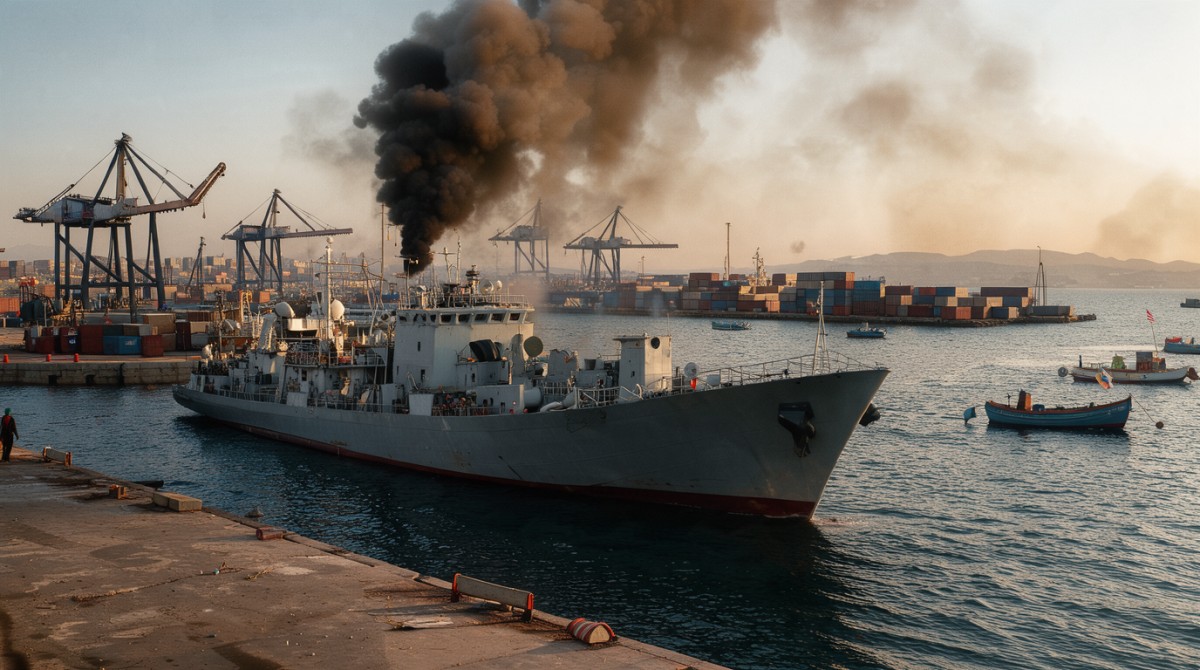
The United States has intensified its pressure on Iran through a combination of renewed sanctions and a naval blockade aimed at restricting Iranian shipping in the Persian Gulf. While the specific legal instruments of the blockade were not enumerated in the video, the Iranian Foreign Ministry characterized these measures as “military aggression” under the United Nations Charter. Baghaei asserted that Tehran possesses the right to self‑defence, a claim that aligns with Article 51 of the Charter, which permits states to use force if an armed attack occurs against them.
Baghaei’s remarks also hinted at a graduated response, stating that Iran could take “diplomatic and defensive measures in stages.” This phrasing suggests a calibrated approach that may begin with diplomatic protest and escalation to defensive military actions if the blockade persists. The language mirrors earlier Iranian diplomatic practice, wherein Tehran has combined rhetorical firmness with a willingness to calibrate its response based on the perceived severity of foreign pressure.
From a Korean perspective, the Ministry of Foreign Affairs (MOFA) monitors such developments closely, given the strategic importance of the Strait of Hormuz for global energy markets and the potential spillover effects on Korean shipping interests. Korean think tanks such as the Asan Institute for Policy Studies have previously highlighted the risk that heightened U.S.-Iran tensions pose to the security of maritime trade routes that Korean vessels routinely traverse.
President Trump’s Warning and Its Implications for Regional Stability
President Donald Trump, speaking on Sunday, warned that the United States would be prepared to launch fresh military strikes against Iran after the New Year if negotiations do not produce a satisfactory outcome. In the same remarks, Trump dismissed Iranian negotiators as “professional tap dancers,” a pejorative that underscores the administration’s frustration with the pace and substance of Tehran’s diplomatic overtures.
Trump’s articulation of a “permanent” deal focused on preventing Iran from acquiring nuclear weapons, rather than pursuing regime change, signals a strategic shift from the more expansive containment policies of previous administrations. However, his insistence on a permanent arrangement raises questions about the durability of any agreement, especially given Iran’s history of periodic non‑compliance and the internal political dynamics that influence Tehran’s negotiating posture.
The Korean Ministry of Unification (MOEU) and the Ministry of Economy and Finance (MOEF) have both noted that any disruption in oil supplies from the Persian Gulf could reverberate through global energy markets, potentially affecting South Korea’s energy import costs. Korean analysts at the Korea Development Institute (KDI) have warned that volatile oil prices could exacerbate inflationary pressures in the Korean economy, underscoring the importance of diplomatic stability in the region.
Iranian Military Posturing: Revolutionary Guard and New Missile Capabilities
The video report also referenced recent footage released by Iranian state television showing Revolutionary Guard officials unveiling a new missile launcher at an underground facility. While the exact specifications of the system were not disclosed, the visual evidence suggests a continued emphasis on expanding Iran’s asymmetric deterrent capabilities, particularly in the maritime domain.
The Islamic Revolutionary Guard Corps (IRGC) has historically been the principal instrument through which Iran projects power in the Persian Gulf, employing fast attack craft, anti‑ship missiles, and mine‑laying operations to challenge foreign naval presence. The unveiling of a new missile launcher may indicate an effort to modernize these capabilities in response to perceived U.S. naval encirclement.
Korean security scholars at the Korea Institute for International Economic Policy (KIEP) have noted that Iran’s missile developments, while primarily aimed at regional adversaries, also contribute to a broader pattern of missile proliferation that complicates security calculations for all states operating in the Gulf, including Korean naval vessels participating in anti‑piracy and security missions.
Diplomatic Maneuvers: U.S. Secretary of State’s Upcoming Meeting
Amid the heightened rhetoric, U.S. Secretary of State Marco Rubio is scheduled to meet Qatari Prime Minister and Foreign Minister Mohammed bin Abdulrahman Al Thani in Washington on Monday. While the agenda of this meeting was not detailed in the video, the timing suggests an effort by the United States to coordinate with regional partners on a unified response to Iran’s defiant stance.
Qatar, a key U.S. ally in the Gulf, has historically served as a diplomatic conduit for dialogue with Tehran. The involvement of Qatari officials may therefore reflect an attempt to mediate or at least manage the escalation, offering a channel for de‑escalation that could be leveraged by Korean diplomatic efforts seeking to preserve the safety of Korean maritime commerce.
In Seoul, the Ministry of Foreign Affairs has indicated that it will monitor the outcome of the U.S.–Qatar talks, recognizing that any consensus reached could shape the contours of future U.S. policy toward Iran, and by extension, the security environment in which Korean vessels operate.
Commercial Shipping Risks and Korean Economic Interests
Recent reports of Iranian attacks on commercial vessels near the Strait of Hormuz have heightened concerns about the safety of maritime traffic. The Strait is a critical chokepoint through which a substantial share of the world’s oil passes, and any disruption could have immediate repercussions for global energy markets.
South Korean shipping companies, many of which maintain regular routes through the Gulf, have expressed alarm over the prospect of Iranian attacks on merchant ships. The Ministry of Oceans and Fisheries (MOF) has issued advisories urging heightened vigilance and the adoption of defensive measures for vessels transiting the high‑risk zone.
Think tanks such as the Asan Institute have emphasized that Korean firms must balance the cost of rerouting ships around the Cape of Good Hope against the risks of remaining in the Gulf. The economic calculus involves not only fuel costs but also the potential for insurance premiums to surge in response to heightened threat levels, a factor that could strain the profitability of Korean export logistics.
Prospects for De‑Escalation and the Role of International Law
Looking forward, the trajectory of U.S.-Iran tensions will likely hinge on the interplay between diplomatic engagement and the credibility of military threats. Iran’s invocation of the UN Charter to justify self‑defence underscores a reliance on international legal norms to legitimize its actions, even as it simultaneously showcases new missile capabilities.
For Korea, the imperative is to support multilateral mechanisms that reinforce the rule of law at sea, such as the United Nations Convention on the Law of the Sea (UNCLOS). By advocating for freedom of navigation and the peaceful resolution of disputes, Korean diplomatic actors can contribute to a framework that discourages unilateral coercion and promotes stability.
In the broader regional context, the involvement of Qatar and the scheduled meeting of Secretary Rubio suggest that diplomatic channels remain open, albeit strained. Should the United States proceed with a strike in the new year, the risk of a broader conflagration would increase dramatically, potentially drawing in allied forces and destabilizing the Gulf’s delicate balance.
In sum, the Iranian pledge to counter U.S. sanctions and blockade with “all the means at its disposal” reflects a hardened stance that will test the resilience of diplomatic efforts. Korean policymakers, informed by ministries such as MOFA and MOE, and guided by analytical insights from institutions like KDI and KIEP, must navigate this volatile environment with a blend of strategic foresight and adherence to international law. The coming weeks will be decisive in determining whether the rhetoric translates into kinetic conflict or whether a calibrated diplomatic pathway can avert a broader escalation in the Middle East.
By Prof. David Park, Staff Writer
This article was produced with AI-assisted research and editorial support. Reporting is based on the source material cited below. Sources: Arirang News video report (23 November 2026); Arirang News; Global1.News
What's Your Reaction?
 Like
0
 Dislike
0
 Love
0
 Funny
0
 Wow
0
 Sad
0
 Angry
0

East Asia/Technology Correspondent at Global1.News. Seoul-based voice covering Korean politics, technology, business, and culture. Analyzes how technology and geopolitics intersect across East Asia.












Comments (0)