
When Will the West Name Israel's Ceasefire Violations?
Barry Malone asks when the West will name Israel's ceasefire violations in Gaza and Lebanon, where over 1,257 Palestinians have been killed since October 2025. As violations reach 306 days, B'Tselem and the WHO document a humanitarian crisis the international community refuses to call by name.
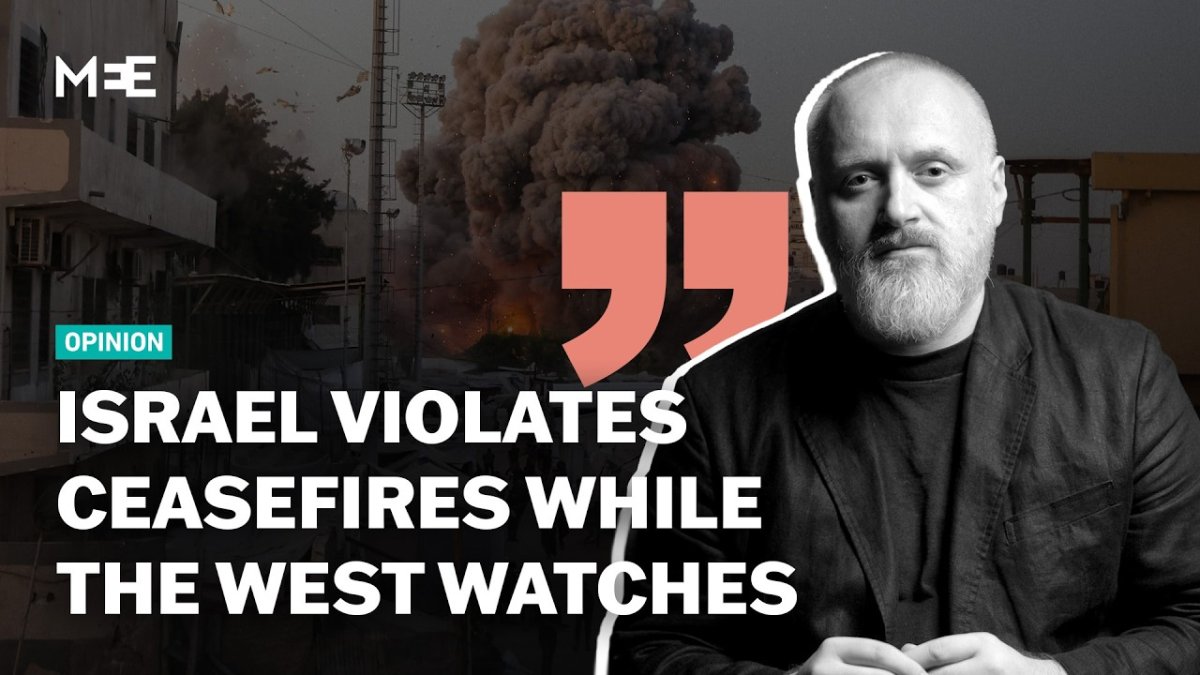
In a recent Middle East Eye opinion video, independent journalist Barry Malone poses a question that has haunted the occupied Palestinian territories for nearly a year: "When will the west call out Israel's ceasefire violations?" Malone, a former deputy editor-in-chief at the Thomson Reuters Foundation and author of the Proximities newsletter, argues that Israel has repeatedly violated ceasefires in both Gaza and Lebanon while much of the Western media avoids describing those actions as violations. His analysis cuts through the diplomatic euphemisms that have come to define coverage of a conflict that continues to claim lives despite the ink drying on agreements meant to end it.
The video, published on 12 August 2026, arrives on the 306th consecutive day of reported Israeli ceasefire violations in Gaza, according to Palestinian monitoring groups. It is a stark reminder that the ceasefire brokered by the United States with Qatar, Egypt and Turkey on 11 October 2025 has not brought the peace that its name implies. Instead, it has produced a grim new vocabulary — one of "incidents," "tensions" and "escalations" — that obscures a simple, brutal fact: people are still dying, and the world is struggling to say so plainly.
When Will the West Name Israel's Ceasefire Violations?
Gaza City, Occupied Palestinian Territories – 12 August 2026 — The sound of artillery fire has become a constant companion for residents of Beit Lahia in the north, Shuja'iyya east of Gaza City, and the crowded camps of al-Bureij and Deir al-Balah in the central strip. On Tuesday morning, tank shells struck near residential blocks in Khan Younis, while naval vessels opened fire off the coast of Gaza City and Deir al-Balah, preventing fishermen from even approaching the shore. Humanitarian convoys heading to northern Gaza were again obstructed by Israeli forces, according to local coordination officials. This is not a scene from the war that preceded the ceasefire — this is life under a ceasefire that was supposed to end the killing.
The Numbers Behind the 'Ceasefire'
The statistics paint a picture that defies the diplomatic framing. Gaza's Health Ministry reports that Israeli violations of the ceasefire have killed 1,257 Palestinians and wounded 4,131 others since the agreement took effect on 11 October 2025, with figures current as of 10 August 2026. The Israeli human rights group B'Tselem, which has meticulously documented the toll, puts the number of Palestinians killed in Gaza since October 2023 at 73,385, including 21,757 children. Since the ceasefire was declared, B'Tselem records at least 1,258 killed, among them 300 children. In July 2026 alone, 152 Palestinians were killed, including 21 children.
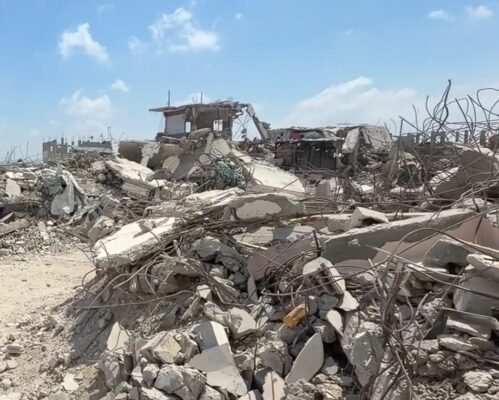
These are not abstract numbers. They represent families shattered in a territory where roughly 90 percent of infrastructure has been devastated, according to Gaza authorities cited by Anadolu Agency. The overall toll since 8 October 2023 exceeds 73,000 Palestinians killed and more than 174,000 wounded, most of them women and children. When B'Tselem, an Israeli organization, publishes figures that contradict the official narrative of a "calm" ceasefire, the dissonance becomes impossible to ignore. Yet the daily reports of shelling, sniper fire and drone strikes rarely make headlines in Western outlets, which continue to describe the situation as a "fragile truce" rather than what it is: a ceasefire being systematically violated.
A 13-Year-Old's Death in al-Mawasi
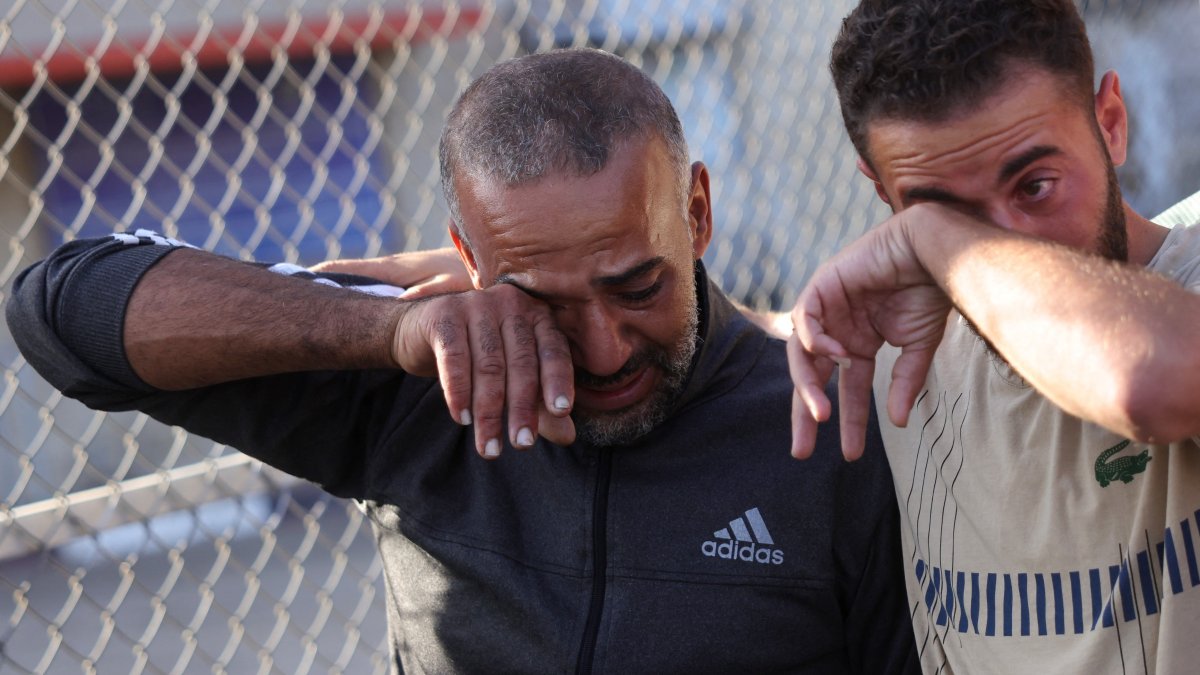
On 10 August 2026, 13-year-old Saba Na'im Abdullah al-Hashash died from wounds sustained two days earlier when Israeli forces opened fire in the al-Mawasi area of Khan Younis. She was not a combatant. She was not near a military target. She was a child in a designated humanitarian zone, where thousands of displaced families have sought refuge in tents and makeshift shelters. Her death, like so many others, was reported by local medics and human rights monitors, but it barely registered in international coverage.
The circumstances of Saba's killing are tragically familiar. Al-Mawasi, a coastal strip west of Rafah and Khan Younis, has been repeatedly struck despite being declared a safe zone for civilians. Hospitals in the area, already overwhelmed and undersupplied, struggled to reach her in time. Ambulance crews face constant delays at checkpoints, and medical staff report that they are often unable to respond to casualties because of ongoing military operations. The World Health Organization has warned that thousands of patients in Gaza remain in urgent need of medical evacuation, with 12,913 patients evacuated since October 2023 — including 6,186 children — along with 16,000 family members. Evacuations now run only three or four times per week, a fraction of what is needed.
Saba's name joins a list that grows longer with each passing day. Her death is not an anomaly or an accident; it is the predictable outcome of a ceasefire that exists on paper but not in practice. For the families of al-Mawasi, the distinction between war and ceasefire has become meaningless. The bombs still fall. The children still die. And the world still struggles to find the words to describe it.
The Siege That Was Supposed to End
The ceasefire agreement promised the reopening of the Rafah crossing, a lifeline for a population that has been under siege for years. That promise remains unfulfilled. The crossing remains closed, and the flow of goods into Gaza is a fraction of what was agreed. According to Middle East Eye reporting, only about 115 fuel trucks entered Gaza in a 21-day period — roughly 10 percent of the agreed quantity. Daily aid truck entries averaged around 145 against the agreed 600. These are not minor shortfalls; they are a systematic strangulation of a territory whose population depends entirely on external assistance for survival.
The consequences are visible in every aspect of daily life. Fuel shortages have crippled hospitals, water desalination plants and bakeries. Medical supplies are running out, and doctors are forced to make impossible choices about who receives treatment. The WHO's warning about medical evacuations underscores the urgency: patients with cancer, kidney failure and war wounds are dying not because their conditions are untreatable, but because they cannot get out. The Rafah crossing, once a symbol of hope for the wounded and the sick, has become another instrument of collective punishment.
Lebanon: A Parallel Pattern of Violations
The pattern of ceasefire violations is not confined to Gaza. In Lebanon, a US-mediated ceasefire between Israel and Lebanon took effect on 27 November 2024, ending more than a year of cross-border hostilities. A year later, Lebanese officials said Israel had carried out more than 10,000 breaches — air incursions, artillery fire, ground operations — that have killed and wounded civilians and destroyed homes in the south. In October 2025, UN experts warned against continued Israeli air and drone strikes in Lebanon despite the ceasefire, noting that these actions violate international law and undermine the stability the agreement was meant to secure.
The parallels with Gaza are striking. In both cases, the ceasefire agreements were hailed as diplomatic achievements, brokered with US involvement and endorsed by the international community. In both cases, the reality on the ground tells a different story. Israeli forces continue to operate with impunity, striking targets they deem threats, while the civilian population bears the cost. And in both cases, Western governments and media have been reluctant to use the word "violation," preferring instead to frame these actions as "responses" or "operations" within the context of ongoing security concerns.
This reluctance has real consequences. When violations are not named, they are not condemned. When they are not condemned, they are not addressed. The ceasefire framework, already fragile, is being hollowed out by a steady stream of incursions that go unchallenged. For the people of southern Lebanon, many of whom remain displaced from their villages, the ceasefire has not brought the security they were promised. For the people of Gaza, it has not brought an end to the killing. The agreements have become a shield for continued military action rather than a foundation for peace.
Why the Language of 'Violation' Matters
Barry Malone's argument in the Middle East Eye video is not merely semantic. The language used to describe events shapes public understanding and political response. When a ceasefire is violated, and the violation is described as an "incident" or a "clash," the responsibility of the violating party is obscured. The word "violation" carries legal and moral weight. It implies a breach of an agreement, a failure of obligation, a basis for accountability. Without that word, the international community can look away, and the cycle of violence continues.
Western media outlets have been particularly adept at this linguistic evasion. Reports from Gaza often describe Israeli military actions without contextualizing them as violations of the ceasefire. The framing is typically neutral — "Israeli forces opened fire" or "an Israeli strike killed" — without noting that these actions are prohibited by the agreement that both parties signed. This is not a matter of bias; it is a matter of accuracy. A ceasefire that is being violated is not a ceasefire in any meaningful sense. To describe it otherwise is to mislead the public and to provide cover for those who would undermine it.
The political consequences are profound. When Western governments refuse to name violations, they signal to Israel that there are no consequences for breaching agreements. This emboldens further violations and erodes the credibility of the ceasefire process itself. It also sends a message to the Palestinian and Lebanese people that their lives are worth less than the diplomatic optics of a "successful" peace process. The refusal to call a violation a violation is not a neutral act; it is a political choice with deadly implications.
Analysis and Implications
The continued unaccountable violations of the ceasefire in Gaza and Lebanon have profound implications for international law and the future of conflict resolution in the region. International humanitarian law is clear: parties to a conflict are bound by the agreements they sign, and violations carry consequences. Yet the enforcement mechanisms are weak, and the political will to hold violators accountable is almost entirely absent. The United Nations has issued statements and reports, but these carry no weight without the backing of powerful member states. The United States, which brokered both ceasefires, has been notably silent on the violations, focusing instead on the stability of the agreements rather than their implementation.
This silence is not without cost. It undermines the credibility of the United States as a mediator and erodes trust in the international system. It also creates a dangerous precedent: if ceasefires can be violated with impunity, why would any party agree to one in the future? The very framework for ending conflicts is being weakened by the failure to enforce the agreements that have already been signed. For Palestinians in Gaza and Lebanese in the south, the message is clear: their suffering is not a priority, and their lives are expendable in the calculus of geopolitics.
Looking ahead, the situation shows no signs of improving. The Rafah crossing remains closed, the aid flow remains inadequate, and the daily reports of shelling and strikes continue. The ceasefire, if it can still be called that, is a fiction maintained by diplomatic inertia. The people of Gaza and Lebanon are left to navigate a reality in which the promises of peace are repeatedly broken, and the world watches without acting. The question posed by Barry Malone — when will the west call out Israel's ceasefire violations? — remains unanswered. Until it is, the killing will continue, and the word "ceasefire" will remain a cruel irony for those who live under its shadow.
For Palestinians in Gaza, each day brings new losses and new reminders that the international community's words are not matched by actions. For Lebanese in the south, the fear of a return to full-scale war lingers as Israeli incursions continue. The path forward is not clear, but one thing is certain: without accountability, without the courage to name violations for what they are, the cycle of violence will persist. The world has a choice — to continue looking away or to finally speak the truth about what is happening in Gaza and Lebanon. The people on the ground are watching, and they are waiting.
By Fatima Al-Rashid, Staff Writer
This article was produced with AI-assisted research and editorial support. Reporting is based on sources cited in the article.
What's Your Reaction?
 Like
0
Like
0
 Dislike
0
Dislike
0
 Love
0
Love
0
 Funny
0
Funny
0
 Wow
0
Wow
0
 Sad
0
Sad
0
 Angry
0
Angry
0

Gulf/MENA Correspondent at Global1.News. Based in Doha, covering Gulf politics, energy markets, diplomacy, and development across the Middle East and North Africa. Tracks the economic transformation of the Gulf states.










Comments (0)