
Vision Thailand: A Strategic Pivot Toward a Multipolar Economy
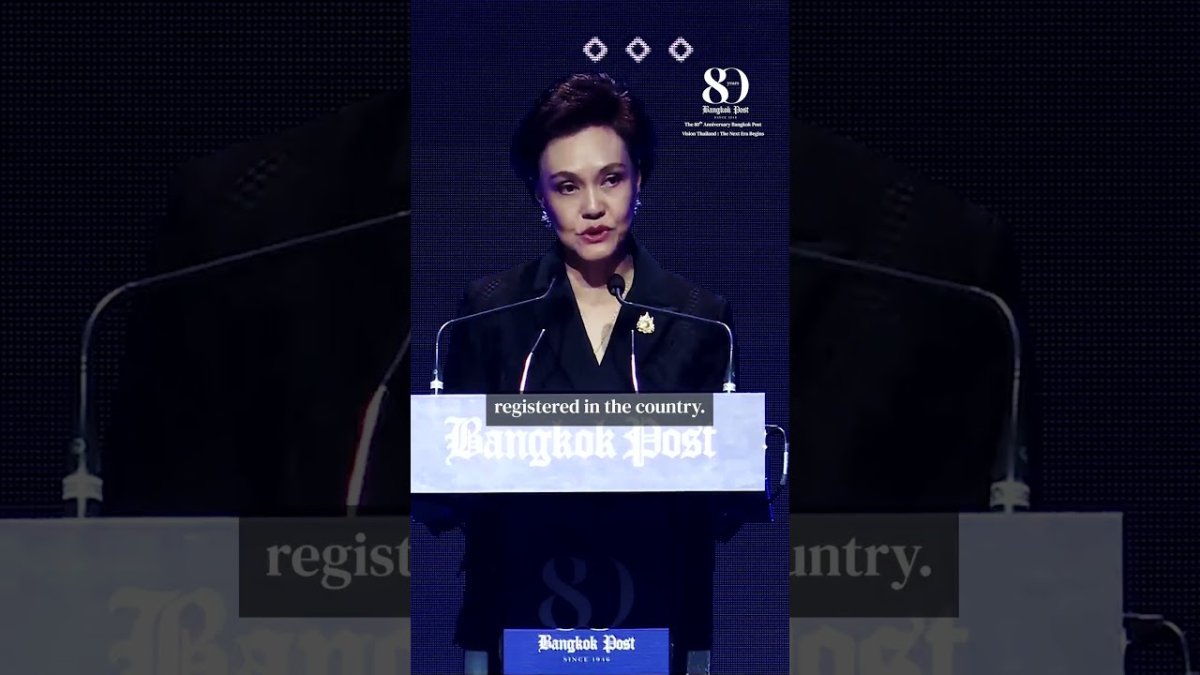
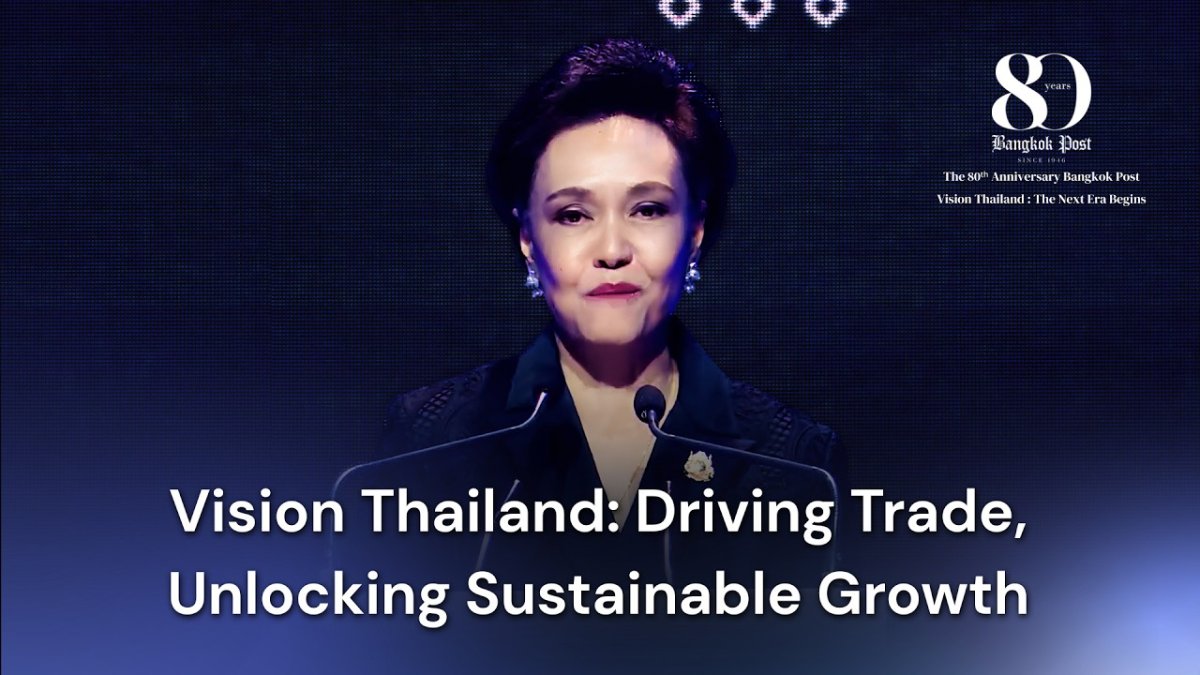
Bangkok’s Centara Grand and Bangkok Convention Centre at CentralWorld was packed on Thursday evening as Deputy Prime Minister and Commerce Minister Suphajee Suthumpan delivered the keynote address at the 80th Anniversary Bangkok Post Forum. Under the theme "Vision Thailand — The Next Era Begins," her speech, titled "Vision Thailand: Driving Trade, Unlocking Sustainable Growth," laid out a pragmatic roadmap for a nation navigating a fractured global economy.
Bangkok’s Centara Grand and Bangkok Convention Centre at CentralWorld was packed on Thursday evening as Deputy Prime Minister and Commerce Minister Suphajee Suthumpan delivered the keynote address at the 80th Anniversary Bangkok Post Forum. Under the theme "Vision Thailand — The Next Era Begins," her speech, titled "Vision Thailand: Driving Trade, Unlocking Sustainable Growth," laid out a pragmatic roadmap for a nation navigating a fractured global economy.
Vision Thailand: A Strategic Pivot Toward a Multipolar Economy
Bangkok, Thailand – Thursday — In a forum that drew a fully booked audience of government, business, and technology leaders, Deputy Prime Minister and Commerce Minister Suphajee Suthumpan delivered a clear message: Thailand cannot afford to remain tethered to a shrinking circle of trading partners. Her keynote at the 80th Anniversary Bangkok Post Forum, held under the theme "Vision Thailand — The Next Era Begins," framed the country's future around the concept of a Multipolar Economy, urging a shift toward open, risk-diversified, and balanced trade policies.
The urgency of her message was underscored by a stark statistic she presented to the audience: approximately one-third of Thailand's total export value currently flows to just two main markets. This concentration, she argued, is a structural vulnerability in a world where geopolitical tensions and supply chain realignments are becoming the norm. For a nation whose economic engine is heavily reliant on external demand, the need to diversify is not just an ambition but a necessity for sustained growth.
Unlocking Three Gaps: Value, Market, and Participation
Minister Suphajee’s address was not merely a diagnosis of challenges but a prescription for action. She proposed a framework centered on unlocking three critical gaps that have long constrained the Thai economy. The first is the Value Gap, which calls for a fundamental shift from competing on quantity to competing on value. This means moving up the global value chain, producing higher-margin goods and services, and leveraging Thai creativity and innovation rather than simply exporting raw materials or low-cost manufactured items.
The second gap is the Market Gap, which involves identifying and cultivating new growth engines beyond the traditional heavyweights. This aligns directly with the Ministry of Commerce’s recent diplomatic and trade offensives, including the push to conclude a Thailand-Canada free trade agreement within 2026 and the accelerated ratification of the Thailand-EFTA FTA. The third, the Participation Gap, addresses a long-standing domestic issue: the limited role of small and medium-sized enterprises in the export economy. The minister’s focus on this gap signals a recognition that broad-based prosperity cannot be achieved if the benefits of trade remain concentrated among a few large conglomerates.
Four Paths to Implementation: From Markets to Trust
To translate these concepts into tangible outcomes, Minister Suphajee outlined four implementation paths. The first is unlocking markets, which involves aggressive trade diplomacy and the removal of barriers in new and existing markets. The second is unlocking value through what she termed "Market-Led Production," a strategy that aligns manufacturing and agricultural output with actual consumer demand and premium market segments, rather than production for its own sake.
The third path focuses on unlocking opportunities for SMEs and MSMEs, a demographic that is the backbone of the Thai economy but has historically struggled to access global markets. The fourth path is unlocking trust with trading partners, a crucial element in an era where supply chain transparency and regulatory compliance are increasingly important. This trust-building extends to ongoing negotiations with the United States on tariff relief, where more than 2,000 Thai tariff lines have already been granted exemptions, and Thai investment in the US stands at about US$19.3 billion, with a further US$5.5 billion planned.
Thailand Context: The SME Conundrum and the Technocrat’s Mission
Minister Suphajee’s emphasis on SMEs resonates deeply within the Thai economic landscape. She cited statistics showing that of the approximately 30,000 registered exporters in Thailand, some 22,000 are SMEs and MSMEs, yet they contribute only about 12% of the country’s export value. This disparity is a persistent challenge. "SMEs are important to the Thai economy, contributing approximately 35% of GDP, but this proportion has hardly changed for many years," she said, underscoring the stagnation of a sector that remains central to the Thai economy.
This is where the minister’s unique background comes into play. A rare technocrat in Thai politics, Suphajee is the former group chief executive of Dusit Thani Plc, one of the country’s most iconic hospitality groups. Her transition from the private sector to the cabinet has been marked by a stated mission to open new trade markets for Thailand. Her business acumen is evident in the four working groups she announced, which cover the Creative Economy and Visitor Economy, Agriculture and Food Security, Community and SMEs, and International Trade. These groups are tasked with delivering "Quick Big Wins" with measurable results within 6-12 months, a timeline that reflects a sense of urgency often absent in government initiatives.
Implications for Southeast Asia: A Model for Regional Resilience
For Thailand’s neighbors in Southeast Asia, the strategic pivot outlined by Minister Suphajee carries significant weight. As a founding member of ASEAN and the region’s second-largest economy, Thailand’s trade policies often set a precedent. The move toward a Multipolar Economy is not just a Thai strategy; it is a recognition that the entire region must adapt to a world where the US-China rivalry and other geopolitical shifts create both risks and opportunities. By diversifying its trade portfolio, Thailand is positioning itself as a more resilient hub for supply chain diversification, potentially attracting investment that might otherwise bypass the region.
The emphasis on the Thailand-EFTA FTA is particularly instructive for the region. With Switzerland being Thailand’s No.1 EFTA partner, with trade of about US$13.7 billion in January-November 2025 (up nearly 29% from a year earlier), this agreement demonstrates the value of pursuing high-income, niche markets. For ASEAN peers watching from Jakarta, Hanoi, or Manila, Thailand’s approach offers a case study in how to balance relationships with major powers while cultivating new, less volatile partnerships. The focus on the Creative Economy and Visitor Economy also aligns with regional trends, as Southeast Asian nations seek to move beyond manufacturing into higher-value services and experiences.
Expert Perspectives: The Road to High-Income Status
The forum’s broader context provided a sobering backdrop for Minister Suphajee’s trade vision. The World Bank’s 2026 income classifications place Thailand in the upper-middle-income group, with a GNI per capita of about US$7,690, still well below the high-income threshold of more than US$14,375. This economic reality is a driving force behind the government’s ambition. At the same forum, Finance Minister Ekniti Nitithanprapas outlined a fiscal strategy aimed at lifting Thailand into the high-income bracket within 12-15 years, a goal that will require sustained, multi-pronged efforts.
Minister Suphajee’s trade agenda is a critical pillar of that broader ambition. Her call for a balanced approach was unmistakable: "We must be open, diversify markets, and maintain balance because Thailand is a medium to small country compared to superpowers; therefore, we must create options for ourselves and work with all parties." This pragmatic worldview acknowledges Thailand’s position in the global order while refusing to accept it as a limitation. It is a strategy of agility and adaptability, leveraging the country’s strengths while mitigating its vulnerabilities.
What to Watch For
In the coming months, the effectiveness of Minister Suphajee’s strategy will be measured by the progress of the four working groups and the delivery of "Quick Big Wins." Key indicators to watch include the finalization of the Thailand-Canada FTA, the ratification timeline for the Thailand-EFTA FTA, and any breakthroughs in ongoing tariff negotiations with the United States. Domestically, the success of initiatives aimed at boosting SME export participation will be a crucial test of whether the Participation Gap can be meaningfully closed.
For Thai businesses, from the large conglomerates to the small community enterprises, the message from the forum is one of cautious optimism. The government is signaling a clear direction, but the execution will require coordination across ministries and a genuine commitment to reform. The shift from quantity to value, in particular, will demand investment in innovation, branding, and quality standards—areas where Thailand has potential but has historically underperformed.
As the evening concluded at the Centara Grand, the sense was that Thailand is at a pivotal juncture. The "Next Era" referenced in the forum’s theme is not a distant future; it is being shaped now by policy decisions and trade negotiations. Minister Suphajee’s keynote provided a coherent framework for navigating the multipolar world, but the real work lies ahead. For Thai readers, the takeaway is clear: the country is actively seeking to create its own options, reduce its dependencies, and build a more resilient and inclusive economy. The path is set, and the next 12 months will reveal whether the vision can be translated into measurable progress.
By Ann Srisawat, Staff Writer
This article was produced with AI-assisted research and editorial support. Reporting is based on sources cited in the article.
What's Your Reaction?
 Like
0
Like
0
 Dislike
0
Dislike
0
 Love
0
Love
0
 Funny
0
Funny
0
 Wow
0
Wow
0
 Sad
0
Sad
0
 Angry
0
Angry
0

Southeast Asia Correspondent at Global1.News. Based in Bangkok, covering Thai and Southeast Asian politics, economy, technology, and culture. Deep regional perspective on one of the world's most dynamic regions.












Comments (0)