
Arriva Bus Strike: Drivers Demand Air-Con in 44C Heat
As London swelters through its fifth heatwave of a record-breaking summer, 1,500 bus drivers have downed tools in a dispute that goes far beyond comfort. The industrial action at Arriva North London, which began on Friday 14 August, has brought into sharp focus a question the capital can no longer ignore: how do we keep essential workers safe when the thermometer keeps climbing? Heatstroke, 44-Degree Cabs, and a Bus Network at Boiling Point London, UK – 15 August 2026 — The p
As London swelters through its fifth heatwave of a record-breaking summer, 1,500 bus drivers have downed tools in a dispute that goes far beyond comfort. The industrial action at Arriva North London, which began on Friday 14 August, has brought into sharp focus a question the capital can no longer ignore: how do we keep essential workers safe when the thermometer keeps climbing?
Heatstroke, 44-Degree Cabs, and a Bus Network at Boiling Point
London, UK – 15 August 2026 — The picket line outside Wood Green bus garage on Friday morning was a study in controlled fury. Around 50 protesters, many in their Arriva uniforms despite the sweltering conditions, held placards bearing a simple, stark message: "No to heatstroke. Yes to heat strikes." For the drivers behind the action, this is not a dispute about pay or pensions. It is about whether a 14-tonne vehicle carrying up to 80 passengers should be piloted by someone who feels like they are trapped inside a greenhouse.
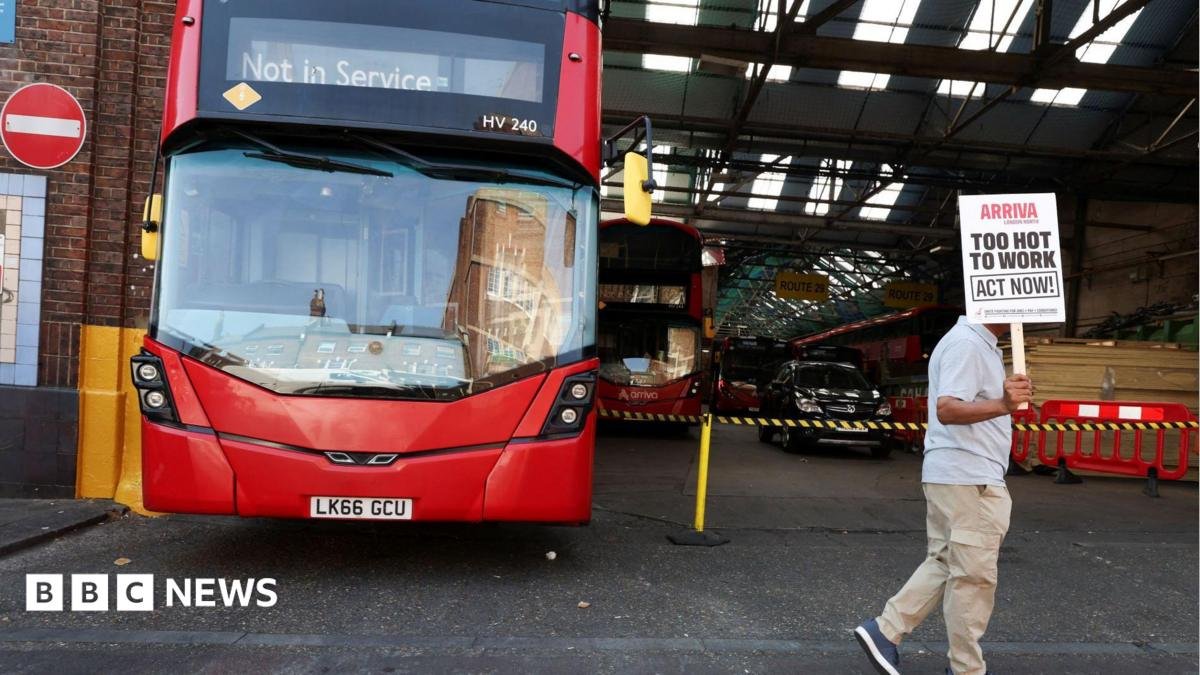
The Oven on Wheels: Inside a Driver's Cab at 44C
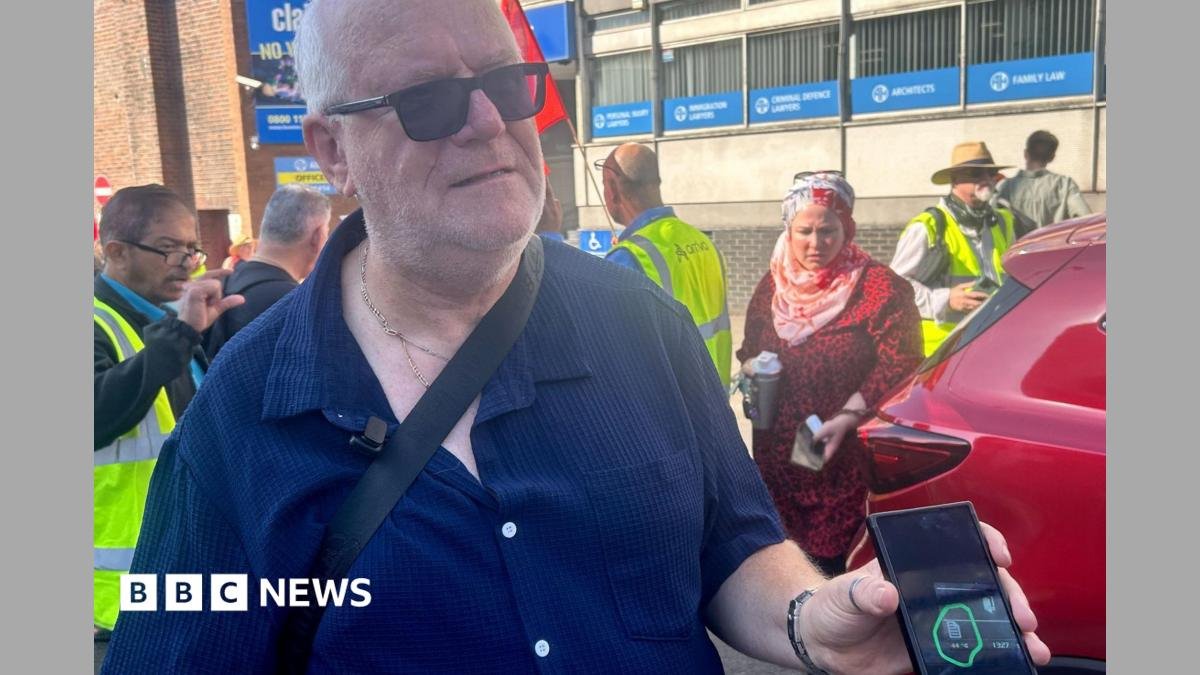
The statistics are alarming. Drivers report that cab temperatures routinely exceed 40C, with one driver photographing his cab thermometer at a staggering 44C. Peter Crane, who has driven for Arriva for 22 years, described the daily reality with grim precision. "It makes you drowsy... uncomfortable... you're sweating, you're sticky. It's like being in a greenhouse. You can't walk out. It's not like an air-conditioned office," he told reporters on the picket line. His question was direct: "Why can't we have air-con? Why can't we be comfortable and safe?"
The human cost is not hypothetical. Drivers report falling ill with heatstroke and, more worryingly, narrowly avoiding crashes. Peter Skinner, 56, painted a chilling picture of the risks involved. "It's very hard... it's exhausting, it's awful. How long is it going to be before a driver does pass out on the wheel? Think of the carnage of a 14-tonne bus with 80 people in it, that could make a big mess." That is the crux of the matter — this is not merely a welfare issue; it is a public safety issue with potentially catastrophic consequences.
Unite's Demands: A Structural Fix, Not a Sticking Plaster
Unite the Union has planned industrial action for 11 separate occasions between mid-August and mid-October, signalling that this is a long-term campaign rather than a flash in the pan. The union's demand is unequivocal: replace the current air-cooling systems in bus cabs with full air conditioning. Steve Stockwell, Unite's regional officer, was blunt about the urgency. He said driving conditions this summer had been "some of the worst they've ever been" despite previous warnings to bus operators. "They need to do something to keep our drivers cool, we need a structure to get air conditioning on all our buses," he insisted.
The union's position is bolstered by a curious detail: drivers say Transport for London (TfL) has advised them they have the right to refuse to drive in extreme heat. Yet they fear potential sanctions from the bus firm if they exercise that right. This creates a Kafkaesque situation where workers are told they can refuse unsafe work, but are terrified of the consequences of doing so. It is a grey area that TfL and Arriva have so far failed to clarify to the satisfaction of the workforce.
Arriva and TfL Respond: Complex Upgrades or Corporate Evasion?
Arriva's response, delivered by managing director Wasim Mohammed, walks a careful line between empathy and deflection. He acknowledged that extreme heat was "creating challenges across many sectors, including London's bus network" and insisted that the wellbeing of staff and customers was the company's "top priority." He pointed to "additional support for drivers during hot weather, including regular breaks and welfare checks" and claimed the company was "continuing to invest in long-term improvements, including upgraded air conditioning systems and new buses coming into our fleet."
But here is the rub: Mohammed stated that these upgrades are "complex and being led by TfL as part of its extreme heat taskforce." He urged Unite to "come back to the negotiating table and engage with us constructively so we can avoid further disruption." TfL, for its part, issued a carefully worded statement insisting that it takes drivers' "safety and welfare seriously" and that "any reports from drivers are always fully investigated." The subtext is clear: both organisations are pointing at each other while drivers sweat it out in 44C cabs.
The Record-Breaking Summer: A New Normal for the UK
This dispute cannot be divorced from the wider meteorological context. The UK is enduring its fifth heatwave of summer 2026, and the numbers are sobering. Temperatures provisionally reached 38.1C at Kew Gardens in London on Thursday 13 August — the fifth hottest day on record for the UK. Pershore in Worcestershire recorded 38C, and 40 locations across central and southern England recorded 36C or higher. The Met Office says summer 2026 is on course to be the UK's hottest on record for average temperature, and 2026 has already seen four days at or above 36C — the most in a single year.
This is not an anomaly; it is a trend. The summer has already brought wildfires to the West Midlands and triggered multiple UK heat-related health alerts. Our infrastructure, designed for a cooler climate, is being stress-tested in real time. From the rails buckling in the sun to the NHS coping with heat-related admissions, the fabric of British daily life is straining. The bus network is simply the latest, and most visible, casualty of a changing climate that our institutions have been slow to adapt to.
Local Impact: Commuters Caught in the Crossfire
For the travelling public, the immediate impact is tangible. Bus routes across north London and Essex are disrupted, with passengers advised to check the TfL website for the latest updates. The eight garages affected span a wide geographical area, from the inner London boroughs to the Essex border, meaning thousands of daily commuters are affected. School runs, hospital visits, and the daily commute to work have all been thrown into uncertainty.
Yet the public's sympathy appears to be with the drivers. In a summer where office workers are told to work from home and schools are closing early due to heat, the expectation that bus drivers should pilot metal boxes in 44C conditions seems increasingly indefensible. The drivers are not asking for the moon; they are asking for the same basic standard of climate control that most office workers take for granted.
The Bottom Line — What Comes Next
The coming weeks will be decisive. With 11 strike dates planned between now and mid-October, the pressure on Arriva and TfL to find a resolution is immense. The ball is firmly in their court. If they continue to insist that air conditioning upgrades are "complex" and "long-term," they risk a summer and autumn of sustained disruption that will alienate passengers and embolden the union. If they move with genuine urgency, they have an opportunity to set a new standard for worker safety in an era of extreme heat.
This dispute is a harbinger of things to come. As the Met Office confirms that our summers are getting hotter, every sector — from construction to healthcare to transport — will need to adapt. The question is whether our institutions will adapt proactively or reactively. For now, the drivers of Arriva North London have made their position clear: they will not risk their lives, or the lives of their passengers, for a system that refuses to modernise. The heat is not going away, and neither are they.
By Erica Thornton, Staff Writer
This article was produced with AI-assisted research and editorial support. Reporting is based on sources cited in the article.
What's Your Reaction?
 Like
0
Like
0
 Dislike
0
Dislike
0
 Love
0
Love
0
 Funny
0
Funny
0
 Wow
0
Wow
0
 Sad
0
Sad
0
 Angry
0
Angry
0

US Politics and Policy Correspondent at Global1.News. Based in Washington DC, covering American politics, policy, elections, and the courts. Knows how the system works and tells you what it actually means.












Comments (0)