
More Judaism, more victory: Ben-Gvir seeks revamped IDF code of ethics
National Security Minister Itamar Ben‑Gvir, leader of the far‑right Otzma Yehudit party, used Thursday’s briefing to unveil a sweeping proposal to rewrite the Israel Defense Forces’ (IDF) code of ethics.
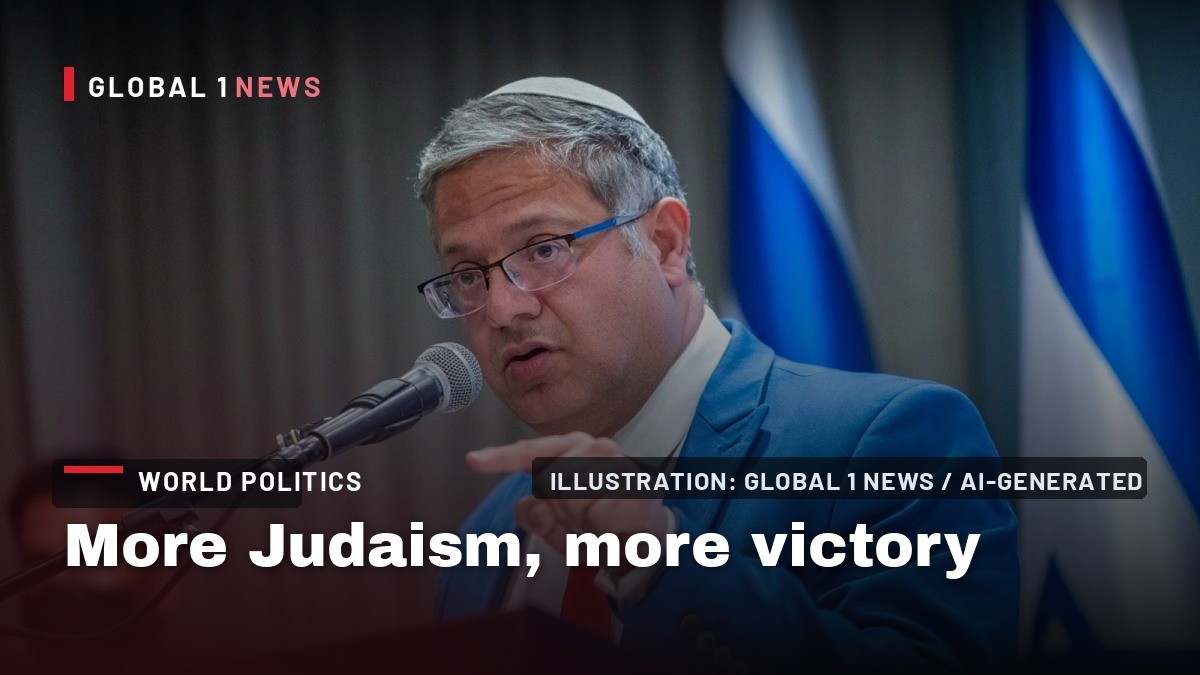
National Security Minister Itamar Ben‑Gvir, leader of the far‑right Otzma Yehudit party, used Thursday’s briefing to unveil a sweeping proposal to rewrite the Israel Defense Forces’ (IDF) code of ethics. The draft, which he presented as a corrective to what he calls the “post‑Zionist” character of the existing document, seeks to embed explicit Jewish moral language, elevate the notion of decisive victory, and replace the long‑standing principle of “Purity of Arms” with a more aggressive “Righteousness of Arms.” The move has reignited a debate that stretches back to the code’s inception in the mid‑1990s and raises questions about the balance between democratic values, military professionalism, and the symbolic identity of Israel’s army.
From “Purity” to “Righteousness”: The Core of Ben‑Gvir’s Proposal
At the heart of the minister’s plan is a substantive alteration of one of the eleven values that currently anchor the IDF’s ethical framework. “Purity of Arms,” as it stands, obliges soldiers to employ their weapons “only to the degree required” and to exercise restraint to avoid unnecessary harm to life, body, honor and property. Ben‑Gvir’s draft excises the phrase “only to the degree required” and removes references to protecting “uninvolved persons.” In its place, the proposal inserts a biblical maxim: “If someone comes to kill you, rise early and kill him first.” The shift replaces a restraint‑focused ethic with a principle that foregrounds pre‑emptive force.
In addition to this textual change, the draft eliminates the reference to “universal moral values” that appears in the current code. By doing so, the proposal narrows the moral horizon of the IDF’s ethical compass, aligning it more closely with a specifically Jewish moral tradition rather than a broader, secular universalism.
Redefining the Army’s Purpose: Victory as the Primary Goal
Ben‑Gvir’s statement frames the rewrite as a response to what he sees as an insufficient emphasis on the army’s ultimate mission. The new language would define the IDF’s purpose “first and foremost” as the pursuit of “victory and decisive defeat over the enemies of the State of Israel and the people of Israel.” This framing would be woven throughout the revised code, signaling a shift from a defensive posture to an explicitly offensive, victory‑oriented doctrine.
By anchoring the army’s purpose in the concept of decisive defeat, the proposal seeks to embed a more assertive strategic outlook into the daily conduct of soldiers and commanders. The emphasis on “victory” aligns with the party’s broader narrative that Israel must project strength to deter hostile actors and secure its national existence.
Embedding Jewish Moral Values: From Tanakh to Hebrew Law
The draft also calls for a “central emphasis on Jewish moral values rooted in the Bible [‘Tanakh’], Jewish ethics, Hebrew law and the nation’s traditions across generations.” It further declares the state to be a “Jewish national home” and the IDF its “Jewish state army.” This language is intended to address longstanding criticisms that the existing code lacks explicit Jewish content.
Supporters argue that such references reinforce the historical and cultural continuity of the Jewish people’s right to self‑defence, while critics warn that embedding a particular religious‑national identity into a state military could marginalize non‑Jewish citizens and complicate Israel’s democratic character.
Historical Roots of the Controversy: The 1994 Code and Its Critics
The IDF’s code of ethics, titled “The Spirit of the IDF,” was first distributed to units on 26 December 1994. It was intended as a guide for soldiers and commanders in their day‑to‑day and operational activities, according to the IDF’s website. From its inception, however, the document attracted criticism for its secular tone and omission of explicit Jewish references.
In 1997, Tzvi Hauser—later Cabinet secretary to Prime Minister Benjamin Netanyahu (2009‑2013)—published a scathing assessment in Azure magazine. Hauser argued that the code’s lack of Jewish content turned it into a “trophy for Post‑Zionist ideology,” noting that it failed to mention loyalty to the Jewish state, national sovereignty, or the bond with world Jewry. He claimed any democratic army could adopt the code without alteration, underscoring the perceived disconnect between the document and Israel’s identity as a Jewish state.
The Role of Asa Kasher: Ideology Behind the Original Text
Hauser traced the code’s secular character to its lead author, Professor Asa Kasher of Tel Aviv University. As the sole civilian on the four‑member committee, Kasher’s political leanings—described by Hauser as “extreme left”—shaped the document’s tone. Kasher advocated revising the Law of Return, supported a “right of return” for Arab refugees, and proposed political autonomy for Arab‑majority areas such as the Galilee.
Kasher’s activism extended beyond academia. He was a member of Yesh Gvul, a radical group that urged refusal of IDF service as protest against the First Lebanon War, Israeli operations in the West Bank, and the establishment of certain Jewish towns. Hauser quoted Kasher calling for outright refusal to serve as a means of dissent, a stance that, in Hauser’s view, directly influenced the code’s omission of overtly Zionist language.
Political Implications: Balancing Identity and Democratic Norms
Ben‑Gvir’s push to rewrite the code sits at the intersection of Israel’s security imperatives and its democratic ethos. By foregrounding “victory” and “Righteousness of Arms,” the proposal could reshape operational doctrine, potentially encouraging more proactive engagement rules. At the same time, the overt insertion of biblical language and the removal of universal moral references raise concerns among civil‑society groups, minority communities, and legal scholars about the impact on Israel’s pluralistic character.
The debate also reflects broader tensions within Israeli politics between right‑wing parties that emphasize a Jewish national narrative and left‑leaning factions that champion universalist, civic values. As the Ministry of Defense and the Israel Innovation Authority continue to modernize the IDF’s technological edge, the ethical framework governing its use of force remains a contested arena that will shape both the army’s internal culture and Israel’s international reputation.
Looking Ahead: What the Rewrite Means for the IDF and Israeli Society
If adopted, the revised code would mark a decisive shift in the moral language that guides Israel’s most powerful institution. The emphasis on decisive victory and the replacement of “Purity of Arms” with “Righteousness of Arms” could influence training curricula, rules of engagement, and the public perception of the IDF’s role in conflict.
Nevertheless, the proposal must still navigate the legislative and institutional processes that govern military doctrine. The IDF’s leadership, the Ministry of Defense, and the broader coalition in the Knesset will weigh the strategic benefits of a more assertive ethical stance against the potential domestic and diplomatic costs of a code that leans heavily on religious‑nationalist rhetoric. As the conversation unfolds, it will test Israel’s ability to reconcile its identity as a Jewish state with the democratic principles that have long underpinned its institutions.
This article was produced with AI-assisted research and editorial support. Reporting is based on the source material cited below. Sources: JNS (Jewish News Syndicate); jns.org; Global1.News (16 October 2026).
By Hannah Berg, Staff Writer
What's Your Reaction?
 Like
0
Like
0
 Dislike
0
Dislike
0
 Love
0
Love
0
 Funny
0
Funny
0
 Wow
0
Wow
0
 Sad
0
Sad
0
 Angry
0
Angry
0

Israel Correspondent at Global1.News. Based in Tel Aviv, covering Israeli politics, security, technology, and society. Provides balanced, deeply-sourced reporting on one of the most closely-watched regions in the world.















Comments (0)