
Jacob Zuma’s brother breaks silence: ‘It’s not looking good’
Former president Jacob Zuma’s health has become a headline that stretches far beyond the corridors of power, reverberating through the very fabric of South African society – from the streets of KwaZulu‑Natal to the rugby stands of Ellis Park.
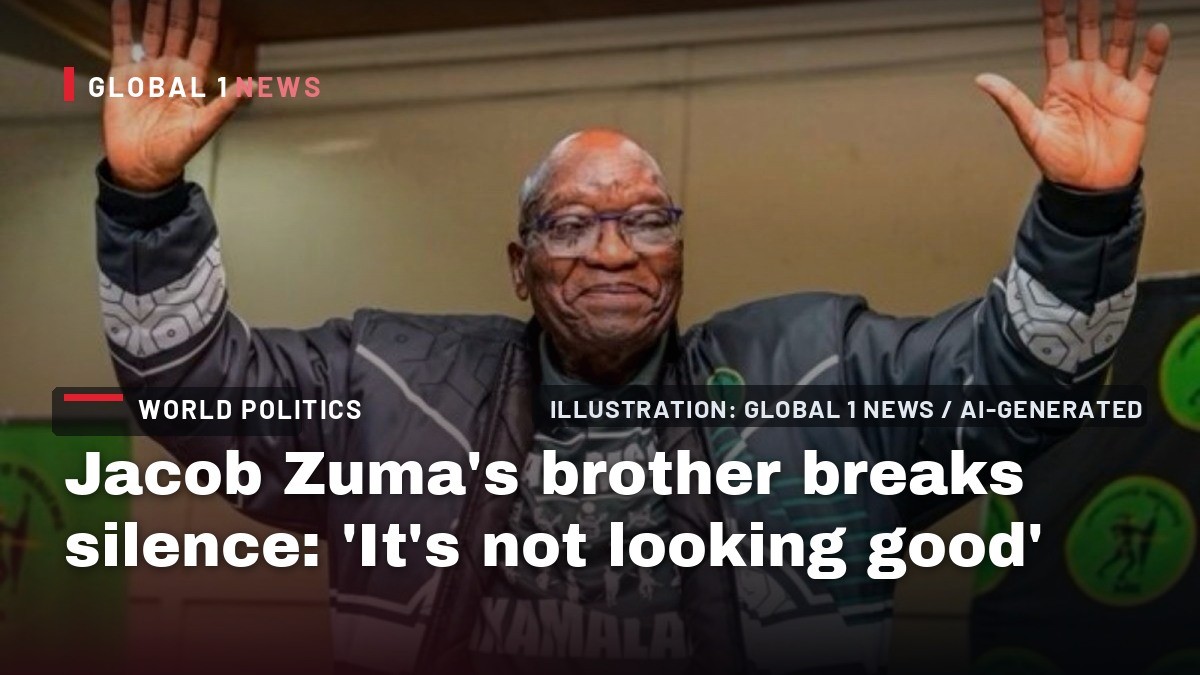
Former president Jacob Zuma’s health has become a headline that stretches far beyond the corridors of power, reverberating through the very fabric of South African society – from the streets of KwaZulu‑Natal to the rugby stands of Ellis Park. On 9 October 2026, President Cyril Ramaphosa confirmed that the 84‑year‑old former leader is under medical treatment, while Zuma’s own brother, Khanya, broke a long‑standing silence to warn that “it’s not looking good”. The conflicting narratives from the MK Party, the family and the Presidency have thrown the nation into a swirl of speculation, and the timing could not be more critical with the 4 November local government elections looming.
Family Voices Break the Silence
Khanya Zuma, speaking to a local outlet, recounted a private conversation that hinted at a deeper malaise. “When I last saw him, he said, ‘Brother, I am not feeling well.’ But you could not tell that he was ill,” he told reporters. This candid admission runs counter to the MK Party’s earlier insistence that the former president was merely attending a routine check‑up. While Khanya stopped short of revealing a diagnosis, he noted that a younger family member had been in contact with the hospital and received a more reassuring assessment from doctors, suggesting that the family is seeking clarity behind the curtains of public statements.
The brother’s remarks underscore a growing unease within Zuma’s own circle. The lack of a public disclosure about the nature of the illness fuels speculation, especially as the former president’s presence has been a linchpin for the MK Party’s grassroots mobilisation ahead of the local polls. Khanya’s decision to speak out signals a fracture in the carefully curated narrative of health and vigor that the party has tried to project.
Presidential Confirmation and Military Briefing
President Cyril Ramaphosa, in remarks broadcast by SABC on 9 October, confirmed that Zuma “has not been well, and he has now been put under treatment by doctors.” The President added that the military surgeon general had been briefed on the former leader’s condition, a detail that hints at the seriousness with which the state is monitoring the situation. Ramaphosa’s public wish for a speedy recovery was accompanied by a hope that Zuma would be “sufficiently recovered to continue serving South Africans,” a phrase that subtly acknowledges Zuma’s continued political relevance.
This official acknowledgment marks a departure from the MK Party’s earlier statements that framed the hospital stay as a routine examination. By involving the military surgeon general, the Presidency signals that Zuma’s health is not merely a private matter but one with potential national implications, especially given his role in the upcoming elections and his influence over a substantial voter base.
MK Party’s Narrative of Routine Care
Since reports emerged on 7 October that Zuma had been hospitalised after campaigning in Msinga, the MK Party’s spokesperson Sifiso Mahlangu has repeatedly dismissed concerns. “The president is not unwell. He is very much well and alive; it was a regular check‑up,” Mahlangu told the media, later issuing a statement confirming that Zuma undergoes a bi‑annual medical examination. The party’s messaging emphasised that Zuma was “healthy and in good spirits” and that his campaign programme would continue as planned.
However, the party’s assurances have been undercut by subsequent reports that Zuma remained at a private hospital in Pietermaritzburg on Thursday night, with unverified claims of an intensive care admission. Neither the hospital nor the MK Party has officially confirmed the ICU reports, leaving a gap between public statements and on‑the‑ground realities. This discrepancy raises questions about the party’s communication strategy and its impact on voter confidence.
Election Stakes and Campaign Dynamics
Zuma’s health saga unfolds against the backdrop of the 4 November local government elections, where the MK Party is positioning itself as a formidable challenger in several metros. Zuma’s role has been central, with the party previously indicating that he would resume campaigning on a Friday following his hospital stay. Yet, there has been no independently verified confirmation of his return to the campaign trail.
The missed appearance at an MK Party event in Orange Farm, Johannesburg, intensified scrutiny. Party second deputy president Tony Yengeni stepped in, delivering a message from Zuma urging residents to vote for mayoral candidate Bongani Baloyi. While this substitution kept the party’s rallying cry alive, the absence of Zuma’s physical presence may have diluted the emotional punch that his supporters expect, especially in a constituency where personal loyalty to the former president remains strong.
Implications for South African Unity and Sport
In South Africa, sport has long been a conduit for national unity, and political figures often leverage sporting events to connect with the masses. Zuma’s health concerns echo past moments when political uncertainty intersected with the sporting calendar – such as the 2010 FIFA World Cup, where national morale was tightly linked to the country’s performance. As the Springboks prepare for upcoming test matches and the Proteas gear up for a home series, the nation’s focus may shift between the fields of play and the political arena.
Should Zuma’s condition deteriorate, the MK Party could seek to rally support through sport‑related outreach, mirroring past strategies where political campaigns aligned with rugby and cricket events to galvanise grassroots backing. Conversely, a swift recovery could see Zuma re‑emerge at high‑profile sporting venues, using the platform to reinforce his relevance. The interplay between his health narrative and the country’s sporting pulse will be a barometer of public sentiment in the weeks leading up to the elections.
Public Perception and Media Scrutiny
The divergent accounts from family, the Presidency, and the MK Party have placed the media at the centre of a delicate balancing act. While outlets like The South African have reported the initial hospitalisation and subsequent statements, the lack of concrete medical details leaves room for speculation. Social media, amplified by the President’s own tweet‑style briefing, has become a hotbed for rumors, with users dissecting every word for clues about Zuma’s prognosis.
In this environment, the credibility of the MK Party’s messaging is under pressure. The party’s insistence on a routine check‑up, juxtaposed with reports of intensive care, may erode trust among supporters who value transparency. Meanwhile, Ramaphosa’s measured confirmation, coupled with the involvement of the military surgeon general, could be perceived as a more sober and responsible approach, potentially shaping public opinion in favour of the incumbent government’s handling of the situation.
Looking Ahead: Uncertainty and Potential Outcomes
With Zuma’s diagnosis and expected discharge date still undisclosed, the coming days will be crucial in determining the political landscape ahead of the local elections. If the former president recovers quickly and returns to active campaigning, the MK Party could harness his presence to energise its base, especially in KwaZulu‑Natal, where his legacy remains potent. A prolonged absence, however, might force the party to recalibrate its strategy, relying more heavily on surrogate figures like Yengeni and Baloyi.
Beyond the immediate electoral implications, the episode underscores a broader theme in South African politics: the tension between public reassurance and private reality. As the nation watches Zuma’s health unfold, the interplay of family testimony, presidential confirmation, and party rhetoric will continue to shape the narrative. In a country where sport often mirrors societal dynamics, the outcome of this health saga may well influence how South Africans rally around their leaders – on the field, in the streets, and at the ballot box.
This article was produced with AI-assisted research and editorial support. Reporting is based on the source material cited below. Sources: The South African; thesouthafrican.com; Global1.News (11 October 2026).
By Dante Williams, Staff Writer
What's Your Reaction?
 Like
0
Like
0
 Dislike
0
Dislike
0
 Love
0
Love
0
 Funny
0
Funny
0
 Wow
0
Wow
0
 Sad
0
Sad
0
 Angry
0
Angry
0
Breaking News and Investigations Correspondent at Global1.News. Based in London, covering global breaking news, security, and investigative stories. Known for digging deeper and connecting the dots across continents.









Comments (0)