
US, Iran and Oman Close In on Deal to Reopen Strait of Hormuz
The United States, Iran and Oman are closing in on an interim deal to reopen the Strait of Hormuz after months of war. Officials signal an agreement could come within days as talks cover shipping lanes and a 60-day fee-free period.
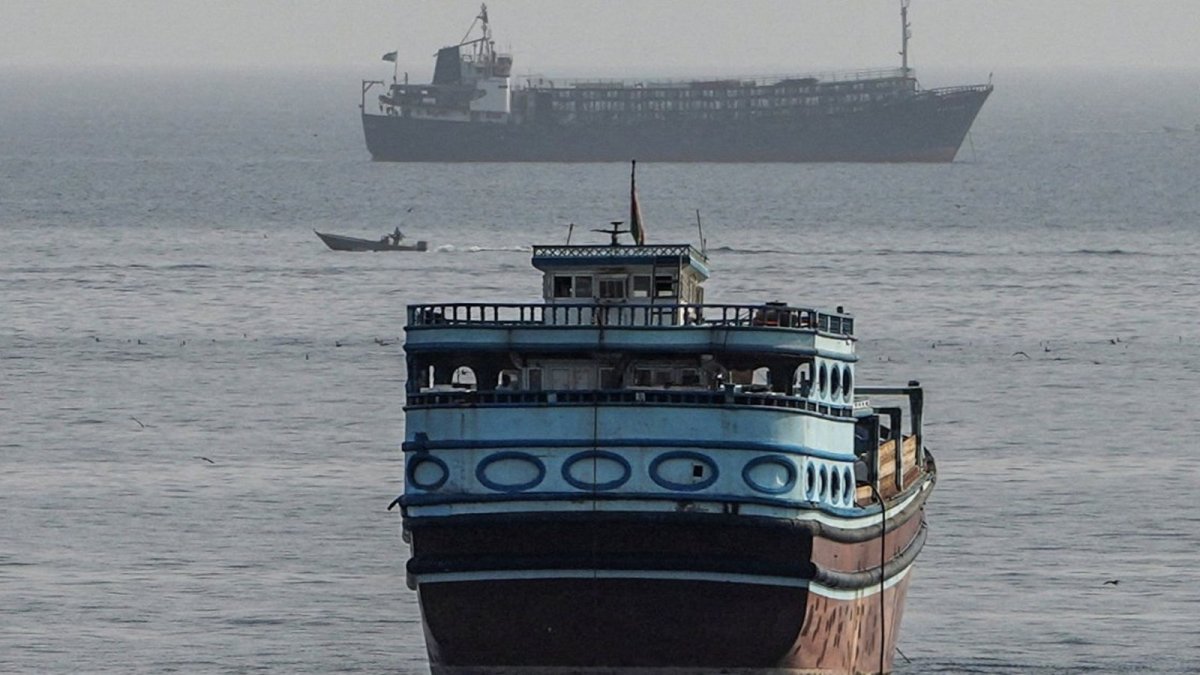
The Strait of Hormuz, the chokepoint through which one-fifth of the world's oil flowed before the war, is closer to a reopening agreement than at any point since fighting erupted on February 28. Washington, Tehran and Muscat have all signaled in recent days that an interim deal could land within hours, even as both sides keep military threats firmly on the table.
Trump Signals Hormuz Strait Deal Imminent Amid Talks
Washington, DC — The United States, Iran and Oman are advancing toward an interim agreement to reopen the Strait of Hormuz after nearly six months of conflict that has all but shut the waterway. Negotiations center on shipping lanes and a 60-day fee-free period under the June 17 memorandum of understanding. Officials from all three nations have signaled progress in recent days while warning of renewed military action if talks collapse.
Conflict Timeline and Initial Closure
The US-Israel war on Iran began February 28, 2026, prompting Tehran to close the Strait of Hormuz. One-fifth of global oil supplies normally transited the waterway before the conflict. Iran later reopened sections but restricted commercial ships to a northern lane near Larak Island.
The United States responded with a naval blockade of Iranian ports. A ceasefire took hold in April. Washington then proposed a southern route along Oman's coast, which Iran rejected as inconsistent with the June 17 memorandum of understanding.
Iran targeted vessels that used the Oman route. Article 5 of the memorandum allowed commercial vessels to pass without charge for 60 days, yet vague language left control and routing unresolved.
Three weeks before August 5, mediators believed a deal was near until Iran resumed attacks on ships. Two weeks of fighting followed, bringing the parties close to all-out war before talks resumed over the August 1-2 weekend.
Latest Diplomatic Exchanges
On August 3, President Trump told reporters negotiations were moving along very nicely and a deal could be known within 48 hours. He stated the strait would open very soon or face a hard military response. Only eight vessels transited the strait that day, down from roughly 130 ships per day before the war.
Iranian Foreign Ministry spokesman Esmaeil Baghaei said August 3 that Iran was negotiating with Oman, not the United States, over a temporary safe route. He added that a single corridor with entry and exit lanes was under discussion and that no US-Iran delegations were planned.
Secretary of State Marco Rubio said August 4 that progress had occurred in Oman-Iran talks with Washington involved. He described the Hormuz issue as separate from the larger nuclear negotiations and noted the strait remained open but required expanded safe transit.
Treasury Secretary Scott Bessent told CNBC on August 4 that a deal could come that day or the next. Diplomatic sources in Tehran indicated an agreement might be reached by the end of August 5.
Proposed Shipping Arrangement
The reported framework would route inbound ships through a northern lane in Iranian waters and outbound vessels through a southern lane in Omani waters coordinated with Iran. The arrangement would last 60 days with no transit fees charged.
Negotiators are also discussing removal of naval mines from the center of the strait before pursuing a longer-term pact. Iran has dropped its demand for full control over both directions but remains unlikely to accept further changes, according to Reuters.
Iranian Deputy Foreign Minister Kazem Gharibabadi previously stated the inbound lane must remain under Iranian control while part of the outbound lane could stay under Omani control. Press TV reported talks now focus on a new middle corridor.
Trump rejected any Iranian fee system, saying the United States would charge if Iran did. US officials seek total freedom of navigation without tolls or Iranian approval requirements and aim to restore the prior system where no party controls the lanes.
Oil Price Movements and Market Data
Brent crude rose 1.3 percent to $80.39 per barrel on August 5 after dropping 5.3 percent the previous day. West Texas Intermediate futures increased 0.7 percent to $76.30 after falling 5.7 percent on August 4.
Oil prices declined sharply Tuesday following Treasury Secretary Bessent's remarks about an imminent deal. CENTCOM stated the southern route through Omani territorial waters remains free and open and has assisted more than 1,000 vessels despite Iranian actions.
Analysts note that any sustained reopening could ease pressure on global energy supplies that had spiked after the initial closure. The 60-day interim period is intended to allow time for mine clearance and confidence-building measures.
Market participants are watching for confirmation that the northern and southern lanes can operate simultaneously without interference. A return to pre-war traffic levels of roughly 130 vessels per day would mark a significant normalization.
Munitions Stockpile Concerns
Reuters reported the Army has depleted most of its stockpile of Army Tactical Missile Systems and Precision Strike Missiles. CNN reported the US military has exhausted nearly 80 percent of its THAAD missile defense interceptors.
President Trump responded that the United States possesses far more munitions than anyone in the world and more than needed. He added that defense companies are producing at record rates.
White House deputy press secretary Anna Kelly stated the military has more than enough munitions, ammo and stockpiles to meet all strategic goals. She said Operation Epic Fury demonstrated the consequences of confronting the United States.
These disclosures come as negotiators weigh the costs of renewed military action if the Hormuz talks fail. The depleted inventories add pressure to reach an agreement that avoids further expenditure of advanced weapons.
Expert Views on the Framework
Esfandyar Batmanghelidj of the Bourse & Bazaar Foundation noted US sanctions may prohibit coordination or payments with Iranian authorities. He said many vessel owners will avoid the channel unless the Trump administration expressly authorizes participation.
Trita Parsi of the Quincy Institute for Responsible Statecraft argued the central US interest lies in predictable, nondiscriminatory passage rather than administrative control. He said Washington should not reject an agreement solely because it lacks the appearance of unqualified dominance.
David Des Roches, former director of Arabian Peninsula affairs at the Defense Department, described the outlines as Iran denying free passage in its territorial waters while not interfering in Omani waters. He said a formal Iranian announcement to cease attacks on neutral shipping is the key requirement.
Abas Aslani of the Center for Middle East Strategic Studies said the region has felt like a high-speed roller-coaster, with expectations of massive escalation only days earlier. He noted the rapid shift from near-war to renewed diplomacy.
Regional Incidents and Broader Talks
UKMTO reported a cargo ship struck by an unidentified projectile off Oman on August 4. An Indian cargo vessel sank after a similar strike near Yemeni waters the same day, with all 14 crew members rescued by the Yemeni coastguard.
Yemen's Houthis said they attacked the Saudi oil tanker Wafa off Yanbu in the Red Sea with ballistic missiles, marking the eighth ship targeted since their July 22 maritime blockade of Saudi Arabia began. Operations were suspended at Saudi Arabia's Najran airport after a claimed Houthi drone strike on a military site.
Israel and Lebanon opened another round of US-sponsored negotiations in Rome to implement the June 26 framework agreement. The talks focus on Hezbollah disarmament, Israeli redeployments from southern Lebanon and restoration of Lebanese state authority in border areas.
Pakistan invited Iranian Foreign Minister Abbas Araghchi to Islamabad for talks. A senior Pakistani official said a document on reopening the strait is close to finalization, with talks between Iran and Oman mediated by Pakistan and the United States involved indirectly.
Next Steps and Remaining Issues
Outstanding issues include the exact mechanism for reopening, maritime service fees and broader security arrangements. Iran has intimated plans to introduce fees for services such as navigational assistance, though international law prohibits tolls on straits like Hormuz.
One Oman proposal draws on operations in the Strait of Malacca, where coastal states ask ships to voluntarily fund navigation, environmental protection and search-and-rescue services. Baghaei said the Oman talks aim to establish safe lanes that uphold sovereign rights and address security concerns of both nations.
Trump reiterated August 4 that the strait would open very soon but warned of a hard military response if Iran backs out again. Rubio emphasized that the immediate Hormuz deal remains separate from the larger nuclear negotiations.
Officials in all capitals continue to stress that any agreement must deliver predictable commercial transit in the short term before broader issues are addressed. The 60-day window is viewed as a test period for the proposed northern and southern lanes.
By Jessica Ali, Staff WriterThis article was produced with AI-assisted research and editorial support. Reporting is based on sources cited in the article.
What's Your Reaction?
 Like
0
Like
0
 Dislike
0
Dislike
0
 Love
0
Love
0
 Funny
0
Funny
0
 Wow
0
Wow
0
 Sad
0
Sad
0
 Angry
0
Angry
0

Editor-in-Chief at Global1.News. Atlanta-based journalist who cuts through the BS and tells it like it is. Lead anchor, host, and the voice you hear when the spin stops and the truth starts.













Comments (0)