
Captain Amarinder Singh’s Solo BJP Appearance at Sonia Gandhi Book Launch Fuels Punjab Election Speculation
The India Today footage shows Singh as the sole BJP representative among a gathering dominated by Congress leaders, a visual that has sparked a flurry of commentary ahead of the upcoming Punjab Assembly elections.
In a development that has quickly become a talking point across Delhi’s political corridors, former Punjab chief minister and senior BJP figure Captain Amarinder Singh was spotted in the front row of the launch event for Sonia Gandhi’s memoir, Belonging: A Journey of Love, held in the capital on 17 November 2026. The India Today footage shows Singh as the sole BJP representative among a gathering dominated by Congress leaders, a visual that has sparked a flurry of commentary ahead of the upcoming Punjab Assembly elections. While the event itself was a literary affair, the political symbolism of Singh’s presence is being dissected by analysts, party strategists, and the media alike, each drawing their own conclusions about the implications for seat‑sharing talks, alliance calculations, and the broader contest for voter loyalty in Punjab.
Contextualising the Book Launch and Its Political Timing
The launch of Belonging was organised by the Congress party as a high‑profile cultural event, with Sonia Gandhi herself taking the stage to discuss the themes of love and public service that underpin her political narrative. The timing of the launch, just weeks before the Punjab Assembly polls, is noteworthy. In past election cycles, book launches and similar high‑visibility events have been used by parties to project soft power, rally cadres, and signal openness to cross‑party dialogue. The presence of a senior BJP leader at a Congress‑hosted event therefore carries a weight that extends beyond personal literary interest.
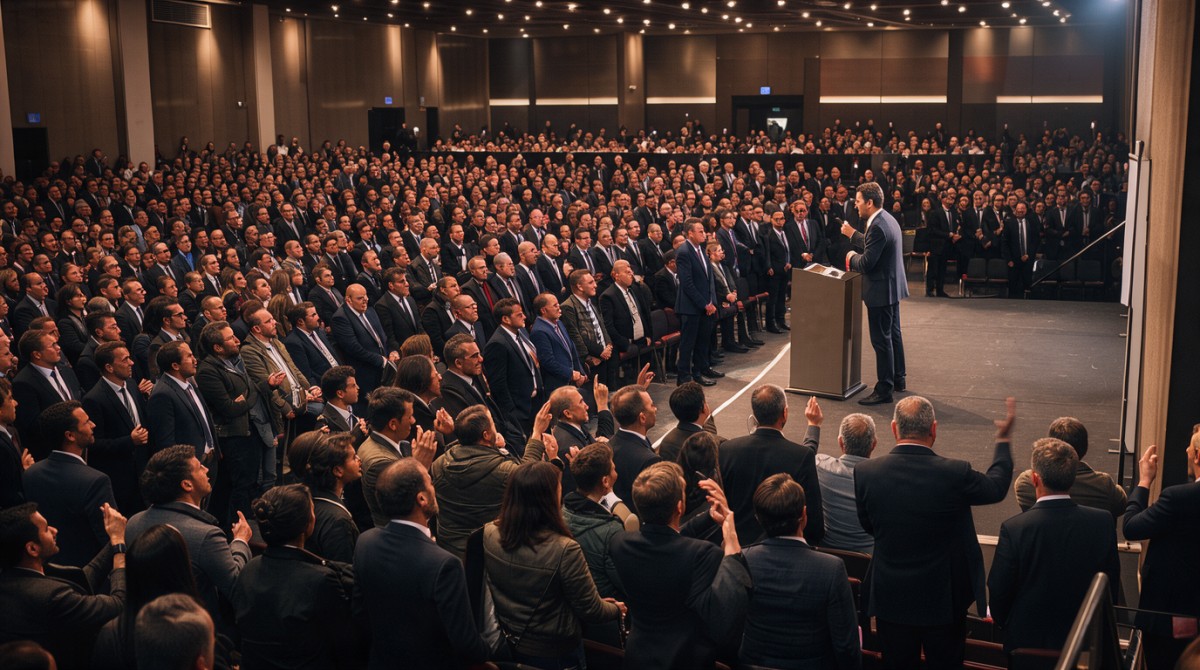
According to the video, Singh was seated in the front row, a position that typically denotes a place of honour. His solitary representation of the BJP amidst a sea of Congress delegates was highlighted by the channel’s commentary, suggesting that his attendance was not a casual gesture but a calculated move. The footage does not capture any direct interaction between Singh and Gandhi, but the visual of a BJP leader sharing the stage with a Congress matriarch is itself a potent image in a political culture where party lines are often rigidly observed.
From a policy perspective, the Punjab Assembly elections are a critical battleground for both national parties. The state’s health infrastructure, agricultural reforms, and educational institutions have been under intense scrutiny, with the Ministry of Health and Family Welfare and the Ministry of Agriculture closely monitoring outcomes that could influence central policy direction. Singh’s appearance at the launch may be interpreted as an attempt to position himself as a bridge‑builder, potentially easing the path for future collaboration on issues such as the implementation of national health schemes in Punjab’s rural districts.
Implications for BJP‑Congress Seat‑Sharing Talks
The most immediate speculation revolves around the impact of Singh’s presence on ongoing seat‑sharing negotiations between the BJP and the Congress in Punjab. Historically, the two parties have engaged in limited seat‑sharing arrangements, often mediated through the National Democratic Alliance (NDA) framework. However, the current political climate, marked by fragmented mandates and the rise of regional parties, has prompted both sides to explore more flexible arrangements.
Political observers noted that Singh’s attendance could be a signal of goodwill, an overture that the BJP is willing to entertain a more collaborative approach in Punjab. The video’s description emphasizes that Singh was the only BJP leader present, underscoring the exclusivity of his participation. If the BJP intends to leverage Singh’s personal clout in the state—derived from his tenure as chief minister and his residual popularity among certain voter blocs—this gesture could be a prelude to a more nuanced seat‑allocation formula that accommodates BJP candidates in constituencies where they have a realistic chance of winning.
From a strategic standpoint, the BJP’s central leadership, under the Ministry of Parliamentary Affairs, may view Singh’s presence as a low‑risk method of testing the waters for a post‑election coalition. By allowing a senior state leader to attend a Congress event, the BJP can gauge the Congress’s receptiveness without committing to formal negotiations. This approach aligns with the broader trend of Indian parties using informal channels—such as book launches, cultural festivals, and think‑tank seminars—to explore coalition possibilities.
Reactions Within the Punjab Political Landscape
Within Punjab, the political ramifications of Singh’s appearance are already being felt. Local party workers from both the BJP and the Congress have taken to social media platforms, expressing a mix of surprise, approval, and skepticism. The video’s hashtags, including #PunjabPolitics and #SeatSharing, indicate that the event has quickly become a focal point for online discourse.
Senior Congress leaders in the state, who have been coordinating the launch, have not publicly commented on Singh’s attendance, but insiders suggest that the party’s central leadership may be monitoring the reaction to assess whether the gesture could be reciprocated in future electoral alliances. Meanwhile, BJP cadres in Punjab are reportedly interpreting Singh’s presence as an endorsement of his continued relevance in state politics, potentially bolstering his influence over local party structures.
The Punjab Election Commission, which oversees the conduct of the upcoming polls, will be observing any shifts in party dynamics that could affect campaign regulations, especially concerning joint rallies or coordinated messaging. While the current event is a cultural launch, the political undertones may prompt the commission to issue guidance on permissible interactions between rival party leaders during the pre‑poll period.
Potential Impact on Voter Perception and Electoral Behaviour
Beyond intra‑party calculations, the most consequential dimension of Singh’s appearance is its effect on the electorate. Voters in Punjab have historically responded to signals of cross‑party cooperation, particularly when such signals are framed around development issues like healthcare delivery, agricultural support, and educational improvement. The Ministry of Health’s recent rollout of the National Health Mission in Punjab’s districts, coupled with the Ministry of Education’s push for digital learning platforms, are policy areas where a collaborative stance could resonate with the public.
By attending a Congress‑hosted literary event, Singh may be attempting to portray himself as a statesman who values dialogue over partisanship. This narrative could appeal to moderate voters who are fatigued by polarising rhetoric and are seeking pragmatic solutions to the state’s challenges. However, the BJP’s core base, which often values clear ideological demarcation, might view the gesture with caution, potentially interpreting it as a dilution of party principles.
Political analysts caution that the ultimate impact on vote shares will depend on how both parties translate this symbolic gesture into concrete policy proposals. If the Congress leverages the event to highlight its commitment to inclusive governance, and the BJP counters by emphasizing Singh’s role in championing Punjab’s interests at the national level, the electorate could be swayed by the perceived sincerity of these overtures.
Broader National Implications and Party Strategy
At the national level, the episode underscores a broader trend of Indian political parties employing cultural and soft‑power events to test the waters of coalition politics. The Ministry of Information and Broadcasting has noted an uptick in cross‑party participation in non‑electoral forums, suggesting that parties are seeking alternative avenues to signal openness without formalizing agreements.
The BJP’s central leadership, led by the Prime Minister’s Office, may interpret Singh’s solo appearance as a litmus test for the Congress’s willingness to engage in constructive dialogue. Given that the Congress is currently navigating internal leadership challenges and seeking to rejuvenate its image ahead of multiple state elections, a controlled, low‑stakes interaction such as this could be a strategic move to keep channels of communication open.
Conversely, the Congress, through its General Secretary of Political Affairs, may view the BJP’s invitation to a senior leader as a gesture of goodwill that can be reciprocated in future negotiations, especially if the party aims to secure a seat‑sharing arrangement that maximizes its chances in Punjab while preserving its core ideological identity.
Future Outlook and What to Watch For
As the Punjab Assembly elections draw nearer, several indicators will reveal whether Singh’s presence at the book launch was an isolated incident or the beginning of a new collaborative overture. Key developments to monitor include any formal announcements of seat‑sharing agreements, joint rallies, or coordinated policy statements on health and education that involve both the BJP and the Congress.
Additionally, the response of other regional parties—such as the Aam Aadmi Party and Shiromani Akali Dal—will be crucial. If these parties perceive a potential BJP‑Congress rapprochement, they may adjust their own strategies, influencing the overall electoral calculus in the state. The Ministry of Home Affairs will continue to oversee the political climate to ensure that any collaborative activities remain within the bounds of the Model Code of Conduct.
Finally, the public’s reception of this political symbolism will be reflected in opinion polls conducted by agencies like the Centre for the Study of Developing Societies (CSDS) and in the voter turnout patterns on election day. Should the electorate view Singh’s appearance as a genuine attempt at bridging divides, it could encourage a more issue‑focused campaign, shifting the narrative from partisan rivalry to collaborative governance. Conversely, if the gesture is dismissed as a mere photo‑op, the election may continue to be dominated by traditional partisan battles.
By Dr. Raj Patel, Staff Writer
This article was produced with AI-assisted research and editorial support. Reporting is based on the source material cited below. Sources: India Today video report (17 November 2026); India Today; Global1.News
What's Your Reaction?
 Like
0
 Dislike
0
 Love
0
 Funny
0
 Wow
0
 Sad
0
 Angry
0

India/South Asia Correspondent at Global1.News. Analytical voice with a background in science and health journalism. Based in New Delhi, covering Indian politics, education, healthcare, technology, and policy. Breaks down complex data into clear, actionable reporting.











Comments (0)