
Türkiye urges nations to honor climate commitments at COP31
As the 2026 climate summit convenes in Antalya, the broader geopolitical canvas of the Middle East—marked by Sunni‑Shia competition, great‑power rivalry and the ever‑present quest for energy security—provides a stark backdrop to Turkey’s call for stricter adherence to the Paris Agreement.
As the 2026 climate summit convenes in Antalya, the broader geopolitical canvas of the Middle East—marked by Sunni‑Shia competition, great‑power rivalry and the ever‑present quest for energy security—provides a stark backdrop to Turkey’s call for stricter adherence to the Paris Agreement. Parliament Speaker Numan Kurtulmuş, addressing the COP31 Parliamentary Meeting, framed climate action not merely as an environmental imperative but as a matter of regional stability and fairness, echoing concerns that have long resonated across the Gulf and Levant.
Turkey’s Parliamentary Push for Climate Accountability
Speaker Kurtulmuş opened the session by warning that “no country can be allowed to evade any international obligation, particularly those under the Paris Agreement.” His remarks underscored a growing sentiment among parliamentary leaders that climate commitments must translate into enforceable national policies. By positioning the Paris framework as a binding covenant, the Turkish speaker sought to elevate legislative oversight, insisting that the burden of environmental damage be shouldered proportionally by those most responsible.
He highlighted a moral calculus: nations that have contributed the greatest share of greenhouse gases should bear a larger portion of the mitigation and adaptation costs, while developing economies deserve heightened financial and technological support. This call for “fairness and accountability” resonates with longstanding regional debates over resource allocation, where wealthier Gulf states have often been urged to assist poorer neighbours in the wake of climate‑induced hardships.
Linking Conflict and Climate Damage
Kurtulmuş extended the climate discourse to the battlefield, drawing attention to the ecological fallout of the Gaza conflict. He noted that Israeli bombardments have devastated ecosystems, contaminated water sources and threatened agricultural land, while the destruction of Palestinian olive trees exemplifies how warfare inflicts lasting environmental scars. By tying the climate crisis to armed conflict, he underscored a broader regional reality: that wars in the Middle East amplify climate vulnerabilities, complicating recovery and food security across borders.
This perspective aligns with a growing recognition among Middle Eastern policymakers that environmental degradation can exacerbate existing tensions, potentially fueling further instability. The speaker’s remarks suggest that any comprehensive climate strategy for the region must address the ecological consequences of ongoing hostilities, a point that may influence future diplomatic dialogues on both climate and security.
Domestic Climate Milestones in Turkey
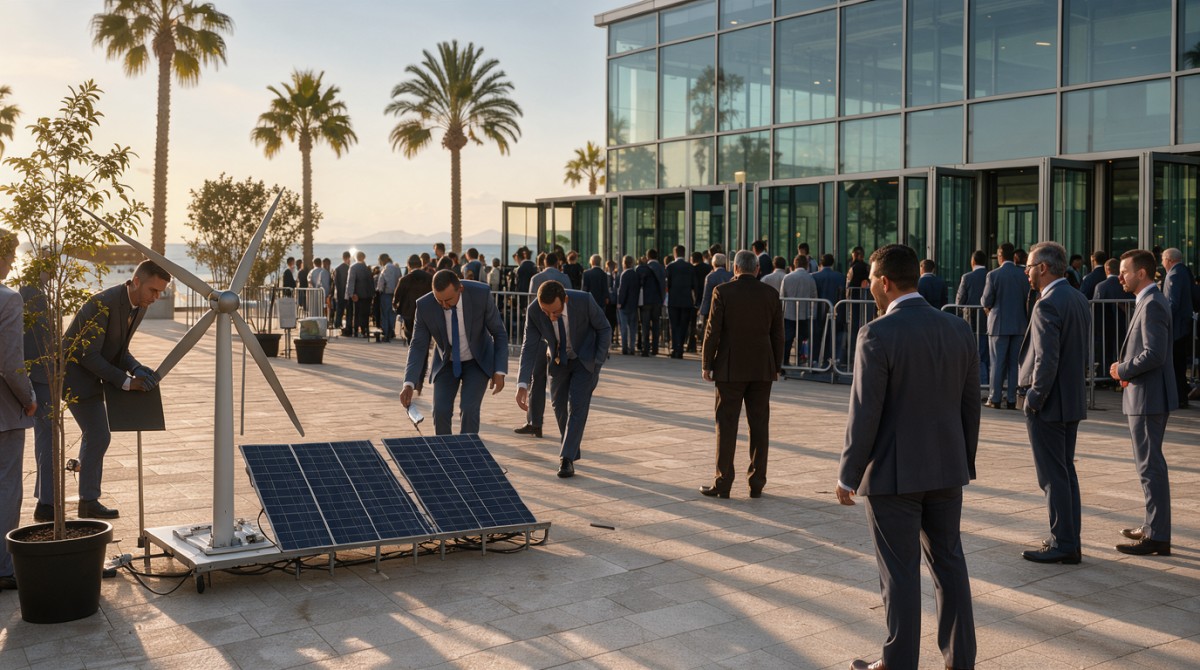
Turning inward, Kurtulmuş outlined Turkey’s recent legislative and policy steps. The country ratified the Paris Agreement in 2021 and adopted its first Climate Law in 2025, establishing a legal framework for emissions reductions, adaptation measures, emissions trading and a “just transition.” He highlighted the “Green Parliament” initiative, which aims to cut energy and water use, expand renewable energy, and shift parliamentary operations to paperless formats.
Specific projects, such as a solar installation in Konya intended to meet the Parliament’s electricity needs, illustrate Turkey’s effort to lead by example. These domestic actions are presented as a template for other legislatures, reinforcing the speaker’s message that national parliaments must convert international pledges into concrete, measurable outcomes.
Renewable Energy Ambitions and Regional Implications
Environment Minister Murat Kurum, also serving as COP31 president, emphasized that renewable sources now constitute 63 % of Turkey’s installed electricity generation capacity. He set an ambitious target: 175 gigawatts of combined solar and wind capacity by 2040. Such goals, if realized, could reshape the regional energy map, reducing reliance on fossil fuel imports and enhancing energy security for neighboring states.
The minister’s focus on “dialogue, consensus and action” reflects an awareness that the Middle East’s energy transition must accommodate diverse development trajectories. By positioning Turkey as a renewable energy hub, the government seeks to leverage its strategic location to foster cross‑border cooperation on clean power, a prospect that could temper traditional competition over oil and gas markets.
Parliamentary Role in Translating Global Pledges
The meeting underscored the centrality of national legislatures in operationalizing climate commitments. Kurtulmuş and Kurum both stressed that the true value of climate targets lies in the laws enacted, budgets allocated, and investments made. This legislative emphasis mirrors a broader trend in the region where parliaments are increasingly called upon to scrutinize executive climate policies and ensure accountability.
Inter‑Parliamentary Union President Milton Dick reinforced this narrative, urging lawmakers to adopt science‑based policies and to broaden participation to women, youth, scientists and civil society. By championing inclusive, evidence‑driven policymaking, the IPU highlights a pathway for Middle Eastern parliaments to enhance legitimacy and effectiveness in climate governance.
Financing and Technology Transfer for Developing Nations
Addressing the financing gap, Kurtulmuş warned that poorer countries often bear the brunt of climate impacts despite contributing minimally to emissions. He called on developed nations to facilitate access to climate financing and clean technologies, framing such support as a matter of equity rather than charity.
This appeal resonates with ongoing negotiations under the UNFCCC, where the adequacy of climate finance remains a contentious issue. In the Middle Eastern context, many Gulf states possess significant sovereign wealth that could be mobilized for green investments, while countries like Egypt, Jordan and Iraq grapple with limited fiscal space. Turkey’s articulation of this imbalance may encourage a regional dialogue on shared responsibility and collaborative funding mechanisms.
Prospects for COP31 Outcomes and Regional Cooperation
Finally, both Turkish officials and the IPU emphasized that the success of COP31 will hinge on post‑conference implementation. Kurum warned that the conference’s legacy depends on how governments and parliaments translate its outcomes into actionable policies. This caution reflects a pragmatic understanding that lofty declarations must be backed by legislative teeth.
For the Middle East, the stakes are high. Climate‑induced water scarcity, heat stress and extreme weather threaten agricultural productivity and could intensify existing socio‑political pressures. If the region can harness the momentum from Antalya—through coordinated financing, technology sharing, and robust parliamentary oversight—it may not only meet its Paris obligations but also mitigate the underlying drivers of instability that have long plagued the area.
This article was produced with AI-assisted research and editorial support. Reporting is based on the source material cited below. Sources: Daily Sabah Middle East; dailysabah.com; Global1.News (16 November 2026).
By Malik Hassan, Staff Writer
What's Your Reaction?
 Like
0
 Dislike
0
 Love
0
 Funny
0
 Wow
0
 Sad
0
 Angry
0
Middle East Correspondent at Global1.News. Based in Beirut, covering politics, conflict, energy, and society across the Middle East. Brings context and depth to a region often reduced to headlines.












Comments (0)