
Toxic Inferno: Chemical Fire Forces Evacuations in Brazil's Sao Paulo
The fire that erupted at Quema Quimica on August 4, 2026, sent shockwaves through the Alto Tiete region, exposing the fragile balance between industrial growth and community safety in Greater Sao Paulo. What began as a routine afternoon quickly escalated into a multi-hour inferno involving millions of liters of flammable solvents, forcing evacuations and raising urgent questions about environmental oversight across Latin America.
The fire that erupted at Quema Quimica on August 4, 2026, sent shockwaves through the Alto Tiete region, exposing the fragile balance between industrial growth and community safety in Greater Sao Paulo. What began as a routine afternoon quickly escalated into a multi-hour inferno involving millions of liters of flammable solvents, forcing evacuations and raising urgent questions about environmental oversight across Latin America. Residents watched in horror as explosions rippled through sewer lines, underscoring how one industrial mishap can threaten an entire watershed.
Toxic Inferno: Chemical Fire Forces Evacuations in Brazil's Sao Paulo
Itaquaquecetuba, Sao Paulo – Brazil, August 5, 2026 — A massive fire tore through the Quema Quimica chemical plant in the Alto Tiete region of Greater Sao Paulo on Tuesday, forcing the evacuation of about 150 residents as toxic smoke and repeated explosions raised alarm across the metropolitan area.
The Blaze That Shook the Alto Tiete
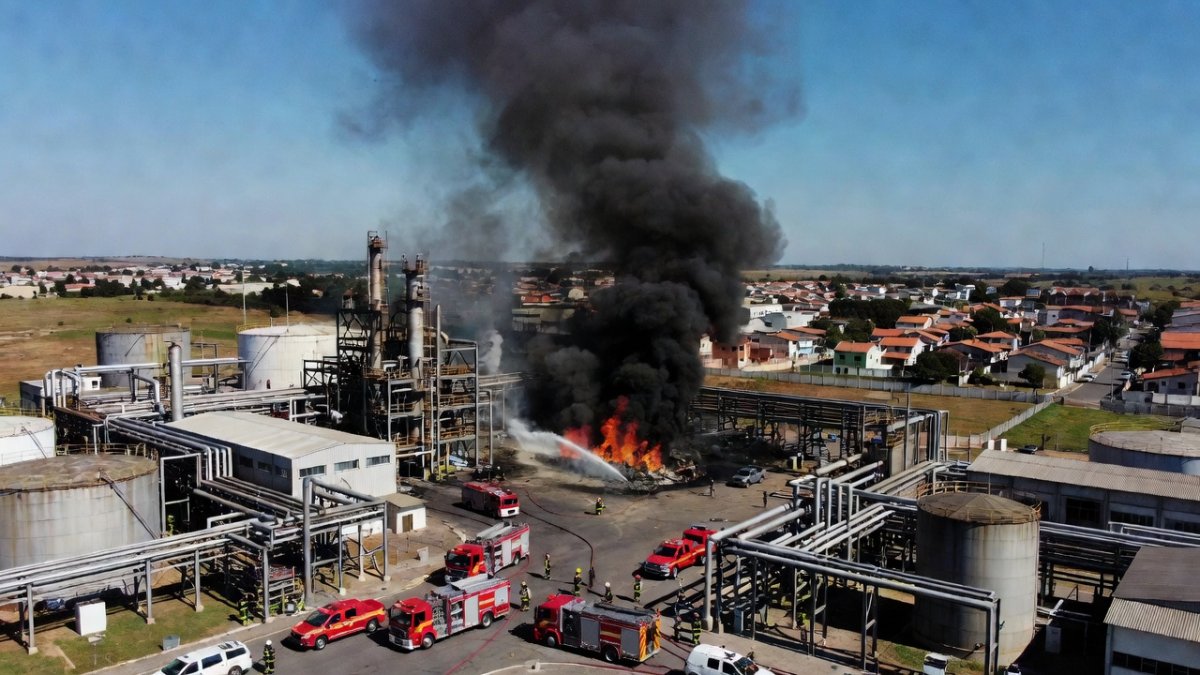
The fire at Quema Quimica chemical industry on Estrada do Bonsucesso in the bairro Rio Abaixo of Itaquaquecetuba began at approximately 15:22 local time on Tuesday, August 4, 2026. This municipality of about 383,000 people sits roughly 41 kilometers northeast of Sao Paulo city in the Regiao Metropolitana de Sao Paulo and forms a key part of the Alto Tiete region. The company, founded in 2002, initially focused on manufacturing and distributing solvents before expanding in 2019 into polyester resins and later other resins and polymers that serve as raw materials for downstream industries. The plant housed 24 solvent tanks, each holding about 31 cubic meters or 31,000 liters, with roughly 2 million liters of flammable liquids such as methanol, ethanol, and acetone involved according to CNN Brasil. Corpo de Bombeiros and Policia Militar responded immediately, isolating the area as multiple explosions rocked the facility for about three hours. Explosions and thick smoke emerged from nearby sewer manholes, terrifying local residents who feared the fire had spread underground. The industrial site lies more than 500 meters from the nearest homes, yet the scale of the blaze quickly overwhelmed initial containment efforts. EDP, the local power utility, cut electricity around the factory as a safety measure, with power to be restored only after firefighters cleared the zone. Itaquaquecetuba city hall dispatched a water supply truck and a water tanker truck to support operations. No deaths were reported, though one person sustained injuries according to Gazeta Brasil, while other outlets noted no confirmed victims at the time of their updates. The cause remains under investigation by forensic experts once the blaze is fully extinguished.
Toxic Smoke and a City on Alert
Thick, acrid smoke described as "burning" or fumaca ardida billowed from the Quema Quimica site, carrying gases, vapors, and particles capable of causing irritation and intoxication as warned by Itaquaquecetuba city hall and Defesa Civil. Experts emphasized that the smoke must be treated as potentially dangerous until air quality measurements identify specific contaminants. The state Civil Defense ordered evacuations of nearby industries, while about 150 residents were removed from homes near the plant around 18:40, and the plant itself was evacuated preventively. Smoke from burning chemicals posed immediate health risks to families forced from their homes, many of whom had witnessed explosions venting through sewer manholes. Cetesb, the Companhia Ambiental do Estado de Sao Paulo, was activated and dispatched teams to evaluate air quality and assess potential soil and water contamination from leaked or burned toxic substances. Defesa Civil simultaneously investigated a possible chemical leak that could affect the Alto Tiete basin, a critical watershed supplying the Sao Paulo metropolitan region. Residents described the smoke as overwhelming, prompting city hall to issue guidance on avoiding outdoor exposure. The combination of flammable vapors and resin byproducts created a persistent plume that lingered even after the main fire was brought under control around 21:00 on August 4. Materials continued burning afterward, requiring extended overhaul work that firefighters estimated could last several days. This incident highlights the human cost when industrial accidents intersect with densely populated Latin American urban corridors.
A Race Against Flammable Chemistry
Firefighters faced a complex battle against highly volatile chemicals at Quema Quimica, where solvent fires spread rapidly because released vapors ignite easily. The flash point, or ponto de fulgor, determines how readily a liquid ignites, and polyester resins can contain styrene that releases heavy flammable vapors, complicating suppression efforts. Response resources grew from eight vehicles initially to 30 by 18:30, eventually reaching 31 vehicles and 79 firefighters working three attack fronts. They deployed special firefighting foams and cooling techniques to prevent reignition of the roughly 2 million liters of methanol, ethanol, and acetone stored in the 24 tanks of 31 cubic meters each. Explosions continued for three hours after ignition, with flames and smoke visible from sewer manholes near the Estrada do Bonsucesso site in Itaquaquecetuba. Corpo de Bombeiros coordinated with Policia Militar to maintain isolation while EDP maintained the power cutoff. The fire was reported controlled around 21:00 on August 4, yet residual materials required prolonged rescaldo operations. Science underscores why such blazes demand specialized tactics: vapors from these solvents can travel and ignite far from the source, endangering both responders and nearby communities in the Alto Tiete region. This rapid escalation from a single ignition point to a multi-front emergency reveals the inherent risks of storing large volumes of flammable liquids in industrial zones serving Latin America's manufacturing base.
Evacuations and the Human Toll
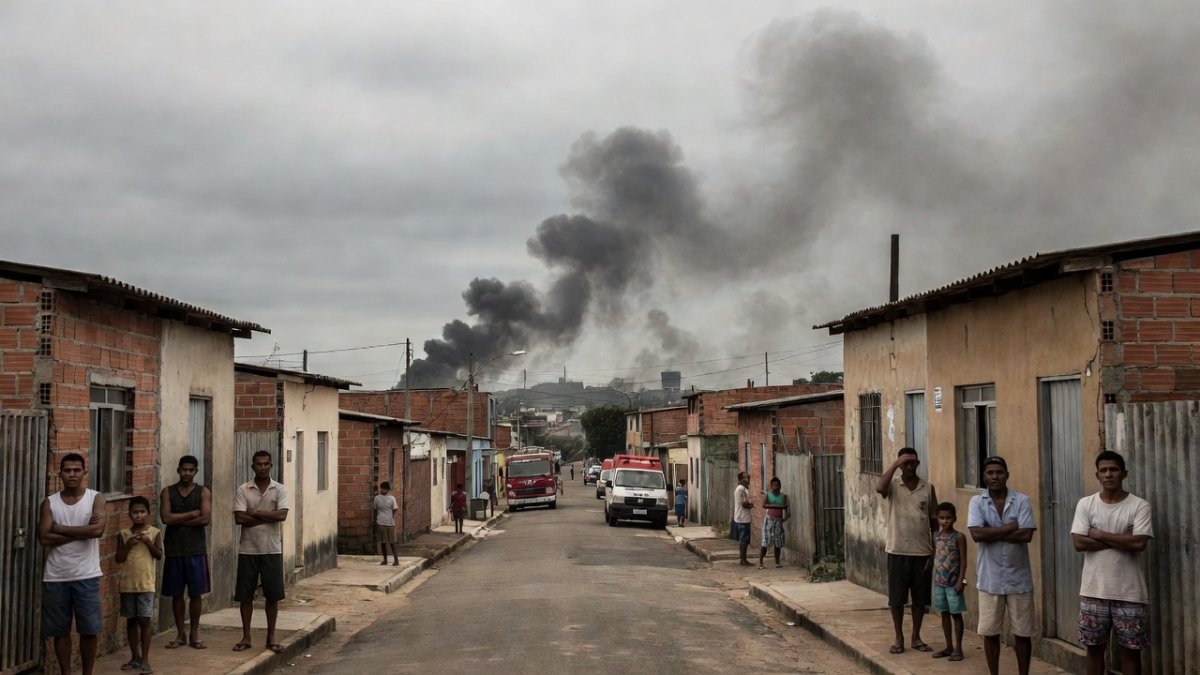
Evacuations began swiftly after the 15:22 start, with about 150 residents removed from homes near the Quema Quimica plant around 18:40 on August 4. The plant itself was evacuated preventively, and nearby industries followed orders from the state Civil Defense. Although the industrial site sits more than 500 meters from the nearest residences in Itaquaquecetuba, a municipality of roughly 383,000, the explosions and toxic smoke created immediate fear among families who saw flames and fumes emerging from sewer manholes. One person was injured according to Gazeta Brasil reports, while other outlets recorded no victims at their last updates, and no deaths occurred. Displaced residents faced uncertainty as they waited for clearance to return, many worried about long-term health effects from the acrid smoke. EDP cut power to the area as a precaution, leaving households without electricity until firefighters released the zone. Itaquaquecetuba city hall supported operations with a water supply truck and tanker, demonstrating local government response amid the crisis. Workers at the facility, which produces solvents and polyester resins since its 2002 founding and 2019 expansion, were among those evacuated, highlighting the direct impact on employees in Brazil's chemical sector. The human stories emerging from this event in the Alto Tiete region reflect broader vulnerabilities faced by communities living near industrial operations across Latin America.
Cetesb and the Environmental Fallout
Cetesb, the Companhia Ambiental do Estado de Sao Paulo, mobilized immediately to monitor air quality and investigate soil and water contamination risks from the Quema Quimica fire. Defesa Civil joined the probe into a possible chemical leak that could affect the Alto Tiete basin, a vital watershed for the Sao Paulo metropolitan region. Smoke containing gases, vapors, and particles raised concerns about irritation and intoxication, prompting guidance from Itaquaquecetuba city hall to limit exposure. The fire involved approximately 2 million liters of flammable liquids including methanol, ethanol, and acetone stored in 24 tanks of 31 cubic meters capacity each. Even after the blaze was controlled around 21:00 on August 4, ongoing burning materials threatened further environmental release during the multi-day overhaul phase. Experts stressed that polyester resins containing styrene add complexity because of heavy flammable vapors that can persist in soil and water. No immediate deaths resulted, yet the potential long-term ecological damage to the region remains under active assessment. This response by state institutions underscores the critical role of environmental agencies in mitigating industrial accidents that threaten Latin America's shared natural resources and public health.
What This Means for Latin America
The Quema Quimica incident in Itaquaquecetuba forms part of a troubling pattern of recent industrial accidents across Brazil, including a gas leak in Manaus that sent 16 people to health units and a factory fire in Maua, Sao Paulo. Located in the Alto Tiete basin that supplies water to the Sao Paulo metropolitan region, the site’s contamination risks carry implications far beyond one municipality of 383,000 residents. Solvent fires fueled by methanol, ethanol, and acetone, along with styrene-laden polyester resins, demonstrate how quickly industrial processes can endanger communities when safety measures falter. The rapid mobilization of Corpo de Bombeiros, Cetesb, and Defesa Civil reflects institutional capacity, yet the explosions through sewer manholes and prolonged smoke exposure reveal gaps in prevention. Families evacuated from homes near Estrada do Bonsucesso experienced firsthand the human consequences of storing 2 million liters of flammable liquids in urban-adjacent zones. Across Latin America, similar chemical facilities support economic growth but also concentrate hazards in watersheds and residential corridors. This event in Greater Sao Paulo highlights the urgent need for stronger regional standards on flash point management, vapor control, and emergency planning to protect both workers and residents from future disasters.
The Bottom Line — What Comes Next
With the fire at Quema Quimica controlled around 21:00 on August 4, 2026, attention now turns to the extended rescaldo phase that firefighters expect to last several days, alongside forensic investigation into the cause once the site is safe. Cetesb continues air, soil, and water testing while Defesa Civil probes the possible chemical leak, ensuring no further threats emerge from the 24 tanks and 2 million liters of solvents and resins. Evacuated residents await clearance to return, supported by Itaquaquecetuba city hall resources including water trucks, as EDP maintains power restrictions until full safety is confirmed. The absence of deaths offers relief, though the injury reported by Gazeta Brasil and the trauma of sewer explosions remind communities of the narrow margin between control and catastrophe. For the Alto Tiete region and broader Latin America, this incident demands renewed focus on industrial siting, vapor ignition prevention through flash point awareness, and coordinated responses by Corpo de Bombeiros and environmental agencies. Long-term monitoring will determine whether contamination affects the watershed supplying Sao Paulo. The path forward requires balancing economic contributions from companies like Quema Quimica with robust protections for the 383,000 residents of Itaquaquecetuba and neighboring areas.
By Elena Vasquez, Staff Writer
This article was produced with AI-assisted research and editorial support. Reporting is based on sources cited in the article.
What's Your Reaction?
 Like
0
Like
0
 Dislike
0
Dislike
0
 Love
0
Love
0
 Funny
0
Funny
0
 Wow
0
Wow
0
 Sad
0
Sad
0
 Angry
0
Angry
0

Latin America Correspondent at Global1.News. Based in Mexico City, covering politics, economics, energy, and culture across the region. Brings an on-the-ground perspective to stories spanning from the Rio Grande to Patagonia.












Comments (0)