
An Empty Tanker Lost Steering and Flipped a Docked Riverboat. Nobody Died.
An empty bitumen tanker lost steering and struck a docked riverboat at the Port of New Orleans, capsizing it with about 180 people aboard. Everyone was accounted for and 32 went to hospital with non-critical injuries. The National Transportation Safety Board is leading the investigation.
An empty bitumen tanker lost its steering on the Mississippi River at New Orleans on Friday and drove into a docked paddlewheel cruise boat carrying passengers at the end of an eight-day cruise. The boat rolled over. Some passengers went into the water. And by Friday evening, every single one of them had been accounted for.
An Empty Tanker Lost Steering and Flipped a Docked Riverboat. Nobody Died.
New Orleans, Louisiana — The American Heritage had been tied up for two hours and was just beginning to let passengers off when the Atlantic Asphalt came upriver and hit it broadside.
The Turn at Mile Ninety-Six
The collision happened at about 12:30 p.m. local time on Friday, on the Mississippi River near mile marker 96, outside 1350 Port of New Orleans Place, a short distance from the Crescent City Connection. The Port of New Orleans calls it an allision — the maritime term for a moving vessel striking a stationary one — and the distinction matters, because the American Heritage was not underway. It had docked roughly two hours earlier to begin disembarkation, according to port officials.
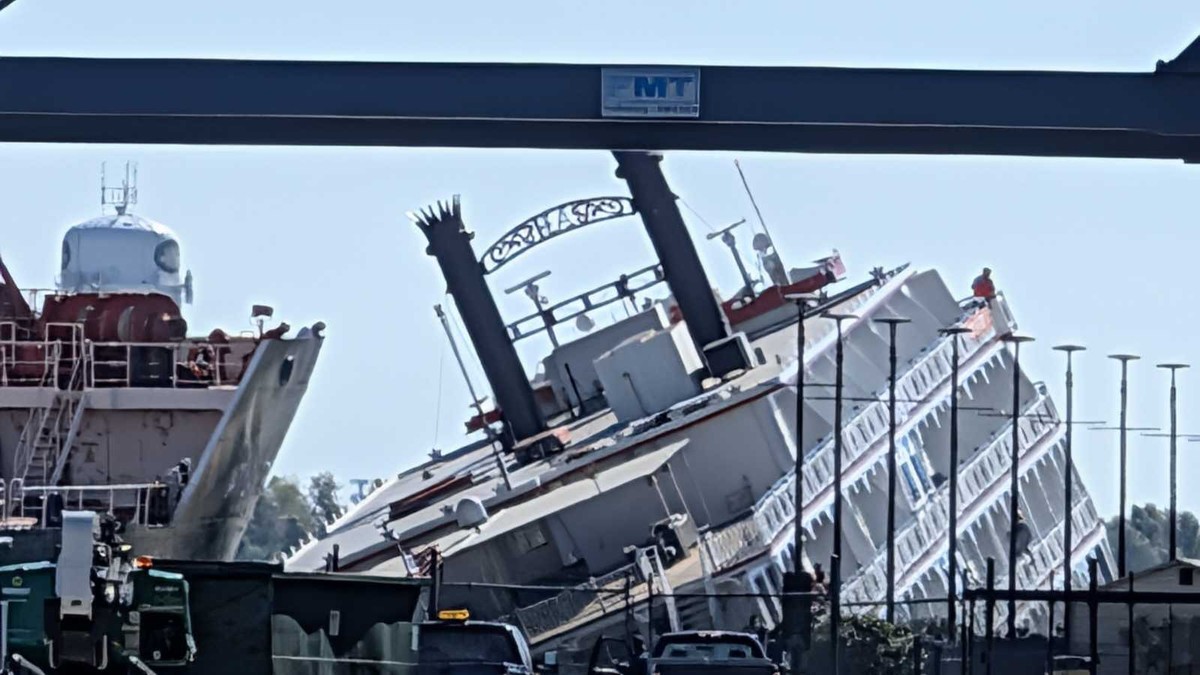
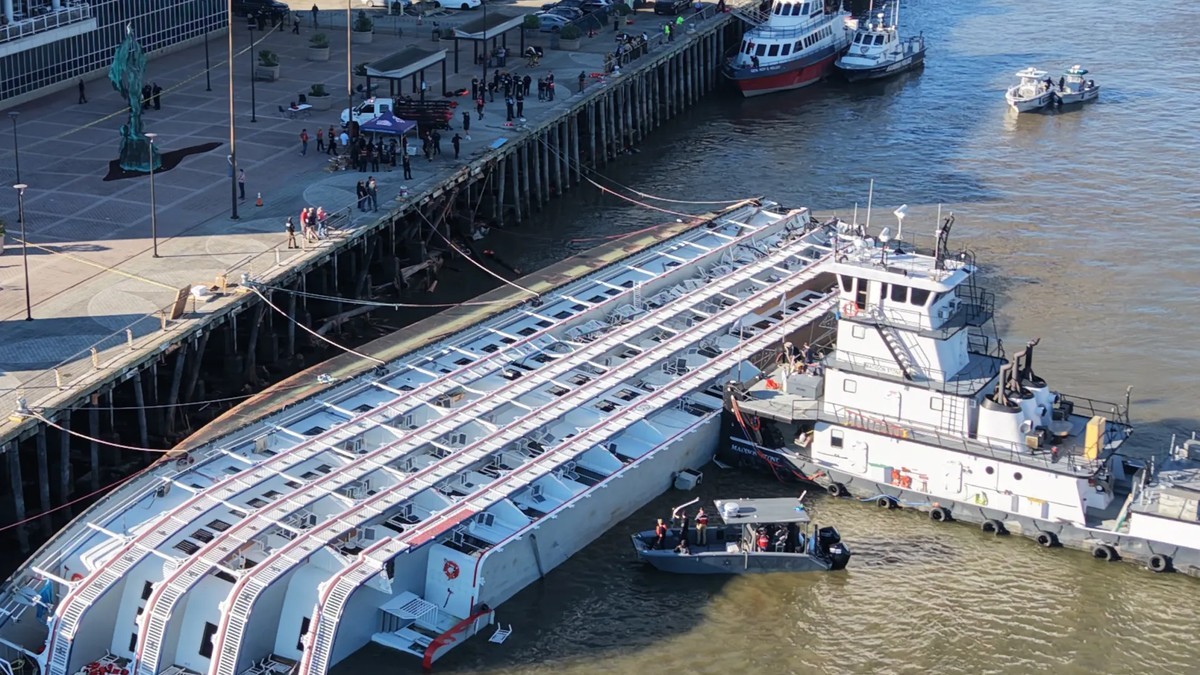
The tanker struck the riverboat broadside. The American Heritage took on water, leaned, and then went over. Passengers were seen gripping the railings as the deck tilted, then people in life jackets in the current. New Orleans Mayor Helena Moreno described the sequence plainly at a Friday news conference: passengers began getting off after the first impact, the vessel began to sink, and then it "toppled over and flipped," putting people in the water. The Coast Guard later said only part of one side of the hull remained above the waterline.
"A Miracle on the Mississippi"
What followed was one of the more improvised rescues the New Orleans riverfront has seen. Port of New Orleans Harbor Police Chief Melanie Montroll said responders got 87 people off the vessel while it was still afloat, and that it took roughly 30 to 45 minutes more to move the remainder onto other boats.
They came from everywhere. Tugboats, a police boat and a firefighting boat worked the water. The New Orleans Fire Department sent a three-alarm contingent of 23 units and 57 personnel and ran ladders out over the dock. The Creole Queen, a tourist riverboat docked a quarter mile away, sent its own rescue boat: captain Brian Clesi, 53, and second mate Ellis "Jimmy" Kimball Jr., 60, pulled about nine people from the river. Many were elderly. Only two had life jackets on, Clesi said. Their first rescue was a harbor police officer clinging to the stern of the capsized boat. Kimball's account of his own thinking was short. "Just get people out of the water," he said.
Thirty-Two in Hospital, and the Two Who Went In
Thirty-two people were taken to local hospitals, and none of them was in critical condition, Moreno said. LCMC Health said it was treating 32 injured passengers across its hospitals; University Medical Center New Orleans and other LCMC facilities initially reported receiving about two dozen.
How those 32 break down is one of the small inconsistencies that a fast-moving disaster produces. ABC News reported that thirty passengers from the cruise ship and two officers who ended up in the water were hospitalized, while the mayor described the 32 as passengers. At least two harbor police officers went into the river while helping the evacuation and both were in hospital in good condition, Montroll said. No children were involved, authorities said, and nobody on the tanker was hurt.
The hard work of the aftermath was less photogenic. The city, the Red Cross and New Orleans & Company moved survivors into hotel rooms, replaced lost medication and handed out blankets and water. Some passengers left everything they owned on a boat that was on its side in the river.
An Empty Ship Bound for Garyville
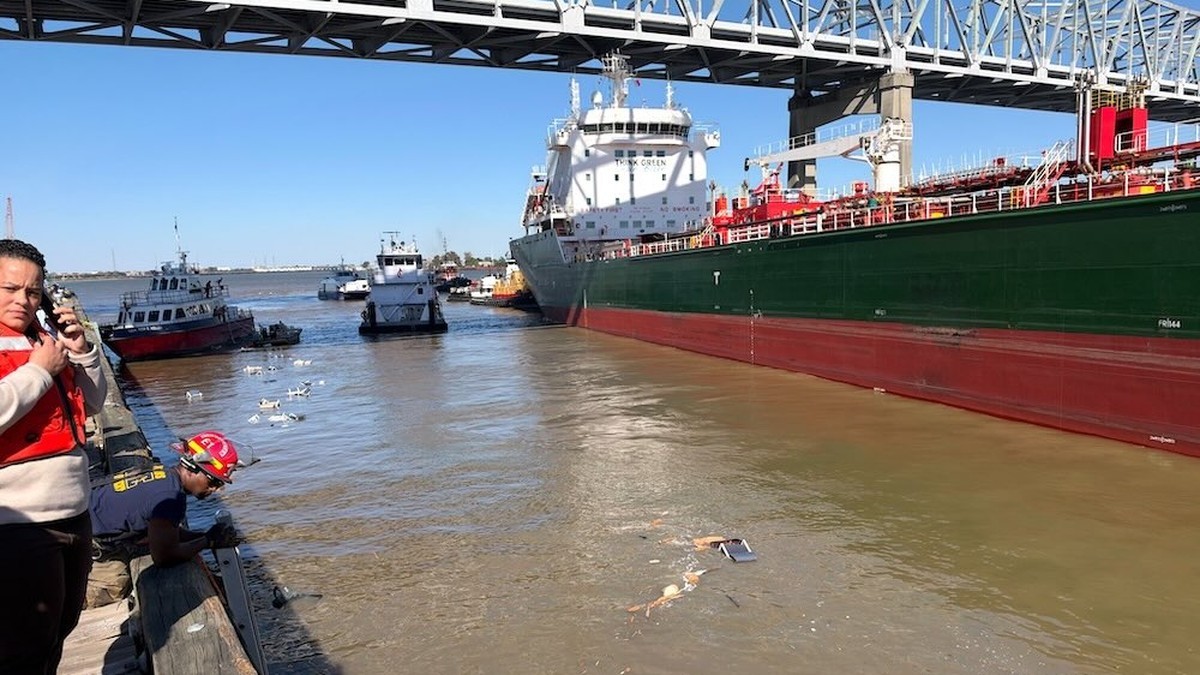
The Atlantic Asphalt is a 2017-built bitumen carrier of 17,764 deadweight tonnes, roughly 525 feet long and 77 feet wide, sailing under the flag of the Marshall Islands, according to vessel tracking services. It carries asphalt and bitumen, the semi-solid material used in road construction and roofing. It was not carrying a cargo of it on Friday.
A river pilot source with direct knowledge of the situation told the Times-Picayune | The Advocate that the ship was empty, ballasting upriver to load cargo at Garyville before departing for Singapore. The same source said the vessel had run the river several times before, most recently in August.
Ownership records are layered, as they usually are in shipping. VesselsValue identifies Nave Shipping, a single-ship company registered in Liberia, as the owner, with the Swiss firm Asphaltos Trade as operator. Maritime data provider MagicPort lists Singapore-based Thome Ship Management as the vessel's ISM manager, and The Hindu reported that Indian government records showed no Indian crew aboard a ship manned by a Singapore management company. Those are registration roles, not findings about responsibility.
The Pilot Who Had Been Aboard Half an Hour
Foreign-flagged vessels do not steer themselves up the Mississippi. Pilots take them, and pilots hand off. According to the river pilot source who spoke to the Times-Picayune | The Advocate, a longtime pilot with the New Orleans-Baton Rouge Steamship Pilots Association had boarded the Atlantic Asphalt about 30 minutes before the collision, taking over from a Crescent River Port pilot near Arabi.
Mike Delesdernier, another longtime river pilot who sits on a board that oversees the Crescent pilots — which was not handling the ship at the time — said the tanker was travelling upriver when it took a "hard turn starboard" into the passenger vessel. Both pilots said there was likely some sort of steering failure. Delesdernier cautioned that it was too soon to say what caused the crash. "It's obviously very rare," he said.
Geaux River's Fleetwatch, a vessel tracking service, recorded the vessel northbound when its course changed, "turning it perpendicular toward the east bank." A company spokesperson said its analysis suggests a steering or power failure, with the river's current possibly carrying the ship into the American Heritage.
What Nobody Has Established
By Saturday morning the central question was still open. "The exact reason why, we don't know that," Coast Guard Captain Melanie Burnham, commander of Sector New Orleans, said of the loss of steering.
That sentence covers a lot of ground that should not be filled in. No cause has been determined. Nobody has been found at fault. There is no confirmed finding of mechanical failure, power failure or pilot error, and no indication that anything about the crash was intentional. No pollution has been reported from a vessel that was in ballast, though the Coast Guard has not issued a formal all-clear on that point either. It is not confirmed that the tanker's voyage data recorder has been recovered.
Governor Jeff Landry promised a thorough inquiry and framed it as a safety question rather than a blame question. The river, he said, had operated with "impeccable safety for a very long time," and he wanted investigators to "triage those problems" so people can trust the water again. He also offered a blunt description of the setting: "The Mississippi River is not some quiet pond, right? I mean, there were challenges out there."
Counting the People on the Boat
The headcount moved all day, and the numbers are not really in conflict once you separate passengers from everybody else. Port NOLA said about 129 passengers, in addition to crew, were aboard the American Heritage. Mayor Moreno put the total at between 180 and 190 people including passengers and crew. ABC News reported nearly 200 people on board. Navy Times published a figure of 195 accounted for.
The figure that mattered most on Friday afternoon was the one that turned out to be wrong. An early Navy Times report carried a headline saying 140 people were missing. By evening the mayor was able to say the opposite: "At this moment, the information that we have, we have zero people unaccounted for." She called it a miracle.
Even the description of the vessel drifted. Port NOLA's statement used the word allision. Wire copy called it a collision. Broadcasters called the tanker a cargo ship. None of those is a scandal; all of them are the sound of a city trying to describe something in real time that it had never had to describe before.
What the NTSB Found the Last Two Times
This is not the first time a tanker has lost an argument with the geography of New Orleans. The National Transportation Safety Board has investigated two strikingly similar cases on this stretch of river, and both reports are instructive.
On 16 March 2021, the tanker Bow Tribute grounded in the Lower Mississippi while trying to overtake a two-barge tow in a river bend already occupied by multiple vessels in high water, then hit the fender systems protecting two intakes belonging to the city's sewerage and water board. Nobody was hurt and nothing spilled. The damage came to more than $1.9 million, including $926,100 to the fenders alone. The board's cause was the decision to attempt the overtake.
On 16 May 2019, the tanker American Liberty hit several moored vessels, barges and wharves along the left descending bank. The NTSB found poor bridge resource management and miscommunication between the pilot and the master, which delayed an engine order and left the ship without enough speed for an undocking manoeuvre. In both cases, the failure was human, procedural, and foreseeable.
A River That Carries 669 Million Tons
The Mississippi is not scenery. It carries 669 million tons of cargo across the United States every year, according to the U.S. Army Corps of Engineers, and the Port of New Orleans on the downtown riverfront is Louisiana's only international container port.
The Coast Guard closed the river to all vessel traffic between mile markers 93 and 96 immediately after the collision, with the closure at Algiers Point taking effect at 3:24 p.m. Eastern. Burnham said the aim was to reopen "as soon as possible so we can keep commerce flowing," likely to one-way traffic first, while salvage teams worked out how to move a sunken cruise boat out of a working channel.
By Saturday, traffic had reopened with restrictions, according to WWL-TV. The Regional Transit Authority resumed its Algiers Point ferry service; the Chalmette Ferry was still out early Saturday. The river kept moving, in other words, much faster than the investigation into what stopped it will.
The Questions That Outlive the Miracle
The National Transportation Safety Board launched a Go Team and expected it in New Orleans on Saturday morning. Representative Steve Scalise said the nationwide FAA ground stop on Friday might complicate the team's travel, which is its own small commentary on the week. The board will run the inquiry alongside the Coast Guard. Navy Times reported the Coast Guard will likely convene a Marine Board of Investigation, a heavier apparatus that can recommend criminal charges.
Then there are the questions the praise did not answer. Why does a ship that size lose steering in a controlled channel with a pilot on the bridge? How long does a pilot need on an unfamiliar bridge before a handover stops being a risk? What did the current do, and what would the outcome have been at a busier hour?
New Orleans got the ending it wanted this time, and the people who pulled strangers out of the river earned every word of it. The city should not mistake that for a system that worked.
By Jessica Ali, Staff Writer
This article was produced with AI-assisted research and editorial support. Sources: The Associated Press, CNN, The New York Times, BBC, ABC News, USA TODAY, WDSU, FOX 8, WWL-TV, NOLA.com / The Times-Picayune | The Advocate, Al Jazeera, Navy Times, Splash247, World Ports Organization, FreightWaves, The Hindu, and National Transportation Safety Board press releases. Cover: Global 1 News editorial image. Photographs: Gerald Herbert/AP; WDSU; New Orleans Fire Department / Chris Mickal.
What's Your Reaction?
 Like
0
 Dislike
0
 Love
0
 Funny
0
 Wow
0
 Sad
0
 Angry
0

Editor-in-Chief at Global1.News. Atlanta-based journalist who cuts through the BS and tells it like it is. Lead anchor, host, and the voice you hear when the spin stops and the truth starts.













Comments (0)