
JMPD Officer Tells Inquiry a Former Boss Said to Take the Money and Let Suspects Go
Sworn testimony at South Africa's Madlanga Commission describes a former JMPD superintendent telling officers to take money from drug suspects and release them, alongside allegations about a R1.5 million theft docket and an abandoned police pursuit.
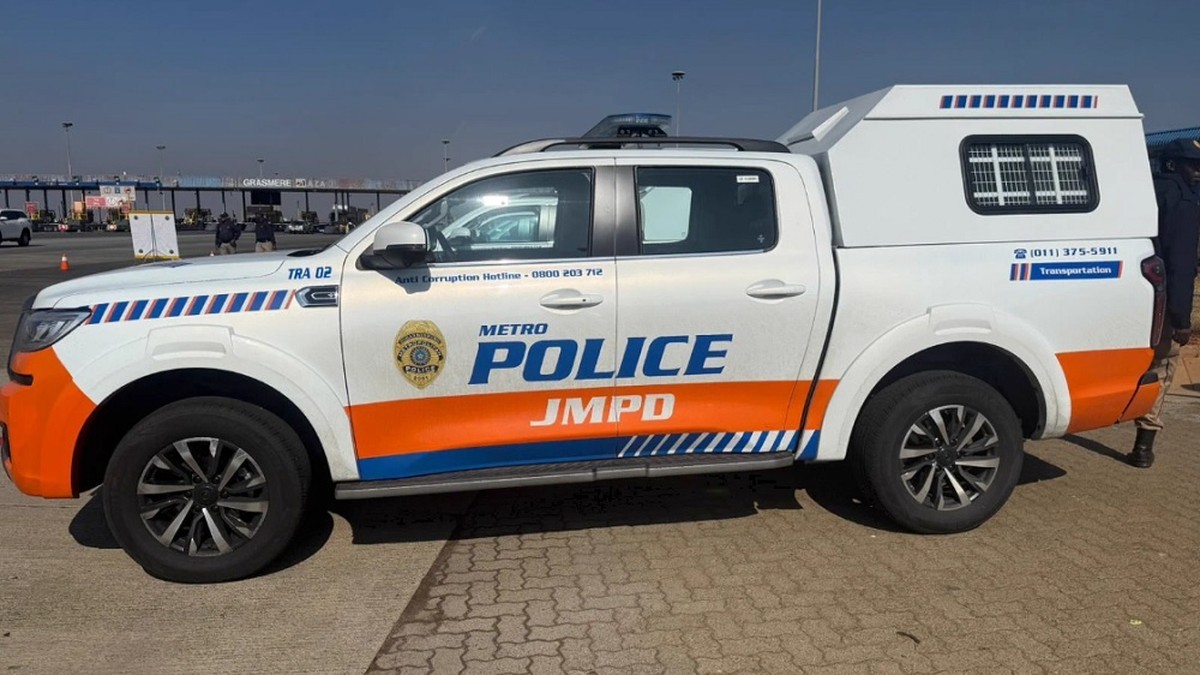
Folks, there is a sentence in the record of the Madlanga Commission you should read twice. It came from a Johannesburg metro police constable, describing what he says a former superintendent told his unit: once you have taken the money from the people you were supposed to arrest, let them go and move on.
That is not a rumour from a WhatsApp group. It is sworn testimony given on Friday 13 November 2026, by audio link, before a judicial commission of inquiry chaired by Justice Mbuyiseli Madlanga.
JMPD Officer Tells Inquiry a Former Boss Said to Take the Money and Let Suspects Go
Johannesburg, South Africa — The Judicial Commission of Inquiry into criminality, political interference and corruption in the criminal justice system heard three threads on Friday: a drug bust, a theft docket a police officer allegedly tried to buy his way out of, and a chase called off mid-pursuit by a phone call. Two constables and a Hawks detective took the stand. The man at the centre of the JMPD allegations, former Superintendent Phineas Manyama, retired in April 2026, has not testified and has not publicly responded. Every allegation below is untested — sworn testimony, or investigators' allegations put before the commission.
The Forecourt Conversation the Inquiry Was Told About
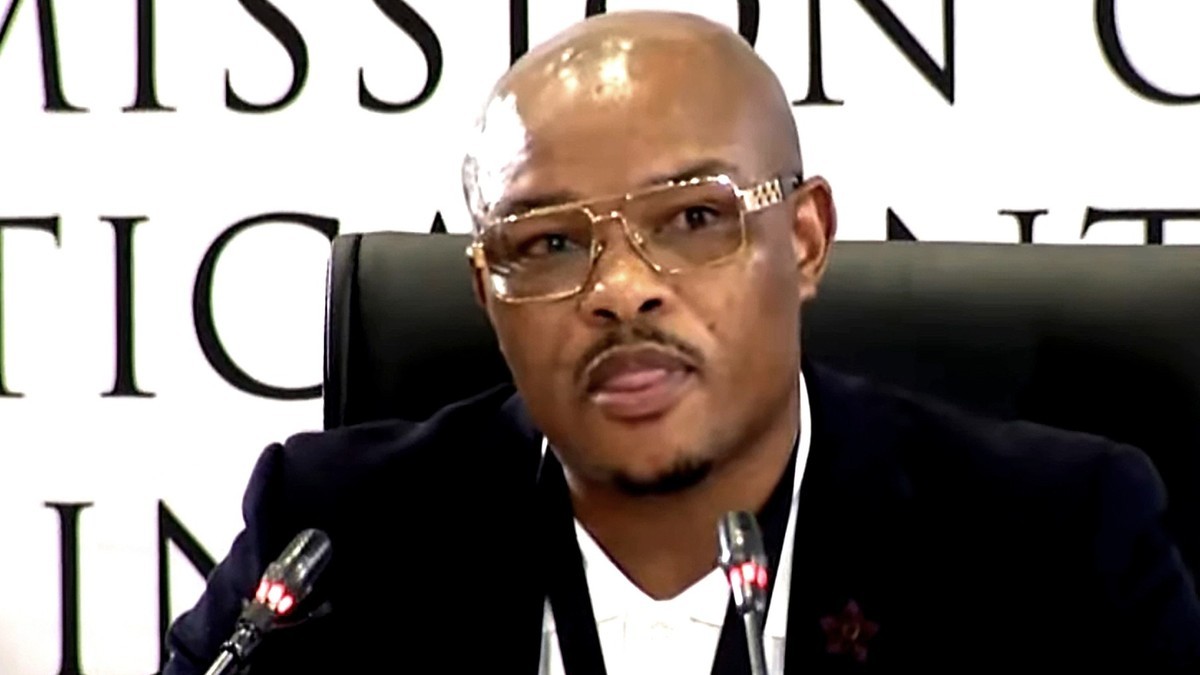
Constable Michael Potsane, attached to the Johannesburg Metropolitan Police Department's tactical response unit, testified remotely. He told the commission that Manyama demanded prior approval for drug operations and threatened officers who went ahead without it.
According to Potsane, the pressure came five days after the seizure. Manyama summoned the officers to a meeting at a Shell garage near Eastgate Mall on 25 July 2025, accused them of being disrespectful, of operating as an independent unit and of stealing other people's drugs, and then set out how he believed such operations should end.
"He stated that, when we go to criminals' premises or homes, we should communicate with others and negotiate for them to give us money," Potsane told the commission. "Once we have received the money, we should let them go and move on."
The SABC, which covered the same session, reported that the commission heard a recording in which Manyama allegedly reprimanded officers for failing to negotiate the release of the suspects and the seized cocaine, and that Potsane said the team should have sat down with the other officers and the suspect and accepted whatever was being offered.
What the Officers Say They Found in July 2025
The operation that preceded that meeting began with two to three weeks of surveillance of suspected drug dealers, Potsane testified. His team stopped Abdul Hussein at the Palm Continental Hotel in Mayfair, Johannesburg, and a search of his Toyota Corolla Quest turned up five bricks of suspected cocaine and a black pistol.
Hussein then led the officers to an unfinished mansion in Lakewood Estate in Ormonde, where a storage room held boxes lined with white foam, two bricks to a box, seventeen bricks in all. A second suspect, Brazilian national Ronaldo Dias Tavez Resende, was found inside. Hussein reportedly told the officers his boss was in Dubai and that he feared for his life because his phone's live-location function was shared with at least five people.
The commission also heard what the officers were told would happen if they refused to play along. "He further stated that, if we were arrogant and unruly and insisted on having our own way, we would die like many other police officers who had died, adding that police officers kill one another," Potsane said.
Manyama, he added, boasted of a relationship with KwaZulu-Natal's police commissioner, Lieutenant-General Nhlanhla Mkhwanazi, claiming he could meet him without junior officers knowing why.
A 'Prestige' Stamp, and a Caution From the Evidence Leader
The 22 bricks are the reason a name you have heard at this commission before surfaced again. Three of the six blocks that tested positive for cocaine carried the same "Prestige" emblem, according to a Forensic Science Laboratory report presented during Potsane's testimony by evidence leader advocate Lee Segeels-Ncube. The same mark appeared on cocaine bricks in footage allegedly sent by businessman Vusimuzi "Cat" Matlala to his associate Mike van Wyk — footage the commission screened in June 2026.
Investigators allege Matlala sent that footage to Medicare24 chief executive Michael van Wyk in April 2025, alongside messages discussing pricing. Both men contest the allegations, and Van Wyk has denied receiving the video.
Segeels-Ncube was careful, and the commission's caution deserves to be repeated rather than buried: matching branding does not establish a direct link between the two consignments, and it does not prove that Matlala owned or controlled the property or the drugs. One of the property's registered owners has the surname Matlala, but no family connection to the organised-crime accused has been established.
The Pursuit That Ended With a Phone Call
The second thread on Friday was not about drugs. Constable Malibongwe Cutalele, also of the tactical response unit, testified that on 3 July 2025 Manyama ordered him and two colleagues to abandon a high-speed pursuit of a black Ford Ranger, even though backup and a police helicopter had already been called.
Cutalele told the commission that Manyama phoned him twice, demanding to know why they were pursuing "that car" and instructing the team to meet him at a Total petrol station near the Lido Hotel. He said Manyama was intimidating, and that disobeying him could get an officer removed from the unit.
He also conceded something that will matter to the inquiry: he did not tell the helicopter or the other backup units the pursuit had been abandoned. The SABC reported that Cutalele told Justice Mbuyiseli Madlanga and commissioner Sandile Khumalo he still does not know how Manyama learned of the chase at all.
R1.5 Million, and a R250,000 Offer to Make It Disappear
The third thread moved from Johannesburg's streets into a docket. Hawks detective Warrant Officer Phuti Eric Mashala testified that JMPD officer Eric Mphahlele robbed Johannesburg businessman Nawazish Ali Raja of R1.5 million on 12 August 2023. In the statement Mashala obtained from Raja, officers stopped him while he was driving his Mercedes-Benz, accused him of speeding, searched the car and found a bag of cash. One officer allegedly drove off with the money, saying he was taking it to a police station.
Mphahlele was later identified as that officer, Mashala said, and allegedly offered a Captain N Tauatswala R250,000 to make the theft docket vanish. Mashala told the commission that he and Tauatswala played along in order to trap him. Two inspectors, Emma Phakoana and Tintswalo Rikhotso, and Captain Matimu Mabunda were allegedly involved in arranging the payment, with Rikhotso later demanding a share.
The Judge Turns on the Hawks
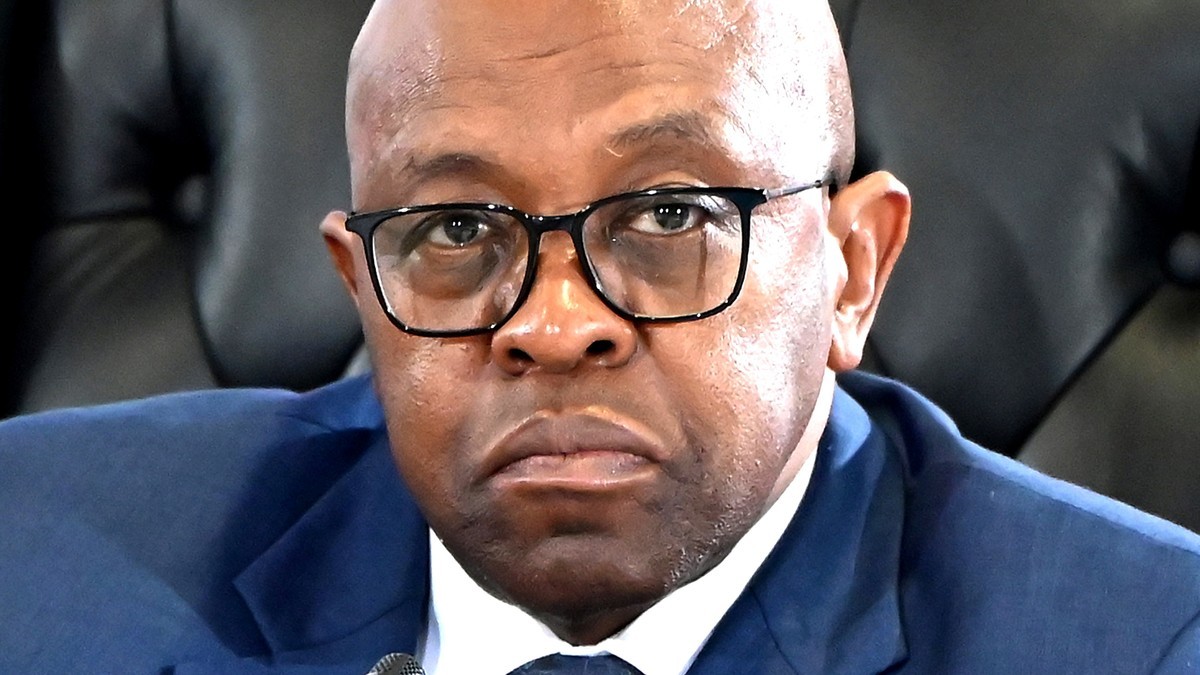
What happened next is the part of Friday that should worry anyone who assumes a sting operation is automatically a clean one. The commission heard that the Hawks failed to keep the subsequent undercover operation under Section 252A of the Criminal Procedure Act confidential, and that investigators informed officers suspected in the case — including Mabunda and Phakoana — effectively warning the people the operation was built to catch.
Justice Madlanga did not hide his view of that decision. "You are supposed to be a specialised branch of the police, aren't you? I would even say you are supposed to be super detectives, aren't you?" he asked Mashala. "You are defeating the very purpose of what you sought to achieve. It just doesn't make sense at all to me. Does it make sense to you?"
Mashala conceded the point. "As I'm saying, commissioners, it might be where we lost it wrong; we got it wrong there," he said. "It might be where we made a mistake in telling her."
The Number the Police Ministry Put on Paper
Two days before those officers testified, Acting Police Minister Firoz Cachalia answered a written parliamentary question from MK Party MP Vusi Shongwe. The figures he put on the record are the context this commission sits inside.
The South African Police Service paid more than R115.5 million in remuneration to 767 members criminally charged between 1 April 2025 and 31 August 2026. Of those, 427 were still on active duty and still drawing salaries while disciplinary proceedings against them were pending. In the same window 629 members faced disciplinary proceedings, 60 were placed on precautionary suspension, 36 were dismissed and 19 left before proceedings could begin. Forty-three were convicted — 32 of corruption, 11 of defeating the ends of justice.
Then the sentence that sits awkwardly beside everything above. "No SAPS members were charged in respect of organised crime, drug trafficking, extortion, kidnapping or the protection of criminal syndicates during the reporting period," Cachalia told Parliament. The same held for convictions: none in those categories. In those seventeen months, not one police member was charged or convicted with protecting a criminal syndicate.
What the Intelligence Services Have Been Saying
The commission was not created out of nothing. It was appointed on 21 July 2025, by Proclamation 269 of 2025, to test the specific allegations Lieutenant-General Mkhwanazi made public on 6 July 2025 — that a sophisticated criminal syndicate had infiltrated law enforcement and intelligence structures.
Announcing the inquiry, President Cyril Ramaphosa summarised the claims: that the Minister of Police interfered with sensitive investigations and colluded with business people, including a murder accused, to disband KwaZulu-Natal's Political Killings Task Team, and that a task team investigation in Gauteng had unmasked a syndicate controlled by a drug cartel involving politicians, police and metro police officials, correctional services, prosecutors, the judiciary and business people.
A day before the JMPD officers testified, Dr Ntandazo Sifolo, acting coordinator of the National Intelligence Coordinating Committee, told the commission that criminal syndicates had become embedded in the state, with political power struggles and corrupt officials compromising security. He pointed to the committee's 2024 National Intelligence Estimate, which identified contamination of the criminal justice system as a systemic national security threat. Earlier, the head of JMPD's internal affairs unit, Superintendent Elmarie de Beer, testified that Manyama allegedly instructed tactical response unit members to escort trucks carrying stolen copper.
What Has Not Been Established
The commission has made no finding against Manyama, Mphahlele, Matlala, Van Wyk or any officer named in Friday's testimony, and the people named have the right to answer. Manyama retired in April 2026 and has not appeared. Its mandate covers whether drug cartels infiltrated the police, metro police, prosecutors, intelligence, the judiciary and correctional services, and the role of officials who aided them or failed to act. It can recommend suspensions, and its final report is due on 25 January 2027.
One more thing happened this weekend. On Sunday the Gauteng Department of Community Safety opened an investigation into a video allegedly showing a Gauteng Traffic Police officer accepting a bribe from a motorist, and said the incident did not appear recent.
A commission, a parliamentary answer and a phone video, all in one week, all describing the same thing from three angles. The testimony is on the record now. What the country does with it is not a question a judge can answer alone.
By Jessica Ali, Staff Writer
This article was produced with AI-assisted research and editorial support. It reports allegations made in sworn testimony before a judicial commission of inquiry; the commission has not made findings on them, and those named have not responded publicly. Sources: Daily Maverick, SABC News, EWN, IOL, SAnews.gov.za, the Government Gazette (Proclamation 269 of 2025 and Proclamation 352 of 2026), and the Presidency. Photographs: a JMPD metro police vehicle (City of Johannesburg Public Safety via SABC News); a witness giving testimony before the Madlanga Commission (screenshot, Madlanga Commission, via Daily Maverick); Justice Mbuyiseli Madlanga (Frennie Shivambu / Gallo Images, via Daily Maverick). Cover card: Global 1 News editorial image.
What's Your Reaction?
 Like
0
 Dislike
0
 Love
0
 Funny
0
 Wow
0
 Sad
0
 Angry
0

Editor-in-Chief at Global1.News. Atlanta-based journalist who cuts through the BS and tells it like it is. Lead anchor, host, and the voice you hear when the spin stops and the truth starts.









Comments (0)