
Guterres Demands a Killer-Robot Treaty. Five States Voted No.
The UN Secretary-General told 128 states in Geneva to negotiate a legally binding treaty on lethal autonomous weapons. The United States, Russia and Israel are working against a binding mandate, and Russia stalled the opening session over observers.
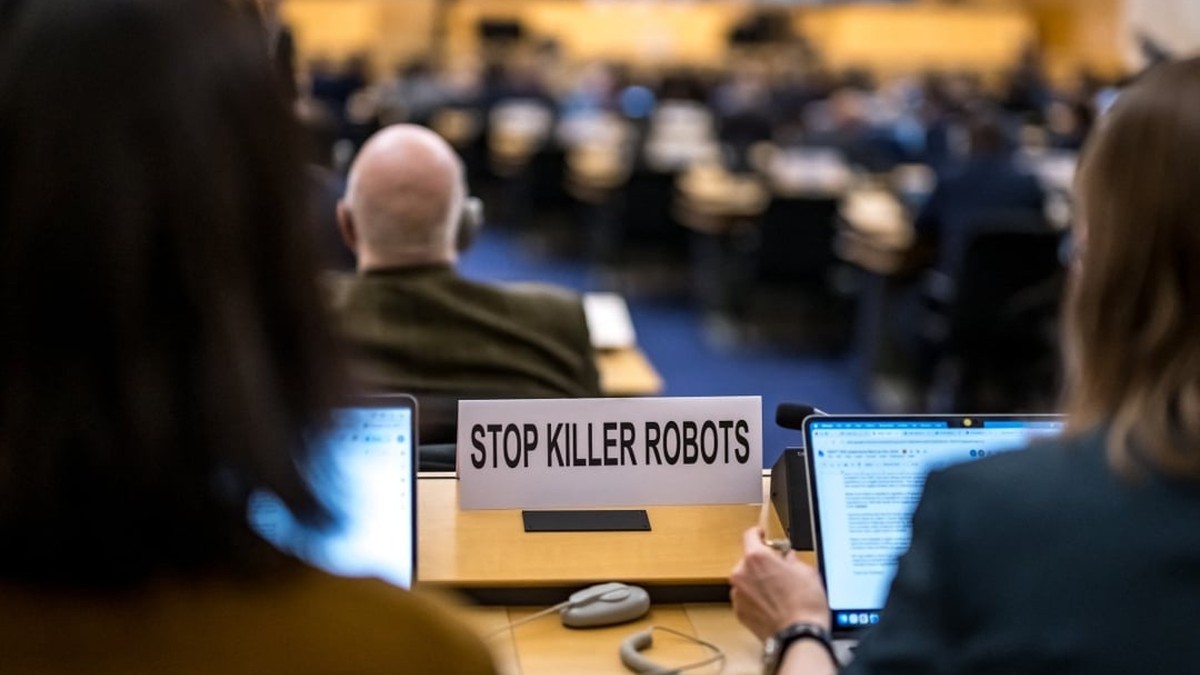
The United Nations opened a five-day arms-control conference in Geneva on Monday with its Secretary-General demanding that governments write a treaty to keep machines from choosing who dies. The United States, Russia and Israel came to block a binding one. Russia did not wait for the first speech: it objected to the observers in the room, and the proceedings stopped.
Guterres Demands a Killer-Robot Treaty. Five States Voted No.
Geneva, Switzerland — The Seventh Review Conference of the Convention on Certain Conventional Weapons is meeting at the Palais des Nations from 16 to 20 November under the presidency of Ambassador Julien Thöni of Switzerland, with 128 states party and one question on the table: whether to start negotiating rules for weapons that can find and kill a target without a human being.
The Doors Opened, and Russia Objected
The Assembly Hall filled at ten o'clock Monday morning, and before the general debate could begin, Russia's representative objected to observers being allowed to participate — the European Union among them, and civil society groups as well. Agence France-Presse reported that the objection forced the temporary suspension of the proceedings. Campaigners said the move looked like an attempt to avoid scrutiny of Russia's own alleged use of autonomous weapons in Ukraine; the report established no motive. Anna Hehir, who leads military AI governance at the Future of Life Institute, did not soften it: "States must ensure that Russia, or any of the handful of governments blocking progress, are not allowed to hold the future hostage." The suspension was temporary. The convention's 128 parties settled in for five days of work that has to be unanimous to produce anything at all.
What Guterres Asked For, and What the Pope Said
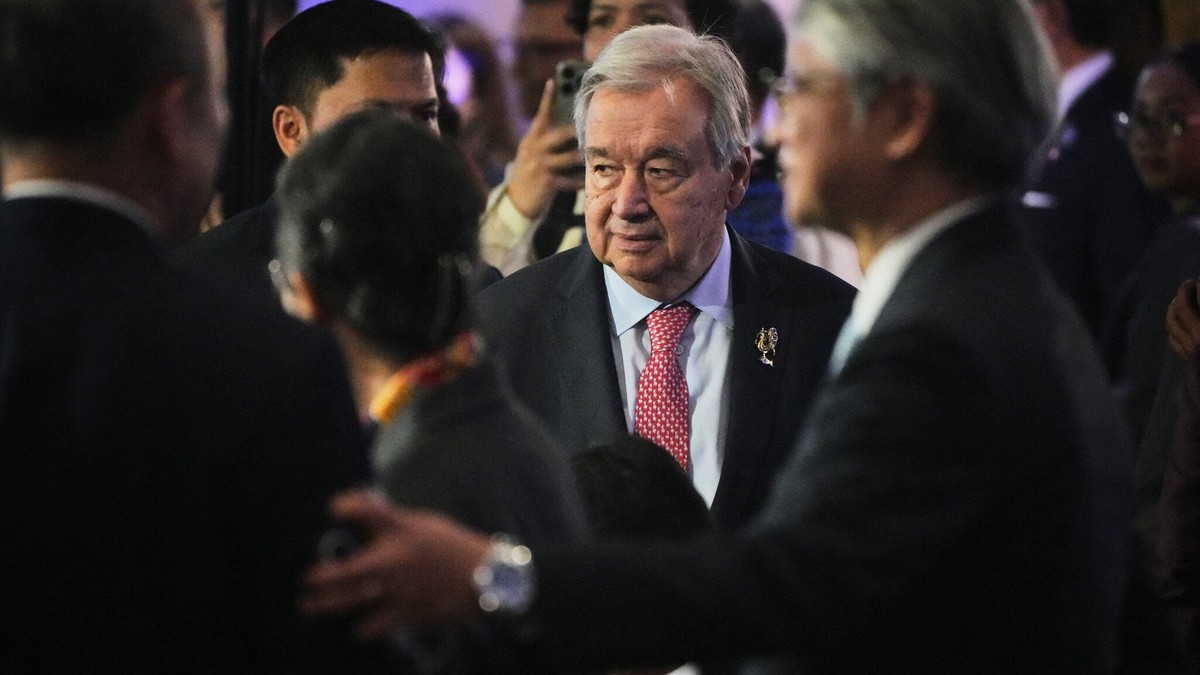
António Guterres addressed the conference by video, and he named the instrument he wants. He said: "I call on you to move towards negotiating a legally binding instrument to regulate autonomous weapon systems — including clear prohibitions and restrictions." Then came the line that will be quoted all week: "I urge you to seize this moment. Take action to prevent the use and spread of these merciless weapons." He also asked states to ban systems whose effects "could not be fully understood, predicted, explained and controlled by human users". Pope Leo XIV made the same argument, urging governments at the Geneva meeting "to take concrete steps toward banning lethal autonomous weapons" and insisting that decisions on the use of force stay under "effective, informed and responsible human oversight". Two moral authorities, one demand, and a room where five governments have already voted the other way.
A Convention Built for a Different Century
The Convention on Certain Conventional Weapons is not a new idea. It exists to "ban or restrict the use of specific types of weapons that are considered to cause unnecessary or unjustifiable suffering to combatants or to affect civilians indiscriminately", as the UN office in Geneva describes it, and it does that through five protocols covering non-detectable fragments, mines and improvised explosive devices, incendiary weapons, blinding lasers and explosive remnants of war. It has 128 High Contracting Parties, and it is reviewed once every five years. What it does not have is a rule for software. Delegates are also weighing the humanitarian damage from landmines and from methods of warfare no other treaty covers. But the fight this week is about the gap nobody wrote into the original text: a weapon that decides for itself.
Three Years of Talks, and a Report With Holes in It
The Group of Governmental Experts, created under the convention in 2016, finished its mandate in September, adopting a final report by consensus on 4 September that sets out "a set of elements of an instrument" without deciding what that instrument should be. It also agreed a working description: a system "capable of identifying, selecting, and engaging a target in a way that results in loss of life, without intervention by a human being operating the system". Read the text closely and the holes show. Human Rights Watch says the final version dropped references to design and development, narrowed the scope from international law generally to international humanitarian law alone, cut the reference to ethical considerations, and removed predictability, reliability, explainability and traceability. Russia and the United States pushed those changes. Even so, the rights group called the report a sufficient foundation for negotiations. That is the tension delegates carried into Monday.
What the Red Cross Wants Banned
The International Committee of the Red Cross is not asking for a total ban, and it is worth being precise about that. Its proposal is two-tiered: prohibit autonomous weapons that are unpredictable, and prohibit those designed or used to target human beings directly; then restrict the rest by target type, geographic scope, duration, situation and scale. Laurent Gisel, who heads the ICRC's weapons and conduct of hostilities unit, said the need "has taken on new urgency" with advances in artificial intelligence, and asked the question that hangs over the whole week: "If it's not possible to predict it, then how is it possible to limit it?" ICRC president Mirjana Spoljaric put the stakes plainly: "Future generations will judge whether leaders acted to prevent a world where machines autonomously kill humans." In August she and Guterres warned the world was "dangerously close to crossing a moral red line".
One Year Against Five
The timetable is where this conference will be won or lost. On 22 October a coalition of 50 states, Ireland, Italy, Brazil, Mexico, France and Germany among them, called for a strict negotiating mandate. The Irish-led plan would create a time-limited expert group to negotiate over three sessions in Geneva in 2027, twenty-five days in all, and require a draft protocol to be reported to that year's annual meeting. The United States wants the opposite shape: a five-year process aimed at a non-binding agreement, on the argument that existing humanitarian law already covers the ground. Britain did not back the Irish statement, and has previously argued that existing humanitarian law is sufficient. Reuters reported that two diplomats expect a difficult week but see room for a hybrid outcome. More than seventy states have said they are ready to negotiate, according to the ICRC. The gap is not whether machines need rules. It is whether the rules bite.
The Vote That Shows Where the World Stands
Eighteen days before the conference opened, the world took a vote. On 29 October the UN General Assembly's First Committee adopted resolution A/C.1/81/L.37 on lethal autonomous weapons systems by 163 votes to five, with nine abstentions — the fourth year running it has passed a text on the subject. The five against were Belarus, North Korea, Israel, Russia and the United States. China abstained, and Laure de Roucy-Rochegonde of the French Institute of International Relations described Beijing's position as a "carefully cultivated ambiguity". North Korea, which boasted of a new AI-enabled torpedo system last week, was among the five. The resolution is a political signal, not a treaty, and it does not bind this conference, which works by consensus. But it is the clearest map available of who wants rules and who does not.
What Is Already on the Battlefield
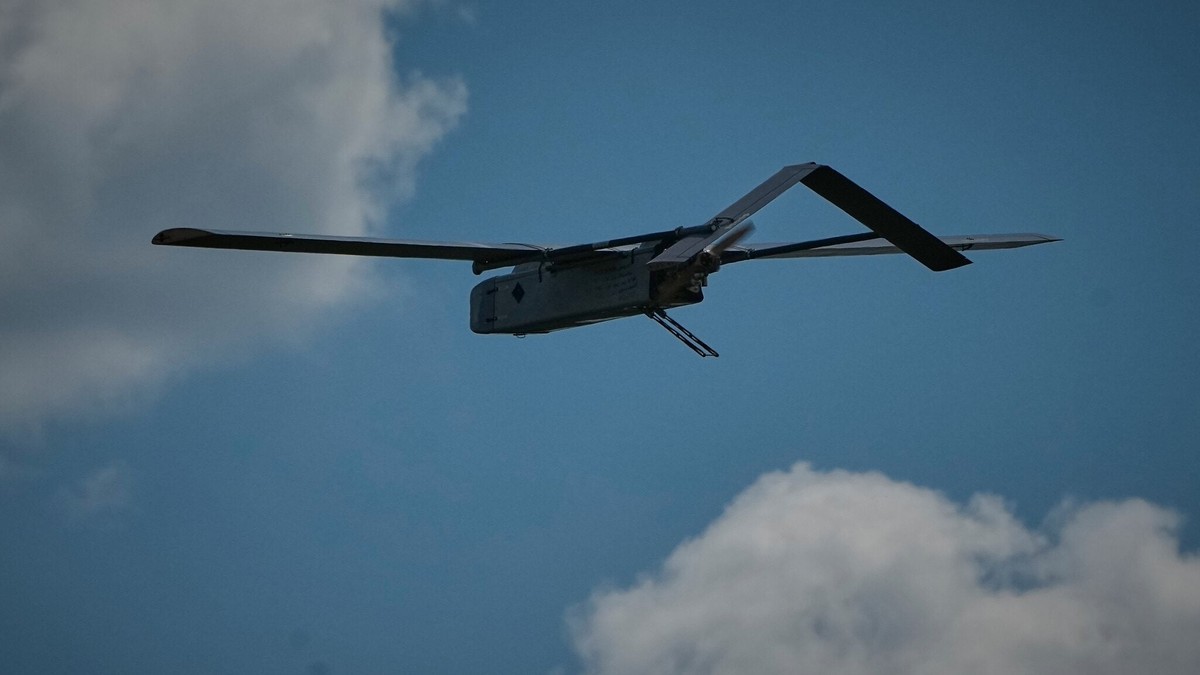
None of this is speculative. Ukraine reported in July, for the first time, that Russia had used an AI-guided drone to strike a propane tank at a fuel station in Zaporizhzhia, in an account carried by The Guardian. Agence France-Presse reports that Russia has reportedly used fully autonomous drones to deadly effect, while Ukraine's own defence industry is pushing to build autonomous drone swarms. President Volodymyr Zelenskyy has warned about the speed of the technology and argued the war needs to end before AI takes over the battlefield. The practical line between autonomy and human control is often a setting rather than a switch, and the setting can be moved. That is why the mandate argument is not academic. Rules written after the systems are entrenched are rules written around them.
When the Software Picks the Target
The case that hangs over the debate is not an autonomous weapon at all, and that is the point. The Guardian reported that the US bombing of a school in Minab, Iran, on 28 February killed at least 175 people, and that the targeting included input from the Maven AI system operated by Palantir. The Guardian's account said Maven did not flag that the site had been a school for 10 years, and that no one reviewing the target data caught it either. That is AI-assisted targeting, not a machine deciding on its own, and conflating the two weakens the case rather than strengthening it. The UN High Commissioner for Human Rights, Volker Türk, made the narrower argument on Friday: "A machine must never have the power to decide whether a human being survives or dies." Machines, he said, do not weigh a human life or read context the way people do.
What Happens Between Now and Friday
The work is scheduled. Main Committee II takes up lethal autonomous weapons systems on Tuesday afternoon, prepares the final document on Wednesday and continues on Thursday, with a press conference from disarmament chief Izumi Nakamitsu on Wednesday morning. Anything that emerges has to clear consensus, which means one delegation can stop the room, as Russia did on day one. Three outcomes are live: a mandate to negotiate, a weaker procedural decision, or nothing. Stop Killer Robots notes that states serious about a treaty have a second route, talks under Article 8 of the convention or through the General Assembly, outside a room where a single objection can freeze everything. "The Convention on Conventional Weapons was created to address emerging threats," said the group's director, Nicole van Rooijen, "and this Review Conference should show that it still can." Five days to find out.
By Jessica Ali, Staff Writer
This article was produced with AI-assisted research and editorial support. Photographs: Fabrice Coffrini/AFP (the conference hall in Geneva on November 16); Firdia Linsawati/POOL/AFP (Guterres in Manila); Efrem Lukatsky/AP (the Ukrainian FP-1 drone). Sources: United Nations News, United Nations Office at Geneva, United Nations Office for Disarmament Affairs, Agence France-Presse, Reuters, The Guardian, Human Rights Watch, Amnesty International, Stop Killer Robots, the International Committee of the Red Cross, the Office of the UN High Commissioner for Human Rights, the Future of Life Institute, Just Security.
What's Your Reaction?
 Like
0
 Dislike
0
 Love
0
 Funny
0
 Wow
0
 Sad
0
 Angry
0

Editor-in-Chief at Global1.News. Atlanta-based journalist who cuts through the BS and tells it like it is. Lead anchor, host, and the voice you hear when the spin stops and the truth starts.











Comments (0)