
US-Iran Blockade Standoff Deepens as Energy War Threatens Global Economy
Washington vows to sustain an indefinite naval blockade of Iran as cease-fire talks stall, while Tehran retaliates against Gulf shipping through the Strait of Hormuz. Analysis of oil stockpiles, IEA reserves, SPR depletion, and the risks of a widening regional war.
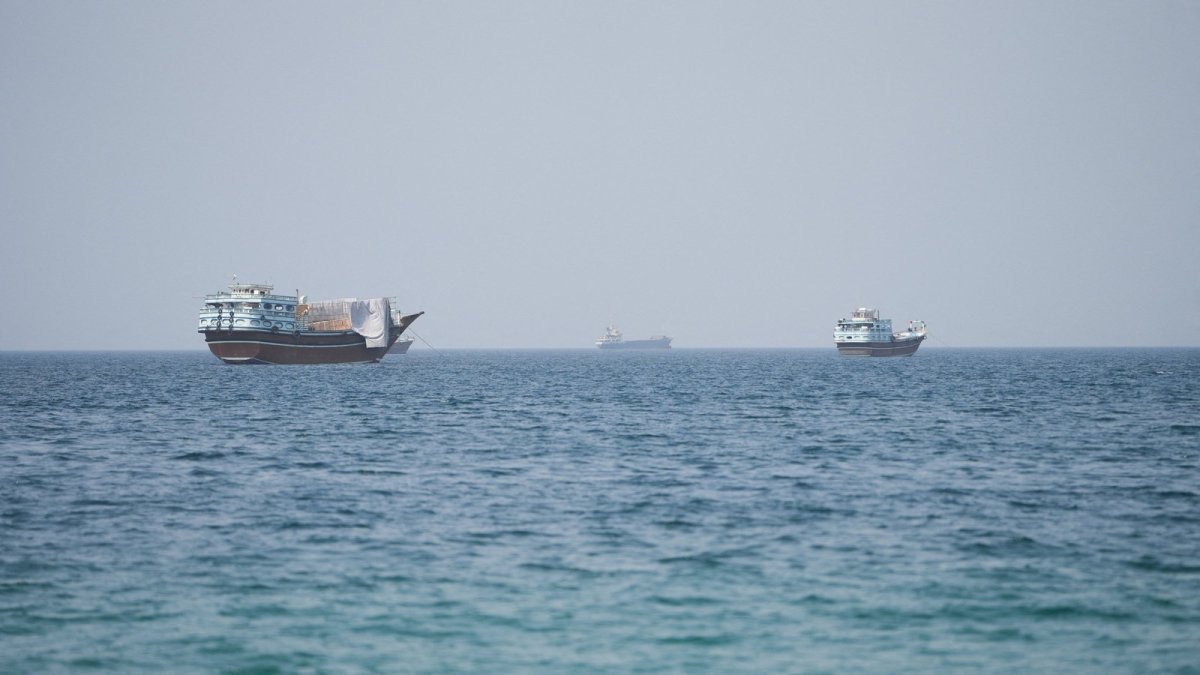
The eastern Mediterranean and Gulf waters have become the fulcrum of a high-stakes economic confrontation, with Washington's pledge to sustain a naval blockade of Iran indefinitely colliding head-on with Tehran's determination to control the Strait of Hormuz. The standoff, now entering its seventh month, has transformed from a regional military conflict into a global energy-security crisis that threatens to reshape the strategic calculus of every nation from Riyadh to Beijing. As the United States doubles down on economic pressure and Iran retaliates against Gulf shipping, the world's oil markets are bracing for a supply shock that could rival the 1979 Iranian revolution in its cumulative impact.
US-Iran Blockade Standoff Deepens as Energy War Threatens Global Economy
Panama City – August 14, 2026 — The United States said Thursday it could sustain a naval blockade of Iran indefinitely while stepping up economic pressure on Tehran as ceasefire talks stall, global oil supplies tighten and tensions across the region escalate.
The Blockade Announcement and US Military Posture
Defense Secretary Pete Hegseth delivered a stark message from Panama City on Thursday, asserting that the United States Navy possesses the capacity to enforce the naval blockade of Iran indefinitely. "We'll rotate ships in and out, as we have, and we'll continue to," Hegseth told reporters, signaling that the Pentagon views the blockade as a sustainable long-term operation rather than a temporary measure. This declaration came as Treasury Secretary Scott Bessent promised unprecedented economic measures against Tehran, stating, "Watch this space for more announcements coming next week because we are going to apply measures like have never been seen in the history of economic isolation on a country."
The dual-track approach of military persistence and financial strangulation reflects a White House calculation that economic attrition will eventually force Iran back to the negotiating table. However, the pressure campaign has thus far failed to achieve its primary objective, with Tehran showing no signs of returning to diplomacy. The blockade, which was briefly lifted for a month in mid-June before being reimposed, has cut off Iran's primary source of hard currency, compounding earlier losses from wartime strikes on its energy infrastructure.
Iran's Leverage: The Strait of Hormuz as a Strategic Weapon
Tehran has responded to the blockade by weaponizing the Strait of Hormuz, through which one-fifth of the world's oil and liquefied natural gas traveled before the war began in February. Iranian forces have attacked vessels attempting to transit the strategic waterway, demonstrating that the Islamic Republic retains significant capacity to disrupt global energy flows despite the naval cordon. President Donald Trump has repeatedly asserted that the United States has "total control" over the strait, a claim that Tehran has categorically denied.
Iran's position remains uncompromising: the waterway will not reopen until its conditions are met, including the removal of economic sanctions and the release of frozen Iranian assets. The impact on shipping has been dramatic, with traffic through the strait falling to just eight vessels on Tuesday, compared with a 10-day average of about 12 vessels and 130 to 140 ships before the war. This represents a collapse of over 90% in normal traffic levels, underscoring the severity of the disruption to global trade routes.
ADNOC Vessel Attacks and Gulf State Stakes
The escalation took a dangerous turn Thursday evening when two vessels operated by state-owned Abu Dhabi National Oil Co. (ADNOC) were attacked while transiting the strait, according to the UAE state news agency WAM. The United Arab Emirates government condemned the incident as an Iranian attack, marking a significant escalation that directly implicates Gulf states in the conflict. The targeting of ADNOC vessels represents a calculated message from Tehran: no Gulf state is immune from the consequences of supporting the US-led blockade.
For the UAE and its Gulf neighbors, the stakes could not be higher. These nations have spent decades building their economies on the foundation of secure energy exports, and the current crisis threatens to undo years of diversification efforts. Saudi Arabia, the UAE, and Qatar all face the prospect of prolonged disruption to their primary revenue streams, while their strategic partnerships with Washington have drawn them into a conflict that increasingly resembles a regional economic war.
The Failed Diplomatic Track: From Ceasefire to Stalemate
The current crisis represents the collapse of multiple diplomatic initiatives that sought to resolve the conflict peacefully. A tentative June deal to end the war lies in tatters, while the April ceasefire that ended high-tempo bombing of Iran in exchange for peace negotiations has failed to produce a lasting resolution. When asked whether declaring that ceasefire was a mistake, Hegseth declined to comment, stating only, "We're doing exactly what we need to, to ensure that Iran never has a nuclear weapon."
Washington had previously indicated it would lift the blockade once Iran and Oman, which sit on either side of the strait, reach an agreement to restore commercial shipping. However, no such agreement has materialized, and the diplomatic track appears moribund. The failure of these initiatives reflects a fundamental impasse: the United States demands guarantees on Iran's nuclear program, while Tehran insists on the complete removal of economic sanctions before any substantive negotiations can begin.
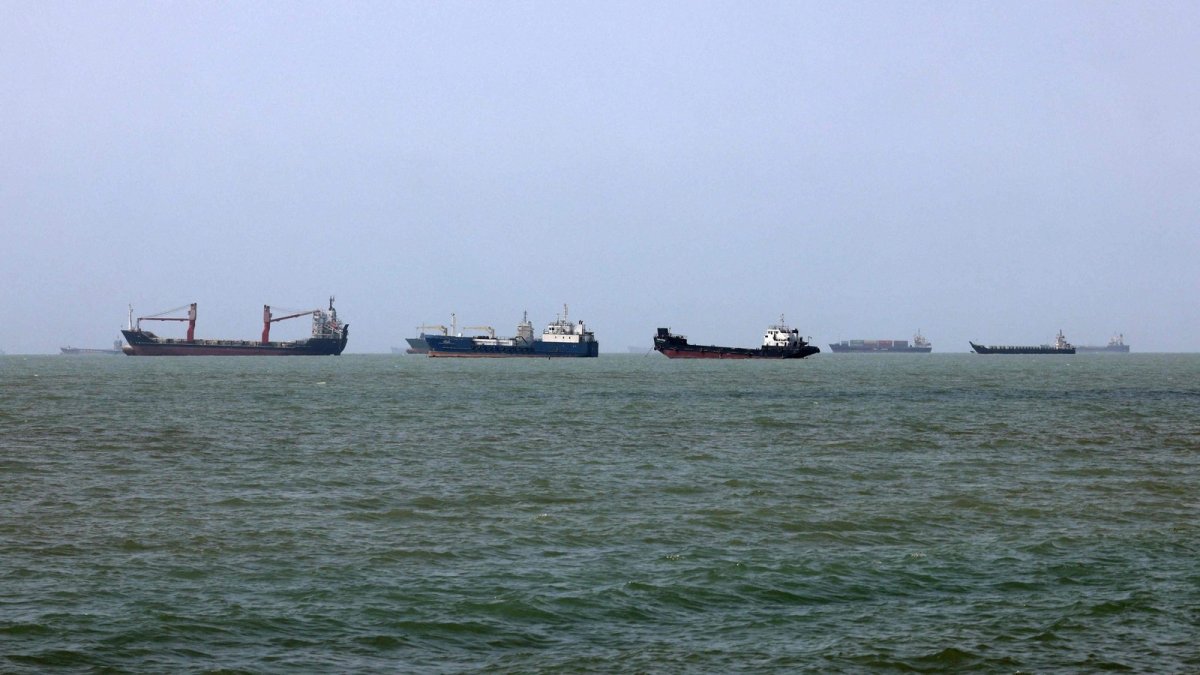
The Oil Stockpile Math: IEA Reserves, SPR, and China's Buffer
The sustainability of the blockade and Iran's countermeasures ultimately depends on the world's ability to absorb the supply shock. Saudi Aramco's leadership estimates the world has lost 2.6 billion barrels of oil since the war began, making it the largest supply disruption in cumulative terms apart from the 1979 Iranian revolution. This represents a massive 25 days of global consumption based on pre-war demand of 103 million barrels per day.
The International Energy Agency announced a release of 400 million barrels from emergency reserves in March, but the math is sobering. IEA stocks, comprising both government-held and commercial reserves, stand at 1.5 billion barrels, enough to cover the current estimated supply gap of 5 million barrels per day for 300 days. However, the IEA cannot order the release of commercial stocks held by refiners for operational reasons, leaving only 0.9 billion barrels in government-held stocks, sufficient for just 180 days.
The United States presents an even more concerning picture. Crude oil stocks in the Strategic Petroleum Reserve have fallen to their lowest levels since January 1983, and the Government Accountability Office warned in May that a quarter of the reserves are no longer available due to deteriorating infrastructure. Analysts from Rapidan Energy suggest this means over 100 million barrels have become impossible to release, leaving the US with perhaps only 200 million barrels of accessible SPR stocks, covering just 40 days of the current supply gap.
Market Impact and Global Economic Consequences
The International Energy Agency has revised its forecast sharply upward, now projecting that global oil supply will fall by 4.3 million barrels per day, or about 4%, this year, compared with a forecast of 3.7 million barrels per day just a month ago. Despite this, oil prices settled more than 2% lower Thursday after a week of gains, as investors focused on signs of weaker global demand and a sharp increase in US crude inventories. This price action suggests markets are beginning to price in demand destruction as the conflict drags on.
Global economists have forecast a sharp drop in global growth as a result of the war, with the potential for a swing into recession in some areas. The depletion of inventories has reduced the buffer against supply shocks, leaving the oil market vulnerable to sharp price rises, according to Hamad Hussain from Capital Economics. Global stocks of diesel and jet fuel are at the bottom of their five-year range, with the wars damaging Middle Eastern and Russian refineries and hitting these products particularly hard.
Regional Escalation Risks: Houthis and Saudi Aramco
The conflict's geographic scope continues to expand, with reports that Yemen's Iran-backed Houthis have targeted a Saudi Aramco refinery with drones, unsettling markets and renewing concerns about a widening regional war. This development, combined with the earlier disruption of the Kazakh CPC pipeline by Ukrainian drones, which pumped 1.8 million barrels per day, demonstrates how the conflict has created multiple points of vulnerability across the global energy infrastructure.
The Houthi attacks represent a particularly dangerous escalation vector, as they threaten to draw Saudi Arabia more directly into the conflict. Riyadh has thus far maintained a delicate balancing act, supporting the US blockade while seeking to avoid direct military confrontation with Iran. However, attacks on Saudi energy infrastructure could force the kingdom's hand, potentially triggering a broader regional conflagration that would have catastrophic consequences for global energy markets.
Strategic Calculus and Outlook
The strategic calculus for all parties remains fraught with risk. President Trump faces intense domestic pressure to end a war that is deeply unpopular, with high fuel prices weighing on his approval ratings and potentially eroding his party's control of Congress in November's midterm elections. Yet he has repeatedly threatened to escalate military strikes and "hit Iran hard," while simultaneously suggesting he would rely on economic means rather than military action.
Iran, for its part, has demonstrated remarkable resilience in the face of economic pressure, maintaining its control over the strait and continuing to attack shipping despite the blockade. Tehran's calculation appears to be that the United States will eventually tire of the economic costs and domestic political pressure, forcing Washington to make concessions. The question of whether China's estimated 1.7 billion barrels of crude reserves, which could cover its pre-war imports through the strait for almost a year, provides Tehran with additional strategic patience remains a critical unknown.
Regional Implications
The prolonged standoff carries profound implications for the broader Middle East. Gulf states, having built their economic diversification strategies on the assumption of stable energy markets, now face an existential challenge to their development models. The conflict has exposed the vulnerability of the region's energy infrastructure and the limits of US security guarantees. For Saudi Arabia, the UAE, and Qatar, the crisis underscores the urgent need to accelerate economic diversification while navigating an increasingly complex security environment.
The blockade has also strengthened Iran's hand in its regional proxy network, with the Houthi attacks demonstrating Tehran's ability to project power beyond its borders. The conflict has created a new reality in which the Strait of Hormuz, long considered a vital artery of global commerce, has become a contested battleground with the potential to trigger a global economic crisis. As the United States and Iran remain locked in a test of wills, the region's future hangs in the balance, with the world's energy security held hostage to the outcome.
By Malik Hassan, Staff Writer
This article was produced with AI-assisted research and editorial support. Reporting is based on sources cited in the article.
What's Your Reaction?
 Like
0
Like
0
 Dislike
0
Dislike
0
 Love
0
Love
0
 Funny
0
Funny
0
 Wow
0
Wow
0
 Sad
0
Sad
0
 Angry
0
Angry
0

Middle East Correspondent at Global1.News. Based in Beirut, covering politics, conflict, energy, and society across the Middle East. Brings context and depth to a region often reduced to headlines.












Comments (0)