
Record Rainfall in Chiba, Japan: At Least 8 Dead, Thousands Stranded at Narita as Historic Storm Hits During Obon Travel Rush
Record rainfall in Chiba, Japan, killed at least 8 and stranded nearly 7,000 at Narita Airport. The JMA issued its first-ever Level 5 warning for the prefecture, with 400,000 evacuated and 20,000 homes without power.
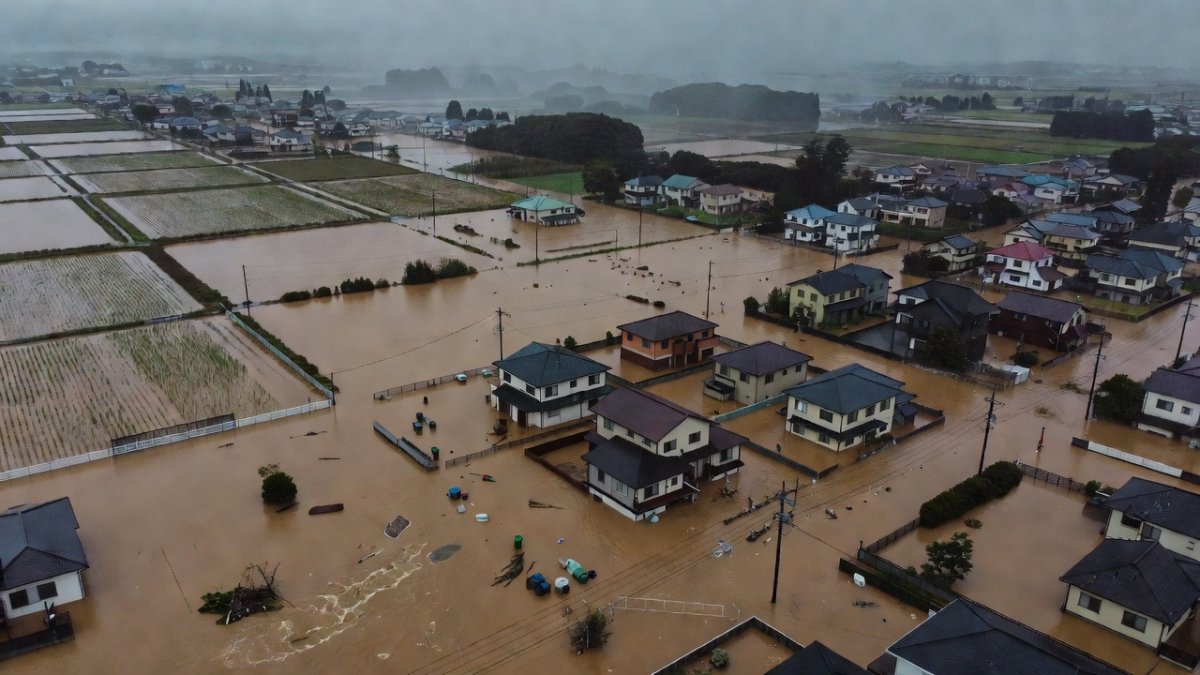
The images coming out of eastern Japan this morning are nothing short of staggering. A wall of water slammed into Chiba prefecture overnight, and the numbers tell a story of a region completely overwhelmed. We are looking at a death toll of at least eight people, with one person still missing, according to reports from the BBC and The New York Times as of August 14. This is not a drill, and it is not a routine typhoon. This is the first time in recorded history that the Japan Meteorological Agency (JMA) has issued its highest-level emergency warning for this specific prefecture, and the consequences are being felt from the hillsides to the runways of one of the world's busiest airports.
A Deluge of Historic Proportions Hits Chiba Prefecture
Let's put the raw data on the table, because the scale of this is difficult to process. The JMA confirmed that more than 360 millimeters, roughly 14 inches, of rain fell in a 24-hour period across parts of Chiba. But that figure, as staggering as it is, doesn't capture the sheer ferocity of the downpour. The New York Times reported that the region east of Tokyo received the equivalent of three months' worth of rain in just 12 hours. We are talking about "linear precipitation bands" that dumped well over 100 millimeters of rain per hour in some localized areas. That is not a rainstorm; that is a waterfall falling from the sky.
The physical toll on the ground is severe. The Fire and Disaster Management Agency has confirmed that evacuation orders were issued for more than 400,000 people across Chiba and the neighboring Ibaraki prefecture. These are not suggestions; these are mandatory orders for residents in low-lying and hillside areas where the risk of landslides and flash flooding is acute. The ground is saturated, and authorities are warning that flooding risks remain dangerously high even as the rainfall begins to ease. The Guardian has reported that the danger is far from over, and local governments are urging people not to return to their homes until the all-clear is given.
This is a crisis that has unfolded in one of Japan's most critical logistical zones. Chiba is not just a residential area; it is the home of Narita International Airport, the primary international gateway for Tokyo. When the rain hit with this level of intensity, it didn't just flood streets, it paralyzed the entire infrastructure network. Roads were closed, rail services were suspended, and the airport, which should have been a hub of activity during the Obon holiday week, became a trap for thousands of travelers.
Narita Airport Becomes an Overnight Shelter for Stranded Travelers
The situation at Narita is a humanitarian and logistical nightmare unfolding in real-time. The Guardian is reporting that nearly 7,000 travelers were stranded at the airport overnight, with the BBC confirming "thousands" were affected. Photographs from the AFP show passengers sleeping in crowded terminals, sprawled across floors, and huddled in corners, trying to make the best of a dire situation. One stranded passenger, with nowhere else to go, reportedly returned to the airport after attempting to find alternative accommodation, according to Reuters. This is the reality of a storm that has shut down the region's mobility.
The timing could not be worse. This is the Obon holiday week, one of Japan's busiest domestic travel periods of the year. Millions of people are on the move, visiting family graves and returning to their hometowns. The storm didn't just disrupt a random Tuesday; it hit the very peak of the travel calendar. Rail suspensions and road closures have left people stranded not just at the airport, but across the entire prefecture. The knock-on effect is that thousands have taken refuge in government buildings and public shelters, waiting for the waters to recede.
This is a stark reminder that our modern travel infrastructure is only as strong as the weather systems it operates within. When a Level 5 warning is issued, a designation reserved for situations that pose a major threat to life, the system grinds to a halt. The JMA made the unprecedented decision to issue this highest-level warning for Chiba city and Ichihara, among other areas. It was the first time such a warning has been issued for this prefecture, and it signals that the meteorological community knew this was not a standard event.
Power Outages and Landslides Compound the Crisis
Beyond the airport, the storm has wreaked havoc on the daily lives of hundreds of thousands of residents. Reuters is reporting that power has been knocked out to approximately 20,000 homes. Imagine the chaos of a flood warning combined with no electricity, no lights, no communication, no way to pump water out of basements. The landslides triggered by the relentless rain have snarled roads and rail services, cutting off communities and hampering rescue efforts. The situation in Oamishirosato, a town near Narita, has been particularly dire, with flooding reported around the airport's periphery.
The human cost is the most painful part of this story. The death toll climbing from 4 to 6 to at least 8 in a matter of hours shows how quickly this situation deteriorated. Each number represents a life lost to a wall of water or a collapsing hillside. The one person still missing is a reminder that the search and rescue operations are still ongoing. The Fire and Disaster Management Agency is coordinating efforts, but the conditions remain treacherous. Emergency services are working around the clock, but they are fighting against a natural force that has already demonstrated its lethal potential.
This is not an isolated incident. Japan has repeatedly faced extreme rain events in recent years, and the scientific community has been sounding the alarm. Warmer air holds more moisture, which makes these intense "linear precipitation band" downpours more likely and more violent. The JMA's decision to issue the Level 5 warning for the first time in Chiba is a direct consequence of a changing climate. We are seeing the fingerprints of global warming on this disaster, and it is a pattern that is repeating itself across the globe with increasing frequency.
Government Response: Takaichi Pledges Support for Chiba
In the wake of the disaster, the political response has been swift. Prime Minister Takaichi has pledged government support for the affected areas, according to reports from the Economic Times. This is a critical commitment, as the recovery process will be long and expensive. Rebuilding roads, restoring power, and repairing the damage to homes and businesses will require significant national resources. The government's focus now must be on search and rescue, ensuring the safety of the stranded, and preventing further loss of life.
But the immediate priority is the safety of the 400,000 people under evacuation orders. Local governments have opened shelters, but the sheer volume of people is straining resources. The message from authorities is clear: heed the evacuation orders. Do not risk your life to save property. The water is still high, the ground is still unstable, and the risk of additional landslides remains a serious threat. The Guardian has reported that authorities are warning that flooding risks remain high despite the easing of rain, which means this is not the time for complacency.
For the travelers stranded at Narita, the wait is agonizing. The airport is working to accommodate them, but the reality is that they are at the mercy of the weather. Flights cannot depart or arrive until the runways are safe and the air traffic control systems are fully operational. The backlog will take days to clear, and the disruption to the global travel network will be felt for weeks. This is a stark reminder of how interconnected our world is, and how a single weather event in one prefecture can ripple across the globe.
The Climate Connection: Why Japan's Rainstorms Are Getting More Extreme
The Japan Meteorological Agency issued its highest-level Level 5 warning for heavy rain and landslides for Chiba prefecture for the first time ever. This is not a routine advisory; it is the most severe alert the agency can issue, and it signals a threat to life. The trigger was a series of "linear precipitation bands" that dumped well over 100 millimeters of rain per hour in localized areas, with more than 360 mm-about 14 inches-falling in a single 24-hour period.
The New York Times reported that the region east of Tokyo received three months' worth of rain in just 12 hours. That is the kind of statistic that should stop you cold. Scientists have repeatedly warned that warmer air holds more moisture, making intense short-duration downpours more likely. This is not speculation; it is the physical reality of a warming atmosphere, and it is playing out in real time over Japan.
Japan has endured repeated extreme rain disasters in recent years, including deadly floods and landslides. The JMA's unprecedented Level 5 alert for Chiba is a stark reminder that the baseline has shifted. We are no longer talking about rare, freak events. We are talking about a pattern, and the science says it will not relent. This is the new normal, and we must treat these warnings with the gravity they deserve.
The Road to Recovery: A Long Cleanup Ahead
Evacuation orders covered more than 400,000 people in Chiba and Ibaraki prefectures, according to the Fire and Disaster Management Agency. About 20,000 homes lost power, and roads and rail services were snarled by landslides and flooding. Nearly 7,000 travelers were stranded at Narita airport overnight, and the backlog there will take days to clear, rippling through global travel. Prime Minister Takaichi has pledged government support, but the scale of this mess is immense.
The immediate danger has not passed. Authorities are warning that flooding risks remain high even as the rain eases, and they are urging residents to heed evacuation orders until the all-clear is given. This is not a time for complacency. The ground is saturated, rivers are swollen, and the next wave of water could come from a hillside that looks stable but is not.
Here is the practical message, and I cannot stress this enough: heeding warnings saves lives. The people who left their homes when told to do so are safe. The people who stayed behind are the ones we worry about. The cleanup will be long, and the disruption will be felt for weeks, but the most important thing is that everyone gets through this alive. Listen to the authorities. Stay out of harm's way. We will get through this together.
What This Means for the Future of Extreme Weather Preparedness
As we look at the devastation in Chiba, we have to ask ourselves some hard questions. Are we prepared for these events? The JMA's warning system is world-class, and their decision to issue the Level 5 alert likely saved lives. But the fact that this was a "first" for Chiba is a warning sign. We are entering uncharted territory. The infrastructure that we rely on, airports, rail lines, power grids, was not designed for the intensity of rainfall we are now seeing. We need to invest in climate resilience, not just in Japan, but everywhere.
The data points are clear: 360 millimeters of rain, 400,000 evacuation orders, 20,000 homes without power, 7,000 stranded travelers, and at least 8 lives lost. These are not abstract numbers. They represent a community under siege. The recovery will be measured in months, not days. The psychological toll on the residents of Chiba and Ibaraki will be long-lasting. But the resilience of the Japanese people is legendary. They have faced earthquakes, tsunamis, and typhoons, and they have rebuilt every time.
For our readers, the takeaway is this: pay attention to the warnings. Whether you are in Tokyo, Atlanta, or anywhere else on this planet, extreme weather is becoming the new normal. When authorities issue evacuation orders, move. When they tell you to prepare, prepare. The cost of inaction is measured in lives. We are all connected to this story, whether we are stranded at an airport or watching from our living rooms. The climate is changing, and our response must change with it.
As the sun rises over Chiba, the waters may be receding, but the danger is not over. The search for the missing continues, and the cleanup is just beginning. Our thoughts are with the victims and their families. We will continue to monitor this story and bring you the latest updates as they develop. Stay safe, stay informed, and stay prepared.
By Jessica Ali, Staff WriterThis article was produced with AI-assisted research and editorial support. Sources: Reuters, BBC News, The Guardian, The New York Times, Japan Meteorological Agency, Fire and Disaster Management Agency, AFP.
What's Your Reaction?
 Like
0
Like
0
 Dislike
0
Dislike
0
 Love
0
Love
0
 Funny
0
Funny
0
 Wow
0
Wow
0
 Sad
0
Sad
0
 Angry
0
Angry
0

Editor-in-Chief at Global1.News. Atlanta-based journalist who cuts through the BS and tells it like it is. Lead anchor, host, and the voice you hear when the spin stops and the truth starts.













Comments (0)