
Ghana MP Says Gay People and Allies 'Should Be in Prison'
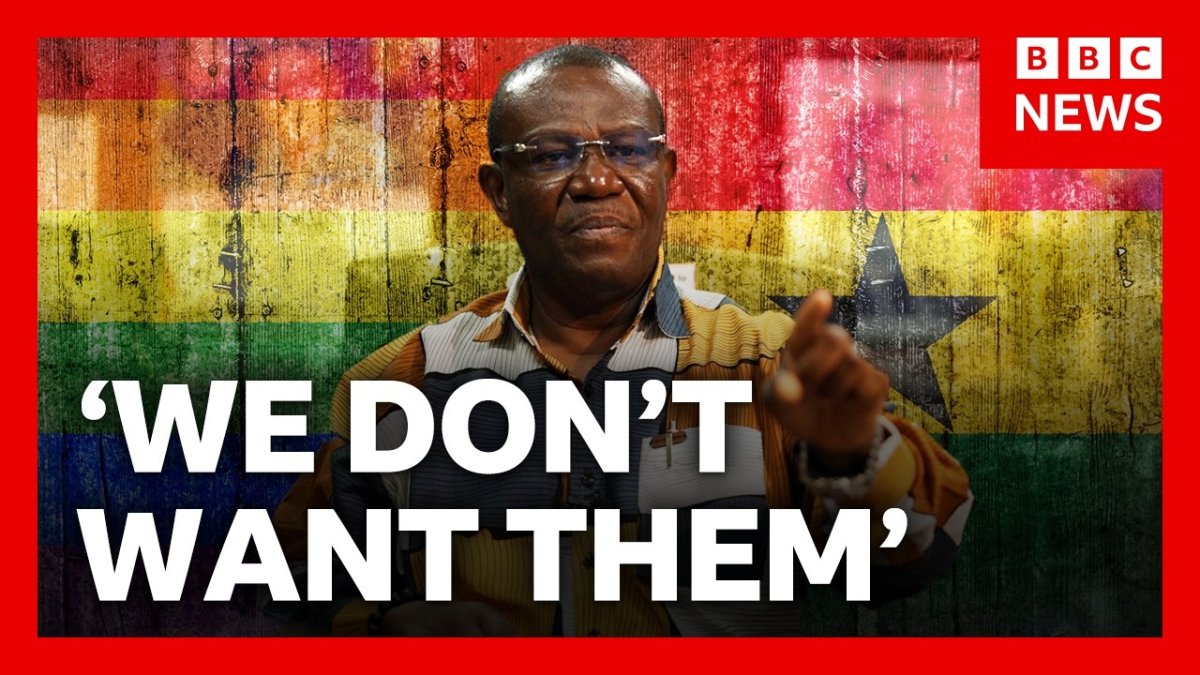
In a recent BBC News report, Ghanaian lawmaker Emmanuel Kwasi Bedzrah offered a blunt defence of his country's newly passed anti-LGBTQ+ legislation, telling the BBC that gay people and their allies "should be in prison" and that the law is meant to protect gay people from being attacked or stoned because of their sexual orientation.
In a recent BBC News report, Ghanaian lawmaker Emmanuel Kwasi Bedzrah offered a blunt defence of his country's newly passed anti-LGBTQ+ legislation, telling the BBC that gay people and their allies "should be in prison" and that the law is meant to protect gay people from being attacked or stoned because of their sexual orientation.
The interview, published on Friday, marks the first major international media appearance by a co-sponsor of the bill since Ghana's parliament passed the Human Sexual Rights and Family Values Bill, 2025, in late May. The legislation, which criminalises homosexuality and the promotion of LGBTQ+ activities, now sits on the desk of President John Dramani Mahama, who must decide whether to sign it into law or send it back to parliament for further scrutiny.
Ghana's Anti-LGBTQ+ Bill: MP Says Gay People 'Should Be in Prison'
Accra, Ghana – 14 August 2026 — Ghana's parliament passed sweeping anti-LGBTQ+ legislation in May, and now one of its chief architects is defending the law in stark terms. In an interview with the BBC's religion editor Aleem Maqbool, MP Emmanuel Kwasi Bedzrah said gay people and their supporters belong behind bars, while insisting the law actually protects LGBTQ+ individuals from vigilante violence.
The MP Who Wants Gay People Out
Emmanuel Kwasi Bedzrah, the National Democratic Congress (NDC) MP for Ho West and a co-author of the bill, did not mince words in his BBC interview. When asked about gay people and their allies, he responded directly: "You should be in prison." He then offered a grim hypothetical to justify the legislation, arguing that without legal prohibition, violence would be inevitable. "So, let me tell you, if a man is kissing another man and somebody else sees it outside, because our culture frowns on it, what will happen? If you are not careful, that man will stone the two of you," he said. The MP framed the law as a protective measure, adding: "So, to prevent that, we said let there be a law, so that nobody will see you doing something against the cultural norm of the society." He concluded with a pointed message to Ghana's LGBTQ+ community: "So, why don't they respect our culture? If you want to be gay, be gay forever; don't bring it to our society."
Bedzrah's commitment to the bill has been unwavering. In April, he issued a public ultimatum: the bill must be passed and assented to before the next election, or he would not return to Parliament. That threat carried weight, given his position as a sitting NDC MP in a government led by President Mahama, who has expressed personal support for the legislation's underlying principles. Bedzrah's role as co-sponsor places him at the centre of one of the most contentious pieces of legislation in Ghana's recent history, and his willingness to speak candidly to international media suggests he is prepared to defend the law on the world stage, regardless of the diplomatic consequences.
The MP insists the law protects gay people from vigilante violence, a claim that human rights organisations have sharply contested. Critics argue that by criminalising LGBTQ+ identity itself, the bill creates a climate of fear and legitimises discrimination, rather than preventing the attacks Bedzrah describes. His assertion that imprisonment is an appropriate outcome for gay people and their allies has drawn particular condemnation from international observers, who note that the law's "duty to report" provisions effectively deputise every Ghanaian citizen as an enforcer of sexual norms.
What the Bill Actually Says
The Human Sexual Rights and Family Values Bill, 2025, is sweeping in its scope. It proposes up to three years' imprisonment for anyone identifying as lesbian, gay, bisexual, transgender or queer. The legislation also introduces a "duty to report" clause, requiring citizens to report prohibited acts to police, effectively compelling Ghanaians to surveil their neighbours, colleagues and even family members. People who identify as "allies" — supporters of LGBTQ+ people — could also face prison time under the bill's broad provisions, which criminalise not just same-sex acts but the very expression of LGBTQ+ identity and solidarity.
The bill does contain exemptions, though their practical application remains unclear. Legal professionals providing advice or representation, journalists and media organisations reporting on LGBTQ+ issues, and medical professionals offering surgical, psychological or counselling services are all carved out from prosecution. The bill's sponsor, Reverend John Ntim Fordjour, has defended these provisions, arguing that the legislation protects Ghanaian family and cultural values while making existing laws "more robust, more encompassing and more stringent" in dealing with LGBTQI practices. Fordjour, a Presbyterian minister and MP, has framed the bill as a moral necessity, drawing on religious and cultural arguments that resonate with significant segments of Ghanaian society.
Mahama's Delicate Balancing Act
President John Dramani Mahama now faces one of the most consequential decisions of his presidency. The bill has been transmitted to his desk for assent, and he must decide whether to sign it into law, return it to parliament with objections, or allow it to lapse. Mahama has publicly indicated support for the legislation's underlying principles, stating after taking office: "I believe in the principles and values that only two genders exist – man and woman - and that marriage is between a man and a woman." That statement, delivered early in his term, suggested the bill would receive his signature without hesitation.
But in June, Mahama signalled a more cautious approach. He told reporters that the bill is not close to becoming law and faces procedural hurdles, adding that it would be scrutinised before approval. This apparent shift reflects the delicate political calculus facing the president. On one hand, he faces intense pressure from religious leaders, traditional authorities and conservative factions within his own NDC party to sign the bill promptly. On the other, he must weigh the international criticism that would inevitably follow, including potential economic consequences from Western donors and investors who have increasingly made human rights a condition of their engagement with African nations.
Human Rights Groups Push Back
Human Rights Watch has been unequivocal in its condemnation of the legislation. In a formal submission to the constitutional and legal affairs committee in Accra, the organisation sharply criticised the bill, saying it places LGBTQ+ peoples' lives at risk while "encouraging citizens to surveil and denounce one another." The submission recommended that the bill be abandoned entirely, arguing that its provisions violate fundamental human rights protections enshrined in Ghana's constitution and international treaties to which the country is a signatory. The organisation's warning that the law could lead to violence against LGBTQ+ people echoes the very scenario Bedzrah claims the bill is designed to prevent.
The Minority Caucus in parliament has also voiced strong opposition, though their objections are procedural rather than principled. The caucus argued that the amendments made to the bill suggest the original version submitted to former President Nana Akufo-Addo for assent was flawed. This line of attack implies that the bill's sponsors rushed the legislation through without adequate drafting, potentially leaving it vulnerable to legal challenges. The Minority Caucus's position is notable because it shifts the debate from the bill's content to its process, a strategy that may ultimately prove more effective in delaying or derailing the legislation than direct opposition to its provisions.
A Regional Wave of Anti-LGBTQ+ Legislation
Ghana's bill is not an isolated development. Across West and East Africa, a wave of anti-LGBTQ+ legislation has swept through parliaments in recent years, driven by a combination of religious conservatism, cultural traditionalism and political opportunism. Senegal's parliament approved similar legislation in March, prescribing a maximum prison term of 10 years for same-sex acts and criminalising the "promotion" of homosexuality. Uganda went further in 2023, introducing the death penalty for certain same-sex acts, a law that drew international condemnation and prompted sanctions from Western governments.
Ghana's own legal history is deeply intertwined with this regional pattern. Same-sex relationships have been banned in the country under laws dating from the British colonial era, remnants of a legal system imposed by a foreign power that has since been embraced by post-independence governments. A similar bill in 2024 did not become law after former President Akufo-Addo failed to sign it amid legal challenges, leaving the legislation to lapse. This year's reintroduction and passage represents a determined effort by the bill's sponsors to overcome the procedural obstacles that derailed their previous attempt, and the exemptions for legal professionals, journalists and medical workers suggest they have learned from the legal challenges that plagued the 2024 version.
Analysis and Implications
The passage of this bill has profound implications for ordinary Ghanaians, particularly those who identify as LGBTQ+. For them, the law transforms a hostile social environment into a legally sanctioned one, where their very identity is a crime and their neighbours are legally compelled to report them to police. The "duty to report" provision is particularly insidious, as it weaponises community relationships and creates an atmosphere of suspicion and fear. For the broader population, the law raises questions about the limits of state power over personal identity and the role of religion in shaping public policy in a country that is officially secular but deeply religious in practice.
The international dimension cannot be ignored. Ghana has long been viewed as a stable democracy in a volatile region, and its human rights record has been a point of pride for many Ghanaians. This legislation threatens to undermine that reputation, potentially affecting donor relationships, foreign investment and diplomatic standing. Western governments and international organisations have increasingly made human rights a condition of their engagement, and the growing divide between African cultural conservatism and Western liberal norms shows no signs of narrowing. The bill's sponsors appear willing to accept these consequences, framing their position as a defence of sovereignty and cultural authenticity against foreign imposition.
The bill now sits on the president's desk, and what happens next depends on Mahama's signature and the courts. If he signs, the law will take effect and almost certainly face immediate legal challenges from civil society organisations. If he returns it to parliament, the bill's sponsors will need to address the procedural concerns raised by the Minority Caucus. Either way, the debate over LGBTQ+ rights in Ghana is far from over, and the outcome will resonate far beyond the country's borders. For now, the world watches and waits, as a nation of 33 million people confronts a question that goes to the heart of what kind of society it wants to be.
By Irina Volkov, Staff Writer
This article was produced with AI-assisted research and editorial support. Reporting is based on sources cited in the article.
What's Your Reaction?
 Like
0
Like
0
 Dislike
0
Dislike
0
 Love
0
Love
0
 Funny
0
Funny
0
 Wow
0
Wow
0
 Sad
0
Sad
0
 Angry
0
Angry
0

Russia/Eastern Europe Correspondent at Global1.News. Covering Russian politics, energy, security, and the shifting dynamics of the post-Soviet space. Provides clear-eyed analysis on one of the world's most opaque regions.










Comments (0)