
U.S. Alcohol Sales at Risk After Canada Trade Talks Collapse
In a recent CBC News report, the collapse of Canada-U.S. trade negotiations was laid bare, with alcohol emerging as a central flashpoint in a dispute that now threatens to reshape the economic relationship between the two countries. For Canadians, the implications extend far beyond the liquor store shelf, touching on provincial jurisdiction, manufacturing jobs, and the very notion of national sovereignty in the face of aggressive American trade policy.
In a recent CBC News report, the collapse of Canada-U.S. trade negotiations was laid bare, with alcohol emerging as a central flashpoint in a dispute that now threatens to reshape the economic relationship between the two countries. For Canadians, the implications extend far beyond the liquor store shelf, touching on provincial jurisdiction, manufacturing jobs, and the very notion of national sovereignty in the face of aggressive American trade policy.
Trade Talks Collapse: 50 Per Cent Tariffs Loom as Alcohol Becomes a Flashpoint in Canada-U.S. Relations
Ottawa, Ontario – This week — The collapse of Canada-U.S. trade talks on Friday night has set the stage for a dramatic escalation in the ongoing tariff war, with steep new duties poised to take effect on both sides of the border. The breakdown in negotiations, which had been ongoing for months, means that American consumers will soon face significantly higher prices for Canadian goods, while Canadian provinces are bracing for the economic fallout of a 50 per cent tariff on a wide swath of exports.
Negotiations Fail: A Breakdown of the Talks
The talks, which had been described by insiders as tense and fraught with difficulty, ultimately unravelled over fundamental disagreements on market access and tariff structures. U.S. President Donald Trump has imposed 50 per cent tariffs on Canadian goods, a move that affects roughly $20 billion worth of Canadian imports. The list of affected products is extensive and touches the daily lives of Canadians and Americans alike: wine, furniture, dairy products, cement, clothing, fishing rods and hockey equipment are all now subject to the punitive duties. Reports also indicate that the scope could be even broader, with some estimates suggesting that $28-30 billion worth of Canadian goods across more than 500 product categories could be impacted.
Prime Minister Mark Carney responded swiftly and firmly, announcing that Canada would retaliate "dollar for dollar" with tariffs on U.S. goods, with the counter-measures set to begin on Sept. 8, immediately following Labour Day. In a statement that underscored the gravity of the situation, Carney said, "We were not prepared to compromise Canada's sovereignty or undermine our key industries." He characterised the American position as one that asked "too much, offered too little," a sentiment that appears to reflect the fundamental impasse that led to the collapse of the negotiations.
Alcohol at the Centre of the Storm
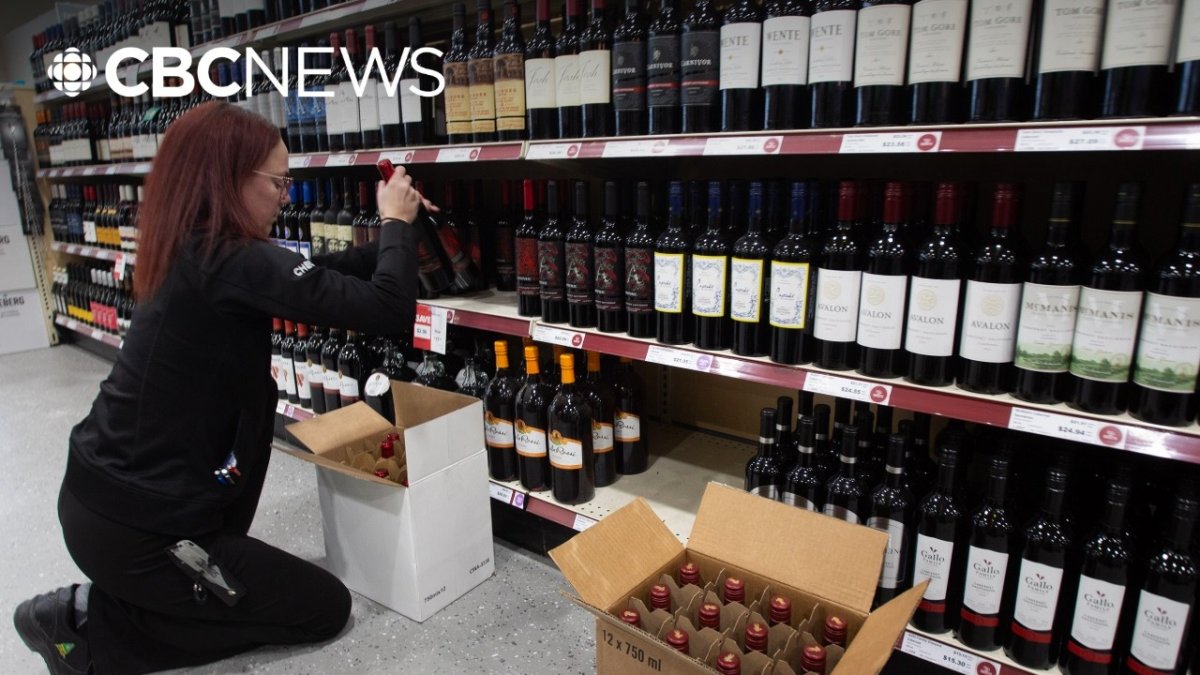
Alcohol has taken centre stage during this week's tariff talks, with businesses on both sides of the border caught in the middle. Canadian liquor is among the products facing the new 50 per cent U.S. tariffs, a development that threatens to decimate a sector that has already been struggling under the weight of previous trade actions. The CBC News video report highlights what the collapse of trade talks means for U.S. alcohol sales, painting a picture of an industry that is facing an uncertain future.
The roots of this particular conflict run deep. Canadian provinces have kept U.S. spirits off retail shelves for more than a year, since March 2025, in response to earlier U.S. tariffs. This "Buy Canadian" response, led by provincial liquor boards including Ontario's LCBO, has been a powerful symbol of Canadian resistance to American trade aggression. The provincial bans have had a profound effect on the American spirits industry, which has seen its once-lucrative Canadian market evaporate almost overnight.
American Distillers Feel the Pinch
Chris Swonger, president and CEO of the Distilled Spirits Council of the United States (DISCUS), said the new tariffs are the direct result of Canadian provinces continuing to keep U.S. spirits off retail shelves. "We appreciate the administration's recognition that American distillers have been unfairly targeted by these Canadian provincial sales bans," Swonger said. However, he also acknowledged that the damage to the industry's reputation and market position may be long-lasting, noting that regaining consumer loyalty will take time.
The numbers tell a stark story. The Distilled Spirits Council told a U.S. federal trade panel, the Section 301 Committee under the Office of the U.S. Trade Representative, that Canada's provincial bans erased $536 million in U.S. export revenue in 2025. The overall decline is even more dramatic: total U.S. alcohol exports to Canada fell from $744 million in 2024 to just $208 million in 2025. The breakdown by category is equally sobering — wine exports plummeted from $460 million to $103 million, distilled spirits dropped from $238 million to $89 million, and beer fell from $47 million to $17 million.
The trade frictions have had a ripple effect throughout the American economy. Domestic U.S. spirits sales recorded their first decline in decades, and the industry has been forced to shed jobs as distillers grapple with the loss of their northern market. For many small and medium-sized distilleries, the Canadian market was a significant source of revenue, and its loss has been keenly felt.
Canadian Workers and the Manufacturing Sector Brace for Impact
While the American spirits industry is suffering, the new 50 per cent tariffs on Canadian goods pose an existential threat to Canadian manufacturing. Economist Trevor Tombe of the University of Calgary has conducted analysis indicating that tens of thousands of Canadian jobs could be lost if the tariffs persist. The sectors most at risk are those that rely heavily on exports to the United States, including the automotive industry, forestry, and agriculture.
Lana Payne, national president of Unifor, Canada's largest private-sector union, said the Trump administration is purposely targeting Canada's manufacturing sector. Payne's assessment reflects a growing concern among Canadian labour leaders that the tariffs are not simply a negotiating tactic but rather a deliberate strategy to weaken Canada's industrial base. The union, which represents workers in a wide range of industries, has been vocal in its support for the federal government's retaliatory measures, even as it acknowledges the pain that the trade war will inflict on its members.
The impact on Canadian workers is not just an economic issue; it is a deeply personal one for the thousands of families who depend on manufacturing jobs for their livelihoods. Communities across Ontario, Quebec, and the Prairie provinces are bracing for potential layoffs and plant closures as the tariffs take effect. The federal government has promised support for affected workers, but the details of any assistance package remain unclear.
Provincial Liquor Boards and the Buy Canadian Movement
The role of provincial liquor boards in this dispute cannot be overstated. The LCBO, along with its counterparts in other provinces, has become a powerful tool of Canadian trade policy. By removing American spirits from their shelves, these provincial agencies have effectively shut off a major distribution channel for U.S. distillers. The "Buy Canadian" sentiment that has swept the country in response to the tariffs has been a unifying force, bringing together Canadians of all political stripes in a show of national solidarity.
However, the provincial bans have also created complications. The federal government's "dollar for dollar" retaliation strategy relies on the cooperation of the provinces, and there have been tensions over how the burden of the trade war should be shared. Some provinces have been more aggressive in their response than others, leading to a patchwork of policies that can be difficult to navigate for businesses on both sides of the border.
For Canadian consumers, the trade war has meant higher prices and fewer choices at the liquor store. The removal of American spirits from provincial shelves has been a visible and tangible reminder of the conflict, and many Canadians have embraced the opportunity to explore domestic alternatives. Canadian wineries and distilleries have reported increased sales as consumers shift their purchasing habits, but the long-term sustainability of this shift remains uncertain.
What Happens Next: A Precarious Outlook
As the Sept. 8 implementation date for Canada's retaliatory tariffs approaches, the outlook for the Canada-U.S. trade relationship is precarious. The collapse of the talks has left both countries in a state of uncertainty, with no clear path forward. The 50 per cent tariffs on Canadian goods are set to take effect immediately, and the impact will be felt across a wide range of industries.
For the alcohol industry, the stakes are particularly high. The American distillers who have lost access to the Canadian market are facing an uncertain future, and the prospect of regaining consumer loyalty in Canada appears increasingly remote. The "Buy Canadian" sentiment that has taken hold is unlikely to dissipate quickly, even if the tariffs are eventually lifted. Canadian consumers have demonstrated a willingness to support domestic products, and many have discovered that Canadian wines, spirits, and beers are of comparable quality to their American counterparts.
The broader economic implications are equally concerning. Economist Trevor Tombe's analysis suggests that the job losses could be in the tens of thousands, a figure that would have a significant impact on the Canadian economy. The manufacturing sector, which has already been struggling with the effects of the pandemic and supply chain disruptions, is particularly vulnerable. The federal government has indicated that it is prepared to provide support, but the scale of the challenge is immense.
Prime Minister Carney's statement that Canada was "not prepared to compromise Canada's sovereignty" reflects a fundamental shift in the country's approach to its relationship with the United States. For decades, Canada has relied on its close economic ties with its southern neighbour, but the current trade war has called that relationship into question. The collapse of the talks has reinforced the view that Canada must diversify its trading partners and reduce its dependence on the American market.
As the situation continues to evolve, one thing is clear: the Canada-U.S. trade relationship has been fundamentally altered. The era of easy cross-border commerce is over, replaced by a new reality of tariffs, retaliatory measures, and economic uncertainty. For businesses on both sides of the border, the challenge now is to adapt to this new reality and find ways to survive in an increasingly hostile trade environment.
The coming weeks and months will be critical. The implementation of Canada's retaliatory tariffs on Sept. 8 will mark a new phase in the conflict, and the response from the United States will determine whether the situation escalates further or begins to de-escalate. For now, the mood on both sides of the border is one of caution and concern, as the full implications of the trade war's collapse become clear.
By Alex Thompson, Staff Writer
This article was produced with AI-assisted research and editorial support. Reporting is based on sources cited in the article.
What's Your Reaction?
 Like
0
Like
0
 Dislike
0
Dislike
0
 Love
0
Love
0
 Funny
0
Funny
0
 Wow
0
Wow
0
 Sad
0
Sad
0
 Angry
0
Angry
0

Canada Correspondent at Global1.News. Based in Toronto, covering Canadian politics, energy, trade, and US-Canada relations. Provides the Canadian perspective on North American and global affairs.















Comments (0)