
More than 5,000 people killed or injured in Haiti due to gang violence this year, UN says
Haiti’s streets have become battlefields, and the human toll is staggering. The grim tally also lists over 230 kidnappings and an estimated 1,000 rapes of women and girls, a number the UN’s Volker Türk warns is likely far higher.
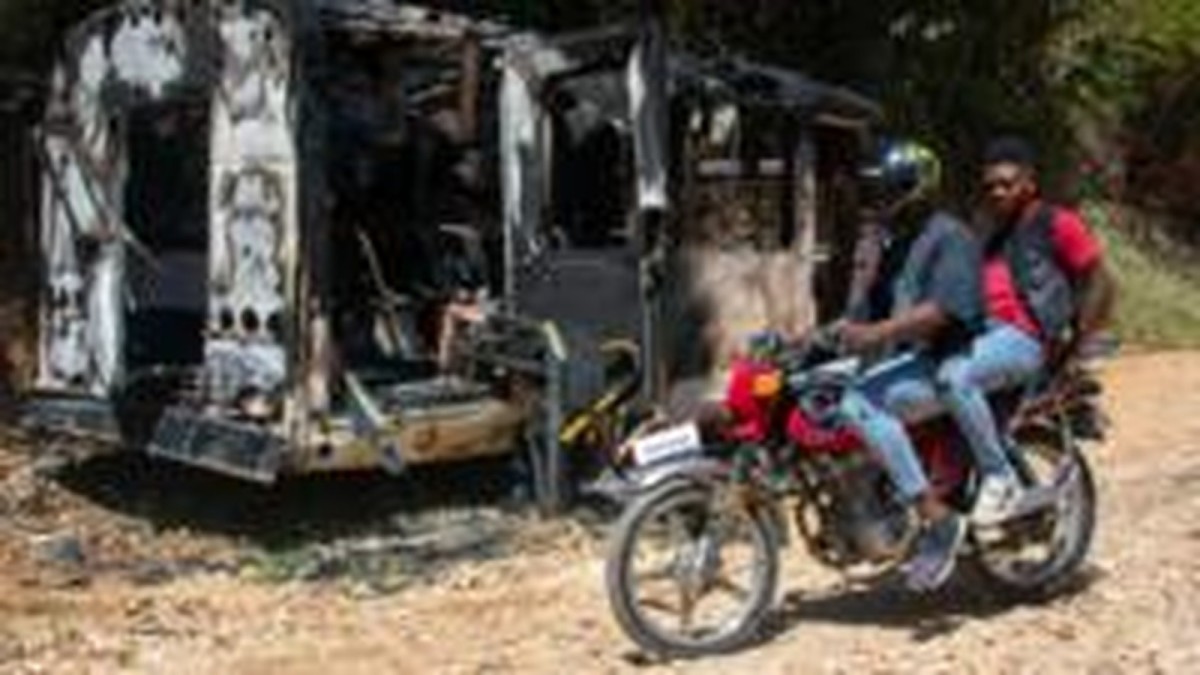
Haiti’s streets have become battlefields, and the human toll is staggering. The United Nations reports that more than 5,700 people have been killed or injured in the first nine months of 2026, a figure that includes victims of gang attacks and casualties from security operations aimed at curbing the same violence. The grim tally also lists over 230 kidnappings and an estimated 1,000 rapes of women and girls, a number the UN’s Volker Türk warns is likely far higher. These statistics are not just numbers; they are a stark reminder that the country’s fragile peace is being torn apart by gangs that have learned to adapt, expand and exploit every power vacuum.
The Scale of the Crisis
When the UN’s High Commissioner for Human Rights, Volker Türk, presented the latest figures, the scale of the crisis was unmistakable. More than 5,700 people killed or injured between 1 January and 11 September 2026 underscores how pervasive the violence has become. The report also highlighted that over half of these casualties occurred during security operations, where stray bullets and explosive drones have indiscriminately hit civilians. This pattern reveals a painful paradox: the very forces tasked with protecting the population are also contributing to the death toll.
Beyond the immediate loss of life, the UN documented a wave of kidnappings—more than 230 people taken by armed groups. Kidnappings have become a tool of intimidation and revenue, further destabilising communities already reeling from daily insecurity. The gendered dimension of the crisis is equally alarming; an estimated 1,000 women and girls have been raped, a figure that Türk insists underrepresents the true extent of sexual violence. The pervasive fear and trauma inflicted by these crimes are reshaping Haitian society, eroding trust in institutions and deepening the chasm between civilians and the state.
Historical Roots and the Power Vacuum
Gang influence in Haiti is not a new phenomenon. For decades, armed groups have carved out territories, exploiting weak governance and chronic poverty. The assassination of President Jovenel Moïse on 7 July 2021 intensified this dynamic, creating a power vacuum that gangs swiftly filled. Türk noted that the murder of Moïse allowed violent factions to seize new territories and control key transport routes, further threatening national stability.
The post‑assassination period saw gangs transition from localized criminal enterprises to quasi‑political actors. Their expansion was facilitated by a lack of coherent state response, allowing them to embed themselves in neighborhoods, markets and even schools. This historical context explains why the current surge in violence feels less like a sudden outbreak and more like a continuation of a long‑standing struggle for control over Haiti’s social and economic arteries.
The Human Cost: Children Caught in the Crossfire
One of the most heartbreaking trends highlighted by the UN is the near‑tripling of child recruitment into gangs. Türk emphasized that for many minors, joining a gang has become a desperate survival strategy. The absence of stable family income, combined with the lure of protection and belonging, pushes children onto a path that exposes them to extreme violence and criminality.
The report underscores a moral imperative: “No child should be forced to choose between their lives and the security of their neighbours.” Yet, the reality on the ground is that children are routinely forced to act as look‑outs, couriers and even combatants. This generational entanglement threatens to perpetuate the cycle of violence long after the current conflict subsides, embedding gang culture into the fabric of Haitian youth.
Security Operations: A Double‑Edged Sword
Security forces, both Haitian and multinational, have intensified operations against gangs, yet the UN notes a paradoxical outcome. While the number of executions carried out by specialised police units has dropped in recent months, the risk of summary executions for those suspected of gang affiliation remains high. This indicates a shift in tactics: from overt, large‑scale killings to more covert, targeted actions that still foster a climate of fear.
Moreover, the reliance on explosive drones and heavy weaponry has resulted in stray bullets striking civilians, amplifying the collateral damage of anti‑gang campaigns. The UN’s observation that more than half of all casualties stem from security operations suggests that the state’s response, while necessary, is insufficiently calibrated to protect non‑combatants. This raises critical questions about the rules of engagement and the accountability mechanisms governing both Haitian forces and the multinational police contingent operating since 2025.
The Multinational Police Force: Limits of Intervention
Since 2025, a multinational police force has been deployed to Haiti with the aim of curbing the escalating gang violence. However, the UN report reveals that these forces have struggled to penetrate areas firmly controlled by gangs. Their limited access hampers intelligence gathering, restricts the ability to protect civilians and undermines the overall effectiveness of the mission.
This operational challenge reflects a broader tension in international interventions across Latin America: the difficulty of imposing external security solutions in environments where local actors wield deep-rooted influence. The multinational force’s inability to secure key territories underscores the need for a more nuanced approach that combines security assistance with robust community engagement and capacity‑building for Haitian institutions.
The Looming Election: A Test of Credibility
Haiti is slated to hold its first presidential and legislative elections since 2016 on 13 December 2026. The UN’s Volker Türk expressed deep skepticism about the feasibility of a credible vote under current conditions. The pervasive violence, the displacement of voters, and the intimidation of candidates all threaten to delegitimize the electoral process.
Without a secure environment, the election could become a symbolic exercise rather than a genuine democratic renewal. The risk is that the results may be contested, further destabilising the nation and providing gangs with additional leverage to claim authority. The international community, therefore, faces a critical decision: whether to press ahead with the election timetable or to postpone it until security conditions improve, a choice that will have profound implications for Haiti’s political trajectory.
Pathways Forward: From Survival to Resilience
Addressing Haiti’s crisis requires more than a militarised response. The UN’s data points to the necessity of tackling the root causes that drive people—especially children—into gang life. Economic opportunities, education, and social services must be scaled up to offer viable alternatives to the lure of armed groups.
Community‑based initiatives that empower local leaders, women’s groups and youth organisations can help rebuild trust and create protective networks against recruitment. Moreover, strengthening the accountability of security forces, ensuring transparent investigations of civilian casualties, and improving the coordination of the multinational police force are essential steps toward restoring confidence in the rule of law.
Ultimately, Haiti’s resilience will hinge on a balanced strategy that couples decisive security actions with sustained investment in human development. Only by addressing both the immediate violence and the underlying socioeconomic fragilities can the nation hope to break the cycle of gang domination and move toward a future where elections are not shadowed by fear, but celebrated as a genuine expression of the Haitian people’s will.
This article was produced with AI-assisted research and editorial support. Reporting is based on the source material cited below. Sources: BBC News Latin America; bbc.co.uk; Global1.News (02 October 2026).
By Elena Vasquez, Staff Writer
What's Your Reaction?
 Like
0
Like
0
 Dislike
0
Dislike
0
 Love
0
Love
0
 Funny
0
Funny
0
 Wow
0
Wow
0
 Sad
0
Sad
0
 Angry
0
Angry
0

Latin America Correspondent at Global1.News. Based in Mexico City, covering politics, economics, energy, and culture across the region. Brings an on-the-ground perspective to stories spanning from the Rio Grande to Patagonia.











Comments (0)