
Ukraine Sanctions Creators of Masha and the Bear for Russian Propaganda
Ukraine has imposed sweeping sanctions on the creators of the Russian animated series Masha and the Bear, targeting Animaccord studio, founder Oleg Kuzovkov and producer Dmitry Loveyko over alleged Kremlin propaganda aimed at children.
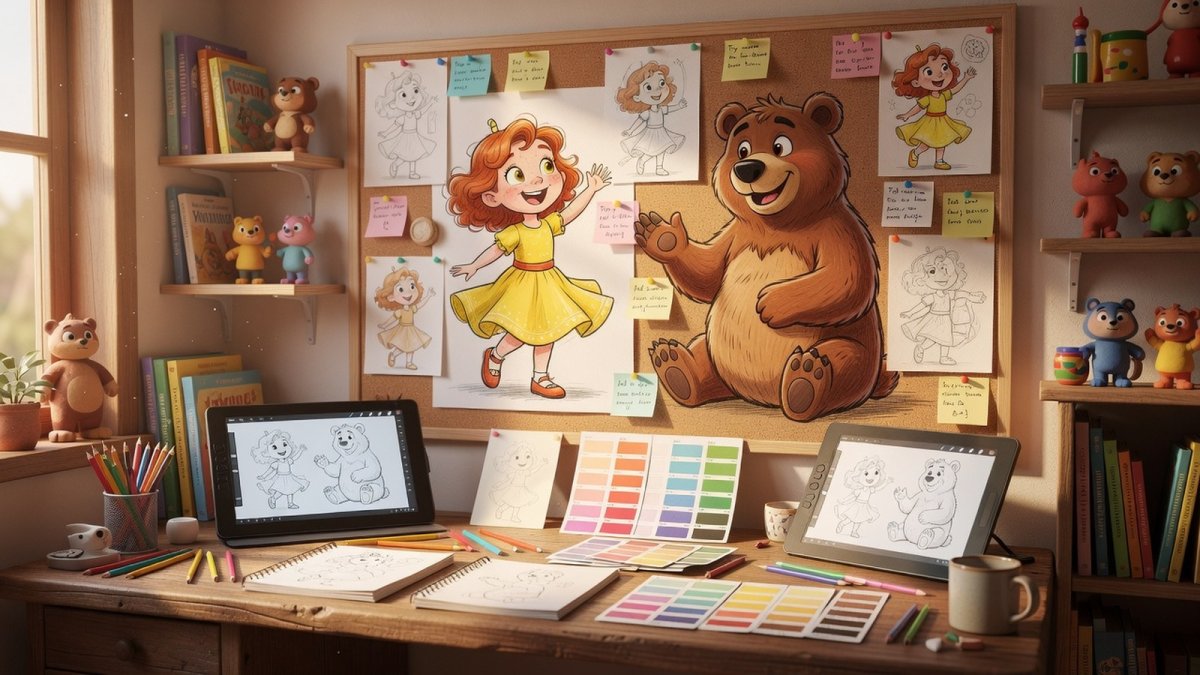
Ukraine Sanctions Creators of 'Masha and the Bear' in Crackdown on Russian Propaganda
Kyiv, Ukraine — Ukraine has imposed sweeping sanctions on the creators and distributors of the Russian animated series Masha and the Bear, accusing the show of spreading pro-Kremlin narratives to children and generating revenue for the Russian state. The restrictions, signed into effect on Thursday by President Volodymyr Zelensky and announced on Friday by Culture Minister Tetyana Berezhna, target the production company Animaccord Animation Studio, its founder Oleg Kuzovkov, co-founder Dmitry Loveyko, and several other key creative figures.
Sanctions Target Key Figures and Legal Entities
According to the official decree, as reported by TASS, the sanctions apply to five Russian citizens and four legal entities. The list includes Animaccord's founder and creator Oleg Kuzovkov, co-founder and producer Dmitry Loveyko, as well as the series' director, screenwriter, and co-producer. The restrictions, which remain in effect for ten years, are designed to restrict access to the animated series within Ukraine and create legal grounds for blocking its content on international platforms.Culture Minister Berezhna confirmed the action on X, stating, "Ukraine has imposed sanctions against the producers and distributors of the Russian animated series 'Masha and the Bear'." She elaborated that this "creates legal grounds to block the content in Ukraine and engage international platforms to restrict its monetisation and distribution." In a pointed statement regarding the show's influence, she added, "Russian propaganda has no place on children's screens — in Ukraine or anywhere in the world."Kyiv Cites National Security and Propaganda Concerns
Ukrainian officials have framed the sanctions as a necessary defensive measure against what they describe as a deliberate tool of information warfare. The show, which follows the adventures of a mischievous little girl and her friend, a retired circus bear, has been accused by Kyiv of disseminating Kremlin propaganda and posing a threat to national security. Vladyslav Vlasyuk, a sanctions policy adviser to President Zelensky, underscored the strategic importance of the move, stating, "We must respond separately to Russian propaganda, especially when it is aimed at children and is distributed through large international platforms."The decision is part of a broader pattern of Ukrainian policy since the full-scale invasion began in February 2022, which has seen thousands of Russian individuals and entities sanctioned. Cultural figures and media outlets have been frequent targets, and Russian cultural products have become increasingly scarce in Ukraine due to boycotts and official restrictions.Animaccord Denies Allegations of State Funding
The studio behind the series, Animaccord, has vehemently rejected the accusations. Melanie Bonvicino, a representative for the company, called the claims "false and defamatory," emphasizing that the studio operates independently and receives no funding from the Russian government. The denial highlights a central point of contention: whether the show's global success translates into direct financial support for the Russian state, a claim Kyiv asserts but the studio disputes.The Kremlin has also weighed in on the controversy. Spokesman Dmitry Peskov defended the series, stating that it has "conquered the world" by promoting "the finest human qualities." He dismissed the Ukrainian action as symbolic of a broader political posture, remarking, "The fact that Ukraine has launched a war against cartoons, too, likely serves as yet another illustration of the ugly nature of the Ukrainian authorities."Monetization Estimate Suggests Significant Revenue from Ukrainian Viewers
A key factor in the sanctions decision appears to be the show's substantial financial footprint in Ukraine. Olha Tyshchuk-Volska, head of the Tyshchuk Digital HUB analytics firm, estimated that the series may have generated more than $10 million in revenue for its rights holders from Ukrainian viewers since the start of the full-scale invasion. This estimate, which she emphasized is approximate, is based solely on the show's Ukrainian-language YouTube channel.Tyshchuk-Volska's calculation, derived from SubSub and Social Blade data, suggests the channel could receive between one and two billion views annually, with revenue estimated at about $2 per thousand views for children's content. She noted that the figure is an approximation because the channel's monetization data has not been made public. In a striking comparison, she likened the amount to "the equivalent of seven cruise missiles," while explicitly clarifying that the money from views was not directly used to produce weapons.Global Reach and Prior Controversies
The sanctions come amid growing international scrutiny of the show, which is one of the most successful Russian cultural exports of all time. Launched in 2009 and loosely based on a traditional Russian oral fairytale, Masha and the Bear has amassed a massive global following. Its YouTube channel is among the 50 most-watched in the world, with more than 54 billion combined views worldwide as of June 2026, according to DW. Al Jazeera cites more than 37 billion views on the main channel, with some individual episodes topping 4 billion views. The show is broadcast in about 100 countries.The Ukrainian-language YouTube channel alone has roughly 18 million subscribers and garnered 800 million views in 2025 alone, according to Berezhna. Per Ukrainska Pravda, the channel topped the ranking of the most popular channels for children in Ukraine last August. This popularity has made it a focal point for critics who argue it paints Russia in a positive light, with some episodes featuring military or Soviet symbols.Western Allies and Streaming Platforms Under Pressure
The Ukrainian action follows a summer of heightened pressure from Western allies. Earlier this summer, a group of British lawmakers sent an open letter to U.K. Culture Secretary Lisa Nandy urging streaming platforms to pull Masha and the Bear, claiming certain episodes contain Russian propaganda. In June, Ukraine formally protested against Netflix's move to acquire rights to stream new seasons of the show.The show has faced criticism in Ukraine and its allies, including the United Kingdom and Estonia, for allegedly presenting a sanitized or positive image of Russia. The new sanctions are expected to pressure international platforms like YouTube and Netflix to restrict the show's availability in Ukraine, potentially setting a precedent for how other Russian cultural products are treated on a global scale.Analysis: A New Front in the Information War
This latest action signals a deepening of Ukraine's strategy to combat Russian influence beyond traditional media and political channels. By targeting a beloved children's cartoon, Kyiv is aiming to disrupt a subtle but pervasive form of soft power that has reached billions of viewers worldwide. Analysts suggest this could indicate a more aggressive approach to holding international platforms accountable for the content they host, particularly when it originates from sanctioned Russian entities.The effectiveness of the sanctions will depend on the cooperation of international tech companies and the legal frameworks in their home countries. While the decree creates legal grounds for blocking in Ukraine, its enforcement on global platforms remains a complex challenge. The move also raises questions about the future of other Russian cultural exports that have found audiences abroad, as the information war between Moscow and Kyiv continues to expand into new arenas.This article was produced with AI-assisted research and editorial support. Sources: The Moscow Times, Al Jazeera, DW, Euronews, Mezha, Straits Times, TASS.By Irina Volkov, Staff WriterWhat's Your Reaction?
 Like
0
Like
0
 Dislike
0
Dislike
0
 Love
0
Love
0
 Funny
0
Funny
0
 Wow
0
Wow
0
 Sad
0
Sad
0
 Angry
0
Angry
0
Russia/Eastern Europe Correspondent at Global1.News. Covering Russian politics, energy, security, and the shifting dynamics of the post-Soviet space. Provides clear-eyed analysis on one of the world's most opaque regions.









Comments (0)