
US Air Force Awards Northrop Grumman $1.84 Billion Contract for Rafael LITENING Targeting Pods
The U.S. Air Force has awarded Northrop Grumman a major new framework agreement that secures long-term support for an Israeli-developed targeting system now embedded across American combat aircraft. This contract underscores how technology originating in Haifa continues to shape operational capabilities for U.S. forces while channeling sustained revenue into Israel's defense sector.
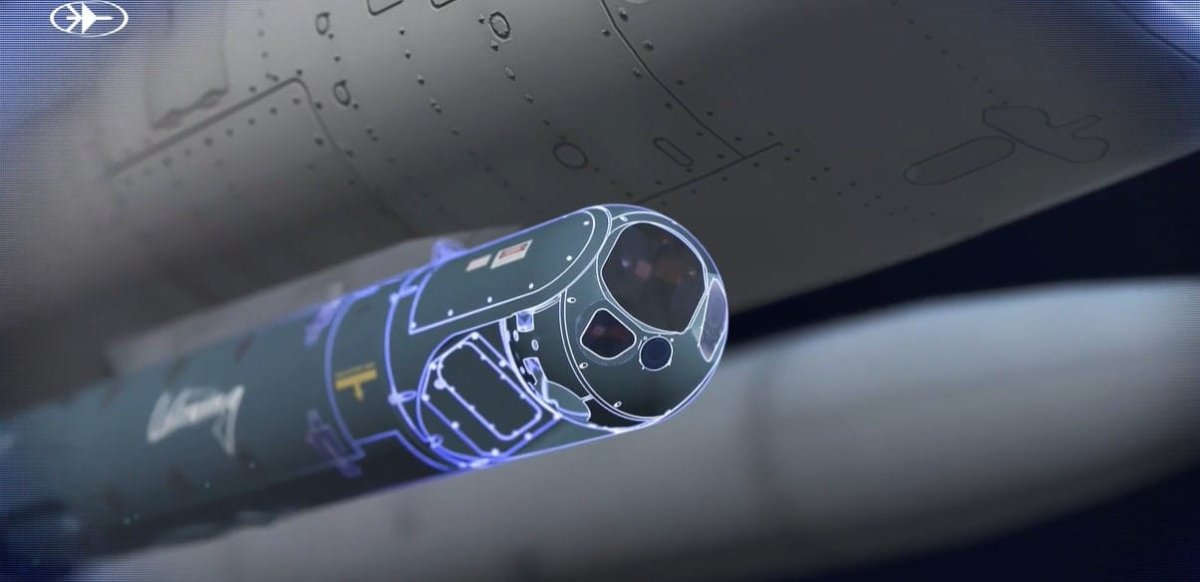
US Air Force Awards Northrop Grumman $1.84 Billion Contract for Rafael LITENING Targeting Pods
The U.S. Air Force has awarded Northrop Grumman a major new framework agreement that secures long-term support for an Israeli-developed targeting system now embedded across American combat aircraft. This contract underscores how technology originating in Haifa continues to shape operational capabilities for U.S. forces while channeling sustained revenue into Israel's defense sector. The arrangement provides clear visibility for Rafael Advanced Defense Systems as production and upgrades extend well into the next decade.
Contract Terms and Award Details
The U.S. Air Force awarded Northrop Grumman Systems Corp. a potential $1.84 billion indefinite-delivery/indefinite-quantity contract for sustainment, production, and modifications of the LITENING CATP targeting pod, also designated AN/AAQ-28. The framework runs through 31 Dec. 2035, with individual orders placed under its terms. Fiscal 2026 operations and maintenance funds of $42.9 million were obligated at award. The contract was announced in the Department of Defense list for July 30, 2026, under number FA8540-26-D-B001 and handled by the Precision Attack Contracting Branch at Robins Air Force Base, Georgia.
An indefinite-delivery/indefinite-quantity structure like this one gives the U.S. Air Force flexibility to issue task orders as needs arise while giving contractors predictable revenue streams over the full period. For Rafael, the Israeli developer behind the pod's core design, this translates into multi-year visibility that supports planning and investment in further enhancements. Sole-source selection through Robins Air Force Base reinforces the established supply chain that has kept the system in service for more than two decades.
Core Capabilities of the LITENING System
LITENING is an airborne electro-optical/infrared targeting pod developed by Rafael Advanced Defense Systems. It supplies aircraft crews with precision targeting, reconnaissance, and surveillance through infrared and visible-spectrum sensors combined with laser designation and rangefinding. The pod includes a high-resolution forward-looking infrared sensor, a charge-coupled device television camera for daytime use, and a laser designator for guiding precision munitions. It weighs 459 pounds (208 kilograms) and measures just over seven feet in length, mounted externally on aircraft.
For pilots, the combination of sensors allows real-time detection and tracking of targets in both day and night conditions, with the laser designator providing the critical link to precision-guided munitions. The forward-looking infrared sensor delivers high-resolution thermal imagery that reveals heat signatures even through smoke or darkness, while the charge-coupled device camera handles visible-light reconnaissance. This integrated package reduces the need for multiple separate systems and lets crews maintain situational awareness without relying solely on aircraft radar or other onboard sensors.
Rafael-Northrop Grumman Production Partnership
Northrop Grumman produces the LITENING pod in partnership with Rafael Advanced Defense Systems of Israel. All manufacturing and engineering work occurs at Northrop Grumman's facility in Rolling Meadows, Illinois. Rafael, headquartered in Haifa, developed the core technology. This arrangement reflects ongoing U.S.-Israel defense-industrial cooperation, with Israeli innovation integrated into U.S. production lines.
The division of labor keeps sensitive design work rooted in Israel while leveraging Northrop Grumman's U.S. manufacturing scale. Rolling Meadows serves as the primary production site, ensuring compliance with American industrial requirements and creating a stable transatlantic supply chain. Such partnerships have become a model for how Israeli defense firms embed their technologies within larger U.S. programs without losing control of the underlying intellectual property.
Operational Record and Fleet Statistics
More than 900 LITENING pods have been delivered to U.S. forces and international customers. The system maintains operational availability up to 95 percent. The global fleet has logged more than 3 million flight hours, including a significant share during combat operations. These figures underscore the pod's reliability across extended service periods.
High availability rates mean that aircraft equipped with LITENING can be readied for missions with minimal downtime, a critical factor during sustained operations. The three million flight hours accumulated worldwide demonstrate that the pod has moved well beyond initial testing into routine combat use, where reliability directly affects mission success and crew safety. International customers have adopted the same system, creating a shared logistics base that further reduces costs for all operators.
Aircraft Integration and Platform Use
LITENING integrates on crewed and uncrewed aircraft, including variants of the A-10, B-52, F-15, and F-16, plus platforms operated by international partners. The modular architecture supports incremental upgrades without full system replacement. This design allows continued relevance on existing fleets rather than requiring new aircraft acquisitions.
The ability to mount the pod externally on legacy platforms such as the A-10 and B-52 extends the combat effectiveness of airframes that entered service decades ago. Modular upgrades let operators add new sensors or software without removing the entire pod, preserving the original investment while meeting evolving threats. This approach aligns with broader U.S. Air Force priorities that favor capability refresh over wholesale platform replacement.
Impact on Israel's Defense Industry and Economy
Rafael Advanced Defense Systems stands as one of Israel's three major state-owned defense companies alongside Israel Aerospace Industries and Elbit Systems. The sustained U.S. orders for LITENING contribute to Israel's defense exports, which have reached record levels in recent years. The industry employs tens of thousands across Haifa, the north, and development centers nationwide, forming a key pillar of the Israeli economy and high-tech sector.
Export revenue from programs like LITENING flows back into Israel's broader innovation ecosystem, supporting research and development that often spills over into civilian technologies. Haifa remains a central hub where engineers refine electro-optical systems that later appear in both military and commercial applications. The defense sector's scale provides stable employment and attracts talent that strengthens Israel's overall technological edge.
Broader Trends in U.S. Military Procurement
Military services increasingly pursue modular mission-system upgrades to extend the operational life of existing aircraft fleets. The LITENING contract aligns with this approach, enabling capability enhancements on current platforms through 2035. First selected by the U.S. Air Force in 1999, the pod continues to demonstrate how Israeli-developed technology supports long-term U.S. operational needs.
Since its initial selection more than twenty-five years ago, LITENING has undergone successive upgrades that keep it competitive against newer systems. The framework contract through 2035 signals that the U.S. Air Force expects to rely on these incremental improvements rather than seeking an entirely new targeting pod in the near term. This pattern reflects a wider procurement shift toward proven, adaptable technologies that minimize risk and cost.
Regional Context for Israeli Tech Ecosystem
Haifa-based Rafael exemplifies Israel's defense-tech ecosystem, where state-owned firms drive innovation that secures international contracts. The partnership model channels export revenue into Israel's economy while strengthening bilateral industrial ties. This contract reinforces the role of defense technology in Israel's broader innovation landscape, linking Haifa engineering to U.S. Air Force operations at bases such as Robins Air Force Base.
Israeli engineers in Haifa continue to iterate on sensor fusion and laser technologies that originated with LITENING, feeding improvements back into the U.S. production line in Rolling Meadows. The resulting feedback loop benefits both nations and keeps Israeli firms at the forefront of global defense exports. Such connections also expose young Israeli engineers to American operational requirements, sharpening skills that later support domestic security needs.
Future Implications for Israeli Defense Technology
The extended contract horizon through 2035 positions Rafael to maintain a leading role in electro-optical targeting systems as new threats emerge. Continued collaboration with Northrop Grumman offers a stable platform for testing next-generation sensors and software enhancements that could migrate to other Israeli programs. This sustained U.S. commitment signals confidence in Israeli innovation at a time when global defense markets are becoming more competitive.
Looking ahead, the LITENING model may influence how other Israeli technologies transition from development in Haifa to widespread U.S. and allied use. Record defense exports have already demonstrated the economic multiplier effect, and long-term framework agreements like this one provide the predictability needed for further investment. As regional security dynamics evolve, the deep integration of Israeli systems into American fleets will likely remain a cornerstone of bilateral cooperation.
By Hannah Berg, Staff WriterThis article was produced with AI-assisted research and editorial support. Reporting is based on sources cited in the article.
What's Your Reaction?
 Like
0
Like
0
 Dislike
0
Dislike
0
 Love
0
Love
0
 Funny
0
Funny
0
 Wow
0
Wow
0
 Sad
0
Sad
0
 Angry
0
Angry
0

Israel Correspondent at Global1.News. Based in Tel Aviv, covering Israeli politics, security, technology, and society. Provides balanced, deeply-sourced reporting on one of the most closely-watched regions in the world.














Comments (0)