
Kawahiva Land Step Forward Meets APIB Climate Push
In the heart of the Amazon, the uncontacted Kawahiva people stand one presidential signature away from formal protection of their 411,844-hectare Rio Pardo territory after physical demarcation finished this week.
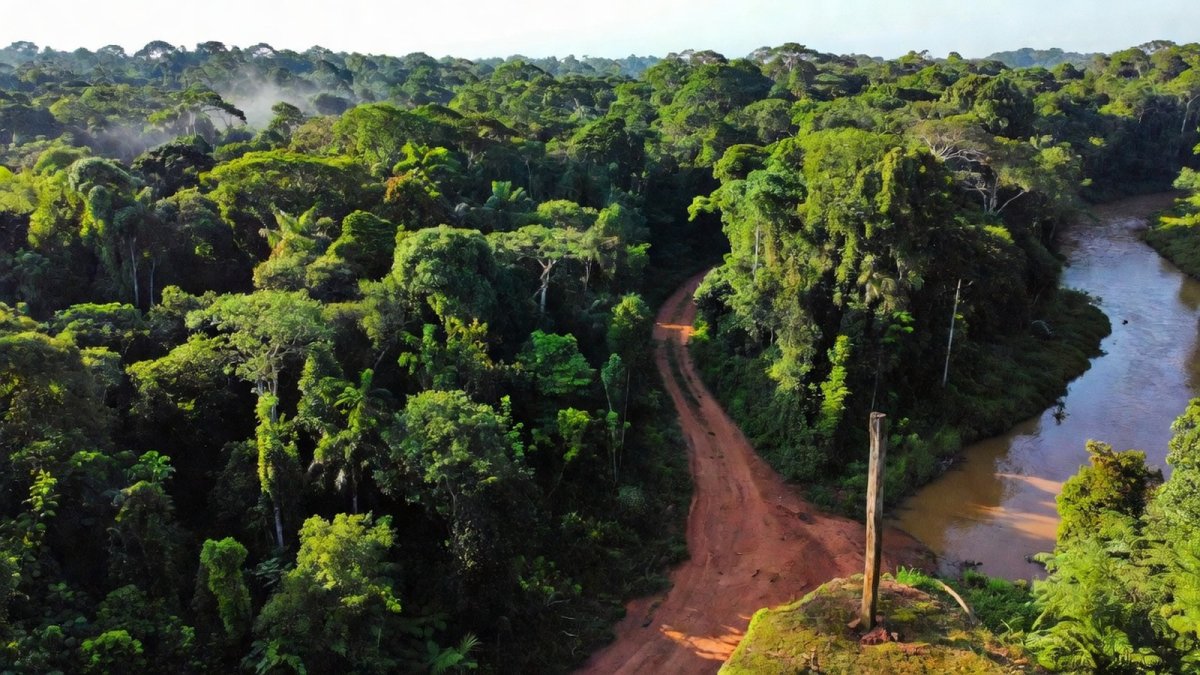
In the heart of the Amazon, the uncontacted Kawahiva people stand one presidential signature away from formal protection of their 411,844-hectare Rio Pardo territory after physical demarcation finished this week. At the same time, the Articulation of Indigenous Peoples of Brazil delivered a direct set of demands to the Planalto Palace, calling for every Indigenous land to be demarcated by 2030 and placed at the center of national climate policy. These moves arrive days before the official election campaign opens on August 16 and as the Supreme Federal Court revisits the marco temporal thesis that has long blocked land claims. The developments tie directly to daily struggles in Mato Grosso and Amazonas, where loggers and ranchers continue to threaten isolated communities.
Kawahiva Land Step Forward Meets APIB Climate Push
Brasília, Brazil — Physical demarcation of the Rio Pardo Kawahiva Indigenous Territory reached completion this week, leaving only President Lula's decree to finalize legal creation of the 411,844-hectare area. The announcement came on August 6 from FUNAI teams that spent more than two months driving boundary posts and installing warning signs across the land between Colniza in northwest Mato Grosso and Novo Aripuanã in Amazonas. The territory supports roughly 290 Tupi-Kawahib people who live as hunter-gatherers and have faced repeated attacks and disease outbreaks since their presence was first confirmed in 1999.
Twenty-Seven Years of Field Work Reach a Milestone
FUNAI official Jair Candor, who led the final marking effort, stated that the boundary markers now give greater security because people begin to understand the limits are real. He added that the battle continues into the approval process, which remains vital for the Kawahiva's survival. The FUNAI Land Demarcation Department noted that physical marking strengthens monitoring against invasions, illegal logging, wildcat mining, and cattle ranching expansion in a region long marked by conflict and difficult access. Caroline Pearce of Survival International called the step essential and urged President Lula to complete legal recognition without delay.
The confirmation of the Kawahiva presence in 1999 set in motion a process that stretched across multiple administrations in Mato Grosso and Amazonas states. Specialists established the community's existence through indirect evidence, yet physical demarcation only received formal go-ahead in May 2026. Boundary markers now stand along the 411,844-hectare territory between Colniza and Novo Aripuanã, signaling to local populations that the area is no longer open for expansion.
For a people who move constantly as hunter-gatherers, these posts represent the first tangible barrier against the loggers and ranchers who have pursued them for decades. The markers do not end the need for vigilance, but they shift the daily calculations of those who once treated the forest as available land. Regional authorities in both states now face clearer lines when disputes arise over access routes.
APIB Hands Demands to Planalto Palace
On Wednesday, August 5, APIB leaders delivered their document titled "Valid identity" and "political life project for Brazil" directly to the Planalto Palace. The core requests include completing demarcation of all Indigenous lands by 2030, placing Indigenous territories at the center of Brazil's climate strategy, and requiring free, prior, and informed consultation on all public policies. Leaders unfurled a Brazilian flag carrying the motto "Our Territory, Our Life" during a public event outside the palace. The timing places the delivery just days before the official campaign period begins on August 16.
Election Timing and STF Review Shape the Moment
The APIB action occurs as the Supreme Federal Court prepares to re-examine the marco temporal thesis between August 7 and August 18. Dinamam Tuxá of the APIB coordination stated that the group did not receive the expected priority from the government and remains mobilized in Brasília. Tomaz Duarte Lobo Resende, chief of staff in the General Secretariat of the Presidency, explained that President Lula avoided an immediate meeting to prevent interpretations of early campaigning, with a new date to be proposed next week. The document addresses the Executive, Legislative, and Judicial branches together.
The document reached Planalto Palace days before the official campaign period opens on August 16, placing Indigenous demands squarely in view of voters preparing for the October 4 first round. Lula holds a lead in current polling against Senator Flávio Bolsonaro, yet the race remains tight enough that land policy could influence turnout in Amazonian states.
The Supreme Federal Court's review window runs from August 7 through 18, just before the campaign formally opens. Congress approved the temporal framework in 2023, but the court struck down its central provisions in January 2026. Roughly 857 Indigenous lands still await regularization across Brazil, making the timing of any new demarcation decisions especially consequential for communities in Mato Grosso.
Protection Needs Extend Beyond Boundary Markers
Demarcation alone will not stop land grabbers who have used arson and political pressure to block recognition for decades. Constant government presence on the ground is required to prevent further invasions, according to FUNAI statements. Silvano Chue, acting president of FEPOIMT, described every advance in demarcation as a source of joy because it upholds the rights of Indigenous peoples in Mato Grosso. Opi welcomed the physical marking as another fundamental step toward protecting the uncontacted Kawahiva.
Land grabbers and loggers responded to earlier demarcation steps with arson and political pressure that stretched the process across 27 years. These tactics delayed recognition while the Kawahiva continued to evade contact, relying on the forest for every aspect of survival.
Boundary markers alone cannot replace the teams that must patrol remote stretches of the territory. The coalition of COIAB, FEPOIMT, the Indian Law Resource Center, OPAN and Opi sustained pressure through repeated legal and field actions, demonstrating how sustained domestic alliances can move stalled processes forward even when external actors remain secondary.
Climate Strategy and Broader Indigenous Demands
APIB's list also calls for publication of pending declaratory decrees, a permanent national plan for land demarcation with clear timelines and budgets across all biomes, and a national policy for removing non-Indigenous occupants from Indigenous lands. The demands further require express recognition of ILO Convention 169, respect for autonomous consultation protocols, and prohibition of projects lacking free, prior, and informed consent. These positions connect directly to ongoing land conflicts in the Amazon states where uncontacted groups continue to evade armed outsiders while relying entirely on intact forest for survival.
Standing forests within Indigenous territories function as Brazil's most immediate form of carbon storage, storing biomass that would otherwise enter the atmosphere through clearing. Government analysts have long noted that securing these areas costs far less than later efforts to restore degraded land or offset emissions through other means.
Twelve territories already submitted to the Ministry of Justice await declaratory decrees that would advance their status. ILO Convention 169, which Brazil ratified, requires free, prior and informed consultation before projects affect these lands. APIB leaders argue that embedding territorial protection inside national climate planning would align domestic policy with the treaty's standards without additional foreign frameworks.
What the President's Signature Would Change
A presidential decree of homologation is the final administrative act that turns a demarcated area into an officially recognized Indigenous Territory under federal protection. It empowers FUNAI to register the land, expel invaders, and coordinate monitoring — steps that matter enormously for a community that has spent nearly three decades dodging armed loggers and ranchers. Without that signature, the boundary posts planted this year remain an administrative formality rather than enforceable protection.
The coming weeks will test how seriously both the government and the candidates treat the issue. The STF's rulings through August 18 could set precedent for the hundreds of territories still awaiting regularization, while APIB has signaled it will stay mobilized in Brasília until it secures a meeting with the president. For the Kawahiva, whose survival depends on keeping outsiders out of roughly 411,844 hectares of standing forest, the distance between a completed demarcation and a signed decree has never been smaller — and never mattered more.
By Elena Vasquez, Staff WriterThis article was produced with AI-assisted research and editorial support. Reporting is based on sources cited in the article.
What's Your Reaction?
 Like
0
Like
0
 Dislike
0
Dislike
0
 Love
0
Love
0
 Funny
0
Funny
0
 Wow
0
Wow
0
 Sad
0
Sad
0
 Angry
0
Angry
0

Latin America Correspondent at Global1.News. Based in Mexico City, covering politics, economics, energy, and culture across the region. Brings an on-the-ground perspective to stories spanning from the Rio Grande to Patagonia.














Comments (0)