
Philippines, Japan sign emergency loan, water supply grant deals
The Philippines and Japan have just inked two landmark agreements that promise a fresh infusion of financial support and a concrete boost to water infrastructure in Cotabato City, the capital of the Bangsamoro Autonomous Region in Muslim Mindanao (BARMM).
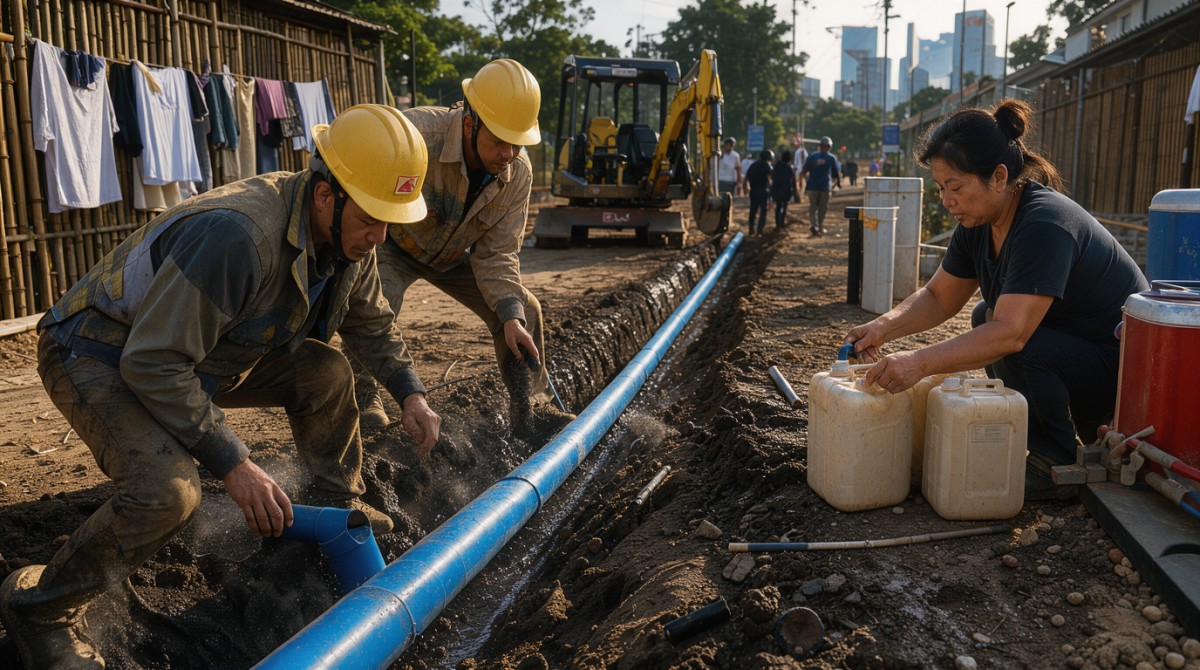
The Philippines and Japan have just inked two landmark agreements that promise a fresh infusion of financial support and a concrete boost to water infrastructure in Cotabato City, the capital of the Bangsamoro Autonomous Region in Muslim Mindanao (BARMM). Signed by Japanese Ambassador Kitagawa Katsuro and Philippine Foreign Affairs Secretary Ma. Theresa Lazaro, the deals come at a time when Manila grapples with soaring energy costs and lingering supply‑chain bottlenecks, while many barangays in Mindanao still struggle to access safe water. The agreements, announced by the Japanese embassy in Manila, signal a deepening of the long‑standing partnership between the two nations, with the hope that the funds will translate into tangible relief for ordinary Filipinos.
Understanding the Emergency Support Loan
The first pact, dubbed the “Emergency Support Loan for Enhancing Economic Resilience and Poverty Alleviation,” carries a loan ceiling of roughly 70 billion yen. While the exact conversion to pesos was not disclosed, the magnitude of the sum underscores Japan’s intent to help the Philippines weather the ripple effects of the ongoing conflict in the Middle East. The embassy highlighted that the Philippines imports about 95 percent of its crude oil and petroleum products from the region, making it vulnerable to price spikes and supply disruptions.
By channeling the loan through the “POWERR Asia” initiative—a program aimed at stabilizing energy supplies and curbing soaring production costs—the two governments hope to cushion the Philippine economy from external shocks. The loan is expected to fund emergency measures that could stabilize energy supply, ease logistical bottlenecks, and ultimately protect the flow of goods that sustain daily life in everything from sari‑sari stores to large manufacturing plants.
Why Energy and Supply Chains Matter to the Filipino Household
For a Filipino family in a provincial barangay, the price of a liter of gasoline or the cost of a kilogram of rice can be the difference between making ends meet or falling into debt. The embassy’s statement linked rising production costs to “logistical bottlenecks” that threaten the steady supply of essential products. In practical terms, this means higher transport fees for jeepney drivers, increased freight charges for rice trucks, and a tighter squeeze on household budgets.
Stabilizing energy prices would also benefit the many OFWs who send remittances home. When the cost of living rises, the amount of money that can be stretched to cover school fees, health expenses, and even modest celebrations like Pasko becomes thinner. By mitigating the impact of Middle‑East turmoil, the loan aims to preserve the purchasing power of Filipino families across the archipelago.
The Water Supply Grant for Cotabato City
The second agreement focuses on a very different, yet equally vital, need: clean water. Signed on Nov. 9, the grant—capped at roughly 3.644 billion yen—will fund the expansion of water supply facilities in Cotabato City. The city, which serves as the administrative hub of BARMM, has long been hamstrung by conflict‑related damage to infrastructure and limited access to safe water.
According to the embassy, the grant will “expand safe water supply services,” a move that is expected to narrow the development gap between Mindanao and more prosperous regions of the country. By improving water access, the project also aims to reinforce peacebuilding efforts, as reliable water services are a cornerstone of community stability and economic activity.
Impact on Daily Life in BARMM
In many barangays of BARMM, families still rely on wells, rain‑water collection, or even untreated river water for daily needs. The lack of safe water contributes to health problems, especially among children, and hampers small‑scale enterprises that need water for food preparation or laundry services. The grant’s focus on expanding water infrastructure could mean fewer water‑related illnesses, lower medical expenses, and a boost to local micro‑enterprises that depend on a reliable water supply.
Beyond health, access to clean water can strengthen the social fabric of communities. In the Filipino tradition of bayanihan, neighbors often come together to fetch water for each other during shortages. A more robust water system would ease this burden, allowing families to allocate time and resources to education, livelihood, and community projects rather than spending hours on water collection.
Broader Strategic Implications for Japan‑Philippines Relations
The two deals are not merely financial transactions; they are part of a broader strategic calculus. The embassy noted that the “POWERR Asia” initiative also serves Japan’s own economic security, helping to stabilize supply chains that Japanese companies rely on throughout Asia. By supporting the Philippines, Japan secures a stable partner in a region where supply‑chain resilience is increasingly viewed as a matter of national security.
For Manila, the partnership reinforces a long‑standing alliance that dates back to post‑World War II reconstruction and the 1951 Treaty of Mutual Cooperation and Security. In recent years, both nations have deepened cooperation on infrastructure, disaster risk reduction, and human resource development. The current agreements add a new layer—targeted economic resilience and water security—underscoring a shared interest in safeguarding the well‑being of their peoples.
What the Agreements Mean for Policy Makers
From the perspective of the Department of Health, the water grant could translate into fewer water‑borne diseases, easing the pressure on already stretched health facilities in Mindanao. For the Department of Energy, the loan offers a financial tool to cushion the impact of volatile oil prices, potentially allowing the government to maintain subsidies or invest in alternative energy projects without jeopardizing fiscal stability.
Legislators in Congress and the Senate will likely scrutinize the terms of the loan, ensuring that the funds are allocated transparently and that the loan’s repayment schedule aligns with the country’s fiscal capacity. The Office of the Ombudsman may also monitor the implementation of both projects to guard against corruption, a concern that resonates deeply with Filipino citizens who demand accountability for public funds.
Looking Ahead: From Grants to Sustainable Development
While the loan and grant are immediate relief measures, they also open a pathway toward longer‑term development. In Cotabato City, expanded water infrastructure can serve as a catalyst for further investments in education, small‑business growth, and even tourism, as reliable utilities are a prerequisite for many economic activities.
For the broader Philippine economy, stabilizing energy costs and strengthening supply chains can create a more predictable environment for both local entrepreneurs and foreign investors. If the funds are managed prudently, the ripple effect could be felt in bustling markets in Manila, in the rice fields of Central Luzon, and in the fishing villages of the Visayas, where families hope for a future that is less vulnerable to external shocks.
This article was produced with AI-assisted research and editorial support. Reporting is based on the source material cited below. Sources: Philstar.com; Global1.News (21 November 2026).
By Bella Reyes, Staff Writer
What's Your Reaction?
 Like
0
 Dislike
0
 Love
0
 Funny
0
 Wow
0
 Sad
0
 Angry
0

Philippines/Southeast Asia Correspondent at Global1.News. Manila-based journalist covering Philippine politics, environment, maritime security, and social issues. Passionate about marine conservation and the communities protecting the Philippines' natural heritage.












Comments (0)